

Flat Rate Shipping
$9.95 flat rate shipping or free over $110

Aussie Owned
Australian family-owned & sourced

School Supplier
Supplier to over 1,000 schools Australia wide
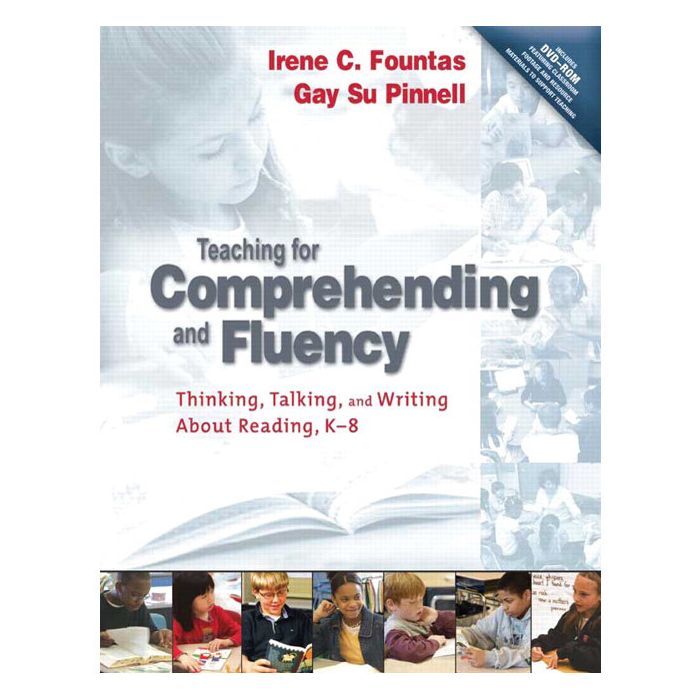

Offering a complete picture of how to skillfully teach meaning making and fluency within any instructional context, Teaching for Comprehending and Fluency, K–8, supports you with frameworks for high-quality instruction that describe appropriate expectations for comprehending, fluency, and vocabulary development.
Fountas and Pinnell's teaching and assessment frames will give you a firm understanding of your students' reading levels: where they are, where they should be, and what they need to do to get there–for any reader, in any grade, at any moment. You'll also gain insight about the specific demands that fiction and nonfiction texts place on readers and about how effective readers think within a text, beyond a text, and about a text to gain rich understandings.
CONTENTS
Teaching for Comprehending and Fluency K–8 comes with a DVD containing short, focused video segments that illustrate concepts from the book and demonstrate exemplar teaching in real classroom settings. The DVD is also a repository of useful materials to support your work–including blackline masters, forms, checklists, and numerous other classroom tools.
Acknowledgments
Introduction
Living a Literate Life: The Right of Childhood
Creating a Classroom Community of Readers and Writers
SECTION I: READERS
1. Understanding Readers, Texts and Teaching
2. Helping Students Build a System for Processing a Variety of Texts
3. Reading Is Thinking: Within, Beyond, and About the Text
4. Helping Students Develop Systems of Strategic Actions to Sustain Processing
5. Helping Students Develop Systems of Strategic Actions for Expanding Thinking
6. Understanding the Fluent Reader: Effective Processing
7. Recognizing Change Over Time in Fluent Reading
8. Assessing Comprehension and Fluency to Document Progress and Inform Teaching
9. The Role of Talk, Writing, and Benchmark Books in Assessing Comprehension
SECTION II: TEXTS
10. Using a Variety of High-Quality Texts to Support Literacy Learning
11. Supporting Thinking Across a Variety of Genres
12. Using a Gradient of Text to Match Books to Readers
13. Understanding the Demands of Nonfiction Texts
14. Understanding the Demands of Fiction and Poetry
SECTION III: TEACHING
15. Engaging Readers in Thinking and Talking about Texts Through Interactive Read-Aloud
16. Creating a Literate Culture Through Interactive Read-Aloud: Shared Talk About Texts
17. Planning for Interactive Read-Aloud and Literature Study Across the Grades
18. Moving from Interactive Read-Aloud to Literature Study
19. Deepening Comprehension: Engaging Students in Small-Group Literature Discussion
20. Getting Started with Book Clubs: Thinking and Talking about Texts
21. Promoting Shared and Performed Reading: Fluent Oral Processing of Texts
22. Maximizing Independent Reading: Helping Students Think Within, Beyond, and About Texts in a Reading Workshop
23. Designing Minilessons to Support Thinking About Texts in a Reading Workshop
24. Using Guided Reading to Teach Comprehending and Fluency
25. Using Guided Reading to Teach for the Comprehending of Fiction Texts
26. Using Guided Reading to Teach for the Comprehending of Nonfiction Texts
27. Writing about Reading: Moving from Talk to Written Conversation about Texts
28. Writing about Reading in a Variety of Genres
29. Meeting the Diverse Needs of English Language Learners
30. Teaching for Fluency Across Instructional Contexts
31. Expanding Vocabulary Across Instructional Contexts
Final Thoughts
Teacher Resources: Description of Print Materials on the DVD
Bibliography of Children's Literature
References
Index
| ISBN | 9780325003085 |
|---|---|
| Year Level | Kindergarten, Year 1, Year 2, Year 3, Year 4, Year 5, Year 6, Year 7, Year 8 |
| Date of Publication | 24 October 2006 |
| Edition | 2nd |
$9.95 flat rate shipping or free over $110
Australian family-owned & sourced
Supplier to over 1,000 schools Australia wide