




Flat Rate Shipping
$9.95 flat rate shipping or free over $110

Aussie Owned
Australian family-owned & sourced

School Supplier
Supplier to over 1,000 schools Australia wide
For Stage 5
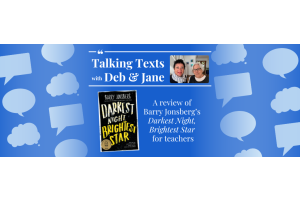
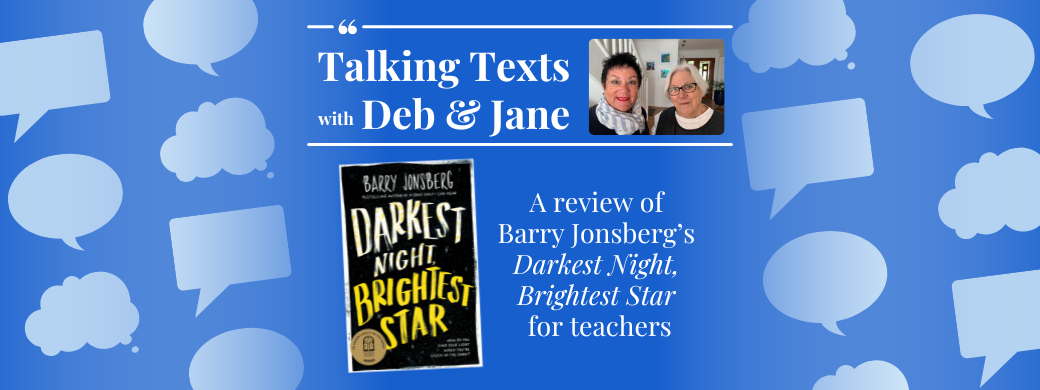
The title of this book reveals a great deal about the narrative progress as a young thirteen-year-old boy struggles to find his identity amid a toxic family. There are dark days and nights and but there is also humour and friendship. In these times of confusion and debate about male identity Barry Jonsberg ‘s exploration of the different kinds of masculinity and the ways adolescent boys can chart a course to being good men will be winner in the Year 9 classroom.
Awards for Darkest Night, Brightest Star
Judges' comments from the Ethel Turner Prize for Young People’s Literature
From the first page, the reader is captivated by the fresh, authentic inner voice of 13-year-old Morgan. He moves through the worlds of school and home almost entirely alone, and mute. It’s safer that way, he’s decided — until a boy called Gray wants to be his friend. Brought into a new world of feelings and communication, Morgan discovers what he does enjoy in life, who he likes, and what his numbness is all about.
The characters are so vivid it hurts, and yet the joy of their evolution is all the more powerful for the pain. It was deeply satisfying to see how, as freedom opens up the world for Morgan, his kindness blooms like the flowers he plants. In spare, powerful writing, Barry Jonsberg compellingly challenges old but sadly persistent ideas of a what a man ‘should’ be, and conveys how humanising it can be to connect, be vulnerable and experience love.
Barry Jonsberg is an Australian award-winning YA and children’s author. He lives in Darwin, Australia, with his wife, children, and two dogs. His books include The Whole Business with Kiffo and the Pitbull (2004), award-winner It's Not All About You, Calma! (2005), and My Life as an Alphabet (2013), Smoke & Mirrors (2024). They have been published in the USA, the UK, France, Poland, Germany, Hungary, Turkey, Brazil, Korea, Slovenia, and China.
The novel commences in the English classroom with thirteen-year-old Morgan and his speech task. It’s a disaster. Morgan lives in a household with his older brother who taunts him by calling him Moron, and a father, who runs a gardening business, who dominates the household and demands his son excel at football. His mother left when he was little and Morgan is now subjected to a punishing regime of soccer training and supervision. While he becomes a very effective player there is no joy in the game for him. Morgan is a loner and has no friends at school. So when he meets Gray, a gay student who challenges Morgan’s stunted view of his identity and encourages him to see himself more positively, it gradually begins to make a difference in his life. None of this is easy and when his mother reappears in his life his difficulties are compounded as she really wants to be part of his life. Her reasons for leaving become more apparent as the novel progresses. Morgan also encounters an older woman called Mary in his neighbourhood who thinks he is her son and who needs help with her garden. Morgan discovers he has a talent for getting things to grow. As their friendship develops there are challenges including Morgan’s homophobia from his father and brother. But Gray just sees Morgan as a person in peril, much like himself before he understood who he was and what he stood for. The bridge he once stood on contemplating ending it all is also a bridge that he hopes he can rescue Morgan from.
Friendship, respect and empathy do win out in this powerful story of discovery. The lemons on the lemon tree he plants for Mary, who has been moved to a nursing home, may be tied on by the helpful Gray under Morgan’s clever instruction, but they ring very true for her and so does this story.
Darkest Night, Brightest Star could be studied as a close study of text or placed in a group of novels that explore the ideas about masculinity. While it features a thirteen-year-old protagonist it fits better in Year 9. It could also be studied in conjunction with some of Jonsberg’s other YA novels such as The Whole Business of Kiffo and the Pitbull.
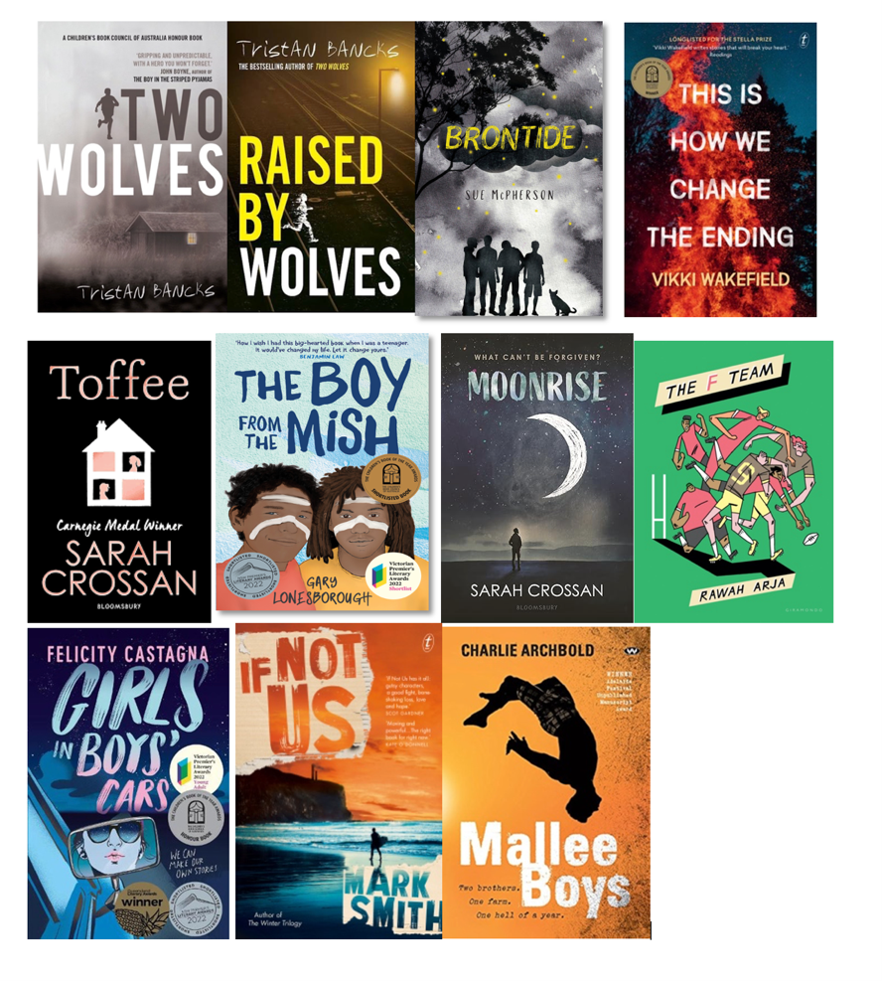
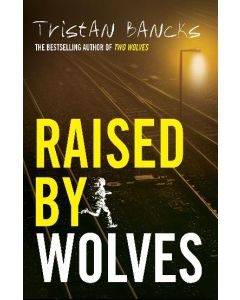
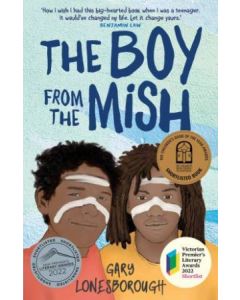
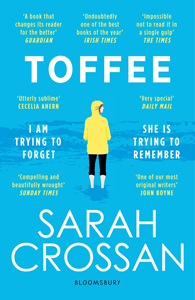
A collection of texts that explore different types of masculinity could include:
In an interview published on the Good Reading website Barry Jonsberg responded to a question about where the idea for the book came from. https://goodreadingmagazine.com.au/article/barry-jonsberg-on-darkest-night-brightest-star/
This time it was following a conversation I had with my wife. She had just come home from work [she’s an English teacher] and she told me that one of her male students had said to her, ‘I have always tried to please my father, but I don’t think I ever will.’ Nothing more was said, but both of us agreed that this was rather sad and moving. It prompted us to have a conversation about how parents can exert subtle and not so subtle pressure on their children to perform in ways that the parents might find satisfying but might not be the best for the kids. My wife recounted the time she came home from school when she was about 10 or 11 and told her father that she had got 97 per cent on a maths test. He asked her what had happened to the other three per cent. Maybe he was joking. Maybe not. But that remark stayed with her for close to 50 years. So I thought that a story about a boy trying to live up to his father’s expectations might make a good book. I started Darkest Night, Brightest Star the following day. Ask students to discuss in groups the choices both Ben and Olive make in both books and how they would answer the question ‘What would I do if that happened to me?’
Jonsberg also answered the question ‘If you were stranded on a desert island and you could only have five books – what would they be?’
Phew. Tricky. The Complete Works of Shakespeare goes without saying. The Lord of the Rings [all of them – would that count as one book?]. The Gormenghast trilogy by Mervyn Peake [you can see how I’m trying to cheat here!]. The Grapes of Wrath by Steinbeck. Great Expectations by Dickens.
This could provide a good opening activity for the class. In groups ask students what books they would choose. If they have any agreement on books they have enjoyed they can create a list and share their list with the class.
Group task on prediction: Ask students to predict what might occur in the novel based on the cover and the blurb.
In another interview with Joy at PaperbarkWords blog Jonsberg is asked several excellent questions, and some are reproduced below. Ask students in groups to consider these questions and share the author’s answers with them at the end of their responses to the class.
From https://paperbarkwords.blog/2026/08/21/darkest-night-brightest-star-by-barry-jonsberg/
Group Task: In groups create a profile for the main characters. Also consider how much agency the three boys have and how that increases in the novel. Remember that agency is about their development of an identity and sense of belonging and the power they have to fulfil their potential. Use the template below for Morgan as a starting point and consider what aspects you would choose for the other characters.
| Characterisation of Morgan | ||
| Aspects | Evidence | Comments |
| Looks like / clothes | ||
| Personality | ||
| Greatest strength | ||
| Biggest fear | ||
| Agency and identity | ||
| Relationship with brother | ||
| Relationship with mother | ||
| Relationship with father | ||
Concepts could include Context • Representation • Point of view • Characterisation • Connotation, imagery and symbol
A student uses a range of personal, creative and critical strategies to interpret complex texts EN5-RVL-01
Reading, viewing and listening skills
Reading, view and listening for meaning
Reading for challenge, interest and enjoyment
Reflecting
A student analyses how meaning is created through the use and interpretation of increasingly complex language forms, features and structures EN5-URA-01
Representation
Code and convention
Connotation, imagery and symbol
Point of view
Characterisation
Narrative
A student evaluates how texts represent ideas and experiences, and how they can affirm or challenge values and attitudes EN5-URB-01
Perspective and context
Style
(English K-10 Syllabus 2022 © NSW Education Standards Authority for and on behalf of the Crown in right of the State of New South Wales, 2023)




Jane Sherlock and Deb McPherson are experienced and passionate English teachers. They have also been involved in the education sector as authors and presenters at teaching conferences.
$9.95 flat rate shipping or free over $110
Australian family-owned & sourced
Supplier to over 1,000 schools Australia wide