

Flat Rate Shipping
$9.95 flat rate shipping or free over $110

Aussie Owned
Australian family-owned & sourced

School Supplier
Supplier to over 1,000 schools Australia wide
For Stages 5 and 6
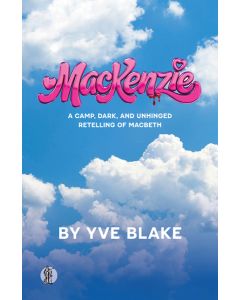
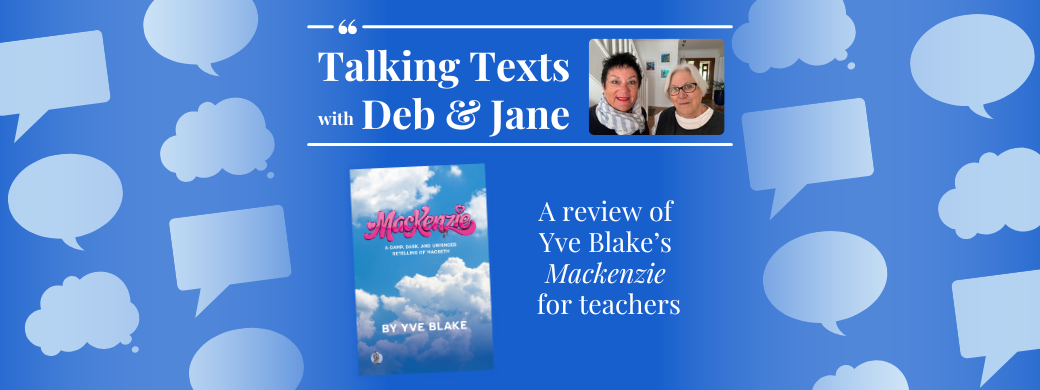
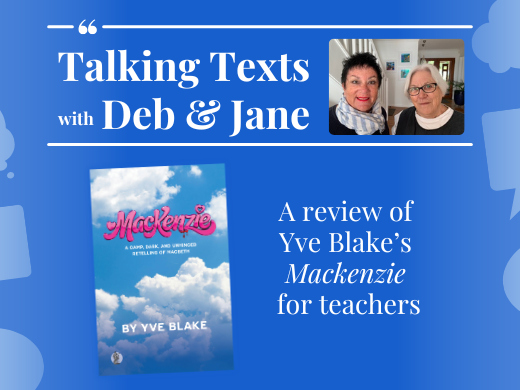
‘Shakespeare, ambition, arrogance and a pushy stage mum’ might seem an unusual description of a new play but Mackenzie, by Australian playwright Yve Blake, combines all of this and much more in a funny, provocative and contemporary adaptation that reinforces the timelessness of Shakespeare’s Macbeth.
Interestingly, Bell Shakespeare had both plays on their 2026 bill. I did not see Mackenzie and plan to book for its return in 2027. But recently I did see Macbeth and the play still has so much to say about ‘blinding ambition’, listening to others who ‘talk you up’ and allowing reason to be consumed by arrogance. Be aware that Mackenzie contains a few crass lines that may offend some readers so preview the play before you consider it for your program. Also note that the cover artwork capitalises the K in the title but all other references are lowercase.
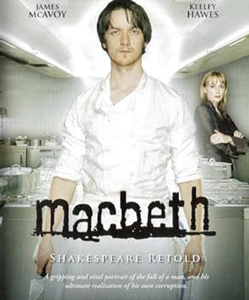
Mackenzie would be an engaging play to combine with Macbeth in a unit around Reimagining the Canon or Texts in Time to explore how a text can continue to resonate in different forms across time. I could see Macbeth being the core text then an exploration of Mackenzie and possibly, the clever Shakespeare Retold. This is a series where different Shakespeare plays are retold in contemporary contexts. In one, Joe Macbeth is the head chef of an award-winning restaurant, but it is Executive Chef Duncan who gets the awards, honours and limelight. Macbeth meets three garbagemen who tell Joe that this glory and fame can be his. You can see where this is going …
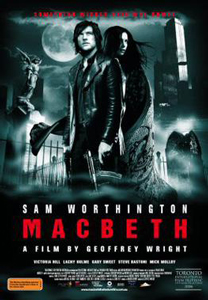
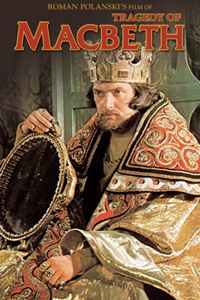
An additional option would be to offer various film versions of Macbeth to different groups within the class and for each group to prepare a presentation on the effectiveness (or otherwise) of their Macbeth version. Images of a selection of such film versions can be found at the end of this blog.
Mackenzie would appeal to Stage 5 and 6 and given Macbeth’s popularity in Year 10, it would be well-suited there and could certainly work in Year 11 in Narratives that shape our world. Teachers love texts which abounds in accessible resources; Bell Shakespeare have clearly thought how they can best help teachers and have created some wonderful resources.
This review captures Mackenzie’s context: https://www.timeout.com/sydney/theatre/Mackenzie
It is a love letter to Y2K culture with Mean Girls, Hannah Montana, High School Musical and other references fully inhabited. It is smart, sharp, and unapologetically itself – and is essential viewing for the theatre connoisseur and the casual viewer alike.
The play is set in the early 2000s and taps into the world of girl groups. It opens by introducing two actors, Mackenzie and Beau, who are thirteen and both have a small part in the successful teen production, The Dahlia Show starring the beautiful Dahlia. Mackenzie has visions of stardom and Mackenzie’s mum, Ruth, has even greater visions for success. An old woman, Pickle, is the makeup artist and she is struck by a vision that Mackenzie will indeed achieve such stardom. Mackenzie tells her mother about Pickle’s vision, and they establish a plan to disfigure Dahlia’s beautiful face and to ensure the choreographer is blamed. Dahlia’s stage career ends. Mackenzie is then made the star of her own TV show and loyal and gentle Beau will be her sidekick. The success of the show becomes a huge commercial enterprise with merchandising in abundance. Time has moved on and Mackenzie is now almost eighteen, and she fears her teen stardom may be lost when she reaches official adulthood. Mackenzie has become ruthless and arrogant. She orchestrates a smear campaign to ruin the careers of Beau and his sister and the collateral damage grows including the toll on Ruth, who is now in total decline. Mackenzie is exposed and her dreams are over.
Mackenzie will be most effective if students have studied Macbeth as the parallels will add a richer dimension to Mackenzie. There are many ideas which resonate in both plays:
In Bell Shakespeare’s resources a section focusing on the play’s construction and cohesion: https://www.bellshakespeare.com.au/Mackenzie-vce-theatre-studies will add depth to the study of Mackenzie aligned with Macbeth.
Access these features to add insights and rigour to your study and view these YouTube presentations:
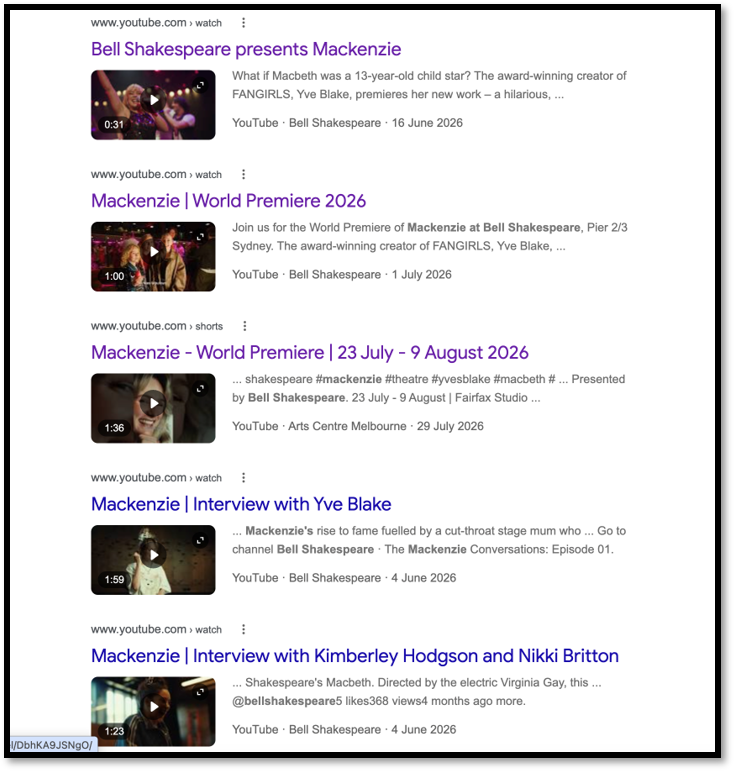
Introduce students to the concept of why is it that some texts seem forever relevant and are always being reimagined to ensure their longevity and resonance. Think about The Iliad and The Odyssey: in 2027 the block buster movie of The Odyssey was released, two new graphic novels were published and a reimagination through the play An Iliad received outstanding reviews around Australia.
Similarly, Romeo and Juliet continues to appeal through stage productions, an opera, modern film versions and film reimaginations like West Side Story and Grease; the themes of star-crossed lovers caught in the crossfire of conflict continues across time and place.
Shakespeare’s Julius Caesar, Richard III and Othello are often performed to emphasise the political parallels with contemporary leaders and societies.
Macbeth, too, is forever popular on stage as it continues to be reimagined, reinvented and rejuvenated for future audiences to appreciate the longevity of Shakespeare’s insights to humanity.
When authors and composers take an older text they have been drawn to the ongoing relevance of the original text’s ideas and know that a reimagining will say something about the broader nature of humanity. One text will highlight those unique features of a character or its context but several texts exploring similar ideas will highlight that if we scratch the surface of people in any century there will be many similar characteristics.
Clearly Yve Blake was drawn to the idea that ambition, ruthlessness and determination is not restricted to a medieval Scottish soldier who has been predicted to become Thane of Glamis, Thane of Cawdor, and ‘King hereafter.’ Her transposing of the ideas to a teen pop show in the early 2000s is a relevant reimagining as the elements are all there. Stage mums, a gruelling rehearsal schedule, dubious talent, children being pushed to look like glamorous adults and a cutthroat industry provides a parallel context. Students may have had similar experiences in their own world of ballet, singing, school concerts.
Your students were not alive in the early 2000s but the Y2K pop culture is still around. This YouTube clip captures the girl groups of the 2002 and provides some visual insights to this phenomenon and its iconography: https://www.youtube.com/watch?v=k83oNAqWLIM
This YouTube clip focuses on more recent girl groups including those who debuted in the 2020’s: https://www.youtube.com/watch?v=Z6_0yj-UwMI
You don’t have to watch these clips in their entirety, but they establish the context so that students can visualise Blake’s representation of hyper-real colours, stylised makeup and hairstyles and the commercial merchandising of this form of entertainment.
After viewing these clips consider a discussion about the effectiveness of using the teenage world of popstars as a context to reimagine Macbeth: what are the features of this context which could be explored through the themes and ideas of Shakespeare’s play?
The first sixteen scenes go beyond the conventional exposition in their alignment with Macbeth and cover Acts I and II.
Note Pickle’s predictions for the character of Mackenzie:
‘NUMBER ONE POP GIRL OF THE WORLD!... Triple-double-Platinum albums! Hollywood IT boys will be lining up to be your P-R boyfriend. Oscars as far as the eye can see … mansions.’
This aligns with the witches’ predictions on the heath and further consolidate the connections between the two plays. For fun, asks students to add to this list of what else such fame could bring.
The black humour of Ruth and Mackenzie’s ‘attack’ on Dahlia is reinforced in the Network Head’s comments:
‘We just had Dahlia’s face printed on fifty thousand pencil cases, AND NOW SHE DOESN’T HAVE ONE!’
And, later: I want our publicist to craft a campaign, immediately, around Mackenzie. I want interviews about how traumatised she is by this brutal attack on her friend. Make it her best friend. I want the public squarely on Mackenzie’s side. I want them obsessed with her … And then, I want a brand-new show with Mackenzie at the centre of it.’
The next section: Scene 17 is ‘Five years later’ and by now Mackenzie is the ‘teen sensation about to shoot the FIFTH series of her number one hit show, Mackenzie’s World.’
Mackenzie performs her song, ‘Mackenzie’s World’: what are the key ideas which are explored in this song including her duet with Beau? Are there any similarities with this song and Macbeth’s soliloquy of III, i?
Either continue this close focus on the play or consider the section on: Parallels and nods to the original – key Moments (p. 89-101).
Allocate a selection of ‘moments’ to different groups to explore these parallels with Macbeth and share their findings with the class.
In what ways do the final three scenes of Mackenzie draw together the key ideas of the play? How do these closing scenes of Mackenzie sustain the parallels with Macbeth?
Bell have provided a very valuable scene by scene comparison in table form in a link to their online resources: https://d23giwvlsb2qc0.cloudfront.net/uploads/general/EDU2605_MACZ-Education-Resources_V2.pdf
ONLINE RESOURCES MACKENZIE (c) Bell Shakespeare 2026 Unless otherwise indicated. Provided all acknowledgements are retained, this material may be used, reproduced, and communicated free of charge for non-commercial educational purposes within Australian and overseas schools.
An interesting task when looking at a pair of texts where the latter is influenced by the original is to create a dialogue between the two composers.
For example, Yve Blake to William Shakespeare:
Why did you choose to use Macbeth’s wife, Lady Macbeth, as the force behind Macbeth seeking to fulfil the witch’s prophecy?
William Shakespeare to Yve Blake:
Why did you choose to recontextualise the premise of Macbeth to the girl pop world?
In small groups, invite students to compose three more questions from each composer. Swap the questions around the groups and answer the questions showing knowledge of both plays.
When a composer chooses to reimagine an older text there will be a re-examination and re-evaluation of the values which underpinned the original. What are the key values that shaped Shakespeare and in turn, what values shaped Yve Blake’s reimagining in Mackenzie? How are each set of values affected by each composer’s context? Are there any values which cross both texts?
This is the conclusion to an online review of Mackenzie:
Pop stars, like monarchs, occupy a stratosphere of existence that can feel hermetically sealed from ordinary relatability; Shakespeare’s genius, of course, lay in making the remote resonantly human. Mackenzie may never fully transcend the somewhat prosaic narrative of a celebrity life unravelling, but in its final accounting it offers an unflinching meditation on the perils of unmoored ambition—a caution that, in our present moment of unbridled rapacity, reverberates with mournful immediacy.
https://suzygoessee.com/2026/06/12/review-Mackenzie-bell-shakespeare/
To what extent does this comment capture the significance of Yve Blake’s reimagination of Macbeth as Mackenzie?
In your response of about 800-1000 words make close reference to Mackenzie.
In small groups or pairs students could research other Shakespearean plays which have been adapted and transformed for the contemporary youth market.
In their exploration students should focus on Macbeth and Mackenzie and at least two other Shakespearean plays.
Features to include in the article:
Text requirements: Australian author, cultural, social and gender perspectives. .
A student uses a range of personal, creative and critical strategies to interpret complex texts EN5-RVL-01
Reading, viewing and listening skills
Reading, viewing and listening for meaning
Reading of challenge, interest and enjoyment
Reflecting
(English K-10 Syllabus 2022 © NSW Education Standards Authority for and on behalf of the Crown in right of the State of New South Wales, 2023)


Jane Sherlock and Deb McPherson are experienced and passionate English teachers. They have also been involved in the education sector as authors and presenters at teaching conferences.
$9.95 flat rate shipping or free over $110
Australian family-owned & sourced
Supplier to over 1,000 schools Australia wide