



Flat Rate Shipping
$9.95 flat rate shipping or free over $110

Aussie Owned
Australian family-owned & sourced

School Supplier
Supplier to over 1,000 schools Australia wide
Pathways for English, a guide for teachers to the Advanced and Standard courses in the new NSW Higher School Certificate, is about to be published and Jane Sherlock and Deb McPherson thought you might appreciate the story about how the book came to be. Here are their reflections on its genesis and what inspired them to write it.
Pathways for English is the name of the book we recently wrote together about the new HSC Standard and Advanced English courses in NSW. This book is for teachers as you start on the English adventure that a new syllabus brings. We spent a decade presenting a series of English conferences for the NSW Teachers Federation’s Centre for Professional Learning which were concentrated on the implementation of previous English syllabuses from Years 7-12 and on the related HSC texts lists. The wonderful Professor Jackie Manuel, whose English craft was in the stratosphere and whose influence and generosity to teachers was legendary was part of that decade. Jackie was to write the introduction to this book but fate intervened: it was not to be. So, this book is dedicated to her, an English teacher par excellence who showed such an affirming flame for others.
When the new ‘HSC English Prescriptions 2027–2028’ (later amended to 2027-2030) was released in December 2024 to accompany the new NSW Stage 6 English Syllabus (2024) we thought writing a book that explored the new list and its focus areas, and placed them in the context of the new syllabus would be a fascinating challenge to undertake together. So here is the story of that collaboration. This is not a review in any sense but an attempt to explain why we wrote the book and what we put in it.
Jane and I called our book Pathways for English to acknowledge the sometimes-convoluted journey it takes to navigate the texts and syllabus to ensure selections meet all the requirements. Students and parents see the three and four texts set for study but don’t see the difficulty of plotting a path through the requirements. Pathways do lead somewhere, sometimes not where we intend so signposts on the way do help. We wanted to supply some of those waypoints to support you on your journey towards the new syllabus and list. In this first part of a 2-part series we reflect on the areas covered by the HSC examination Paper 1 Sections I and II which include the first focus area Texts and Human experiences.
In Part 2 there will be a discussion of the ways we addressed the focus areas and texts for both Standard and Advanced which are examined in the HSC English Paper 2 Sections I, II and III.
English teaching is a collaborative effort
While reading can be a solitary joy, the shared experience of a text can be wonderful. English teaching is not a solitary exercise: it is a collaborative profession. After the reading comes the talking, discussing and planning and finessing of what to do with a text in the classroom. We might stand alone in a classroom but many other teachers stand with us. In those early days as English teachers on a steep learning curve few would have survived ‘the drowning not waving stage’ without the support and help of other English teachers. But thankfully we did progress to the dogpaddle stage, valiantly hoping for some freestyle towards the end of that first year!
Collaboration is a joy and a challenge, and trust has a huge part in that reciprocal understanding that everyone brings different strengths to the table. It’s that sort of conversation that rolls through Pathways for English. We wanted to talk with teachers and one thing we share as English teachers is a passionate interest in literature. Quality texts let us walk in other people’s shoes, which must be the defining image of our teaching careers. It’s a motif of feeling and understanding others’ different lives, emotions and experiences and trying to understand how those authors, poets, playwrights and directors made such texts happen. So we are in the fortunate position to share something we love with others and to be in a profession that encourages that to happen.
We wanted the book to offer information, ideas and pathways for some of the new texts and some more familiar texts on the ‘HSC English Prescriptions 2027–2030’. We planned introductions to the focus areas followed by separate chapters on selected texts. Each chapter includes:
Pathways for English is obviously not an alternative to the units of work you will develop for the new HSC or to the conversations that will occur in your faculties. It is designed to provide some ideas, suggestions, prompts and opportunities to explore the new senior Standard and Advanced English syllabuses in your classroom. Despite many decades in the classroom, we were still challenged by some texts and some combinations of texts required for the new HSC. It’s a huge task to read and view through the new list alone and it makes sense to adopt a collaborative approach. In schools, faculty members can share the joy and the weight of the new texts by each teacher reading and viewing a selection and bringing their opinions to the group meeting. We were conscious that English teachers in small and remote areas often have to innovate and share across wide areas because faculties are small and we thought that a guide to the new courses would be helpful for them. One thing was clear to us, wide reading and viewing by English teachers is the vital first step in their text selection for students and is a crucial part of English teaching.
The new ‘HSC English prescriptions 2027–2030’ certainly delivered some differences to previous lists. For the first time there are only Australian texts in Texts and human experiences, and with no Shakespearean text available in this focus area, Advanced pathways have narrowed. There has been a reduction in text choices, especially in prose fiction and non–Shakespearean drama. Nomenclature has changed with modules no longer with us, replaced with focus areas. In Standard, drama, film, media or nonfiction have been placed together and not all types of texts are represented in each focus area. There are no designated texts in The craft of writing in either Standard or Advanced. The Prescribed list contains links to syllabus details which were previously included in the document, such as the text requirements and more detailed information about the commencement of study of prescribed texts.
A new HSC prescribed text list is a mixture of a texts you know, texts you have taught, texts in new combinations and some that are completely new. In Advanced the Textual conversations paired texts can present a complex challenge but more of that in Part 2.There are many competing agendas in text selection:
Be open to texts that will be memorable in your students’ lives. As we read through the texts we kept asking ourselves ‘Is this the best novel or poet or play students should read in their last year at high school? Will it set them up to become lifelong readers? Does it engage with their needs and interests? Is it the best fit in this focus areas? Will they want to continue reading after this year of high pressure? At the back of our minds as we read and viewed the texts we kept thinking that a text that will engage, enthuse and inspire students is so much easier to teach in the classroom.
Aboriginal and/or Torres Strait Islander histories and cultures are represented in much greater complexity in this new syllabus and texts authored by Aboriginal and Torres Strait Islanders must be studied in Stage 6. There are some excellent suggestions in the syllabus for approaches to texts authored by Aboriginal and/or Torres Strait Islander Peoples. Rachel Perkins’ film One Night the Moon is set for Texts and human experiences for both Standard and Advanced, as is Samuel Wagan Watson’s poetry collection Love Poems and Death Threats. Both texts have much to offer to Standard and Advanced students in the classroom.
Form influences writers, and form has been a question in past HSC examinations. So, we decided to develop an Appendix that listed some of the attributes of the various forms studied in the HSC. Prose fiction is where we started when we were doing our reading. Novels ‘ask the big questions’ as George Saunders said, and many teachers start reading and selecting prose fiction first.
How are we supposed to be living down here? What were we put here to accomplish? What should we value? What is truth, anyway, and how might we recognize it?’ George Saunders A Swim in a Pond in the Rain.
Sylvia Plath in A Comparison talked about a poem being ‘concentrated’, a ‘closed fist’ and novels being more relaxed and expansive , like ‘an open hand’ while Brian Pattern, rather excitedly thought
Poetry should guide all those who are safe, into the middle of busy roads and leave them there.
A play is drama, a story acted out on stage in front of an audience with key elements being conflict while a film uses a series of moving pictures and sound to once again tell stories. Nonfiction texts vary greatly from autobiography to biography and memoir and hybrid texts such as Question 7 and can have that appeal of the real that can be so attractive to readers of all ages.
To write this book we divided up the texts, read and re-read them, discovering new favourites and delighting in familiar ones. Nearly every text had something to offer but some sang out to us more than others.
We made a decision at the start of writing Pathways for English to suggest course pathways for each text we considered. That is, we selected three texts for Standard and four texts for Advanced and slotted them into a pattern that met the syllabus requirements. Some pathways were much easier to arrive at than others but all text chapters have pathways for Standard and Advanced. Of course, we don’t know the students sitting in your classroom or what you may have taught at HSC level or what texts you are leaning towards, but we wanted to represent possible pathways for the texts we discussed. Plotting a pathways for Standard is more straightforward than for Advanced. With three texts for three focus areas teachers often head to prose fiction first, novels after all are the foundation stone of our subject. In Advanced the four texts for three courses and the mandatory Shakespeare makes it more complicated, especially with no Shakespeare available in Texts and human experiences.
For students it is their first HSC. For all teachers, no matter how experienced or new to teaching, this is the first year of a new Stage 6 English Syllabus and a new HSC prescriptions list. It is vital for students to know their pattern of study from the beginning of the HSC year and the key differences between each component of the syllabus.
The HSC Standard and Advanced courses begin in Term 4 with Texts and human experiences. We know that Term 4 can be challenging as students come to understand the demands of being an HSC student, manage HSC assessments across all subjects, refine responses and manage their time for essential tasks and enjoy a personal life. Transparency with students about their text sequence, assessment schedule and other expectations will really help them come to understand what is required.
It was fascinating reading and viewing across the nine texts set for Texts and human experiences. There are three texts set for study as prose fiction in Texts and human experiences: Cold Enough for Snow by Jessica Au, An Imaginary Life by David Malouf and The Penguin Henry Lawson Short Stories. There are also three texts set for study as poetry in Texts and human experiences: Gwen Harwood Selected Poems, Rosemary Dobson Selected Poems and Love Poems and Death Threats by Samuel Wagan Watson. In the category drama OR film OR media OR nonfiction in Texts and human experiences the three texts are Away (drama) by Michael Gow, One Night the Moon, a film directed by Rachel Perkins and Question 7 by Richard Flanagan (nonfiction).
After reading and viewing the texts and writing about them we created possible pathways of texts, across three of the focus areas, for each text set in Texts and human experiences. The decision you make in your text selection for this first focus area will of course affect all other choices. Is this where you want to study prose fiction or poetry or would the film or play better suit your students? Pathways for English covers all the texts in Texts and human experiences with valuable links to the syllabus content and classroom tasks. Out of eighteen pathways in this focus area we constructed, here are some favourite pathways for Standard and Advanced.
Pathway 1 for HSC Advanced English with One Night the Moon in Texts and human experiences
Film

Texts and human experiences:
One Night the Moon directed by Rachel Perkins
Drama (Shakespeare) | Poetry
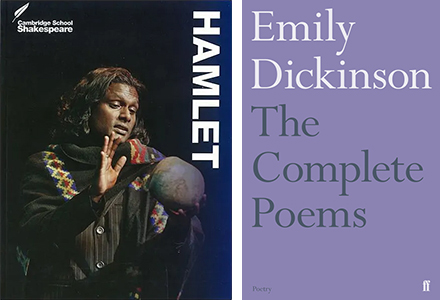
Textual conversations:
Hamlet by William Shakespeare| Prescribed poems of Emily Dickinson
Prose Fiction

Critical study of literature:
Warlight by Michael Ondaatje
Pathway 2 for HSC Advanced English with Away in Texts and human experiences
Drama

Texts and human experiences:
Away by Michael Gow
Drama (Shakespeare) | Poetry
Textual conversations:
Hamlet by William Shakespeare| Prescribed poems of Emily Dickinson
Prose Fiction
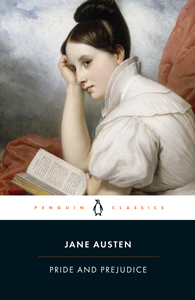
Critical study of literature:
Pride and Prejudice by Jane Austen
Pathway 1 for HSC Standard English with One Night the Moon in Texts and human experiences
Film
Texts and human experiences:
One Night the Moon directed by Rachel Perkins
Poetry

Language, identity and culture:
The Perseverance by Raymond Antrobus
Prose Fiction
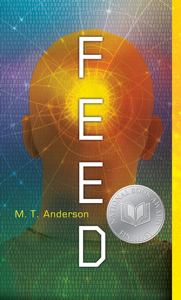
Close study of literature:
Feed by MT Anderson
Pathway 2 for HSC Standard English with Away in Texts and human experiences
Drama
Texts and human experiences:
Away by Michael Gow
Poetry
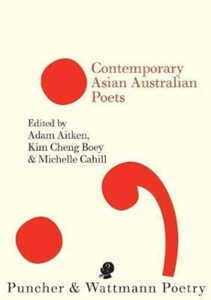
Language, identity and culture:
Contemporary Asian Australian Poets edited by Aitken, Boey & Cahill
Prose Fiction

Close study of literature:
Limberlost by Robbie Arnott
Text and human experiences is not a close study. It is an exploration of how, or in what ways, texts represent human experiences. One of the key elements of this focus area is the concept of representation. This can sometimes be a difficult concept for students to grasp but it is a vital one for them to understand. Representation validates storytelling across time and place and is a way of making sense of our world and often encompasses universal ideas about humanity. Representation embodies the perspective of the composer as they bring their values and attitudes about particular content to their representation.
In the content paragraph for Texts and human experiences the concept of representation is mentioned four times. Representation refers to when the composer makes deliberate choices about how to craft their text for a specific purpose and audience. All creative decisions are part of this purposeful and deliberate focus. This can be illustrated by looking at an individual example. When Rachel Perkins, an acclaimed film director, made her film One Night the Moon she had a specific story to tell in a particular time and place. All the film conventions she decided to use, including plot, script, characterisation, location, score, cinematography, costume and design were part of this representation.
It is never too early to build student understanding and confidence with Paper 1 which is all focused on Texts and human experiences. Of course there is a concentration in Term 4 on the specific prescribed text. Time is at a premium, students may still be in the Preliminary mindset and there is a huge amount to cover. But ultimately Paper 1 is about Texts and human experiences beyond that prescribed text. In the focus area the syllabus is very clear: ‘By responding to a range of texts, students explore how texts provide insight…’
While the texts in the Reading task are new to students the skills are not new and when writing Pathways for English, we were conscious of the need for classroom time to be devoted to the specific skills of reading and writing for Paper 1 Section 1. These skills are not the same set of skills required for a sustained response. Students need explicit teaching and classroom opportunities on strategic reading. They need to know what to look for in the text which aligns with the question and how to respond in an accurate, precise and succinct way.
During our exploration of Texts and human experiences we considered ways you can incorporate skills needed for Paper 1 Section 1. This could include a selection of book covers from different editions of your prescribed text and analyzing in what ways are we drawn into the world of the text through the covers. Reviews of the film, play and prose fiction and interviews with authors could provide valuable content for Section 1 style questions. Extracts from your prescribed text can provide excellent sources for questions like this one: In what ways does the opening of your prescribed text invite the reader/viewer into the lives of the characters? What human experiences and emotions are represented in this opening?
Pathways for English offers many practical examples how to integrate skills and opportunities for Section I in your exploration of the prescribed text.
Part 2 which reflects on the focus areas covered in the HSC examination Paper 2 Sections I, II and III will be posted on the Five Senses blog soon.
Writing this book has confirmed the importance of reading, thinking and collaboration but above all, it has affirmed the true joy that is this wonderful subject, English.

Jane Sherlock and Deb McPherson are experienced and passionate English teachers. They have also been involved in the education sector as authors and presenters at teaching conferences.
$9.95 flat rate shipping or free over $110
Australian family-owned & sourced
Supplier to over 1,000 schools Australia wide