




Flat Rate Shipping
$9.95 flat rate shipping or free over $110

Aussie Owned
Australian family-owned & sourced

School Supplier
Supplier to over 1,000 schools Australia wide
For Stage 4
Mission Australia surveyed 19,501 young people aged 15-19 about what they regarded as the most important issues in Australia today. 44% identified the environment as one of the most important issues and many considered climate change and its effects on Australian life as of particular concern.
The English classroom is an ideal context to explore how texts raise awareness about the challenges to our climate and to provide authentic experiences for students to create texts of their own which emphasise understanding, awareness and agency.
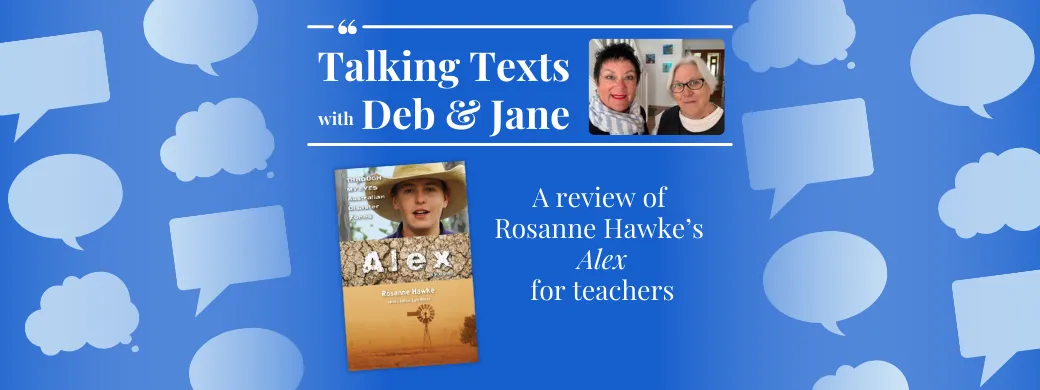
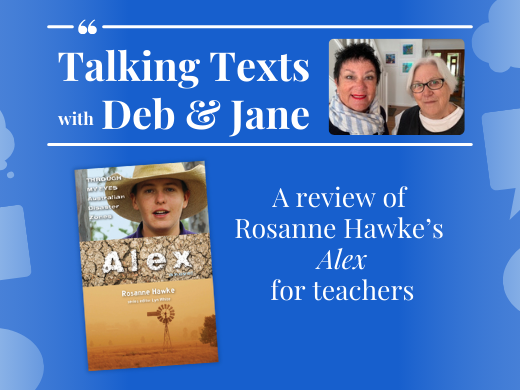
Alex is the seventh book in an enjoyable and engaging series titled Through My Eyes Natural Disaster Zones which explore challenging weather experiences ranging from the 2011 tsunami in Japan, a typhoon in 2013 in the Philippines and the 2011 Christchurch earthquake in New Zealand. More recently the series has focused on Australian Disaster Zones: the 2019 devastating bush fires in Tasmania (Tyenna), the ferocity of Cyclone Veronica in 2019 in the Pilbara (Mia) and the most recent novel, Alex, which uses the 2020 severe drought in South Australia’s Flinders range as its setting.
Alex is well-suited to Stage 4.
Each book in the series explores physical challenges through the eyes of the story’s adolescent protagonist, and in this text it is Alex Bray. The stories have been well researched so there is a compelling sense of the real. Adolescents overcoming adversity is an inspiring narrative and this series delivers in abundance.
Alex is set in 2020 in the Flinders Ranges of South Australia on the traditional lands of the Adnyamathanha people. The people of this area are used to calamitous weather events including dust storms, bushfires and drought, and this time there is the ongoing effects of the Covid pandemic and its effects on rural tourism and small business. Alex Bray is thirteen and lives with his family on their sheep farm in a remote part of this region where it is 55 kms to travel to school each way each day. Alex’s sister, Lily, lives with her grandparents and attends a school in the city. Alex’s dad has been deeply distressed by having to shoot his sheep, when a raging fire threatens their house and farm. He is suffering from this harrowing experience and through his character Rosanne Hawke highlights the challenges for farmers, especially men and their mental health. Alex’s dad is not the man he was and Alex and his mother are compassionate and supportive while they are working extra hard to do the jobs of their father. Alex’s mum works in town cooking at the local pub but the decline in visitors post-Covid is affecting that business too.
Alex has a horse called Jago and a faithful and much-loved kelpie Tangi. One day a dangerous feral dog attacks Jago and this reinforces the impact of the drought as feral dogs are now coming much closer to the homestead and the Bray’s dwindling sheep flocks.
Alex is a mature, caring and gentle young man whose compassion for his parents is endearing and special. He is deeply worried about the ongoing effects of the drought on the farm, their livelihood, and of course his parents’ well-being. He tries to think of ways to improve the farm’s sustainability. At school he befriends a new student, Bonnie Saleh, whose family plans to start a camel dairy as well as saving camels from being culled. Camels are a controversial topic in this area and indeed, in many parts of Australia, so Alex has a challenge to convince his parents of their worth.
Alex and Bonnie become good friends and are both interested in ideas to improve sustainability. They decide to create a Transmutation project which transforms discarded plastic into usable items. This project not only highlights the value of recycling, but it has a powerful unifying force on the local community, as a common project gives them a unity of purpose and value.
At the same time Alex tries to convince his father of the benefit of camels. When their school friend Summer is missing, Alex takes one of the camels to find her. The gradual change in attitude to camels has begun.
This is a fascinating story and the character of Alex ensures it is an authentic and special read.
Rosanne Hawke is an Australian writer of over 35 books for children and YA. She has been a teacher and an aid worker in Pakistan and the UAE and currently is a lecturer in Creative Writing at Tabor Adelaide. She has a PHD in writing. Rosanne often writes about children under challenge especially through dislocation.
Initiate a class discussion of why we are attracted to real stories and how real stories are often the basis for novels, plays, television series and films. Consider a visual display of such texts or some slides of book covers and film posters.
Include in this discussion:
This idea of realistic fiction could be the focus of this unit of work and could explore a range of texts e.g. film, ballads, nonfiction, fiction, short stories which use real stories as the basis of their narrative.
Encourage students to read through Alex and note the various features which are more common to nonfiction. You might find it more engaging to visit these sections after the story has been read.
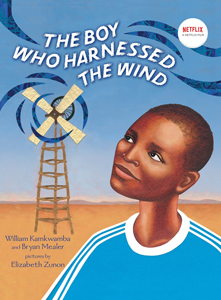
1. Alex is inspired by watching the film: The Boy who Harnessed the Wind (2019). This is based on the true story of another 13-year-old boy, William Kamkwamba, from Malawi in south-east Africa. His family, like 98% of Malawi did not have electricity. In 2000 William’s village is devastated by large flood followed by a prolonged drought and the threat of famine is powerfully real. From reading books at his primary school William learned how to build a wind turbine and his life takes a totally different direction.
Watch the trailer or access the entire film through a streaming service.
There is also a picture book on Williams’ story.
The Guardian published a review of the film which concludes with this compelling comment:
There’s unavoidable darkness in the story and Ejiofor leans into the brutal reality of Malawi’s early 2000s food crisis while balancing the more harrowing details with notes of resilience and hope. When the climax arrives, it’s with immense, earned satisfaction, a crowd-pleasing triumph…
In what ways does the trailer and/or the feature film draw the viewer into the world of the extreme challenge to parts of the planet? What were 2-3 insights you learnt from this film and what most inspired you?
2. Crafting a powerful speech
Increasingly, speeches by respected and concerned people are imploring us to be more vigilant in protecting the planet and its animals. Tim Winton’s speech to protect Ningaloo Reef is a compelling example of a beautifully crafted and passionate speech.
Possible topics:
3. Writing your own contemporary realistic fiction or about 600-800 words.
Choose a specific place for your setting and a specific time. It could be contemporary or in the past. Research the time and place.
Craft your character who will be significant to your narrative. Include in your narrative five facts from your research and highlight those facts with a coloured highlighter.
Write a 300-word reflection on what factual details you chose to incorporate and how that realism contributed to the authenticity of your narrative.
Text requirements: Alex is a novel (extended prose) by an Australian author. It includes a range of cultural, social and gender perspectives, including from popular and youth cultures.
Explore our Year 9 texts and study guides and Year 7 texts and study guides for more Stage 4 and 5 reading material.
Concepts: Point of View, Narrative, Characterisation, Perspective and Context
A student uses a range of personal, creative and critical strategies to read texts that are complex in their ideas and construction EN4-RVL-01
A student analyses how meaning is created through the use of and response to language forms, features and structures EN4-URA-01
A student identifies and explains ways of valuing texts and the connections between them EN4-URC-01
(English K-10 Syllabus 2022 © NSW Education Standards Authority for and on behalf of the Crown in right of the State of New South Wales, 2023)



Jane Sherlock and Deb McPherson are experienced and passionate English teachers. They have also been involved in the education sector as authors and presenters at teaching conferences.
$9.95 flat rate shipping or free over $110
Australian family-owned & sourced
Supplier to over 1,000 schools Australia wide