




Flat Rate Shipping
$9.95 flat rate shipping or free over $110

Aussie Owned
Australian family-owned & sourced

School Supplier
Supplier to over 1,000 schools Australia wide
For Stages 4 and 5
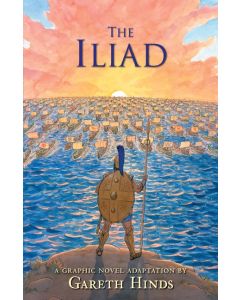
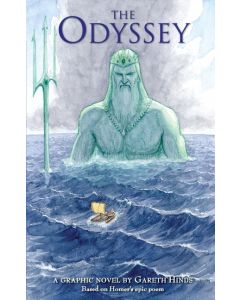
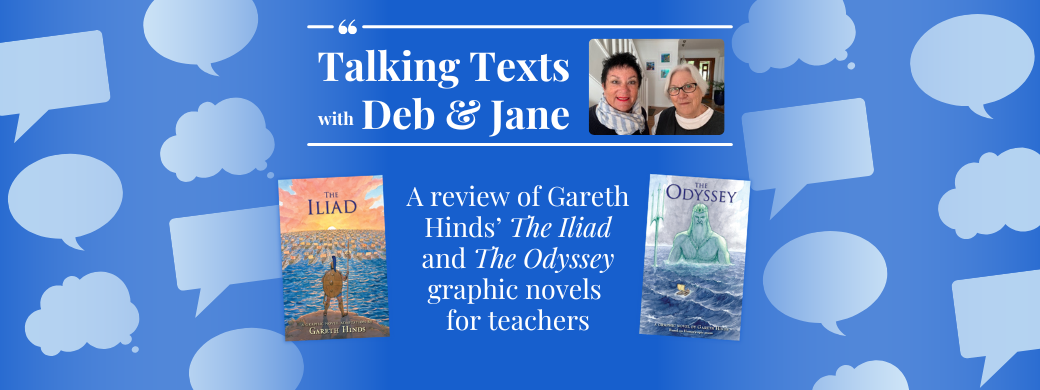
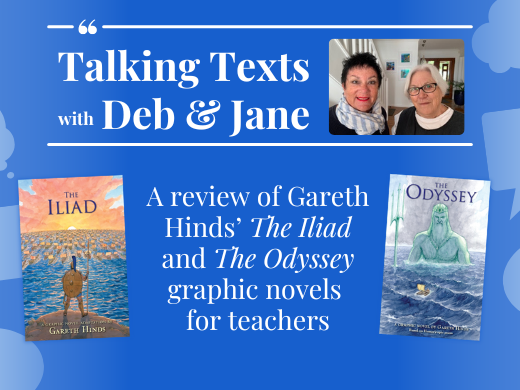
Retellings of Homer’s epic poems The Iliad and The Odyssey in graphic form by Gareth Hinds.
Gareth Hinds created his graphic account of The Odyssey in 2010, before a companion graphic novel of The Iliad which he created in 2019. Since Christopher Nolan’s film of The Odyssey was released in 2026 there has been considerable interest in the original poems and Hinds’ epic texts will be welcomed in English classrooms in late Year 8 or Year 9.
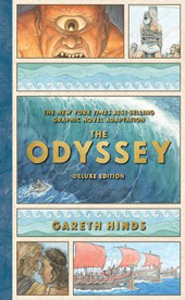
The deluxe edition of The Odyssey (in contrast to the original) is a hardback with new front and back covers which both highlight aspects of the story. The painted edges which represent the sea and sea creatures and foil embellishments in the title lettering make it a very attractive text for the classroom.
Homer’s account of the Trojan War covers only events that took place in the tenth and final year of the war and it does not tell how the war started or how it ended. Hinds provides a prologue which explains the probable origins of the Trojan War. The story begins with a focus on the fierce argument between Agamemnon, the leader of the Greeks, and Achilles, the famous warrior and hero. The god Apollo is angry with Agamemnon because he wronged Apollo’s priest and his daughter and the god retaliated by sending a plague among the troops. Achilles calls for an assembly of the Greek captains and tells Agamemnon he should send the girl to her father to get the gods back onside. When Agamemnon in retaliation takes the captured woman Briseis from Achilles, the hero is infuriated and withdraws from combat leaving the Greeks without their best warrior. The Trojans led by Prince Hector sense an opportunity and in a brutal assault drive the Greeks back to their ships. Achilles’ best friend, Patroclus, wears the distinctive Achilles armour into the fray in an effort to retake the field. The trick is initially effective, but it is shattered when Patroclus is killed in combat by Hector. In a rage Achilles returns to the battlefield and slaughters many Trojans and kills Hector in a brutal fight. He then desecrates his foe’s corpse by dragging it behind his chariot around Troy.
The grief of Achilles for his friend and of King Priam for his son saturates the final pages of the text. Priam slips into the Greek camp to beg Achilles for his son’s body so he can give him an honourable burial. Their shared grief is a fitting conclusion to the folly of war. Achilles is so moved by the plea of Priam that he releases the body and supports a truce to allow the burial to take place. The last line of the text focus on the mourning for Hector and his burial pyre conducted during an eleven-day truce between the waring armies.
That was how the Trojans buried
Hector, breaker of horses.
The death of Achilles and the Trojan Horse deception which was orchestrated by Odysseus is not part of Homer’s Iliad.
When Odysseus leaves Troy after ten long years he and his men are eager to return home to Ithaca. Odysseus is described in Hind’s text as ‘that man of many troubles.’ In the celebrated translation by Emily Wilson, he is described as a ‘complicated man’: both descriptions are clear indicators that the voyage will not be easy. Odysseus’ path home is delayed for seven long years when he is trapped on the island of Ogygia by the nymph, Calypso. When he doesn't return home, his son, Telemachus sets sail to find out what has happened to him. Upon escaping from Calypso, Odysseus comes ashore at Phaeacia and recounts his past decade of adventures and disasters. They include an encounter with the giant Cyclops whom Odysseus blinds to enable his men to escape and this directs the hatred of the god Poseidon against him. The Greek gods are divided about Odysseus, but Athena always supports him. Odysseus and his men also visit Circe and Hermes, the herald of the gods, who helps Odysseus to save his men after they are turned into pigs. They travel on to seek advice from Tiresias in the underworld and survive the Sirens and the terrors of the Scylla and Charybdis. However, when his men eat the sacred cattle of the sun god Helios, Zeus destroys them with a thunderbolt and leaves Odysseus as the sole survivor of his crew. At long last he arrives at Ithaca disguised as a beggar.
Paralleling Odysseus’ journey, life at home is very difficult for Queen Penelope and her son as they wait for Odysseus to return. Arrogant and rapacious suitors who want to marry the queen and claim the kingdom are becoming impatient. Finally, Penelope agrees to marry the one who can string her husband’s massive bow and shoot an arrow through twelve axe handles. None can do it but the disguised beggar who, together with Telemachus, kills the abusive suitors. After Odysseus has been reunited with Penelope, his careful guardian, the goddess Athena, establishes a lasting peace between Odysseus and the families of the men he has killed.
The term ‘graphic novel’ is widely used to describe more complex illustrated texts in which text and image combine to tell the story. The name can cause some confusion. Many so-called ‘graphic novels’ are non-fiction e.g. Steve Jobs: insanely great by Jessie Hartland is a graphic biography of the inventor of the apple computer and iPhone. Graphic novels are becoming increasingly sophisticated and complex in the way the visual and written components interrelate to develop students’ understanding about specific ideologies, reading positions and multiple readings. Neil Gaiman suggests that graphic novels are a form not a genre, and just another way of telling a story. It's clear that the term ‘graphic novels’ has traction and they are increasingly popular with young readers and adolescents.
Some features of this form to raise with students include:
Ask students to flick through the two texts and note what aspects or elements of the graphic novel form they can identify. In a class discussion, outline some of the elements of the graphic novel form.
Create a short explanation of the source for the two graphic novels. Share with the class what happened BEFORE The Iliad started and what happened AFTER Hector’s death and burial. Then explain that Odysseus took ten years to return home from Troy. Introduce the class to Homer. Explain we know little about the person who crafted the two epic poems but that they have had an immense influence on the art and literature of subsequent civilisations and expanded humans’ knowledge of the lives and beliefs of Ancient Greek society. Consider showing images of several adaptations of the two poems and include references to the latest film version by Christopher Nolan of The Odyssey. A trailer can be found at https://www.youtube.com/watch?v=Mzw2ttJD2qQ
Group task 1: Each group will be responsible for a class presentation on their text including aspects of context, plot, characterisation and the impact of the combination of image and text. They can decide the medium for their presentation, but the task is to persuade the other students to read their text. Each group will have 10 minutes for their presentation.
Group task 2: Investigate the gods, heroes and monsters
These two texts have an astonishing range of characters from the quarrelling gods to the heroes and villains and monsters that move through the ancient world that the texts inhabit. Every reader will have their favourites and an excellent way to explore these characters is to create an illustrated Iliad/Odyssey Homer’s Cast of Characters: gods heroes and monsters.
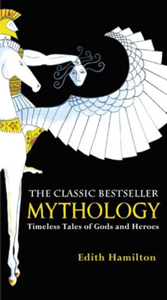
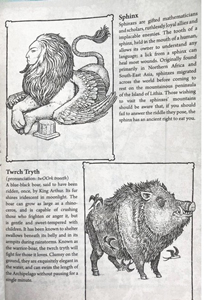
Katherine Rundell’s Impossible Creatures series provides a useful model through its ‘Guardian’s Bestiary’. Students could use the guide’s layout as a model for presenting their characters. They could also consult Edith Hamilton’s Mythology for further information about the gods and heroes.
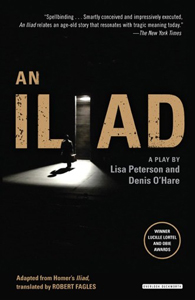
If exploring these texts in Stage 5 consider pairing them with An Iliad, the modern interpretation of Homer’s work adapted by Lisa Peterson and Denis O’Hare that was performed in 2026 at the Sydney Theatre Company with David Wenham in the spellbinding role of the travelling storyteller. You can find a short trailer at https://www.sydneytheatre.com.au/whats-on/2026/productions/an-iliad/
Text requirements: The Iliad and The Odyssey are graphic novels which are included in the description of a range of types of texts inclusive of short prose, visual, spoken, multimodal and digital texts. The graphic novels are quality texts from around the world. They contain a range of cultural, social and gender perspectives.
Concepts could include Genre • Intertextuality • Theme • Characterisation.
A student uses a range of personal, creative and critical strategies to read texts that are complex in their ideas and construction EN4-RVL-01
Reading, viewing and listening for meaning
A student examines and explains how texts represent ideas, experiences and values EN4-URB-01
Theme
A student identifies and explains ways of valuing texts and the connections between them EN4-URC-01
Genre
Intertextuality
(English K-10 Syllabus 2022 © NSW Education Standards Authority for and on behalf of the Crown in right of the State of New South Wales, 2023)
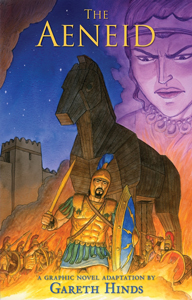
Please note that The Aeneid is Hinds’ latest adaptation which retells the story of the ancient myth of the fall of Troy and the founding of Rome. It is due for release in March 2027.



Jane Sherlock and Deb McPherson are experienced and passionate English teachers. They have also been involved in the education sector as authors and presenters at teaching conferences.
$9.95 flat rate shipping or free over $110
Australian family-owned & sourced
Supplier to over 1,000 schools Australia wide