




Flat Rate Shipping
$9.95 flat rate shipping or free over $110

Aussie Owned
Australian family-owned & sourced

School Supplier
Supplier to over 1,000 schools Australia wide

For Stages 4 and 5
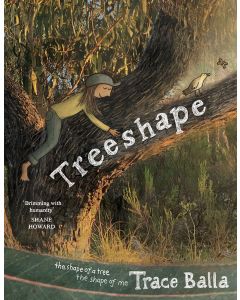
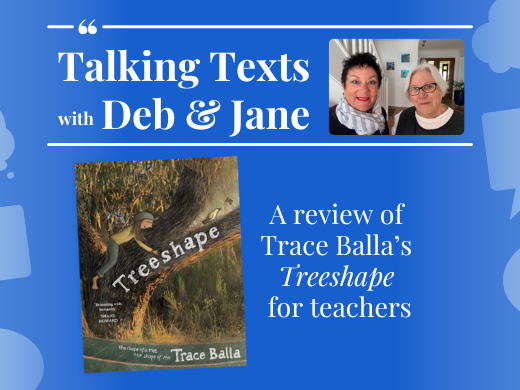
As I reflect over almost fifty years of talking about, teaching and enjoying English texts for the classroom, a huge highlight has been the growth of quality picture books and graphic novels which speak to many different age groups. Treeshape is indeed in this category. To add to its appeal, Treeshape is a story for our times which cherishes and celebrates our natural environment and exhorts us to be active and involved in both experiencing and protecting our natural world.
Written by author, artist and illustrator Trace Balla, Treeshape embodies the wisdom and importance of what Balla has learned from Australia’s First Nations connections to Country. Through her gentle words and detailed illustrations Balla imbues her book with a type of mindfulness which incorporates the First Nations ‘listening’ to the land and the need for all of us to take notice of the details within nature that surrounds us.
Please add Treeshape to your classroom and school libraries. It is not only an aesthetic delight but explores many significant issues about connection, belonging, sustainability and our obligation to advocacy for the environment.
Look at what other writers have said about Treeshape:
A beautiful book about being connected to the world at ground level. I feel like I've made a new friend through Trace's exquisitely accessible drawings and gentle prose. Alison Lester
Treeshape is brimming with humanity and bursting with the wholesome imagery and folk wisdom that magnify the small details of life - a generous act of love from a rare Australian artist.'- Shane Howard, singer/songwriter, Goanna
Reminiscent of Alison Lester and Roland Harvey, this is a story about moving slowly, looking carefully and remaining curious, and it is a book that leads by example. It is spellbinding. Books+Publishing
I was saddened when the Cross Curriculum Priority, Sustainability, did not feature in the latest English 7-10 syllabus. But students can still explore current ideas and issues about a sustainable future through the ways content is represented and how it positions the reader and viewer to consider such ideas about our world. Treeshape is a wonderful text to explore texts for such insights into our environment and advocacy.
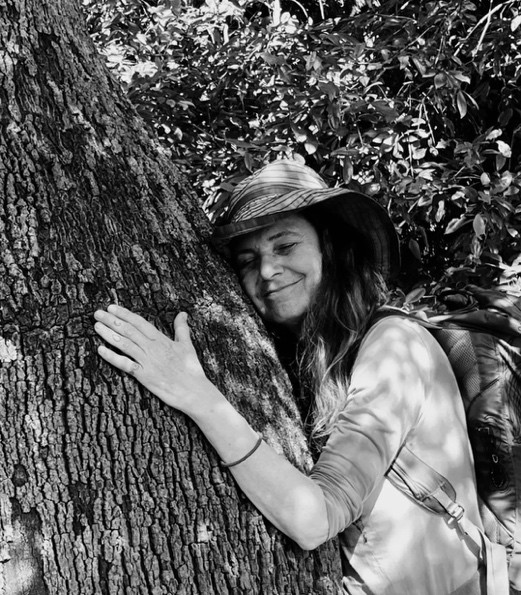
Trace Balla shares in her interviews and writing that from childhood her favourite place has always been up a tree – ‘where everything I notice feels like a part of me. Every birdsong, every leaf's light, every creeping ant, every butterfly dance… Treeshape p.13
Trace Balla lives on Djaara Country which is also known as Central Victoria. Balla’s ancestors came from Hungary, England and France. Balla creates graphic novels and children’s books about connecting with Country and community. Balla has also written Rivertime, Rockhopping, Landing with Wings and Leaf-light. Her books have won the CBCA Book of the Year Award, the Readings Children’s Book Prize, the Wilderness Society’s Environment Award for Children’s Literature, a Comic Arts Awards of Australia Bronze Ledger, and an Honour Award for the inaugural SCBWI Australian Picture Book Illustrator Awards.
On Trace Balla’s Instagram post she says this book is ‘about the trees in my life and is a personal story about my awakening to the preciousness of the environment and standing up for what we really care about…’
Treeshape is a memoir of the author’s own journey and awakening to the significance and precious role of the environment. The first 23 pages cover Balla’s childhood, growing up, travelling and becoming an artist. This section includes specific detail about her parents’ background and challenges as well as specific significant world events like the collapse of the Berlin Wall in 1989 and the release of Nelson Mandela in 1990.
On her return to Australia Balla sought peace and fulfilment with trees and the landscape. She continued to work as an artist which led to her painting a mural for a festival to celebrate the return of the snapper to Mordialloc Creek in Victoria. Soon after, she took a walking expedition among the giant trees in Gunaikurnai Country which was ‘blissful’ until the group encountered the results of logging and ‘utter destruction’. She had a profound awakening to the spirituality of the trees.
Balla was then involved in city demonstrations which led her to join a protest in Jabiluka in the Northern Territory in support of the local Mirarr people against uranium extraction. While in the north Balla joined a local Aboriginal family who took her on Country. Balla returned to Melbourne and tried to agitate against the uranium mining company and returned to Jabiluka and along with others, was imprisoned briefly which increased the media coverage. The protesters’ camp conditions deteriorated and eventually the camp was closed but in 2003 the campaign was successful and people everywhere were watching this significant moment. Since then, the mining company has repaired and replanted the site and it is now protected as part of the Kakadu National Park.
Balla had a baby son and they both returned to the city and over the next years Balla and her son Joey travelled to various parts of Australia to connect with Country. When her son left to study, Balla found new connections with Country and learned even more about different trees and how they have been used by First Nations Peoples. Apart from the broader environmental campaigns Treeshape also explores smaller campaigns such as protesting against the removal of forty trees ‘to make room for astroturf and more playing fields’ in her local suburb.
Balla continues to grow her awareness and devotion to trees and the natural world: “I hug the huge trees and told them I’d speak up for them with my art and my heart.’
On her website Balla acknowledges her debt to First Nations Peoples:
It's hard to fathom the thousands of years of Culture of Peoples who know how to live in ways that care for Country so knowledgably and skillfully and what it is to be of place. The Generosity of spirit of the Original Peoples continues to astound and humble me. I am so grateful too for the landscape of Djaara Country where I live, learn, grieve, grow, work and walk, which is such a balm to me every day. I pay my utmost respect to all those ancestors, the Elders, and those growing into them, and those to come, leading the way so wisely, the young mob growing strong and all the generations to come. I hope some of my work is a give back to this generosity.
The artist and author also provides a thumb sketch description of herself in the third person which could inspire readers to create their own:
Trace loves to rise at dawn, especially when it’s frosty, and walk up hills above the fog line to marvel at the dawn light. A self-described ‘story catcher,’ she finds inspiration in nature and incorporates local plant and animal species into her detailed, cartoon-style drawings.
The teaching ideas below are more suited to Stage 4 and 5 students. You would not need to have a full class set as small groups could explore one copy between them. Remind students of the rewards that re-reading brings to their understanding of a text.
Open with this statement: The power of a picture.
Share with the class a range of iconic images which have captured key events and situations. Consider for example:
What is it about images which are so effective in telling stories, raising awareness and reminding us about events?
Graphics and images have become a significant addition to texts aimed at adolescents. Share a display of graphic novels and picture books suitable for adolescents for example:
Ask students to consider features of graphic novels:
Either as a full class or in small groups explore these questions and share responses:
In the coming lessons we are going to explore a new graphic novel that is both the author’s personal story and an exploration of some of the key areas of environmental activism in Australia as well as important insights into First Nations knowledge of and caring for Country.
Share with the class the description of Treeshape earlier on in this blog. You can see from this summary that Treeshape explores a personal story and a broader Australian story about activism and protest to advocate for the environment.
Allow students time to explore Treeshape and ask for initial observations. Did your students notice:
Task: In small group student choose 5 different double pages and list the ways the reader is positioned to consider the key ideas. Students can then share this information with the class. Using the information from the group submissions, students, as individuals or in pairs, answer this question:
In Treeshape what are the most important purposes of Trace Balla and in what ways does she combine words and images to explore her ideas? Make close reference to 4–6 double pages.
Consider poems that explore the spirituality and sense of connection with our landscape:
The first three poems on this list are written by First Nations poets. In class explore and closely examine the ideas about connection to Country and the importance of quiet and close observations of our environment.
After an exploration of the poems, students to write a response to the question below:
How have the poets used the poetic form to explore their connection to the landscape? Make close reference to two of the poems in the list above.
1.
“I often call big old tress ‘Aunty’ trees- one of my favourites I call ‘Diamond in the Mist’ or ‘Aunty Diamond’. She sits right near the Ancestor Tree by the waterhole, where I sometimes have brekkie with the ducks and wallabies, all of us watching the mist rise off the water-or the dew drop fall from the leaves, making ripples in the tannin-dark water, my back steady against her strong trunk.’ p106
After re-reading Balla’s description write your own imaginative piece of about 500 words which captures the unique features of your local landscape. Think about how you can incorporate concrete details as well as evocative imagery to represent the significance of your landscape.
Include a visual, for example, a photograph, a collage, a pen and ink drawing, a watercolour or oil representation.
2. Write to one of the large environmental movements like WWF and Greenpeace to persuade them about the important role literature can play to grow awareness and understanding about the key issues of the future. In your persuasive text make close references to Treescape as a text which explores the importance of awareness and activism in the advocacy for sustainability. Reference two other texts which explore sustainability of the environment both; for example, another picture book, song, speech, poetry, prose fiction.
Below is a list of texts which could be part of the students’ exploration and inclusion in this task:
Students could also read Tim Winton’s Blueback and view the 2023 film (see Five Senses blog 18 July 2024) and read the backstory from Blueback’s director Robert Connolly and his insights about the impact of films like Blueback
Share The Golden Mole, a glorious text by Katherine Rundell which is a truly splendid exploration of the wonders of the animal kingdom. See Five Senses blog: 26 August 2024.
Allen and Unwin have created an impressive teacher resource which is pitched at upper primary and lower secondary ages.
Primary teachers would enjoy examining pp 102–103 and using the representation of the seasons of Djaara Country as a model to create a map or graphic of seasonal observations within their own environment.
Text requirements: Treeshape is a graphic novel (multimodal text) by an Australian author and fulfils the requirements to give students experience of a range of types of texts inclusive of short prose, visual, spoken, multimodal and digital texts.
Concepts could include Representation • Perspective and context • Theme.
A student uses a range of personal, creative and critical strategies to read texts that are complex in their ideas and construction EN4-RVL-01
Reading, viewing and listening skills
Reading, viewing and listening for meaning
Reading for challenge, interest and enjoyment
Reflecting
A student analyses how meaning is created through the use of and response to language forms, features and structures EN4-URA-01
Representation
Code and convention
Connotation, imagery and symbol
Point of view
Narrative
A student examines and explains how texts represent ideas, experiences and values EN4-URB-01
Theme
Perspective and context
(English K-10 Syllabus 2022 © NSW Education Standards Authority for and on behalf of the Crown in right of the State of New South Wales, 2023)




Jane Sherlock and Deb McPherson are experienced and passionate English teachers. They have also been involved in the education sector as authors and presenters at teaching conferences.
$9.95 flat rate shipping or free over $110
Australian family-owned & sourced
Supplier to over 1,000 schools Australia wide