Brief description and distinctive features

For Stage 5 or 6
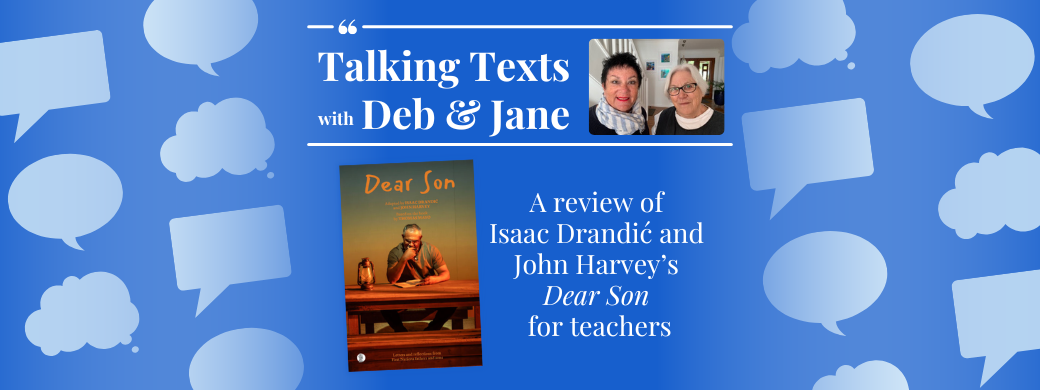
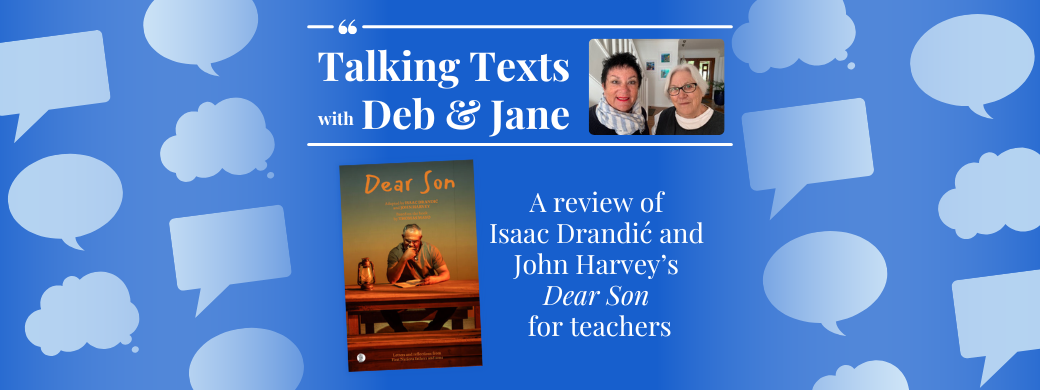
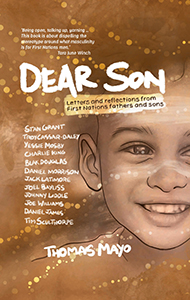
Dear Son Adapted by Isaac Drandić and John Harvey (based on the book by Thomas Mayo) Currency Press (2026) 34pp

Overview

As teachers we can be very grateful to Currency Press and their support, encouragement and courage in publishing plays about who Australians are today. We can also be enlightened by the playscripts which are coming out of Currency Press and indeed, are being performed in spaces like Belvoir, the Sydney Theatre Company and on other stages around Australia.

Playscripts have an important role in our English classrooms and more so with the diminution of drama on the new HSC prescribed list. Plays and the theatre are effective vehicles for exploring so many issues and ideas about society, humanity and perspectives on our worlds. 

Dear Son taps into this old and respected category of the Arts, and both validates and celebrates the power of storytelling especially the importance of storytelling in First Nations Cultures and Identities. 

Dear Son is a theatrical adaptation of Thomas Mayo’s 2021 collection of essays of the same title written by thirteen prominent Aboriginal and Torres Strait Islander men. This play provides a new and contemporary voice for our country, having first opened at Belvoir in January 2026.

Dear Son has real application in our classrooms. It is short at only 34 pages so could suit a range of levels of students and for different units of work. It would be wonderful as part of a Reading to Write unit for Year 11 to explore a range of texts written by both First Nations and non-Indigenous authors  which explore contemporary Australian identity and challenges. It could work well as a Representation unit for stage 5 students (probably Year 10) where the concept of how texts represent different perspectives on Australia would be powerful. 

The Guardian has an excellent review on the play which would provide valuable insights and notes for your students as well as some engaging images of the Belvoir production.:

 Other reviews can be found at:


Synopsis of Dear Son

In June 24 2025 the online Arts site, The Scoop, interviewed Isaac Drandić about Dear Son. The extract below would help your students contextualise the play and its concept:

Dear Son is such a personal and powerful collection of stories. What drew you to adapt it for the stage?

There’s a defiance that is implied in these letters in regard to reclaiming and shifting the image of Aboriginal and Torres Strait Islander men. Through these acts of writing these letters to our sons, and some to our fathers, there’s a responsibility there that these men have taken towards their sons. They start to change the image that has been outside of our control of who Aboriginal and Torres Strait Islander men are. It’s loaded with what really attracted me to this work. And of course, there’s the beautiful writing and the beautiful deep expression that can only, I think, be articulated through the form of writing letters.

I also think about the act of writing these letters. I often think that in a lifetime, I’m not sure that we would sit down with our sons or with our fathers and talk about our experiences. About our lives, about our wisdoms, about how it is we pass on those teachings and those learnings over generations.

… And I imagine that through the process of writing, things would have come up for these men that they might not have expected.

The interview also provides some interesting insights into the process of adapting an existing work, especially into the form of the letter. Access the full interview at https://thescoop.au/isaac-drandic-on-dear-son-crafting-a-theatrical-love-letter-to-first-nations-men/

The prologue opens with the five men of the play entering the space and the group moves to a Cook Haus which has been damaged in a storm. The Cook Haus becomes the setting for the men to yarn and share stories and introduce some of the key ideas of the play: relationships, the importance of sharing painful experiences, the value of honesty, the challenges on families and also, aggression and masculinity. At times songs are used to add a different layer to the storytelling including Troy Cassar-Daley’s ‘Some Days’ and later, his wonderful celebration of the warrior in the song ‘Windradyne’.

The letters explore and expose fatherhood, masculinity and what it means to be male as well as referencing elements of contemporary Australia including racism, cultural tension and intergenerational trauma. But there are also wonderful and touching moments of First Nations’ lived experiences and insights into cultural traditions and ways of life as explored, for example,  in Act I, iii. Another scene, I.iv, is based on a letter by Stan Grant about his father and it is a moving insight into the importance of fathers, grandfathers and family. The play’s final scene resonates with the Prologue and confirms the power of storytelling, the strength of the men’s ancestors and the ‘fathers of the longest surviving culture on earth.’
 

The creators

Thomas Mayo is a Kaurareg Aboriginal and Kalkalgal, Erubamle Torres Strait Islander who was prominent during the Voice Referendum as a passionate advocate for the Yes campaign. Mayo is an author, activist and advocate for justice issues, a lawyer, a signatory to the Uluru Statement from the Heart and the assistant National Secretary of the Maritime union of Australia.

Access his website for further details: https://www.thomasmayo.com.au/


Dear Son was published in 2021 and features letters from thirteen First Nations men: Stan Grant, Troy Cassar-Daley, John Liddle, Charlie King, Joe Williams, Yessie Mosby, Joel Bayliss, Daniel James, Jack Latimore, Daniel Morrison, Tim Sculthorpe and Blak Douglas.

Mayo’s work was adapted by Isaac Drandić and John Harvey

Isaac Drandić is a Noongar man from the southwest of Western Australia. He is a dramaturg, playwright, and director. Drandić has directed for the leading theatre companies in Australia including Queensland Theatre, Belvoir Street, Melbourne Theatre Company, LaBoite and ILBIJERRI. 

John Harvey is a Torres Strait Islander of Saibai Island and also of English descent and is a director, producer and writer for the theatre and the film industry. 

Distinctive features of Dear Son

  • Dear Son is short at 34 pages and this accessibility allows coverage of the play, its key ideas and distinctive features in a compact series of lessons. Such a short text also enables close analysis to appreciate the richness and power of this play
  • Thomas Mayo has huge credibility in contemporary Australia and several of the letter writers may be known to students including Stan Grant, Blak Douglas and Troy Cassar-Daley
  • The Director’s Note contains some powerful comments which could be the basis of a writing task, for example: ‘The men who step onto the stage aim not to pretend, but to reveal. They allow the audience to witness something raw and rarely shared: the complexity of love between Black men. The silence, the shame, the pride, the distance – and the deep, unspoken knowing.’
  • The structure comprises a Prologue, Act I (scenes 1-7), Act II (scenes 8–13) and Act III (scene 14). The prologue and each scene have a title e.g. ‘Letters of Longing’, ‘Scars of Survival’
  • Short scenes are valuable in propelling the ideas and the narrative. Each scene can be seen as a type of vignette capturing a specific letter and its key ideas and experiences
  • Various First Nations languages are used and they are not translated nor given explanation which is a valuable way to celebrate such languages and give them credibility and legitimacy in literature
  • Song is used to reinforce some of the key ideas: including Troy Cassar-Daley’s ‘Some Days’ and ‘Windradyne.’ 
  • These songs can be accessed at: https://www.youtube.com/watch?v=shbFJ4BSBrw and https://www.youtube.com/watch?v=f7AL6bWZ6PM
  • There is an interesting discussion about the warrior and resistance leader Windradyne of the Wiradjuri nation (now known as central-west NSW around Bathurst) https://www.youtube.com/watch?v=ICwB1XYZiVs
  • The men make many moving comments about their own families, dislocation and challenges as well as heartfelt comments about their fathers, grandfathers and sons.
  • There are scenes which will give students insights to the challenges of First Nations Peoples in Australia
  • Projections of words and images were used in the stage production and could be very valuable to use in the classroom. 

Ways to use Dear Son in the classroom

  • Dear Son is a script for performance, so students need to use the metalanguage of drama and be aware of such features as the stage directions, set details and how the characters interact in the small space of each scene. It is possible that your students have not experienced a live play so will benefit from watching some clips from the Belvoir production
  • Some discussion would be beneficial for students about the power of theatre to draw us into the world of the characters and to be immersed in the ideas and issues of the writing
  • Contextualise drama and theatre as one of the oldest forms of sharing stories and coupled with the concept for Storytelling in First Nations Cultures and Histories, this play taps into a deep and rich seam of human experiences. Think about why we tell and share stories as an intrinsic feature of making sense of ourselves and the world around us.Works like Dear Son provoke and challenge our assumptions about past practices and how we perceive First Nations Peoples within the broader Australian context
  • Raise student awareness about the growth of First Nations writing across all forms which has burgeoned in the last 10+ years. Consider a display of plays, novels, poetry collections from your school and/or local library. Depending on the focus of your unit, a wide reading component would be valuable for students to immerse in this growing and popular area of literature
  • Introduce students to the concept of letters as a significant vehicle over centuries and that the first novels were in fact a series of letters. It has become less popular to use letters in drama but Dear Son is a fine example as to how it can work effectively. Consider the notion of the letter as a reflective piece of writing compared to the more abbreviated form of the email
  • The original premise of Thomas Mayo – to capture experiences of First Nations men in writing to their fathers or their sons– is a clever construct which could also apply to the rest of Australia’s males (and indeed, females) where time is taken to write a letter revealing, exposing and exploring emotions, concerns and relationships. In the current landscape of dire examples of toxic masculinity as well as male vulnerability, this idea about sharing emotions, not condoning silence is relevant and resonate. I was moved by this line in Act I.i which could be an interesting starting point for discussion:

    Man 1: I was just thinking about my son–when he was nine, he tried to take my hand as he always did, and I said, you’re too old to hold my hand in public.

    I wish I never said that.

    Later, in II.i:

    Man 1: There was an unwritten law in the western suburbs of Sydney where I was raised. To be seen to hug your father at school drop-off demonstrated gayness.

  • Have Mayo’s collection of letters available in the classroom so you can match the scenes with the letter and provide some background on some of the writers
  • Given the play is not plot-driven, one way to explore the play would be to allocate specific scenes for groups to read and then share a rehearsed reading with the class. The fourteen scenes could be allocated across 4–5 groups and I would suggest their scenes are not sequential. This task is not so much about creating actors in your classroom but about vocalising the beauty, richness and power of the play’s words to give them meaning and relevance
  • After viewing the fourteen scenes as a class students could then decide which scenes would most benefit from close focus. I would suggest that about six scenes from throughout the play could be examined and ideally, each group would have one of their scenes they shared in their reading. Groups should document their responses and duplicate as class notes. The exploration could include:
    • Research a little about the writer of the letter on which this scene is based
    • List the key ideas explored in this scene
    • How effective is the scene’s title in capturing the scene’s key ideas?
    • What 2–3 lines from the scene best encapsulate the scene’s impact?
    • What insights into First Nations lived experiences did the scene offer?
    • What props and additional features would you use to present your scene?
    • Consider creating some slides to use as a backdrop and to provide some extra context for example, artwork of Blak Douglas which is colourful, evocative and at times, provocative
  • Following this exploration, present a reading of the scenes which have been explored. Give students time and encouragement to rehearse the use of props, slide projection and reading the words. If students need some inspiration for this ‘Reader’s Theatre’ approach, the best example is by a group of actors led by Cate Blanchette reading a poem based on refugees’ experiences: What They Took with Them: https://www.youtube.com/watch?v=xS-Q2sgNjl8
  • Consider filming the presentations for future re-viewing
  • Written tasks for students post- performance:
    • From your point of view which scene most effectively captured the play’s key ideas and insights? Explain your choice.
    • How did your involvement in your group’s presentation enhance your understanding of the scene?
  • Sustained written response:

    To write is not only to remember– it is to resist, to reclaim, and to reach across generations.
    Director’s Notes. Isaac Drandić.

    In what ways does Dear Son fulfil this purpose? What else does the play achieve? Using the notes from the group explorations and at least one other source, for example a review of the play or an interview, respond to this question.

Other classroom tasks

  1. Individually write a letter (real or imagined) to a specific member of your family for example, mother, father, sibling, grandparent revealing specific insights or sharing aspects of your relationship. 
  2. Listen to and read the lyrics of Troy Cassar-Daley’s song ‘Windradyne’. In what ways does the song strengthen and broaden your understanding of First Nations Histories and Cultures? 
  3. Access a previous blog (September 2 2024) I wrote on This Book Thinks Ya Deadly: A Celebration Of Blak Excellence for some interesting insights and activities exploring other First Nations Peoples’ achievements.
  4. Write a feature article in the discursive style suitable to a weekend newspaper or online publication on the importance of contemporary Australians watching and reading about First Nations Peoples’ lived experiences. Refer to the play, Dear Son as the main textual detail. Also refer to 2-3 other texts authored by First Nations Peoples; these could include television series, feature films, fiction, poetry, speeches and song. Include 3-5 images with captions.

    Be sure to access the key features of the discursive form to follow as a model. Pathways For English contains a section on the features of the discursive style and other tasks appropriate for The craft of writing. 
  5. Consider a wide reading component or a reading challenge where students are required to read 2-3 other texts authored by First Nations writers.

Relevant details in relation to the new NSW English K-10 syllabus

Stage 5 references

Text requirements: Australian author, ATSI author, cultural, social and gender perspectives.  

Concepts could include Representation • Point of view.


Relevant NSW English K-10 Syllabus content

Reading, viewing and listening to texts 

A student uses a range of personal, creative and critical strategies to interpret complex texts EN5-RVL-01

Reading, viewing and listening skills

  • Develop a deeper understanding of themes, ideas or attitudes by revisiting and reinterpreting texts to find new meaning

Reading, viewing and listening for meaning

  • Analyse the main ideas and thematic concerns represented in texts
  • Investigate how layers of meaning are constructed in texts and how this shapes a reader’s understanding and engagement
  • Analyse how the use of language forms and features in texts have the capacity to create multiple meanings

Reading for challenge, interest and enjoyment

  • Read increasingly complex texts that challenge thinking, pique interest, enhance enjoyment and provoke a personal response
  • Engage in sustained and varied reading that presents increasingly diverse and complex perspectives and experiences, including those of Aboriginal and Torres Strait Islander Peoples, and respond in a range of ways, including through extended written responses
  • Consider how the social, cultural and ethical positions represented in texts represent, affirm or challenge views of the world
  • Evaluate experiences of reading by sharing responses to texts
  • Evaluate the ways reading texts help us understand ourselves and make connections to others and the world

Reflecting

  • Understand and reflect on the value of reading for personal growth and cultural richness
  • Reflect on how reading promotes a broad and balanced understanding of the world and enables students to explore wider universal issues

(English K-10 Syllabus 2022 © NSW Education Standards Authority for and on behalf of the Crown in right of the State of New South Wales, 2023) 


Stage 6 references

Text requirements if considered in Year 11: Dear Son meets Stage 6 text requirements for drama, Australian author, a range of texts authored by Aboriginal and/or Torres Strait Islander Peoples. 


Relevant NSW English 11-12 Syllabus content

Texts authored by Aboriginal and/or Torres Strait Islander Peoples

Across Stage 6, the study of a range of texts authored by Aboriginal and/or Torres Strait Islander Peoples should consider:

  • the artistic and Cultural value of these texts, including ideas, arguments and representations of identity, histories and Cultures
  • how Country/Place, Community and lived experiences shape the perspectives of Aboriginal and/or Torres Strait Islander Storytellers and audiences
  • ethical responsibilities surrounding Indigenous Cultural and Intellectual Property (ICIP) in the production of texts
  • how Storytelling, Aboriginal Languages and Aboriginal English are expressions of Culture, identity and Customary practices
  • how the modes of these texts may recognise and contribute to Cultural conventions or practices of oral Storytelling
  • how Cultural symbolism, imagery, allusion and irony are used to shape meaning
  • how personal values and perspectives are broadened and reconsidered through engagement with these texts
  • texts that originate from a range of diverse Communities.

(Stage 6 English Syllabus p. 6)

Connecting texts

  1. Borderland
    Borderland
    Now: $20.69 Was: $22.99