




Flat Rate Shipping
$9.95 flat rate shipping or free over $110

Aussie Owned
Australian family-owned & sourced

School Supplier
Supplier to over 1,000 schools Australia wide

For Stage 4
One of the joys of my now 46 years in the English teaching landscape is the wonderful growth of First Nations writers.
There are now so many texts for you, as an English teacher, to enjoy the thrill of taking your students on this important and special journey of First Nations experiences.
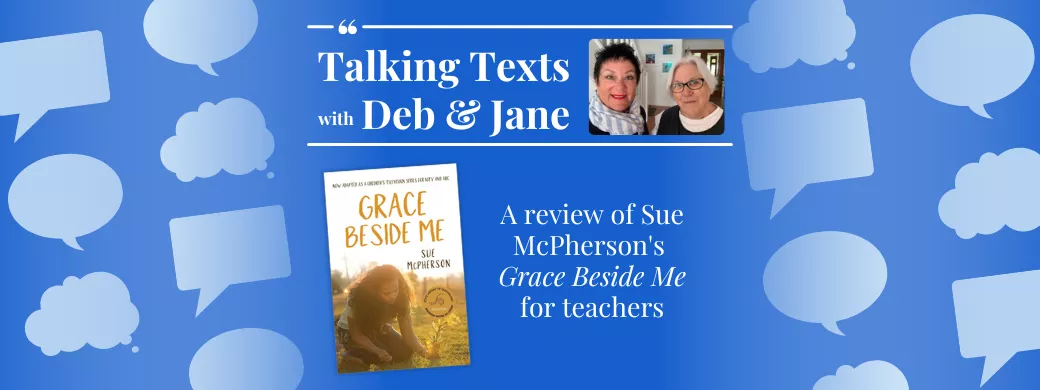
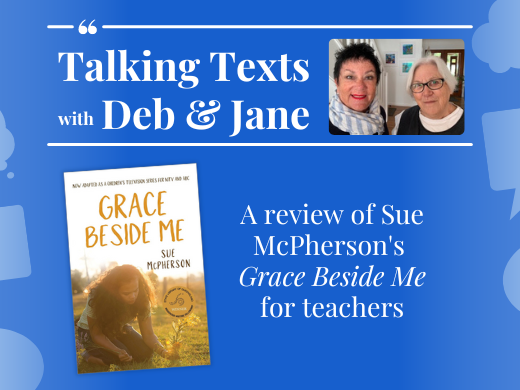
Grace Beside Me is one of those. It is a such a warmly-told and positive story full of loving family connections, hope, First Nations spirituality, gentle humour and likeable characters. It is also a great story – suitable for Stage 4 and Year 9 students could also enjoy the novel.
Grace Beside Me takes place in a small town in southern NSW. The main character and narrator is Fuzzy Mac, who lives with her grandparents, following the death of her mother. There are many elements of adolescence including romance, best friends, school and enjoying the tales of Grandma. It is an accessible story of everyday life and yet it also contains some compelling insights into First Nations beliefs and spirituality. There is a real authenticity about the characters of Nan, Pop and the townsfolk of Laurel Dale.
Early in the story Fuzzy shares that she, Nan and Pop love stories, especially good ones.
“Stories link us to our mob, doesn’t matter if you are Koori, Irish, Welsh or Indian. It’s the listening and telling of these stories that bring our people close, both young and old. Stories keep our culture strong and our faith alive.”
What a delightful perspective on telling stories.
The writer, Sue McPherson is a visual artist living in Eumundi, Queensland. She was born in Sydney to an Aboriginal mother, from Wiradjuri country. Sue was adopted into the McPherson family, landowners from the Batlow area in New South Wales, when she was very young. Sue was inspired to write by her two teenage sons. She took a writing workshop in Coolum and, three months later, started writing Grace Beside Me. She is also the author of the popular text Brontide. Her awards include: Winner, 2011 Black&Write! Indigenous writing fellowship • Shortlisted, 2013 Prime Minister’s literary awards, young adult literature • Finalist, 2012 Deadly Awards, outstanding achievement in literature.

I recommend you include in your faculty resources Cara Shipp’s exemplary text, Listening from the Heart. This extract, from my colleague, Deb McPherson’s review of Listening from the Heart, attests to that:
“Listening from the Heart is an outstanding resource for English teachers and faculties across Australia as we seek to be a better job of enjoying, understanding, learning about, and from, First Nations people… Listening from the Heart will help teachers seek better ways to engage with First Nations People and their stories, history and culture. Every teacher will benefit from this kind, thoughtful text and faculties will have much to explore and discuss. This is the book of the year in terms of supporting teachers in the classroom and can be very highly recommended."
Cara Shipp is a Wiradjuri/Welsh woman and teacher who regularly presents at local and National conferences on incorporating First Nations perspectives into the English curriculum. Go to her blog for past presentations and teachers notes at https://missshipp.wordpress.com
Cara has written a detailed resource on Grace Beside Me with many practical classroom ideas for Reading Australia: https://readingaustralia.com.au/lesson/grace-beside-me/
Teaching ideas are also available from Magabala Books: https://cdn.shopify.com/s/files/1/0092/5043/9268/files/Grace_Beside_Me.pdf?2728
At some point in this unit of work revisit student understanding and knowledge of First Nations culture and history, Cara Shipp’s resource in Reading Australia provides some very accessible notes on this area as well as excellent teaching ideas on the novel’s style, plot, use of motif, character and themes.
The characters in Grace Beside Me are very authentic and have an engaging sense of the real. There are main characters and a wide range of secondary characters which give us insights about people who live in the town.
Form small groups and students to choose a character to explore:
Each group to construct a table for their character and identify five words to describe their character:
| Our character is ............. and our five words are ........................ | ||
| Evidence from the text | What does this evidence reveal about the character? | In what ways does Sue McPherson use specific language features to shape these revelations? |
Share tables and discuss if there are any other experiences in the text which could be added to the table.
Individually students are to choose two characters and use the evidence from the tables to respond to one of these questions:
Engaging with the people in a story is the best way to learn about humanity.
With close reference to two characters in Grace Beside Me, respond to this statement.
OR
In what ways did the characters in Grace Beside Me contribute to a deeper understanding of yourself and the connections we make to others and to our world?
Students to choose one of the following topics to write a vignette which explores this topic. Considerations for writing:
Collate the class writings into a collection with a title. Each student could be given a copy and be encouraged to read others’ stories.
Topics:
Text requirements: Grace Beside Me is a novel, by an Australian Indigenous author, which explores how Aboriginal and Torres Strait Islander authors convey connections between Culture and identity. As an Indigenous author, Sue McPherson presents a range of experiences and perspectives of Indigenous people and culture and specifically through figurative language, meaning is shaped.
Looking for more classroom texts for Stage 4 students? Browse our Year 7 texts and study guides and Year 8 texts and study guides at Five Senses Education.
Concepts could include Narrative • Character • Perspective.
Uses a range of personal, creative and critical strategies to read texts that are complex in their ideas and construction EN4-RVL-01
Analyses how meaning is created through the use of and response to language forms, features and structures EN4-URA-01
A student examines and explains how texts represent ideas, experiences and values EN4-URB-01
A student creates personal, creative and critical texts for a range of audiences by using linguistic and stylistic conventions of language to express ideas EN4-ECA-01
(English K-10 Syllabus 2022 © NSW Education Standards Authority for and on behalf of the Crown in right of the State of New South Wales, 2023)


Jane Sherlock and Deb McPherson are experienced and passionate English teachers. They have also been involved in the education sector as authors and presenters at teaching conferences.
$9.95 flat rate shipping or free over $110
Australian family-owned & sourced
Supplier to over 1,000 schools Australia wide