



Flat Rate Shipping
$9.95 flat rate shipping or free over $110

Aussie Owned
Australian family-owned & sourced

School Supplier
Supplier to over 1,000 schools Australia wide
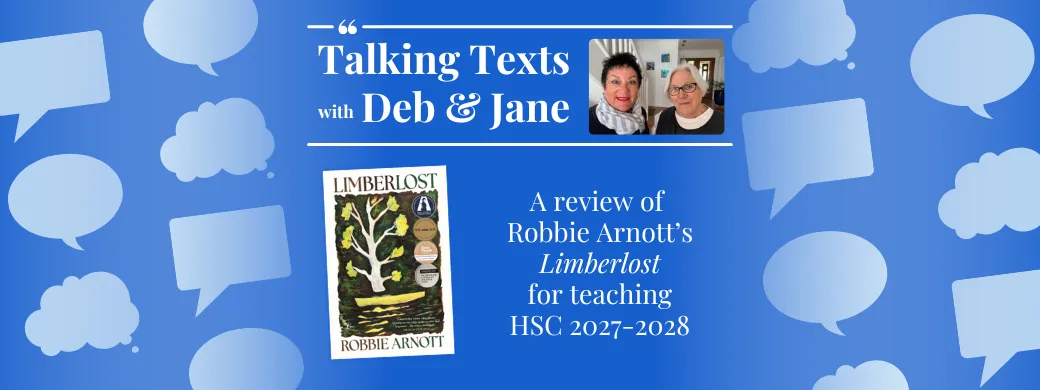
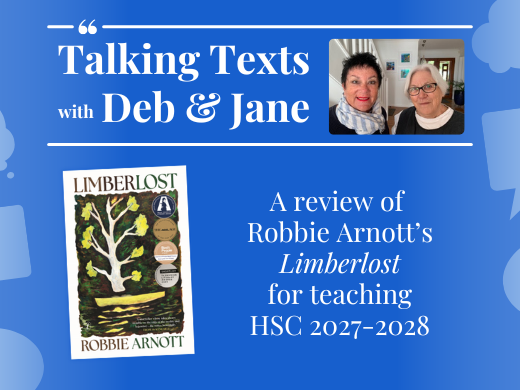
Limberlost is set for study in 2027-2028 in Year 12 Standard: Close study of literature.
If you would like your students to experience the life and choices of a young Australian over one summer in the 1940s, Limberlost, might be just the right choice for a novel for your students in Close Study of Literature when they sit for the HSC in 2027. This captivating, coming-of-age novel follows young Ned through time, set against a Tasmanian landscape, that is brought magnificently to life by Robbie Arnott, a stellar storyteller and writer.
Robbie Arnott is Australian, and he lives in Hobart, Tasmania. His previous books include Flames, The Rain Heron, and since the publication of Limberlost he has also written Dusk (2024). Limberlost won the Fiction, Age Book of the Year, 2023 and was also the winner of Adult Fiction Book of the Year and of the Dick and Joan Green Family Award for Tasmanian History in 2024. Limberlost was shortlisted, Miles Franklin Literary Award in 2023.
Limberlost is about a family, their interconnected lives and the Tasmanian landscape they live in and the non-human lives that have a gripping influence upon their own. Limberlost is the name of the West apple orchard and 15 year old Ned lives there with his father (his mother died soon after he was born) while his two brothers are overseas fighting in World War 2. His older sister, Maggie, has returned home and together the three family members work hard on the land they love. The novel opens with a flashback memory of a fearful encounter with a ‘mad’ whale when Ned was young and closes with another memory of unexpected and profound joy. Both memories are vital parts of the structure of the novel. The narrative of Ned’s story is sometimes linear and sometimes fragmented as it weaves back and forth through many decades but most of the novel concerns one summer holiday in which Ned makes choices that shape his life. He snares a quoll in a trap and agonises over keeping it, killing it or releasing it. He dreams of owning his own boat to sail on the nearby river. He traps and shoots rabbits to sell their pelts to purchase an old boat and restores it. He worries about his father and his brothers, he works hard in the orchard and his eye relishes the landscape around him. First Nations lives are also woven into the narrative. Later in his life Ned is just about to give two of his daughters some tough news about the return of their mother’s cancer, when they ask questions about his silence regarding the people who lived there first and what happened to them. Ned, distracted by grief, struggles to communicate his knowledge of the Letteremairrener, Pairelehoinner and Panninher people and realises he treated what happened to them as history and had done nothing about it. The insight stuns him. The concluding pages of the novel reveal much more about the whale and the brothers and their impact on Ned’s life and provide a notable ending to this tender, tough and lyrical novel, which has so much to offer to eighteen year old readers.
Animals have a large part to play of the life of Ned and his family including:
In pairs take responsibility for researching one of the animal stories in the novel and for contributing to the table below. Then all pairs for each animal display their tables in the classroom and report to the class about what you discovered about the characters and the animals in their story and the ways the author used their connections to tell his story.
| Animals | References in the novel, descriptions and page numbers | Impact on Ned and/or other family members | Commentary on language and ideas |
| The whale in the opening chapter and in later revelations | |||
| The mare that went lame | |||
| The rabbits that Ned trapped and shot | |||
| The quoll that Ned caught, kept and released | |||
| The straying cow when he was a cattle drover | |||
| The ram that brother Bill fought | |||
| Any other animal |
Ned spends his summer hunting rabbits for pelts to sell so he can buy his heart’s desire- a small boat. He finds an old one, covered in flaking paint with no rudder and no sail. He buys it and spends long hours restoring its Huon pine timbers to their green gold glory and more hours teaching himself to sail it on the river. He discovers from his sister, that the mother he never knew, loved sailing. His family take quiet delight in his joy.
“’Would you like to come out in my boat?’ Maggie came without question.”
…
“He wanted to fly out into the river proper, but as soon as he gained enough confidence the day betrayed him, the sun losing itself in the west. The final light died over the hills. He turned to the shore and sailed for home, the oars still stowed, a feeling of ecstatic accomplishment flashing through him, a feeling beyond language. His life widened. Time wobbled. He grazed the truth of his dreams, grazed a world frozen perfect, if only for the length of the dusk.”
Group task: In small groups you will be given a part of the boat story to investigate. You will need to go back into the text and find quotations and events that illuminate the part for which your group is responsible. Present your ideas about the ways the author shared Ned’s experience with you to the class.
For example, the following quotation links to both part 3 and part 4 and could support other sections. When Ned tells the vet, Telle, about his boat, this conveys a great deal about Ned’s motivation and what the boat meant to him and how it linked to other important moments in his life.
“He told her [the vet Telle] the story of it, his words coming faster than with the others, without artifice or caution. Told her how he'd known there was something wonderful under the old paint from the moment he saw it lying on Falmouth's dirt. How the boat had spoken to him, guided him. How when he sailed it, he felt like a fuller version of himself. How he and Callie had used it to take the quoll to the forest on the eastern shore.” (p.176)
Seen through Ned’s eyes, Abbott writes vivid and sensory descriptions of the Tasmanian landscape. One example is his description of the Liffey falls:
Three days after their wedding they were standing at the base of Liffey Falls, at the brisk death of winter, watching an airborne river thrash its way earthward. The water tumbled through high ridges, crowded with the princes of the island’s wetter wildernesses: blackheart sassafras, dappled leatherwoods, contortions of mossy myrtles. Giant stringybarks rose above them all, their gum-topped crowns fighting for space in the clouds. The forest loomed, wet-dark and thickly green in the morning dew, and through the ancient roots of its trees the Liffey ran and broke and fell to splash the boots of the gazing newlyweds. (p.68)
In groups read the description above and share other extracts to discuss the word choice, imagery and style of the author. Create a table that draws on information from all groups to create a Class Report on The language of Limberlost.
Individual written response
Select a natural setting, place or area that has special place in your heart. Describe that place and write about your experiences in nature. Try to emulate some of Robbie’s evocative landscapes. Write at least 400 words.
Beginnings and endings are so important in a novel. Good beginnings can hook the reader; good endings can provide fulfillment for a tale well told. On the other hand, poor openings can turn readers aside and unsatisfactory endings can cause annoyance and frustration.
Task: Re-read the beginning and ending of Limberlost (see below) and in groups decide how effective both were. Be prepared to share your opinion with the class.
Beginning
“It was believed a whale had gone mad at the mouth of the river. Several boats had been destroyed in acts of violence so extraordinary they were deemed inhuman. Each attack had come at dusk, while the boats were passing the head on their way back to port- the same area where plumes of spray were supposedly erupting from the water.”
Ending
“In that moment Ned felt a swelling, a ripping expansion, a hugeness that rang through him for the length of his life, a feeling that was sometimes rivalled but never quite matched. Not at weddings, not at births, not at funerals. Not when he worked his way north to Longreach, where he finally saw Toby again, finding him cocky, funny and largely unchanged. Not during good seasons or bad. Not when he was alone on cold waterways, not when he was in the grip of people he loved. Not as he poured dirt into graves, not as he watched his children, then his grandchildren, play. Not on the white sands of hidden beaches. Not in the shade of ancient trees, in whose canopies he imagined he could see the darting of cream-brown quolls. Not on rocky mountain roofs. Not in the presence of whales, not while viewing fine ships. Not at the scent of Huon pine. Not as Callie's last breath eased out of her, in their house overlooking kanamaluka, the eastern sun warming her face right up to the final moments of her life. Not at his ninetieth birthday, surrounded by his family and what was left of his friends, as he felt both powerfully loved and profoundly alone.
Not even then, at the very end of his life, did he feel it again, although he always remembered it: this hugeness of feeling. This undamming of a whole summer's fear, this half-sickening lurch to joy. (pp.225-6)”
Students could explore a shorter discursive piece of writing by Robbie in the Good Weekend's Summer Reading, in which he recounts two sides to his spider web photographs.
There are requirements for particular types of texts to be selected from the prescribed texts list for different courses. Great care must be taken in selecting a pathway of texts that meets all the requirements.
In the Standard English course students are required to closely study 3 prescribed texts, with ONE drawn from each of the following categories:
Limberlost is a novel by an Australian author and includes a range of cultural, social and gender perspectives.
Pathway 1 for HSC Standard English with Limberlost as first choice
Film

Texts and human experiences:
One Night the Moon directed by Rachel Perkins
Poetry

Language, identity and culture:
The Perseverance by Raymond Antrobus
Prose Fiction

Close study of literature:
Limberlost by Robbie Arnott
Pathway 2 for HSC Standard English with Limberlost as first choice
Drama

Texts and human experiences:
Away by Michael Gow
Poetry
Language, identity and culture:
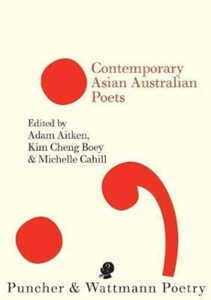
Contemporary Asian Australian Poets edited by Aitken, Boey & Cahill
Prose Fiction
Close study of literature:
Limberlost by Robbie Arnott

Jane Sherlock and Deb McPherson are experienced and passionate English teachers. They have also been involved in the education sector as authors and presenters at teaching conferences.
$9.95 flat rate shipping or free over $110
Australian family-owned & sourced
Supplier to over 1,000 schools Australia wide