Brief description and distinctive features

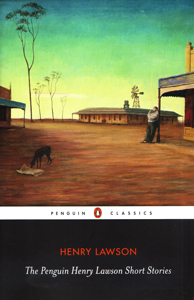
The Penguin Henry Lawson Short Stories is set for study in 2027-2028 in Year 12 for Advanced and Standard in Texts and human experiences.

This suite of short stories is the same selection which is currently set for the 2025 and 2026 HSC in Standard Module A: Language, Identity and Culture.

The set stories are:

  • ‘The Drover’s Wife’
  • ‘The Union Buries its Dead’
  • ‘Shooting the Moon’
  • ‘Our Pipes’
  • ‘The Loaded Dog’

“‘Tell it like it is,’ we say today. Henry Lawson claimed that style as his own 118 years ago in his 1897 poem The Writer’s Dream. For a decade before the poem was published, Lawson had already established himself as the voice of ordinary Australians. With his keen, sensitive eye and dry, honest tone, he wrote of the hardships of life in the Australian bush, the plight of the poor in the city, the fight for a republic, the strength and bravery of women, the mateship and larrikinism of men, all ‘for the sake of the truth’. Telling it like it was.” 

This is the opening paragraph of the NSW State library resource: Henry Lawson: Poet of the People. I recommend it. 

This suite of short stories well suits Texts and Human experiences. The stories are accessible, short, entertaining and provide 21st century students with insights to the experiences of a different Australia. It is important to be aware that the stories are currently set for a specific lens in Module A Standard and that their treatment will need to be adapted and tailored to the specific of the new Focus Area.

Key syllabus content areas for consideration where students develop their own understanding of this content specific to how the Henry Lawson Short Stories:

  • Represent individual and collective human experiences
  • Represent emotions and qualities related to these experiences 
  • Provide insight into emotional, intellectual, physical, cultural and lived experiences. 
  • Represent identity, culture, acceptance and growth
  • Invite the reader to see the world differently and challenge assumptions
  • Represent the tension between agency and conformity in our human experience
  • Examine the paradoxes of motivation and behaviour. 
  • Encourage students to reflect personally and challenge their assumptions about the nature of human experience.

For those of you who are new to Henry Lawson there is a rich seam of resources available.

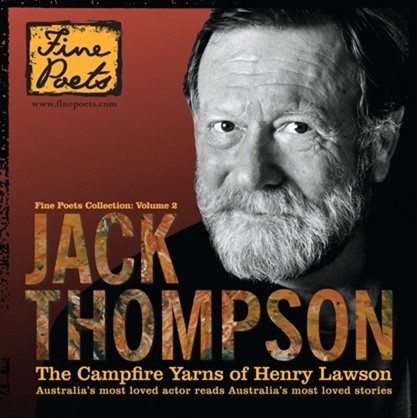
My recommendation would be to share Jack Thomson’s audio readings in order the bring them to life. 
 

Henry Lawson: the man behind the stories

  • Renowned Australian poet and short story author
  • National literary icon
  • 1867-1922: in his 55 years Lawson witnessed huge changes in the experiences of Australians 
  • Grew up in rural NSW, the son of a poor, working-class family: 
  • Lacked the privilege of education in childhood but put himself through night school as a young man
  • Spent time ‘wandering’ around rural NSW, working at itinerant jobs and observing bush life
  • A unionist, and a nationalist at a time that ‘Australia’ the nation did not exist
  • Lawson was one of the first to promote an “Australian” perspective. His comments were often scathing about England:
    “Why on earth do we want closer connection with England? We have little in common with English people except our language. We are fast becoming an entirely different people.” 

Distinctive features of Lawson's stories

  • Lawson mastered the ability to re-create an Australian flavour in his portraits of the people and the landscape. 
  • His use of the Australian vernacular makes his stories vivid, realistic, credible, convincing and compelling
  • His laconic humour contributes to the appeal of his characters and reinforces the growing Australian culture of representing experiences with irreverence and self-deprecation as well as sardonic wit (characterised by irony, mockery or derision)
  • His characters are also vividly portrayed in the images he chooses to use, for example, look at the description of the dog in ‘The Loaded Dog’ and the description of the women and her children in ‘The Drover’s Wife’
  • His characters are everyday men and women, unpretentious, working class, have to work hard, have little money, maybe physically isolated, do not have many luxuries, they face and endure hardships with fortitude and even grace. They show tenacity, resourcefulness, resolve, survival, they are reliable and they feel and look like real people. Their voice is clearly Australian with its idiomatic colloquial phrases and descriptions. The people are often the typical self-deprecating Aussie battler like the drover’s wife when she pokes herself in the eye or considers the irony of the women’s magazines. Ironic understatement, parody and satiric mockery is a feature. They know the importance of facing life’s challenges with a smile and a joke on themselves and we can picture all of this.
  • Lawson mainly uses the first person and sometimes the second when his characters speak directly to us. The intimacy created using first-person narrative perspective is juxtaposed with the emotional distance created using third person and the omniscient narrator.
  • Lawson favoured the unconventional use of the present tense.
  • Narrative pace is maintained so that the story has pace and interest. They feel like a bush yarn. He keeps us focused on the specific subject.
  • Imagery that is distinctively Australian with landscape (setting) and people (their experiences)
  • Not too much description; often blunt, direct, brevity and precision is used.
  • Limited dialogue unless it is being used to differentiate characters

Ways into teaching Henry Lawson's short stories in the HSC classroom

Lawson’s context and culture

  • His context is pre-Federation
  • Lawson, was a frequent contributor to The Bulletin, a popular magazine of the time
  • The Bulletin was first published in January 1880 and known as ‘the bushman’s bible’, with a masthead reading “Australia for the White Man’
  • The Bulletin magazine played a key role as a nationalistic (but racist and exclusionary) publication that promoted authors like Lawson and the bush narrative, which helped shape Australia's emerging identity 
  • Lawson’s first published work, ‘His Father’s Mate’, appeared in The Bulletin in 1888
  • Lawson’s 1892 inland trip to Bourke and its surrounds was funded by the magazine
  • City readers enjoyed his tales and representations of the experiences of rural life
  • Norman Lindsay said “The Bulletin initiated an amazed discovery that Australia was ‘home’, and that was the anvil on which [the publisher] Archibald hammered out the rough substance of the national ego”.
  • Lawson's stories were part of the establishment of a national narrative and sense of identity necessary to the success of federation, but at the expense of cultural and racial inclusivity 
  • While Lawson's stories are undeniably and deservedly iconic, there are spaces and silences in them that can be explored and questioned to develop and refine our modern narrative.

A key concept of the Focus Area is that of representation which is linked to the deliberate choices made by Lawson to position his reader to consider his specific perspective on the human experiences of Australians at this specific time in Australia’s growth, evolution and change.


Lawson’s chosen form is the short story. 

This accessible and popular literary form has several key features:

  • Narrative to be read in one sitting: captures all features in a compressed entity 
  • Unity of time and place: may start in media res, not much backstory or epilogue
  • 1-3 characters: the focus is tight
  • Finishes at the high point of action and leaves the story there


Lawson’s short stories belong to the genre of realism

  • Lawson had first-hand experience of poverty, overcoming adversity, bad luck, working in difficult and demanding jobs and in unforgiving environments. 
  • This was both from his own experiences and witnessing the difficulties of his father and also his mother. 
  • Therefore, his stories have a sense of realism, credibility and verisimilitude. 
  • His stories tell us about an era from the past but one that still resonates with us today as we can see the same kinds of characteristics in other Australians today. 


Lawson and the narrative power of the Bush

“… in the 1890s ‘the bush’ was chosen as the imaginative territory through which to construct and explore Australian identity and values … https://www.poetrylibrary.edu.au/poems-poetic-form/bush-ballads

“The Bush [w]as a major component in many interpretations of the European Australian national character. This popularly accepted Australian identity is largely defined through the “Bush Legends”: the bushman, the pioneer, the bushranger ... these legends are stereotypically male; tough and rugged, hard-working outdoors types, independent and adventurous, capable and strong, but most of all they persevere against all odds … These Australian legends find value in mateship, are physically tough and resourceful in their surrounds... Being loyal to one’s mates was integral to survival in an isolated landscape ... Mates could always be relied upon in tough times and tough places; there was no one else.”

https://www.lib.latrobe.edu.au/ojs/index.php/tlg/article/view/9/9

Consider the long and rich tradition of irreverence and satire in Australia and that Lawson is very much a part of this heritage. Share with your students: extracts from The Castle, The Dish, Kath and Kim, the ABC’s The Weekly; editorial cartoons are a rich vein for satire and ridicule of Australian attitudes and experiences.


The Stories

‘The Drover’s Wife’

  • The only story in the suite about the harsh realities of bush life
  • The anonymity of the woman: defined only by her husband and children; even the dog has a name
  • The presence of ‘King Jimmy’ and Black Mary: acknowledgement of Aboriginal Australia, but only briefly
  • Matter-of-fact tone and language, predominance of noun phrases and use of present simple tense to convey the stark and isolated routine of her existence
  • One of the ideas Lawson wants to convey in The Drover’s Wife is the hardship and difficulties that women like this drover’s wife had to endure: the isolation, alienation, physical adversity, loneliness and the sacrifices she made to live this life. 
  • At the same time Lawson wants us to see a woman who is tough, resilient, hardy, able, capable, hardworking, protective and indeed, representative of many women in isolated rural communities of this huge country. 
  • Use some of these words in your own responses to elevate your discussion. 
  • Compare the perspectives of marriage and childhood in 'The Drover’s Wife' and 'Our Pipes'
    • Behaviour and attitudes of the sons
    • The representations of the mother, father and their marriage
    • Examining notions of loyalty and solidarity in 'The Drover’s Wife' and 'The Union Buries Its Dead’

Initial responding 
It is very important to encourage students to start writing early in the stories’ exploration. The sooner students start to write, their confidence, skills and capacity are increased. If this occurs early, it becomes normalised especially in low risk/no risk writing environments. Building competence and confidence is critical to student success. 

Task: In what ways are we drawn into Lawson’s representation of human experiences in ‘The Drover’s Wife?’   
‘The Drover’s Wife’ continues to be re-imagined and re-told as it is a significant feature of the Australian narrative. 

Share with your students some of the reimagined versions e.g. Russell Drysdale’s iconic painting, Leah Purcell’s play The Drover’s Wife and the very clever appropriation The Drover’s Wives by Ryan O’Neill which presents 99 reinterpretations of ‘The Drovers’ Wife’ including a very funny ‘Choose Your Own Adventure.’

A Module C style task could be to encourage students to work in small groups to write a feature article in the discursive style suitable for a weekend print or online publication that explores how ‘The Drover’s Wife’ represents core human experiences and why it continues to be reimagined across time and place. 


‘The Loaded Dog’

  • The importance of tall tales and yarns as a way of establishing shared culture
  • The larrikin spirit
  • Power of humour and self-deprecation in the face of adversity: the comical escapades of the bush larrikin: how legends are born:
  • Use of humour throughout: action and descriptions are embellished to excite the audience.
  • Detailed descriptions of how the cartridge is made, where the dog chases them, their reactions and the consequences: comical and hilarious tale of a bush legend
  • Narrator is an observer who exaggerates comic detail. 
  • How stories and yarns can assist in the cultivation of a national identity: survival, perseverance, ingenuity
  • The ever-present threat of death or injury faced by bushmen and gold diggers
  • Strong tension, crisis and dramatic imagery 
  • Action verbs, e.g.: swooped, spluttering, dive, flung, burst, jolt, wedged
  • Short paragraphs build tension


The Union Buries its Dead 

  • Insight to Unionism of that time
  • Insight to funeral practices
  • Humour of alcohol will dominate politics 
  • Humour to deal with tragedy
  • Portrait of harsh climate
  • Portrait of isolation and anonymity
  • Campfire yarns as a vehicle for connection

Ask students in groups to consider how Lawson uses language to explore these ideas associated with unions, tragedy and male behaviour e.g. evocative visual description of the setting, humour clever characterization, sardonic tone and the use of an unnamed narrator?

Experiences represented in this story:

  • Stoicism
  • Challenges and difficulties
  • Austerity
  • Australian bush shapes our identity
  • Masculine identity
  • Masculine friendship and communal activities (without women around)
  • Swagmen’s shared experiences and knowledge

How is language used to represent these experiences?

  • Visual imagery
  • Australian vernacular
  • Inclusive pronouns
  • Cynical tone
  • Personification
  • Colloquial language

Other features

  • Storytelling/ yarns as a vehicle for shared masculine experience and mateship 
  • An affirmation of the coming of age and larrikin spirit of Australian boys and men 
  • Establishes a sense of pride in swagman identity
  • Smoking becomes symbolic of masculine ritual and connection
  • Portrays the mother figure as an obstacle to ‘becoming a man’, but one that is ultimately overcome (and appreciated)


‘Shooting the Moon’ 

Represents:

  • Campfire yarns as a vehicle for connection
  • Mateship as a sudden bond of convenience that can endure for years afterwards
  • Admiration about the working class
  • Affirms the power of humour
  • Challenges the romanticized view of the landscape
  • Explores the challenges of survival, poverty hardship
  • Representation of swagmen and the importance of mateship in surviving hardship and economic struggle
  • The egalitarian nature of ‘true’ Australians: no class barriers or social hierarchies
  • Anti-authoritarianism: the distrust of authority figures until they prove themselves through acts of mateship

How is language used to represent these experiences?

  • Model examples of the following language use in one of Lawson’s short stories to the whole class 
  • Inclusive pronouns
  • Personification of the landscape
  • Descriptive imagery
  • Direct speech
  • Idiomatic expressions
  • Rhetorical questions

Then ask groups to each select a different story and explore the language used. Then report to the class on their findings. 


Content to suit the Focus Area

This table is the starting point for aligning the syllabus focus area content, the specific examples, the stories and textual detail. Students can add to the table as they progress through the stories and share with each other.

Focus Area Examples from the stories Specific stories How this is represented: textual detail:
individual and collective human experiences Overcoming adversity of the challenging Australian landscape: the harsh reality of bush life-its dangers and disasters ‘The Drover’s Wife’  
‘The Loaded Dog’  
‘Our Pipes’  
The tenuous hold on life and survival that characterised many experiences  ‘The Drover’s Wife’  
‘The Loaded Dog’  
Growing up-coming of age bildungsroman ‘The Drover’s Wife’  
‘Our Pipes’  
The power of storytelling  ‘The Drover’s Wife’  
‘The Loaded Dog’  
‘The Union Buries its Dead’  
‘Shooting the Moon’  
‘Our Pipes’  
How stories and yarns can assist in the cultivation of a national identity: survival, perseverance, ingenuity ‘The Loaded Dog’  
‘The Union Buries its Dead’  
Targets for ridicule and derision: church, unions, drinking, droving. ‘The Union Buries its Dead’  
‘The Loaded Dog’  
The Australian bush as a masculine place ‘The Loaded Dog’  
‘The Drover’s Wife’  
‘The Union Buries its Dead’  
emotions and qualities related to these experiences  Mateship to sustain and nurture male relationship in challenging times  ‘The Loaded Dog’  
‘The Union Buries its Dead’  
The price bush women paid for their husband’s work ‘The Drover’s Wife’  
identity, culture, acceptance and growth Growing awareness of an Australian identity which was unique to nineteenth century Australia ‘The Loaded Dog’  
‘The Union Buries its Dead’  
‘Shooting the Moon’  
Larrikinism and humour as a feature of the emerging national identity ‘The Loaded Dog’  
‘Our Pipes’  
emotional, intellectual, physical, cultural and lived experiences.  Detailed insights to the experiences of the people in Lawson’s stories    
Egalitarian nature of the evolving Australian identity ‘Shooting the Moon’  
‘Our Pipes’  
‘The Union Buries its Dead’  
tension between agency and conformity in our human experience The challenges for women living in a masculine world and having to both assert and take control ‘The Drover’s Wife’  
Asserting mateship and camaraderie at what expense ‘Shooting the Moon’  


HSC style questions for Henry Lawson Short Stories

The more opportunities students are given to write about Lawson’s stories, the more confident they will be for the big stakes of their Trial and HSC examinations.
Consider workshopping some of these questions, writing introductions, essay plans and choosing quotes to best suit the question.

  • How effectively does your prescribed text tell stories to reveal both the personal and shared nature of human experiences? In your response make detailed reference to your prescribed text.
  • How does Henry Lawson represent the emotions arising from human experiences through the features of the short story?
  • How do composers draw us into the world of the text by inviting us to share a representation of human experiences? In your response make detailed reference to your prescribed text.
  • Meaningful connections, whether they be to people, places or beliefs, define the quality of human experience.  To what extent do you agree with this statement? In your response make detailed reference to your prescribed text.

Relevant details in relation to the new NSW English Stage 6 HSC syllabus

There are requirements for particular types of texts to be selected from the prescribed texts list for different courses. Great care must be taken in selecting a pathway of texts that meets all the requirements.


For the Advanced course

Four prescribed texts to be studied with at least ONE from each of the following categories (prose fiction, poetry, and drama OR nonfiction OR film OR media) and ONE authored by Shakespeare


Possible pathways for HSC Advanced English course

Pathway 1 for HSC Advanced English with Henry Lawson Short Stories as first choice 

Prose Fiction
Texts and Human Experiences: 

The Penguin Henry Lawson Short Stories

Film | Poetry

Textual Conversations: 

Bright Star directed by Jane Campion | Prescribed poems of John Keats

Drama (Shakespeare)
Critical Study of Literature: 

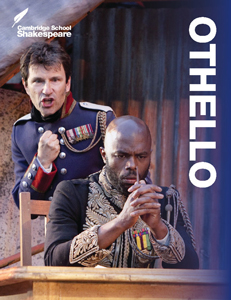
Othello by William Shakespeare

Pathway 2 for HSC Advanced English with Henry Lawson Short Stories as first choice 

Prose Fiction

Texts and Human Experiences: 

The Penguin Henry Lawson Short Stories

Drama (Shakespeare) | Nonfiction

Textual Conversations: 

Julius Caesar by William Shakespeare | The Prince by Niccolo Machiavelli

Poetry
Critical Study of Literature: 

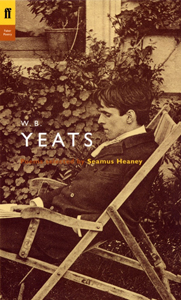
Prescribed poems of WB Yeats

For the Standard course

Students are required to closely study 3 prescribed texts, with ONE drawn from each of the following categories:

  • prose fiction
  • poetry
  • drama OR film OR media OR nonfiction.


Possible pathways for HSC Standard English course

Pathway 1 for HSC Standard English with Henry Lawson Short Stories as first choice 

Prose Fiction

Texts and human experiences: 

The Penguin Henry Lawson Short Stories

Drama

Language, identity and culture: 

Shafana and Aunt Sarrinah by Alana Valentine

Poetry

Close study of literature: 

Collected Poems by Carol Ann Duffy

Pathway 2 for HSC Standard English with Henry Lawson Short Stories as first choice 

Prose Fiction

Texts and human experiences: 

The Penguin Henry Lawson Short Stories

Poetry
Language, identity and culture: 

Contemporary Asian Australian Poets edited by Aitken, Boey & Cahill

Film

Close study of literature: 

Arrival directed by Denis Villeneuve