




Flat Rate Shipping
$9.95 flat rate shipping or free over $110

Aussie Owned
Australian family-owned & sourced

School Supplier
Supplier to over 1,000 schools Australia wide
For Stage 5
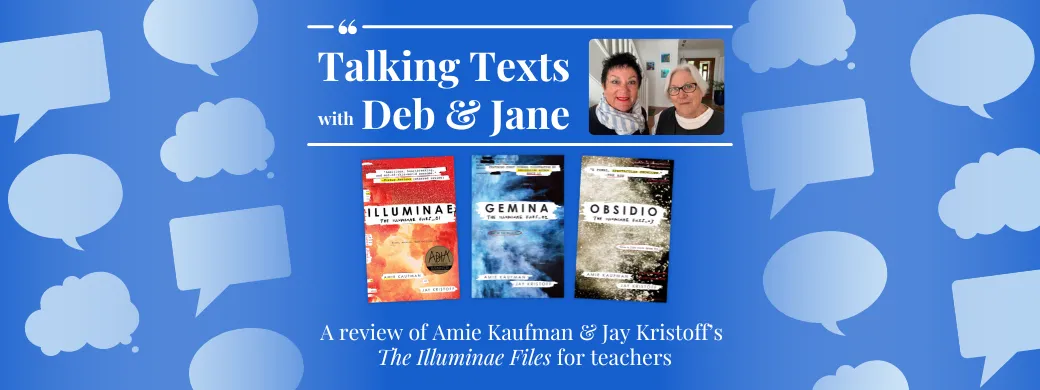
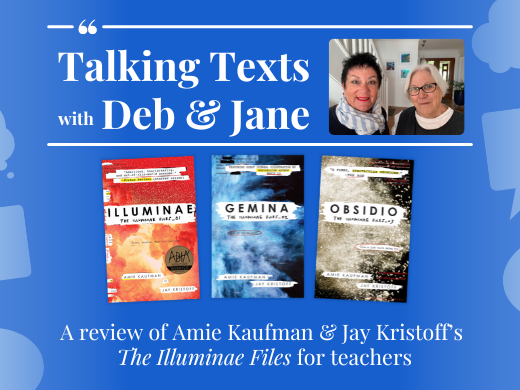
Amie Kaufman and Jay Kristoff have really delivered a multimodal trilogy that pushes the graphic novel in a new and scintillating direction. Take these novels into Year 9-11 classrooms and challenge your students to find out just what is going on in this future universe. Readers in late Year 8 could also enjoy these novels and their issues of power, truth and authority as well as their space and computer settings and edgy romance. The three novels are a breathless read and students should find them an addictive experience as they chase compelling characters Kady, Asha, Nik, Hana and Ezra all over space. The pace is relentless, the revelations surprising, the humour uneasy, (and sometimes gross), the fun unexpected, and the science cutting-edge. This wonderful series pushes the boundaries of what can be done in the printed form and the Australian authors richly involve the reader in the lives of the characters they have created, and the world-building universe they have imagined. Please note the syllabus references below are to the Stage 5 content in the current NSW English 7-10 Syllabus (2022).
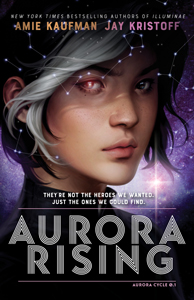
What a blast of a novel! It's big (at 599 pages but a quick read) and bold with its engaging mixture of voices, reports, interviews, graphics, fonts and perspectives. The reader is plunged straight into a space opera as two teenagers break up just as a corporate war breaks out. Kady and Ezra live on an ice-covered planet called Kerenza at the end of the universe, and it has just been attacked. Although barely speaking to each other they manage to escape on different ships of an evacuating fleet. Kady is on Hypatia, a scientific exploration vessel while Ezra is on the Alexander, a heavy battle carrier with an artificial intelligence called AIDAN which has already fought one battle against the invading company BeiTech which pursues them in the dreadnought, Lincoln.
Kady and Ezra are two smart 17-year-olds whose breakup was always going to have trouble being sustained. They spend most of the novel physically apart but technology reconnects them just as many problems become apparent. Alexander's AI has sustained damage and, in a seeming, protective measure turns its guns on Copernicus, the third ship in the fleeing fleet and destroys it. The emerging fear of a mutating virus which turns people into zombies and was planted by BeiTech among refugees from the destroyed Copernicus is coupled with the rapidly closing pursuit from Lincoln. Kady is desperate to help Ezra on the Alexander and when AIDAN releases the quarantined refugees to overrun the ship Kady uses her hacking skills to escape to Alexander believing Ezra is still there. What she discovers and how the strange bond between herself and AIDAN operates will take the reader to a compelling conclusion. This journey across space is told at a frantic pace and its varied narrative forms make it an accessible and even, easy read despite its length.
Gemina is a worthy companion to Illuminae and I use that word deliberately as it is not so much a sequel as a parallel novel, a description which has greater resonance as you move through this amazing space opera.
Two bright teenagers, Kady Grant and Ezra Mason, finally reunited on Hypatia are travelling towards the space station Heimdall, situated at the lip of a space wormhole.
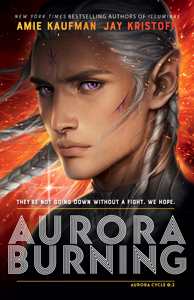
Gemina opens with the Kerenza Trials and a review of the transcripts collected. Hanna Donnelly, the daughter of the station commander, is preparing for Terra Day celebrations and wants some recreational drugs for her amusement and that of her boyfriend. She approaches Nik Malikov, a member of the Dom Najov (the House of Knives cartel operating illegally on the station) to get a deal. He’s up to his knees in manure as his uncle is using cows as hosts for the Lanima, vicious parasites that produce the psychoactive hallucinogen Hanna is after. As Nik meets Hanna to hand it over, the BeiTech assault team arrive. BeiTech are determined to keep their invasion of Kerenza a secret and their attack on the space station aims to keep that secret even safer. They have help from an unidentified mole, codenamed Rapier, on the station.
Hanna (nicknamed ‘Highness’ by Nik) is more than a pretty princess. She’s spent a childhood playing war games with her father and is a martial arts graduate and her father’s murder spurs her to action. She joins the resistance team of Nik and Ella (Nik’s wheelchair-bound cousin) with impressive results. I particularly liked the repetition of the two-page gallery portraits of the twenty-four member of the attack team and the way they are progressively whittled away by Hanna and co. The gallows humour of the trio and the burgeoning attraction between Hanna and Nik hits just the right pitch. It’s salutary that only adults ingest the recreational drugs and they play a key role in a deadly resolution.
At last, the Illuminae files are complete (albeit with a final hint that AIDAN the computer consciousness could come back again) and Books 1 and 2 (Illuminae and Gemina) combine with Obsidio to come to a very explosive and satisfying conclusion.
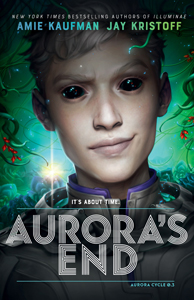
We begin back on the planet Kerenza, with Asha Grant (cousin to systems expert Kady Grant of Book 1 fame). Asha, a pharmacy intern, is one of the survivors of the BeiTech invasion and a member of the resistance. Unfortunately, they are seriously outnumbered and outmatched by the ruthless mining corporation. Asha encounters an ex-boyfriend, Rhys Lindstrom, a techie who has been sent to join the BeiTech team who are to keep the colony functioning while BeiTech replenishes their hermium, the illegal mineral being mined on Kerenza. Their plan is to leave the planet after eliminating all survivors. Can Asha trick Rhys into helping them? Or does their relationship still mean something and could he have an important role to play in helping the remaining civilians on Kerenza survive?
Meanwhile Hanna and Nik, the main characters from Gemina and Ezra and Kady from Illuminae are facing diminishing food and air resources and impossible choices aboard the container ship Mao, which contains the consolidated Hypatia and Heimdall crews. AIDAN, the artificial intelligence reactivated by Kady, is experiencing an identity/existential crisis that could imperil them all. The crew respond to a plea for help from the rebels on Kerenza and approach the planet and attempt to prevent the catastrophe BeiTech has engineered.
The gold, glittering metallic cover and the huge variety of textual forms and illustrations; emails, journal entries, instant messaging chats, blueprints, computer files, dossiers, scrunched up handwritten notes, are just the accompaniment to a tightly plotted and absorbing cavalcade of young characters. Kady, Asha, Nik, Hana and Ezra and the others face war and death and pestilence and are deeply changed by what they experience. Their resilience is tested and emotional exhaustion sets in towards the exacting finale but they all answer the call.
Classic elements of Science Fiction
Space Opera is a subgenre of Science Fiction. Originally a pejorative term, space opera has become a popular cultural term attached to such films as Star Wars set in a distant future with colourful dramatic adventures on an epic scale but with attention to personal relationships. Other elements include:
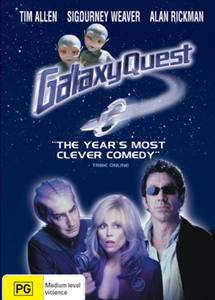
Ask students in groups to nominate science fiction books and films they have read and seen and to suggest some of the characteristics of the genre and create a wall chart with a list of texts and some characteristics of the genre. Then introduce the sub-genre of Space Opera and give a definition and an example of some films and books and use film trailers for both e.g. the film Galaxy Quest directed by Dean Parisot (1999) is an hilarious parody with Space Opera elements in which the cast of a cult television series is drawn into an interstellar war by real aliens who believe the series is a documentary.
The Illuminae Files have spawned several film trailers which could be helpful for inspiring students to read:
Then ask groups to create a list of possible elements before introducing the series with enough books for the class of Book 1 and some 15 copies of each of the other two volumes. Engaged readers will read them swiftly and move on to books 2 and 3. Provide time and space for reading in class.
Ask the librarian to create a book box of Space Opera and Science Fiction texts and encourage students to read more widely in the genres including:
One of the fascinating elements of The Illuminae Files trilogy is the use of so many narrative structures including familiar formats such as phone texts, interviews, reports, blueprints, journal entries, graphics, poems, computer files, dossiers and handwritten notes. Ask students to identify as many different forms as they can and incorporate some of them into their own writing in a short story or blog called Lost in space or In space no-one can hear us scream.
Text requirements: The Illuminae Files is a series of graphic novels/quality multimodal texts by Australian authors. It includes a range of cultural, social and gender perspectives.
For more recommended texts suitable for Stage 5, explore our Year 9 texts and study guides and Year 10 texts and study guides.
Concepts could include Narrative • Genre • Characterisation • Style.
A student uses a range of personal, creative and critical strategies to interpret complex texts EN5-RVL-01
Reading for challenge, interest and enjoyment
A student analyses how meaning is created through the use and interpretation of increasingly complex language forms, features and structures EN5-URA-01
Characterisation
Narrative
A student evaluates how texts represent ideas and experiences, and how they can affirm or challenge values and attitudes EN5-URB-01
Style
A student investigates and explains ways of valuing texts and the relationships between them EN5-URC-01
Genre
A student crafts personal, creative and critical texts for a range of audiences by experimenting with and controlling language forms and features to shape meaning EN5-ECA-01
Writing
(English K-10 Syllabus 2022 © NSW Education Standards Authority for and on behalf of the Crown in right of the State of New South Wales, 2023)

Jane Sherlock and Deb McPherson are experienced and passionate English teachers. They have also been involved in the education sector as authors and presenters at teaching conferences.
$9.95 flat rate shipping or free over $110
Australian family-owned & sourced
Supplier to over 1,000 schools Australia wide