



Flat Rate Shipping
$9.95 flat rate shipping or free over $110

Aussie Owned
Australian family-owned & sourced

School Supplier
Supplier to over 1,000 schools Australia wide

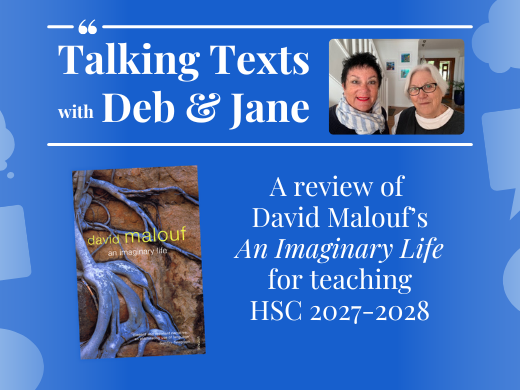
An Imaginary Life is set for study in 2027-2028 in Year 12 in Advanced and Standard Texts and human experiences.
Re-reading this luminous novel surprised me and moved me in ways I don't remember when I first read it many years ago. Standard students will be challenged by it while Advanced students may appreciate it more, but whoever reads it may find it has a way of touching your heart with longing. A sense of exile and belonging is beautifully evoked by the power and grace of Malouf’s prose. As Emily Smith said in a review when watching a minimised dramatization of Malouf’s An Imaginary Life by Humphrey Bower:
“My memory of the book from when I studied it in high school is hazy, only a vague image of an untamed wilderness cycling through seasons of idyllic springs and brutal winters. Having now heard Bower’s abridged version I know that this memory is as accurate as it is apt, as the story’s real strength lies in its imagery. Malouf’s prose – especially in Bower’s rich timbre – is poetry without pretention.”
It is worth reading her whole review.
David Malouf was born in Brisbane in 1934. He studied at the University of Queensland, taught overseas in the UK and returned to Australia to teach at the University of Sydney. He has published several poetry anthologies, novels, short stories, essays and a play to critical acclaim. Currently poems from his collection Earth Hour are set for the Higher School Certificate in the Advanced course, in A critical study of literature.
His first novel, Johnno was published, in 1975. In 1978 An Imaginary Life was published. His eighth novel, Conversations at Curlow Creek, was published in 1996.
Awards include the NSW Premier’s Award, Age Book of the Year Award, and the Pascall Prize, the Commonwealth Writer’s Prize, and the Miles Franklin Award.
An Imaginary Life opens and closes with a memory of a wild child. It follows the life of Ovid, a famous Roman poet from the reign of Augustus in the last century BCE. We would say today that Ovid had been “cancelled”; his poems were too audacious, urbane and critical of the Emperor. He was exiled from Rome to the edges of the known world, to a small settlement called Tomis near the Black Sea, in what we would call Romania today, and in the past was a marginal land of the Roman Empire. The headman in Tomis is set to watch Ovid. The exiled poet shares this man’s mud house and lives among what he considers barbarians who have their own language while he is bereft of his Latin. Cut off from everything he has known and valued, Ovid plunges into despair and spends his days shouting at the landscape. He chronicles his exile and the seasons, saying “I cast this letter upon the centuries” (p18) and gradually finds some solace in the landscape and the simple life of the village. Over time he learns the language of the small community he lives among and finds experiences that are meaningful and free of the overwhelming organisations of his Roman world. He comes to respect the headman, appreciates his wonderful stories and becomes his friend. He rides out with the men of the village to hunt and celebrate their ancestors and joins them as they find small human footprints on the trails, the sign of a wild Child*. Ovid aches to find him, propelled by a connection with his childhood visions of a wild boy with whom he spoke in a “tongue of our own devising” (p9). As the seasons change, recorded by Ovid with an increasing appreciation of their harsh and varied beauty, the men return again and again in autumn to the hunting grounds, and he sees the Child and entices him with food. Ovid hopes to establish communication with the Child though teaching him language and he directs his capture by the men. Returning to the village he cares for and teaches the Child, causing conflict with the family. The boundaries between who is the learner and who is the teacher blur and with the headman’s death the two outsiders flee and seek a new land, past the edges of the Roman Empire. In this world it is the Child, inhabiting nature as he does, who leads Ovid. Watching the Child “walking on the water’s light”, Ovid, who has taken his last step and is preparing for death, records that he is “immeasurably, unbearably happy.”
*Note: that ‘Child’ is capitalised when referring to the wild Child in the novel, however ‘child’ is not capitalised in the preamble.
Watch the film David Malouf - An Imaginary Life: emotive exploration into the life and mind of the writer and poet (1997). The film runs for 55 minutes and was written and directed by Don Featherstone, a Film Australia and RM Associates production with the assistance of the ABC.
This film follows the life of writer David Malouf, looking at places and experiences that have changed him from his early upbringing in Brisbane to time spent in the UK, Ireland and Europe (and particularly Italy where Malouf lived for many years) and in Sydney and on the Gold Coast. Students can see the influence of both his father’s Lebanese background and his mother’s English heritage. Fascinating archival film and sensitive dramatizations of scenes from his novels (voiced by Geoffrey Rush) including scenes from An Imaginary Life will give students an insight into the writer’s craft, and to the importance of landscapes, relationships and friendships in Malouf’s work.
In groups ask students to brainstorm incidents and scenes that highlight human experiences and stand out from their reading of the novel. Then compile those scenes into a timeline which highlights seasons and incidents in the chronology of the story. Some examples below:
From this investigation establish a collaborative table which records the type and nature of the human experiences explored in the novel and their collective and individual aspects.
The more opportunities students are given to write about An Imaginary Life the more confident they will be in preparing for their Trial and HSC.
Consider workshopping some of these questions, writing introductions, essay plans and choosing quotations to best suit the questions:
Look for quotations to support your responses e.g.
“Scarlet!
It is the first color I have seen in months. Or so it seems. Scarlet. A little wild poppy, of a red so sudden it made my blood stop.“My little flowerpots are as subversive here as my poems were in Rome.”
“I have stopped finding fault with creation and have learned to accept it. We have some power in us that knows its own ends. It is that which drives us on to what we must finally become… This is the true meaning of transformation. This is the real metamorphosis.”
Malouf “is interested in searching, through the imagination, for the elements which give life significance.” John McLaren (1978). In what ways does your study of An Imaginary Life support or contradict this statement?
How has your understanding of the complexities of the human experience in An Imaginary Life been shaped by Malouf’s language choices? Discuss with close reference to the text.
Meaningful connections, whether they be to people, places or beliefs, define the quality of human experience. To what extent do you agree with this statement? In your response make detailed reference to your prescribed text.
There are requirements for particular types of texts to be selected from the prescribed texts list for different courses. Great care must be taken in selecting a pathway of texts that meets all the requirements.
Four prescribed texts to be studied with at least ONE from each of the following categories (prose fiction, poetry, and drama OR nonfiction OR film OR media) and ONE authored by Shakespeare
Pathway 1 for HSC Advanced English with An Imaginary Life as first choice
Prose Fiction
Texts and human experiences:
An Imaginary Life by David Malouf
Film | Poetry

Textual conversations:
Bright Star directed by Jane Campion| Prescribed poems of John Keats
Drama (Shakespeare)
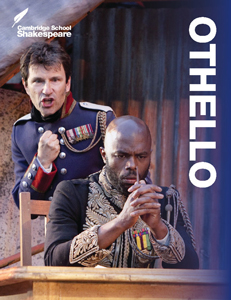
Critical study of literature:
Othello by William Shakespeare
Pathway 2 for HSC Advanced English with An Imaginary Life as first choice
Prose Fiction
Texts and human experiences:
An Imaginary Life by David Malouf
Drama (Shakespeare) | Nonfiction

Textual conversations:
Julius Caesar by William Shakespeare | The Prince by Niccolo Machiavelli
Poetry
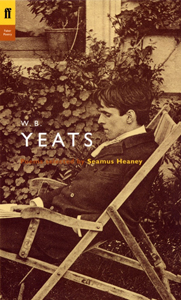
Critical study of literature:
Prescribed poems of W.B. Yeats
Students are required to closely study 3 prescribed texts, with ONE drawn from each of the following categories:
Pathway 1 for HSC Standard English with An Imaginary Life as first choice
Prose Fiction
Texts and human experiences:
An Imaginary Life by David Malouf
Drama

Language, identity and culture:
Shafana and Aunt Sarrinah by Alana Valentine
Poetry

Close study of literature:
Collected Poems by Carol Ann Duffy
Pathway 2 for HSC Standard English with An Imaginary Life as first choice
Prose Fiction
Texts and human experiences:
An Imaginary Life by David Malouf
Poetry
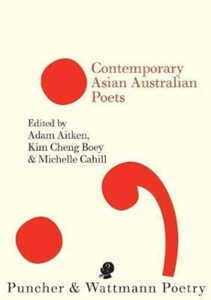
Language, identity and culture:
Contemporary Asian Australian Poets edited by Aitken, Boey & Cahill
Film

Close study of literature:
Arrival directed by Denis Villeneuve

Jane Sherlock and Deb McPherson are experienced and passionate English teachers. They have also been involved in the education sector as authors and presenters at teaching conferences.
$9.95 flat rate shipping or free over $110
Australian family-owned & sourced
Supplier to over 1,000 schools Australia wide