



Flat Rate Shipping
$9.95 flat rate shipping or free over $110

Aussie Owned
Australian family-owned & sourced

School Supplier
Supplier to over 1,000 schools Australia wide
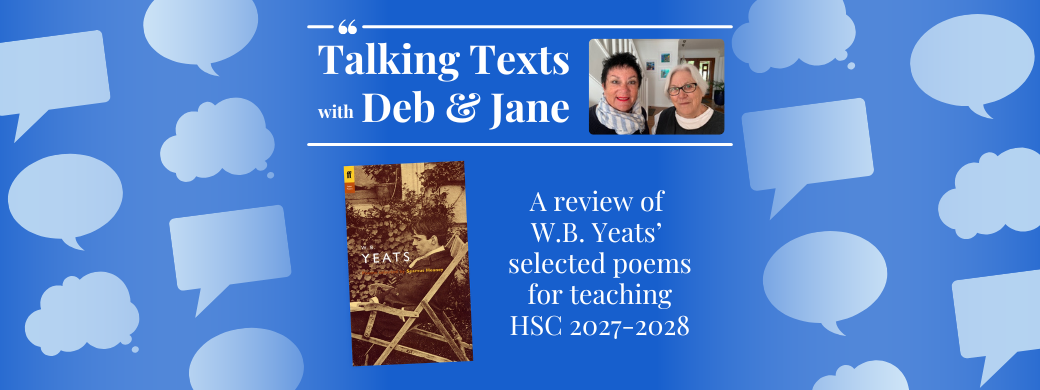
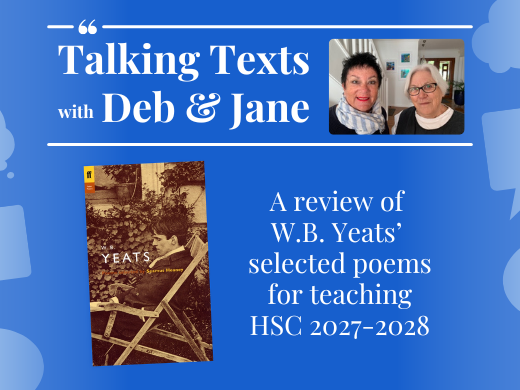
Seven of Yeats' poems are set for study in 2027-2028 in Year 12 in Advanced: Critical Study of Literature:
‘The Wild Swans at Coole’, ‘An Irishman Foresees his Death’, ‘Easter 1916’, ‘The Second Coming’, ‘Sailing to Byzantium’, ‘An Acre of Grass’, ‘Long-Legged Fly’
How special it is to re-visit William Yeats who feels like an old friend and certainly a favourite. I first discovered Yeats at university then had the joy of teaching him in the previous Extension and Advanced courses. Revisiting him now in 2025 feels fresh and engaging as his poetry is so rich and accessible.
Over the last year or so with parts of the world in turmoil and some world leaders demeaning and debasing leadership I am constantly drawn to Yeats’s prophetic words from his 1919 poem ‘The Second Coming’ whose poignancy resonates so powerfully:
Things fall apart
The centre cannot hold …The worst are full of passionate intensity
While the best lack all conviction
This edition of Yeats poems was first published in 2000 and has an excellent, albeit complex, introduction by compatriot Seamus Heaney. Poets speaking about other poets is always fascinating and Yeats certainly attracted a great deal of commentary from not only Heaney but Eliot and Auden.
At some point when teaching Yeats be sure to revisit Auden’s heartfelt tribute to Yeats:
The day of his death was a dark cold day.
And further on:
Earth, receive an honoured guest.
Yeats has often featured on the HSC so you can find some wonderful resources. The 2027 list selection is slightly different, however it is an excellent cross-section of poems from Yeats’ long life.
The prescribed poems are:
The joy of the Critical Study focus Area is that you can devote the entire time on these seven poems. It is not uncommon for a specific poem to be prescribed so students must become experts in every poem.
Critical Study is the backbone of our subject English; and these poems have wondrous possibilities and are perfect for inspiring students in their own Craft of Writing Imaginative, discursive and persuasive styles.
I know that school budgets are tight but consider buying and issuing the prescribed anthology rather than only offering photocopies. In this way students may like to read other poems in the collection and can see the chronology of the prescribed poems.
| Poem | Page in Heaney's edition | When written | Brief description |
| ‘Wild Swans at Coole’ | p. 43 | 1916-1917 |
An accessible, gentle and beautifully lyrical poem about one of Yeats’ favourite locations in Ireland: Coole Park. It reflects Yeats’s thinking about life, transience, change and evocatively uses the swan as a symbol of strength, purity, fidelity and immortality |
| ‘An Irishman Foresees his Death’ | p. 48 | Written in 1918 and published in 1919 just after the end of WW1 |
Powerful and poignant short poem about the death of Major Robert Gregory whom Yeats greatly admired. Gregory volunteered for the Royal Air Force (which was in its infancy), and was shot down over Italy in January 1918 A moving elegy in the first person about the fate of those fighting in war. Also raises awareness about the tensions of Irish soldiers fighting for Great Britain. |
| ‘Easter 1916’ | p. 60-62 | First written in 1916 when 25 copies were printed privately and then later, the poem was formally published in 1920. |
A longer poem which is complex in its ambiguity as it is both a commemoration and a condemnation of the disastrous Easter Uprising or Rebellion which started on Easter Monday 24th April and lasted for six days. It was highly criticised but would provide the crucial steps for Ireland’s independence in 1922. Yeats’s poem is a roll call of significant figures in the Uprising - many of whom were killed or later executed.by the British. Yeats was pained by the event and at times scathing:
This poem needs background on the Irish conflicts as it is not necessarily known to contemporary high school students. |
| ‘The Second Coming’ | p. 64 | Written in 1919 and first published in 1920 |
Regarded by many as not only Yeats’ most outstanding contribution to the world of poetry but it is also regarded as one of the most significant poems of the twentieth century. It highlights the demise of Western civilisation having just emerged from the “war to end all wars” and foreshadows the next world conflagration. It also highlights what Yeats saw was the failure of Christianity to give sustenance and hope to humanity. In just 22 lines the poem incorporates a range of symbols to highlight the despair Yeats felt about the direction of the world. |
| ‘Sailing to Byzantium’ | p. 66-67 | 1926 |
This poem suggests the developing concern for Yeats’s own ageing and the possibility of losing his Muse so he contemplates escape, to the revered and ancient world of Byzantium in which he longs to revive his soul and spirit. The poem is rich in wondrous imagery from the exotic world of the ancient and “holy city of Byzantium.” |
| ‘An Acre of Grass’ | p. 107 | 1936 when Yeats was 71 | A short, simple and moving poem. Yeats was often challenged by contemplation of his own mortality and the restrictions he saw in ageing. He wanted desperately to ensure the last years of his life would be full of vivacity and life: “grant me an old man’s frenzy” and “An old man’s eagle mind.” |
| ‘Long-Legged Fly’ | p. 126 | 1937-1938 |
The late 1930s was a time of great instability and rising fear that the Second World War was not far away. Hitler and Mussolini were in control of strong dictatorships and Stalin had demonstrated his totalitarian strength with the Great Purges. The Spanish Civil war witnessed atrocities and ideological complexity. This was the context for one of Yeats’s final poetic commentaries on his contemporary world. Clearly Yeats has taken his concerns from ‘The Second Coming’ to a more tangible declaration of his concerns about those in power and the decisions they make. He implores leaders to give considered thought to their decisions, and recounts various examples from history where this has not happened, and the results were disastrous. Yeats celebrates the power of solitude and contemplation to gain insight and guidance. The symbol of the long-legged fly balancing on the pond is evocative and convincing. |
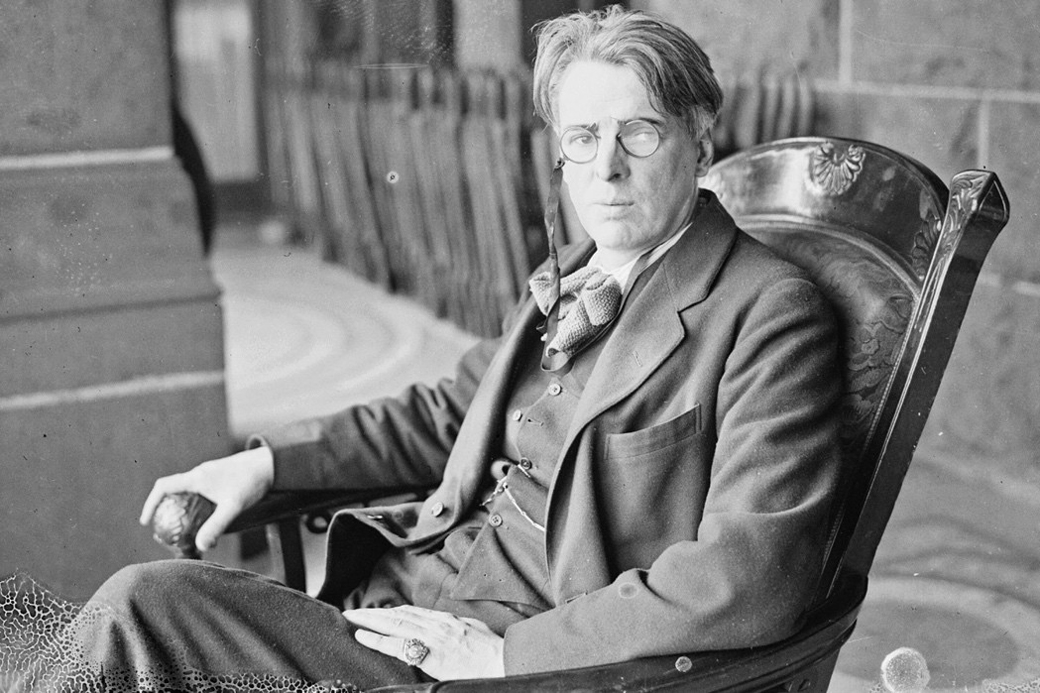
It is almost as if William Butler Yeats was born to be a poet. He had a natural propensity towards melancholy, and he was drawn to many topics which would fuel his complexity. At the same time the world in which he lived saw a terrifying accumulation of turmoil, change, chaos and uncertainty.
In Standard this Focus Area is called Close Study but in Advanced it is Critical Study and that is key to your teaching and students learning and responding. “Critical” is to make a judgment and that moves students from annotation and analysis to a genuine and intelligent consideration of different perspectives and ideas on the poems that can then be used to enhance and enrich student responses. Students should be encouraged to feel confident in the judgment they make especially if those judgments are substantiated by cogent reading to fulfill this feature of the syllabus: Students develop analytical and critical knowledge of a substantial literary text.
Indeed, this concept of Critical Study is highlighted in the syllabus description:
This allows (students) to develop their own interpretations of the text, basing their judgements on evidence drawn from their research and reading, enabling the development of a deeper and richer understanding of the text. (They) investigate the perspectives of others, and explore the ideas in the text, further strengthening their personal perspectives.
Other points to consider include:
A few resources to get you started
Ask yourself how to best cover the background of Yeats as his context shapes so much of what he writes
Material on background and context could later form the basis of a feature article in the discursive style which also includes references to Yeats’s own art as influenced by his own world.
Consider that artists, playwrights, poets, novelists are neither historians nor anthropologists. But their art often reflects their world and indeed many artists are active citizens who are passionate about the world around them. Think about the protest poets and singers who have inspired action over war, violence, climate change.
Before you move into the backstory of Yeats, Ireland and 20th century world events ask students to find one example from painters, poets, songwriters, novelists, or playwrights they know who have been inspired and moved by events around them, either in their own personal lives or the social, historical cultural, political contexts. Ask for three student volunteers to showcase their investigations in an initial lesson then hear from the others over the next few lessons.
Ask students to consider what characterises Irish society, culture and their people. They could ask their parents, friends or do an internet search. Start the lesson with a list of words which capture the Irish spirit. Consider the extraordinary quality and richness of Irish creatives and use this feature article to start the discussion.
Share the earlier information on Yeats and his backstory.
Share the earlier Brief description of the seven prescribed poems table so that students have an overview of the content of the suite.
It is important to give your students many informal writing opportunities. Often this focus area is not formally assessed until the Trial HSC so it is very important to ensure students are given many no-risk/low-risk writing opportunities.
After the second poem issue this question for students to write a 900-1000 word response:
From the first two poems you have explored what would you say are three of Yeats’ concerns?
After ‘Easter 1916’ and ‘The Second Coming’ students could respond to this question:
In what ways has Yeats built on ‘Easter 1916’ in ‘The Second Coming’?
“Yeats attracts us because he states eloquently our own unspoken doubts about our world.”
Do you agree? With close reference to three poems discuss this premise.
“Passion is at the heart of Yeats’s most significant poems.” To what extent is this true? In your response make close reference to three poems.
Imaginative
Choose one of these lines from Yeats as the starting point for an imaginative piece that explores something important to you:
The trees are in their autumn beauty
The worst are full of passionate intensity
While the best lack all convictionAll changed, changed utterly
Discursive
When we hear music or poetry or stories, the world opens up again. We’re drawn in — or out — and the windows of our perception are cleansed, as William Blake said.
Write an article in the discursive style which discusses the various roles that the Arts play in our lives. Consider referring to a range of artists including ones from popular and contemporary culture as well as those like Yeats and Shakespeare.
There are requirements for particular types of texts to be selected from the prescribed texts list for different courses. Great care must be taken in selecting a pathway of texts that meets all the requirements.
Four prescribed texts to be studied with at least ONE from each of the following categories (prose fiction, poetry, and drama OR nonfiction OR film OR media) and ONE authored by Shakespeare.
The pathway below includes a drama text by Shakespeare which can be found in all sections of the course except Texts and Human Experiences.
The lack of Shakespeare in Texts and Human Experiences has a significant effect on the pathway once you choose Yeats.
Possible pathway for HSC Advanced English with W.B. Yeats as first choice
Prose Fiction

Texts and human experiences:
Cold Enough for Snow by Jessica Au
Drama (Shakespeare) | Poetry
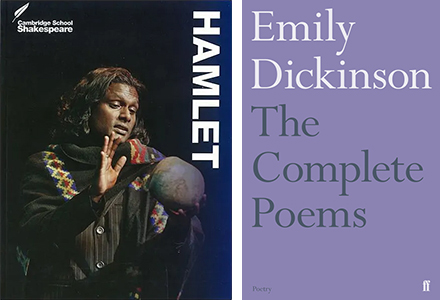
Textual Conversations
Hamlet by William Shakespeare | Prescribed poems from The Complete Poems by Emily Dickinson
Poetry
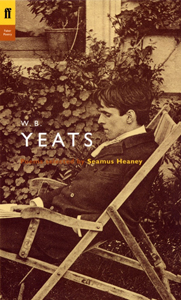
Critical study of literature:
Prescribed poems from Poems selected by Seamus Heaney by W.B. Yeats

Jane Sherlock and Deb McPherson are experienced and passionate English teachers. They have also been involved in the education sector as authors and presenters at teaching conferences.
$9.95 flat rate shipping or free over $110
Australian family-owned & sourced
Supplier to over 1,000 schools Australia wide