




Flat Rate Shipping
$9.95 flat rate shipping or free over $110

Aussie Owned
Australian family-owned & sourced

School Supplier
Supplier to over 1,000 schools Australia wide
For Stage 6 Year 11
Kae Tempest, born Kate Calvert in 1985, has aptly named herself. She chants up a storm in Brand New Ancients in a torrent of poetry that links modern lives with the passion and love, sacrifice and bravery, violence and fury of the old myths and gods.
The two families at the centre of her poem are just as dramatic and absorbing as the divine and human protagonists from ancient legends. We see the lives and loves of Kevin and Jane and Brian and Mary entwined. They raise children, Clive and Tommy, but Brian is the father of both. Tommy’s a dreamer and an artist. Clive’s a tough nut who never got enough love, who grows up angry and brutal with his mate, Spider; the marginalized bad guys. Tommy meets Gloria in the pub where she works behind the bar, he finds love and success but the speed of that fame is dizzying and Gloria is being left behind. All their lives intersect one night in ferocity and violence.
Tempest’s lyrics, their street cadence and rhythm, her repetition and rhyme sing to the soul. She is hard to forget once you have seen her, heard her and read her words. This poem must be read aloud and heard aloud in the classroom. Lyn Gardner in The Guardian captured what Tempest achieves when she wrote:
"Suddenly it feels as if we are not in a theatre but a church... gathered around a hearth, hearing the age-old stories that help us make sense of our lives. We're given the sense that what we are watching is something sacred.”
(15 Sept 2012)
Brand New Ancients teems with lines that beg to be repeated and remembered. There are lines that tug at the heart and resonate as an anthem for the current times and chorus like they give the audience a glimpse of the epic storytellers of old:
“There’s always been heroes
and there’s always been villains
and the stakes may have changed
but really there’s no difference.
There’s always been greed and heartbreak and ambition
and bravery and love and trespass and contrition –
we’re the same beings that began, still living
in all of our fury and foulness and friction,
everyday odysseys, dreams and decisions . . .
The stories are there if you listen.”
Kae Tempest (formerly Kate Tempest) is an English spoken-word poet and performer, a playwright, novelist and recording artist. In 2020 Kae Tempest came out as non-binary on Instagram and explained that in future they will be publishing their books and releasing their music as Kae Tempest:
“It’s pronounced like the letter K. It’s an old English word that means jay bird. Jays are associated with communication, curiosity, adaptation to new situations and COURAGE which is the name of the game at the moment. It can also mean jackdaw which is the bird that symbolises death and rebirth. Ovid said the jackdaw brought the rain. Which I love. It has its roots in the Latin word for rejoice, be glad and take pleasure.”
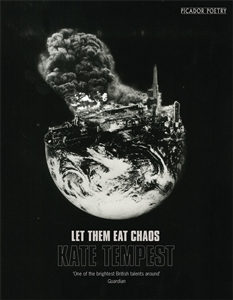
Kae Tempest’s ‘Picture a Vacuum’ (from Let Them Eat Chaos) is one of the short texts set for study in Module C in the HSC English Advanced course.
Brand New Ancients won Tempest the Ted Hughes Award in 2012 for the most innovative work by a living UK poet and the Off West End Award ("The Offies") for "Best TBC Production" in 2013. The TBC award “recognises the best in animation, pop up theatre, immersive theatre and any kind of production that defies existing categories!”
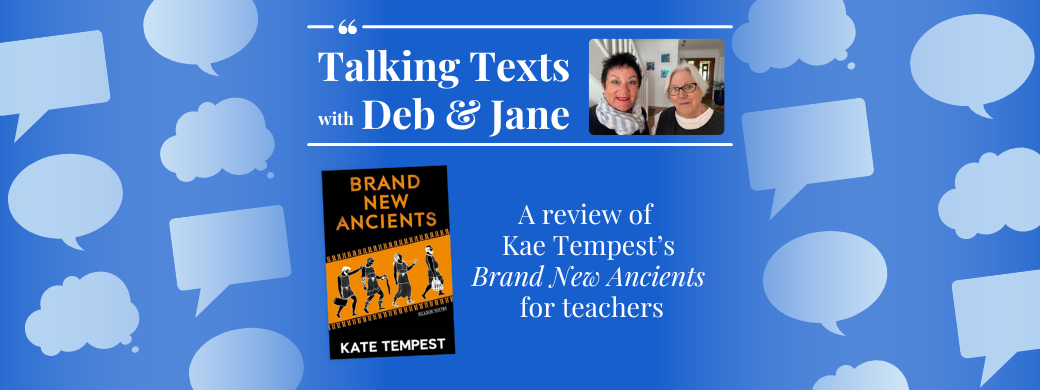
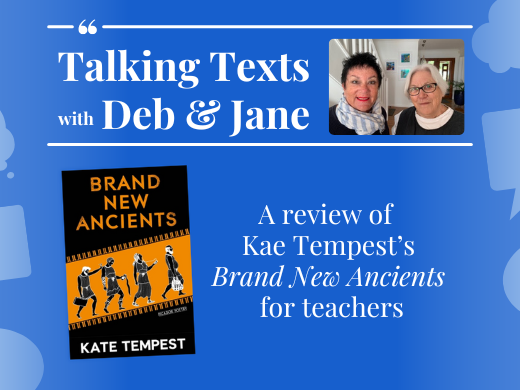
The cover design of Brand New Ancients cleverly echoes ancient Greek vases and robes. The four figures are modernised by their accessories as one carries a shopping bag, others a cascading drink can and a suitcase; another has headphones and running shoes while some are barefoot. They are brand new ancients indeed.
Show the class images of Greek pottery and friezes that show the gods and in groups ask students to contrast the cover with the friezes. Discuss the deliberate paradox in the title.
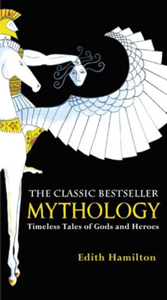
Tempest’s thesis is clear. We don't need to look to the past myths and legends to find ourselves. But the myths from the past offer a template for a discussion about what it means to be human with all the “anomalies, paradoxes and inconsistencies in human behaviour and motivations”; a reference from the rubric for the Common Module currently studied during the HSC. The ancient Greeks made their gods in their own human likeness and what a brawling selfish, egotistical bunch some of them were as they used their powers for their own gratification. More helpful gods regulated the climate, the seasons, and the crops. To help students appreciate the power and depth of Tempest’s characterisation in her poem direct them to Edith Hamilton’s classic bestseller, Mythology. It will be a great source for other myths and legends and a useful text to explore references in Brand New Ancients to such characters, objects and places as Pandora, Medea, Zeus’s daughters, winged sandals and Olympus. Ask students to research the behaviour and motivation of the gods referenced in the Medusa myth, Leda and the Swan, Pandora’s box, and of Zeus’ daughters such as Athena, Aphrodite and Persephone.
I didn't expect the poem to end with Brian. At the end of the poem, he sits on his porch in Thailand where his British pension gets him a young companion and an easy life. It’s a paradise for him, like a fair Olympus. As he reflects on his life and its “miserable course” he feels some shame and remorse for his actions and the people he left behind. But he believes “no dark old cloud could reach him here”. He raises his whiskey and dies.
“When I was young, all the things I’d hoped to be
I never was, but here I stand,
I’ve done what I’ve done, I’ve lived. I’m a man”.
Did Brian’s life have to end like this?
Could he have made other, better choices?
Should the poem have finished with Tommy and Gloria reunited instead of this sad white guy living in Thailand? What do you think of the ending?
Use this starter, “When I was young, all the things I’d hoped to be …” as an inspiration for imagining the reflections of Gloria or Tommy later in their lives and picturing the mini triumphs and the little tragedies they experienced and the ordinary heroism and dignity of their all too human lives.
“The Gods are all here.
Because the gods are in us.” Kae Tempest
Our lives make tales no less dramatic and powerful than those of the old gods.
To what extend do you agree with this statement? Discuss with reference to the poetry of Kae Tempest in Brand New Ancients.
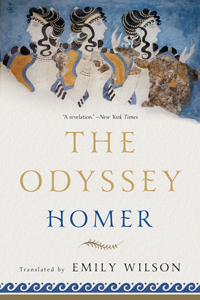
Brand New Ancients could be studied in Module B as a Close or Critical study of literature or in 'Narratives that shape our world' in conjunction with another text such as Homer’s The Odyssey in the outstanding translation by Emily Wilson.
Text requirements: Brand New Ancients is poetry and a quality text. It includes a range of cultural, social and gender perspectives.
Support classroom study with our Year 11 texts and study guides and English Years 11–12 Study Guides at Five Senses Education.


Jane Sherlock and Deb McPherson are experienced and passionate English teachers. They have also been involved in the education sector as authors and presenters at teaching conferences.
$9.95 flat rate shipping or free over $110
Australian family-owned & sourced
Supplier to over 1,000 schools Australia wide