




Flat Rate Shipping
$9.95 flat rate shipping or free over $110

Aussie Owned
Australian family-owned & sourced

School Supplier
Supplier to over 1,000 schools Australia wide
For Stage 5
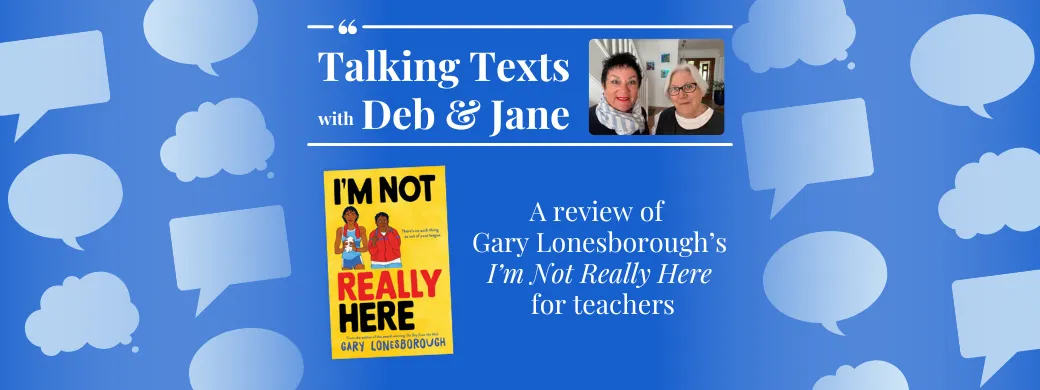
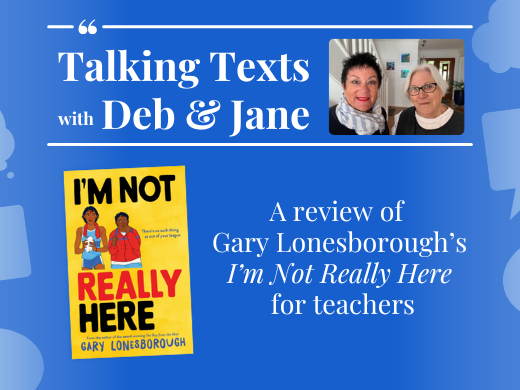
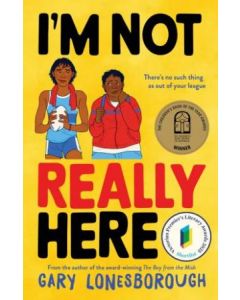
One of the joys of this blog is the continual discovery of engaging texts for our young people. At a time when we may despair at the demise of reading for pleasure, by not only adolescents but by society in general, we need to remind ourselves that one reason for this demise might be linked to what adolescents are given to read. The three books Gary Lonesborough has written are engaging, relevant, enjoyable and provoke many ideas about youth culture and experiences. YA writer Will Kostakis praises Lonesborough as a “bold, necessary new talent.” I reviewed Lonesborough’s second book We Didn’t Think It Through, a very powerful and compelling YA novel in May 2024 for Five Senses.
The NSW 7-10 English Syllabus states that across each stage, the selection of texts must give students experiences of a range of cultural, social and gender perspectives, including from popular and youth cultures. We know that student interest and engagement will be heightened if the texts mean something to our students’ lives. Texts which explore youth cultures will be effective choices, especially for disengaged or reluctant readers. You might consider youth cultures as a broad umbrella or entry point for a series of units. In the case of I’m Not Really Here you are not only providing a genuine voice exploring youth culture, but it is also authored by a First Nations writer.
I’m Not Really Here has several options for teaching:
Jonah King is part of a small, close-knot family of his dad Fred and his twin younger brothers, Zeke and Luke. Their mother has died and not only are the family still grieving but her contribution to the family finances was significant. The family are struggling with not meeting rental payments and now have to move around. They return to Patience, a small town where Fred grew up. Jonah is sensible, he cares for his younger brothers, is reliable and is often given the family’s domestic tasks and duties. Jonah has had challenges fitting in at his old school and dreads a recurrence of this at the new school. But he does find friends and he also finds love. For Jonah though, this path to romance is difficult: Jonah is Aboriginal, he is self-conscious of his weight and he is gay. Jonah has a crush on Harley but a relationship with Harley seems impossible. Harley is also Aboriginal, a star footballer, is very popular, good-looking with a well-toned and “chiselled” body.
Jonah is accepted into a friendship group which includes Tegan who is alternate in her behaviour and views, is feisty and very definite about the rules of friendship which she believes Jonah has broken. This provides more navigation for Jonah of the tricky world of adolescence.
The revelations of Jonah’s feelings for Harley are told with a tenderness and sweetness indicative of Lonesborough’s style. This feature endears the story to boys and girls as the challenges of teenage romance coupled with unrequited love will appeal to a wide range of readers. In addition the scenes set in the high school are very authentic and will resonate with adolescent readers.
Gary Lonesborough is a proud Yuin man who grew up on the South Coast of NSW and moved to Sydney to study film. Gary was a keen writer from childhood and enjoys talking about writing. His YouTube Writing tips Gary is engaging and offers valuable and accessible writing tips: https://www.youtube.com/watch?v=oGbyYUbOe_A
Another YouTube is his discussion about reading on Hook into Books: https://www.youtube.com/watch?v=8KiKstWU34Y
Gary has wide experience in working with adolescents including working in the youth justice system. His debut YA novel, The Boy From The Mish, was published by Allen & Unwin in 2021 and We Didn’t Think It Through in July 2023.
Written by First Nations author Gary Lonesborough with insights into his motivation as a writer to be found in the Author’s Note
‘I hate that I stopped writing. I stopped reading books too, because I could never see myself in them. Aboriginal characters were always secondary, written by non-Indigenous authors and different from my reality ...
‘It is important for Aboriginal kids to be able to read and love books written by Aboriginal authors – books where they can see themselves in the pages.’
1. Reading in the classroom: Give students the legitimacy, time and opportunity for reading I’m Not Really Here in the classroom.
2. Discuss the genre “coming of age” or “bildungsroman” and the characteristics of films and novels of this genre? This could include a protagonist who is an adolescent and experiences a range of situations as a typical rite of passage from childhood to adolescence to maturity. Why do such stories resonate so much with people of your age?
3. Focus on the novel’s title: During their reading ask students to take note of the pages where the novel’s title is mentioned as part of the narrative.
The key word of the title is “really”. In this context “really” is an adverb which modifies/shapes the verbs “I am.” “Really” here implies “in actual fact” and is evoking the idea that the reality is different to what people might imagine is true. Synonyms for “really” could be “in fact,” “in reality,” “actually.” So, this sentence used by Jonah several times in the story suggests that Jonah might be physically in the situation but emotionally he feels empty, alone or removed: : “I’m not actually here” is closer to what Jonah feels.
Once students have completed their reading, offer this task: In what ways does Lonesborough use the title as a sentence in his narrative to represent Jonah’s sense of belonging, identity, and self-worth? How does it fit with the novel as a “coming-of age” story? In your response include at least three specific examples from the novel. For example, pp 323, 360.
4. The ending
“We continue along the crowded street on a busy Saturday morning in Patience…I know what everyone else can see:
Two boys holding hands, walking down the street.”
Examine the novel’s final paragraph. In what ways does it draw together the key concerns of the novel? What has changed from Jonah’s feelings of “I’m not really here?”
5. Characters: Choose a character from each column:
| Column 1 | Column 2 |
| Jonah | Gordon |
| Harley | Zoe |
| Tegan | Jack |
Write a 500 word analysis of your chosen character from column 1 and how that character contributes to the novel’s key ideas. Include three specific references from the novel in your analysis. Add another 300 words where you focus on a character from column 2: what role does this character have in the novel?
6. The author
The syllabus includes this very valuable point about a text’s author: “Analyse how elements of an author’s personal, cultural and political contexts can shape their perspectives and representation of ideas, including form and purpose.”
Encourage students to read/view two sources that explore Gary Lonesborough’s “personal, cultural and political context.”
Written response: How did this extra reading/viewing help to build your understanding of and insights to “I’m Not Really Here?” What did you learn from this additional research?
This article in The Guardian is very accessible and a valuable starting-point:
https://www.theguardian.com/books/2021/mar/01/i-stopped-reading-because-i-couldnt-see-myself-in-books-so-i-wrote-one-instead
Other links:
7. Reading more Gary Lonesborough:
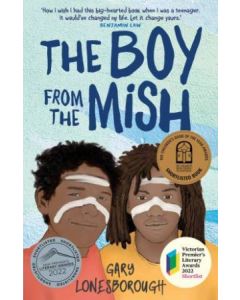
Students to read each novel as part of their sustained reading program or reading for pleasure. After reading the three, poll students as to which one was their favourite.
Arrange students in groups according to the favourite choice.
In groups students to list the various reasons why their choice was their favourite e.g. appeal of the main character, specific themes, insights to young adult challenges, the plot and storyline, narrative voice, setting.
Create a promotional text for your favourite with the title: Gary Lonesborough - his best yet.
This text could be a poster for the school library or English faculty corridor, a post for the school’s Facebook to encourage reading by Stages 5 and 6 students.
Create an engaging heading for your group’s promotion of your chosen novel.
Consider something like one of these:
Year 10 is hooked on books!
Books are not Boring!
Get Reading!
8. Reading and viewing widely about youth culture
While there is no specific definition currently in the new 7-10 English Syllabus glossary, this definition from the English 7-12 Syllabus 2012 is still very relevant:
“The shared beliefs, knowledge, creative activities, customs and lifestyle of young people, particularly teenagers, within a culture.
Youth cultures develop in those societies which differentiate teenagers as a group separate from children and adults. In Australia, the dominant youth culture identifies closely with popular culture and finds expression in the music and multimedia texts of popular culture.”
Consider a Project-Based Learning option for your class.
Students can work independently or in small groups.
Students are to choose 3-5 texts which explore key ideas and experiences related to youth culture. A starting-point for these texts is on pages 8-10 of this blog.
Choose a specific style of presentation which could include:
Text requirements: I'm Not Really Here is extended prose, a novel by an Aboriginal and/or Torres Strait author. It has cultural, social and gender perspectives, including from popular and youth cultures.
For more recommended texts suitable for Stage 5, explore our Year 9 texts and study guides and Year 10 texts and study guides.
Concepts could include Context • Representation • Point of View • Characterisation • Connotation, imagery and symbol.
A student uses a range of personal, creative and critical strategies to interpret complex texts EN5-RVL-01
Reading, viewing and listening skills
Reading, viewing and listening for meaning
Reading for challenge, interest and enjoyment
Reflecting
A student analyses how meaning is created through the use and interpretation of increasingly complex language forms, features and structures EN5-URA-01
Representation
Code and convention
Connotation, imagery and symbol
Point of view
Characterisation
Narrative
A student evaluates how texts represent ideas and experiences, and how they can affirm or challenge values and attitudes EN5-URB-01
Perspective and context
Style
(English K-10 Syllabus 2022 © NSW Education Standards Authority for and on behalf of the Crown in right of the State of New South Wales, 2023)





Jane Sherlock and Deb McPherson are experienced and passionate English teachers. They have also been involved in the education sector as authors and presenters at teaching conferences.
$9.95 flat rate shipping or free over $110
Australian family-owned & sourced
Supplier to over 1,000 schools Australia wide