




Flat Rate Shipping
$9.95 flat rate shipping or free over $110

Aussie Owned
Australian family-owned & sourced

School Supplier
Supplier to over 1,000 schools Australia wide
For Stage 5
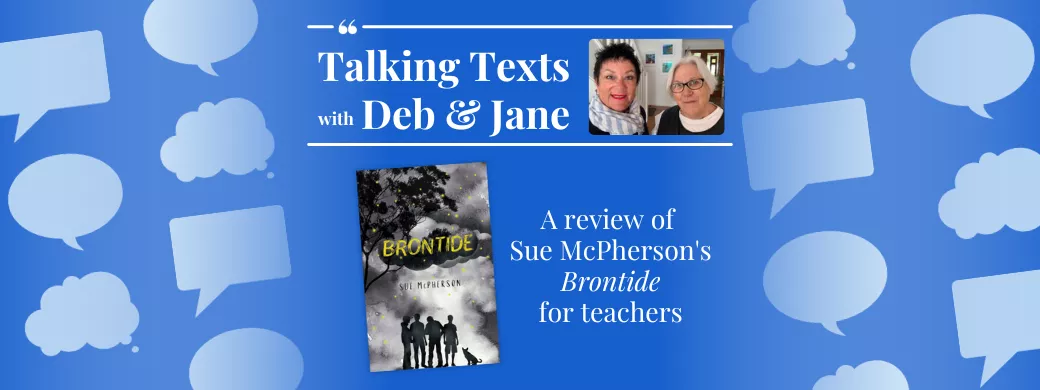
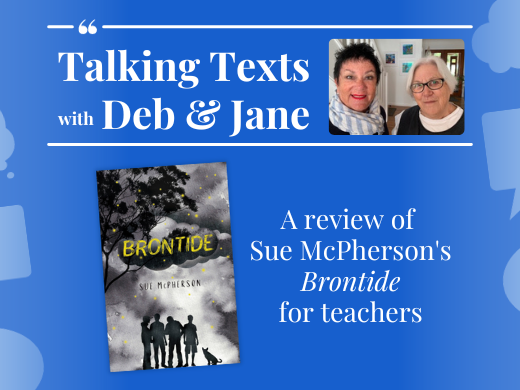
This short novel (132 pages) will make a big impact in the Year 9 classroom. It’s the story of four boys, their schools, their coming of age and their sometimes, dangerous games. Rob is in Year 12, fifteen-year-old Pen is his brother, sixteen-year-old Indigenous Benny Boy is friends with Pen but doesn’t trust Rob, and Jack is white, seventeen, new to the area and adopted into a First Nations family. Over five days, we hear about their lives, through storytelling sessions with a visiting author. The boys are authentic and appealing with rude, humorous, and challenging dialogue that reveals the family fractures and the love and trouble in their lives. This is an accessible and gripping novel that will engage all readers, and especially reluctant or disengaged adolescent boys. Its ending will shock them. Sue McPherson’s Author’s Note cunningly reinforces the story’s gut-wrenching plausibility, so much so that I had to reassure myself that Taralune High did not exist. It doesn’t, and this is a compelling work of fiction. Sue McPherson is a Wiradjuri/Irish/ Torres Strait islander. Reading Australia provides teaching notes at https://readingaustralia.com.au/lesson/brontide/
Read Cara Shipp’s Listening from the Heart: Rewriting the Teaching of English with First Nations Voices (2023 AATE 150pp) to explore better ways to engage with First Nations People and their stories, their history and culture and to understand the protocols and appropriate terminology to use when reading and studying texts by First Nation authors. This warm, wise and generous book will be a huge help in the classroom.
The title
Brontide is first mentioned by Benny Boy, as “the thunder you hear miles away, that’s the brontide” p.60 and Sue doesn't know the word or its meaning. In many ways the brontide rumbles through the whole novel; undercurrents, tensions, anger and misunderstandings are rife in its pages. Ask students to find some examples of these “thunderings” and share them with the rest of the class.
Group work on characterisation and class report
Assign a specific character to each group and ask them to present a precis of their character’s words, actions and interactions with others to the rest of the class. They could start by looking at the character profiles of each of the four boys: Rob on page 1, Benny Boy on page 56, Jack on page 73 and Pen on page 122. One group should explore the character of the author. Students could also take the roles of the four boys in a hot seat and defend themselves against questions from the community based on Pen’s media feed.
Group discussion re structure of the novel
In an interview with Connor O’Brien, Sue McPherson explains why she chose to write the novel as a series of interviews. She said:
As a reluctant reader in high school and an old book worm now, I specifically wanted to write a good yarn that anyone could access without getting bored. I tried writing Brontide in a normal format, but it felt flat and bored me to tears. I strongly believe the format was needed. Younger Sue would’ve loved Brontide. If I was given the option back in high school, maybe I would’ve fallen in love with books and words earlier.
Place students in groups to discuss the structure and interview format of the novel. What are its advantages and disadvantages? Consider the ways it represents teenage boys. Prompt students with what Pen says:
“there are lots of spelling mistakes in the memorial page feed” (of his creative writing) “but that’s how I wanted it. That’s how we talk and text and write. You said to be authentic…”
Consider how McPherson achieves that authenticity.
Text requirements: Brontide is a novel by Australian author Sue McPherson, who is an Aboriginal and Torres Strait Islander. Brontide contains intercultural and diverse experiences and cultural, social and gender perspectives, including from popular and youth cultures.
For more recommended texts suitable for Stage 5, explore our Year 9 texts and study guides and Year 10 texts and study guides.
Concepts could include Characterisation • Perspective • Narrative.
A student uses a range of personal, creative and critical strategies to read texts that are complex in their ideas and construction EN4-RVL-01
(English K-10 Syllabus 2022 © NSW Education Standards Authority for and on behalf of the Crown in right of the State of New South Wales, 2023)



Jane Sherlock and Deb McPherson are experienced and passionate English teachers. They have also been involved in the education sector as authors and presenters at teaching conferences.
$9.95 flat rate shipping or free over $110
Australian family-owned & sourced
Supplier to over 1,000 schools Australia wide