



Flat Rate Shipping
$9.95 flat rate shipping or free over $110

Aussie Owned
Australian family-owned & sourced

School Supplier
Supplier to over 1,000 schools Australia wide
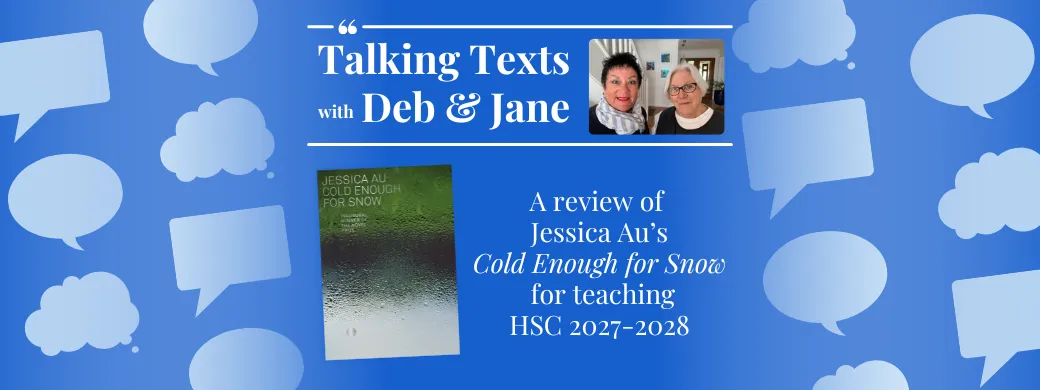
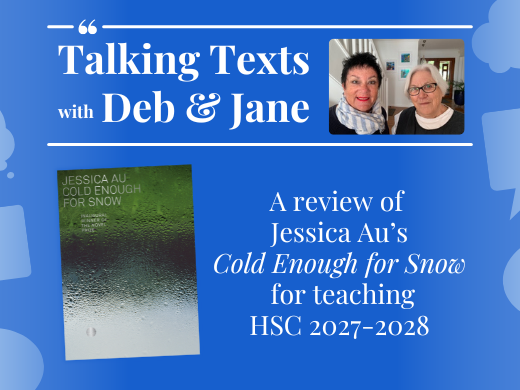
Cold Enough for Snow is set for study in 2027-2028 in Year 12 for Advanced and Standard in Texts and human experiences.
Jessica Au is an Australian writer, currently based in Melbourne. Cold Enough for Snow is her second novel; her debut, Cargo, was published by Picador in 2011 when Au was twenty-five years old.
A young woman has organised a holiday to take her mother to Japan. It is October and the weather is colder and wetter than they had expected; indeed, the mother reflects on whether the temperature will “be cold enough for snow.”
In their travels they visit art galleries, churches, cafes and restaurants. The mother and daughter are sometimes distant from each other but there is a determined attempt by the daughter to get to know her mother. The narrative takes several digressions back to the mother’s homeland, Hong Kong and also to the narrator’s other family and their experiences.
It is as if this particular trip becomes partly a journey of self-discovery and the digressions become an important impetus for reflection on the memories, moments and musings that make up the broader human experience.
It is also an affirmation of the experience of travel to sharpen our senses and to more closely observe the small details around us. It is a celebration of the ordinary and how we can find the extraordinary.
Awards
In 2020 Cold Enough for Snow won the inaugural Novel Prize, a new biennial award offered by three international publishing houses for “any novel written in English that explores and expands the possibilities of the form.” The prize rewards works which are innovative and imaginative in style. The competition had 1500 submissions and Cold Enough for Snow won unanimously. The novel has been translated into fifteen languages.
Other awards included winning the Prime Minister’s Literary Award – Fiction 2023, the Victorian Premier’s Literary Award – Fiction 2023 as well as the Victorian Prize for Literature 2023 and the Readings Prize – New Australian Fiction 2022.
For each of these content areas students need to understand in what ways/how are these experiences are represented in Cold Enough for Snow.
In their reading and responding students:
Initial responding
It is very important to encourage students to start writing early in the novel’s exploration. The sooner students start to write, their confidence, skills and capacity are increased. If this occurs early, it becomes normalised especially in low risk/no risk writing environments. Building competence and confidence is critical to student success.
Task
Re-read the first five pages.
You can listen to the first two pages on the Bolinda site: https://shop.bolinda.com/audioexcerpts/9781867597810.mp3
Consider the specific experiences and the narrative and language choices made by Au in her opening.
To build student confidence ask them if they noticed:
What else have they noticed: build a class list and students use this list for students to respond in class in about twenty minutes to this task:
In what ways are we drawn into Au’s representation of human experiences?
Exploring further:
In small groups students to make a list of the different experiences and emotions that are explored in this novel: build a table for students to contribute through either a share electronic folder or printed documents.
| Experiences | Emotions and qualities related to these experiences | In what ways are these experiences, emotions and qualities represented |
Consider how these representations are providing insight to:
|
| Observation and contemplation | |||
| The role of memory | |||
| Truth and memory | |||
| Families | |||
| Relationships | |||
| Love and obligation | |||
| Travel and its value | |||
| Food as a reminder and motif | |||
| Culture and identity | |||
| The power and effect of literature |
Au’s Style
Structure and narrative
Ask your students: in your reading did you notice how Au plays with the chronology? This echoes with how our own thoughts often wanders from one topic to another in a seemingly random way. Life and human experiences are invariably not sequential, ordered, predictable and instead, our thoughts, conversations, actions are often similarly truncated, isolated like a series of snapshots from our memories or life experiences.
Once students become used to this non-linear style the novel enables authentic exploration of the unpredictability and randomness that life can be. We can often digress to the past and different associations of people and places or we might sharpen our focus on something in front of us that takes us in another direction.
Take note of where the narrative digresses to memories, the narrator’s own past, different experiences of her sister, her uncle, her partner Laurie.
For example, on p 53-55 the narrative point of view focalises the sister- indeed, the detail is as if the sister is now telling the story.
This digression is a deliberate narrative construct by Au.
Access this review in The Guardian and specifically consider this insight:
‘Using tense as a fluid frame, Au’s words evoke imaginings and memories, speaking of how human lives are lived in minds that move fluidly through moments in time. She constructs layers of imagery using echoes and projections; her characters distort reality in subconscious efforts to see life as they imagine it to be. Increasingly thin membranes between memory and moment reflect the fragility of solid chronology within the book itself, while the interior world of the narrator brings personality and texture to this unusual story’.
Hold a class discussion about the strengths and weaknesses of this stylistic choice: how effective is it? Divide the class into two groups: one to represent the strengths of this style and the other its weaknesses. Each group to present examples from the novel which affirm their group’s assigned point of view. Use the groups’ evidence to write a persuasive piece on the point of view you most align with.
This task is to encourage a personal response and to build student confidence in their own judgment.
Other structural features
Recurring motifs:
On p. 1 Au reinforces the importance for contemplation and close focus on our world: if you care enough to notice. p 1. This is like a plea to notice and absorb the world we are in and this is one of Au’s impressive skills: the power of contemplation.
Notice her detail and imagery:
Using reviews
Share with students that Cold Enough for Snow unanimously won the 2022 Novel Prize competition where the judging criteria includes: ‘any novel written in English that explores and expands the possibilities of the form. The prize rewards works which are innovative and imaginative in style’.
To orient students to this style and mood share some reviews:
Task: highlight two comments which most resonate with your own response to Cold Enough for Snow and include in a future analytic task.
Integrating Craft of Writing
With a change from the previous syllabus of prescribing specific texts for Craft of Writing, the opportunities have broadened to enable authentic connections with texts from the other focus areas including Texts and Human Experiences. Cold Enough for Snow is a rich source of Au’s craft to inspire and shape our students’ craft.
“I read all the plays, and then the books on the plays…I watched films and read about artists and directors and poets. Each time, it was like I was travelling at the speed of light, as I had spent all my life living in one dimension…” p.27
Continue this extract as a piece of imaginative, discursive or persuasive writing that evokes a particular emotional response in the reader.
The more opportunities students are given to write about Cold Enough for Snow, the more confident they will be for the big stakes of their Trial and HSC. Consider workshopping some of these questions, writing introductions, essay plans and choosing quotes to best suit the question.
There are requirements for particular types of texts to be selected from the prescribed texts list for different courses. Great care must be taken in selecting a pathway of texts that meets all the requirements.
Four prescribed texts to be studied with at least ONE from each of the following categories (prose fiction, poetry, and drama OR nonfiction OR film OR media) and ONE authored by Shakespeare
Students are required to closely study three prescribed texts with ONE drawn from each of the following categories: prose fiction, poetry, drama OR film OR media OR nonfiction.
Pathway 1 for HSC Advanced English with Cold Enough for Snow as prose fiction first choice
Prose Fiction

Texts and human experiences:
Cold Enough for Snow by Jessica Au
Film | Poetry

Textual conversations:
Bright Star directed by Jane Campion | Selected Poems of John Keats
Drama (Shakespeare)
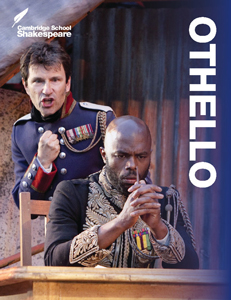
Critical study of literature:
Othello by William Shakespeare
Pathway 2 for HSC Advanced English with Cold Enough for Snow as prose fiction first choice
Prose Fiction
Texts and human experiences:
Cold Enough for Snow by Jessica Au
Drama (Shakespeare) | Nonfiction

Textual conversations:
Julius Caesar by William Shakespeare | The Prince by Niccolo Machiavelli
Prose Fiction
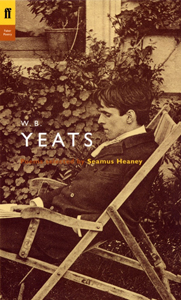
Critical study of literature:
Selected Poems by WB Yeats
Pathway 1 for HSC Standard English with Cold Enough for Snow as prose fiction first choice
Prose Fiction
Texts and human experiences:
Cold Enough for Snow by Jessica Au
Drama

Language, identity and culture:
Shafana and Aunt Sarrinah by Alana Valentine
Poetry

Close study of literature:
Collected Poems by Carol Ann Duffy
Pathway 2 for HSC Standard English with Cold Enough for Snow as prose fiction first choice
Prose Fiction
Texts and human experiences:
Cold Enough for Snow by Jessica Au
Poetry
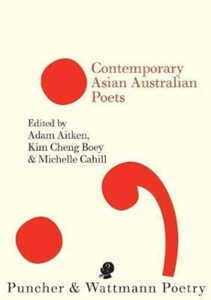
Language, identity and culture:
Contemporary Asian Australian Poets edited by Aitken, Boey & Cahill
Film

Close study of literature:
Arrival directed by Denis Villeneuve

Jane Sherlock and Deb McPherson are experienced and passionate English teachers. They have also been involved in the education sector as authors and presenters at teaching conferences.
$9.95 flat rate shipping or free over $110
Australian family-owned & sourced
Supplier to over 1,000 schools Australia wide