





Flat Rate Shipping
$9.95 flat rate shipping or free over $110

Aussie Owned
Australian family-owned & sourced

School Supplier
Supplier to over 1,000 schools Australia wide
For Stage 6
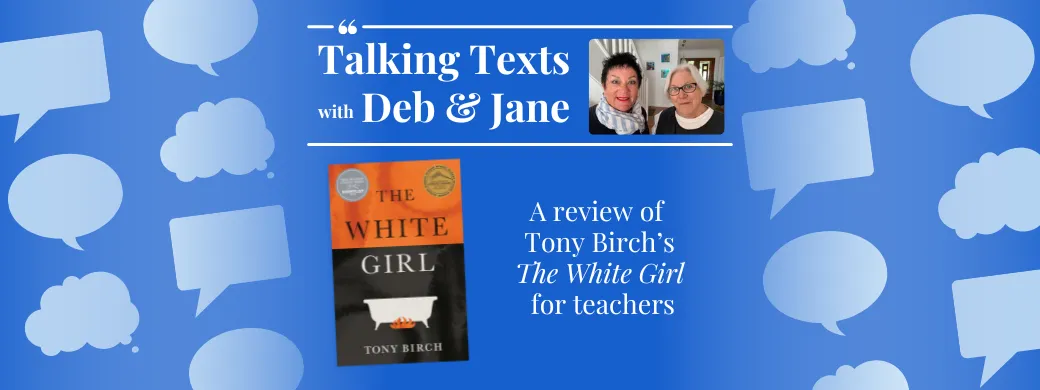
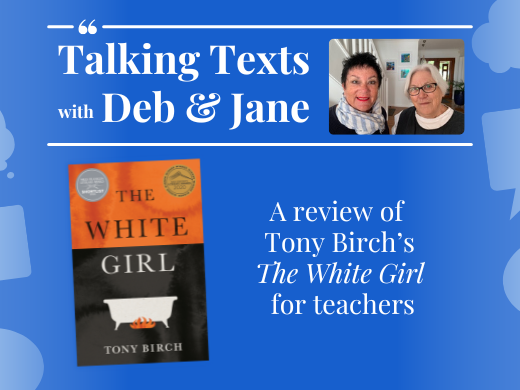
The White Girl lifted my spirits when I read it because it is such an authentic and compelling story about people in Australia and the history, cultural values and identity of First Nations peoples. It’s a celebration of the strength, resistance and resilience of Aboriginal women and a wonderful read. While I’m disappointed it was not set for the HSC in 2027/8 its availability for study in Year 11 is happy news for teachers and students and you don't have to wait until 2027!
In Stage 6 teachers and students need to take care to meet the text requirements of the new English Syllabus (2024) which is set for study in 2027 and 2028. These requirements vary from course to course and they include that across Stage 6 “the selection of texts must give students experience of texts authored by Aboriginal and/or Torres Strait Islander Peoples”.
Selecting First Nations texts in both years would enable students to fully engage with the requirement, however wherever you explore First Nations texts it is important that you consider the following points set out in the text requirements in relation to the texts you select.
Extract from the NSW text requirements for the new Stage 6 English Syllabus courses (2024)
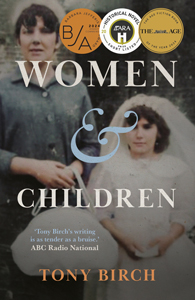
There are no prescribed texts for Year 11 and The White Girl would be an excellent choice for Close study of literature Standard and Critical study of literature Advanced. The White Girl could also be studied in Advanced Reading to Write with a focus on the representations of First Nations histories. Other texts could be included in Reading to Write e.g. Edenglassie, Women & Children, Dark as Last Night (short stories), The Yield and poetry from the First Nations anthology, Firefront.
Tony Birch is a First Nations writer and academic. At the Sydney Writers Festival in May, 2024, he said he didn’t want to describe violence in The White Girl, he wanted to look at the family’s ability to survive it. His references to his own early life were frank. He said there were no men of value in his growing up and both his father and grandfather were very violent, but female love was very strong and a vital part in surviving that violence. He didn’t come across any Aboriginal men role models until he met Jack Charles and he was “everything you would want in an old man- calm, wise and loving”.
In 2020 The White Girl, was the winner of the NSW Premier’s Literary Awards Indigenous Writers Prize and shortlisted for the Miles Franklin Award. In 2017, Birch became the first Indigenous writer to win the Patrick White Award. The $25,000 cash award is given to a writer who has been highly creative over a long period. Other books by Tony Birch include Blood, Dark as Last Night (short stories) and Women & Children.
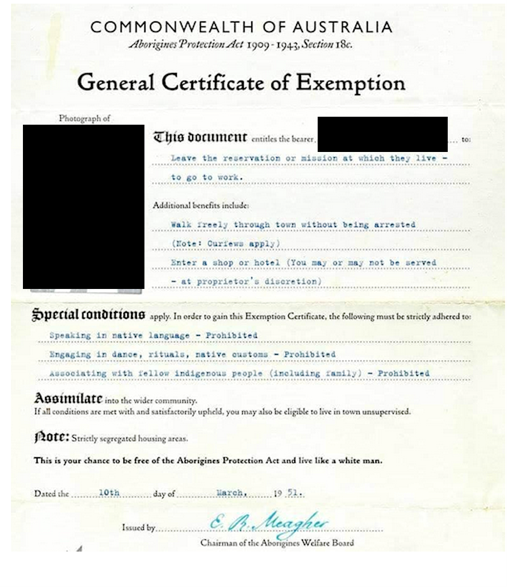
The White Girl is a story about fundamental human decency, love of families, support of friends and about empathy and understanding. It is also about the evils of racism. It is a powerful historical novel set after the Second World War in Queensland, at a time when Aboriginal and Torres Strait Islanders had no voting or citizenship rights. The small frontier town of Deane is slowly dying with only 127 people left. As Odette Brown says, “That wouldn’t include my mob- they don't count us.” Odette is the Aboriginal grandmother of twelve year old Sissy, the white skinned girl of the title and they share a strong and loving family bond. Odette’s own daughter, Lila, fled Deane after sexual abuse from a local farmer. Under the Aborigines Protection Act, First Nations people at this time had their lives controlled by police guardians. They could be punished for speaking their language and could be removed from family. Where they lived and what they did could always be ordered by the police guardians. Odette and Sissy live out of town in an abandoned mining camp and stay under the radar to remain on Country and near the graves of their ancestors. Odette has friends like Henry, who builds Sissy a bike for her birthday and the feisty Millie Khan. A new doctor, refugee Dr Singer provides good medical advice about Odette’s growing tumour. When a new and menacing police officer, Sergeant Lowe arrives, Odette is fearful that Sissy will be taken away from her. Odette plans to travel away from her Country to the city and acquire an ‘exemption’ from the Act. This exemption certificate was a cruel device to separate Aboriginal people from their families and friends by giving them some freedoms from the oppressive Act but forbidding any association with their mob. Officer Bill Shea, who went to school with Odette signs a travel permit for her (despite knowing his boss, Sergeant Lowe, refused to do so), and Henry drives Odette and Sissy to the train station. The journey is difficult and she must travel as an Aboriginal servant to Sissy, who poses as a rich white girl. Even when they reach the city, exposure and punishment are a constant threat as Sergeant Lowe pursues them. But Odette and Sissy find help and support from diverse people as they find a new life in the city.
Read Cara Shipp’s Listening from the Heart Rewriting the Teaching of English with First Nations Voices 2023 AATE 150pp to explore better ways to engage with First Nations People and their stories, their history and culture and to understand the protocols and appropriate terminology to use when reading and studying texts by First Nation authors. This warm, wise and generous book will be a huge help in the classroom
In addition, extensive teaching notes by Cara Shipp on The White Girl are available online from UQP.
When undertaking a study of a substantial literary text students ‘develop their understanding and appreciation of the texts distinctive qualities, meaning and value.’ They consider construction, content and language as well as the text’s reception and develop their own personal responses which are supported by critical perspectives and close textual analysis’. (From the Stage 6 Advanced Syllabus for 2027/8).
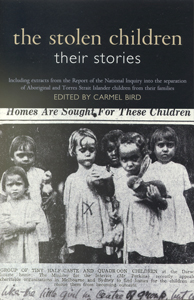
Before handing out the text to students give students an opportunity to research the background to the novel by reading about the Stolen Generation and the abhorrent practices allowed and encouraged under the Aborigines Protection Act, by accessing these texts:
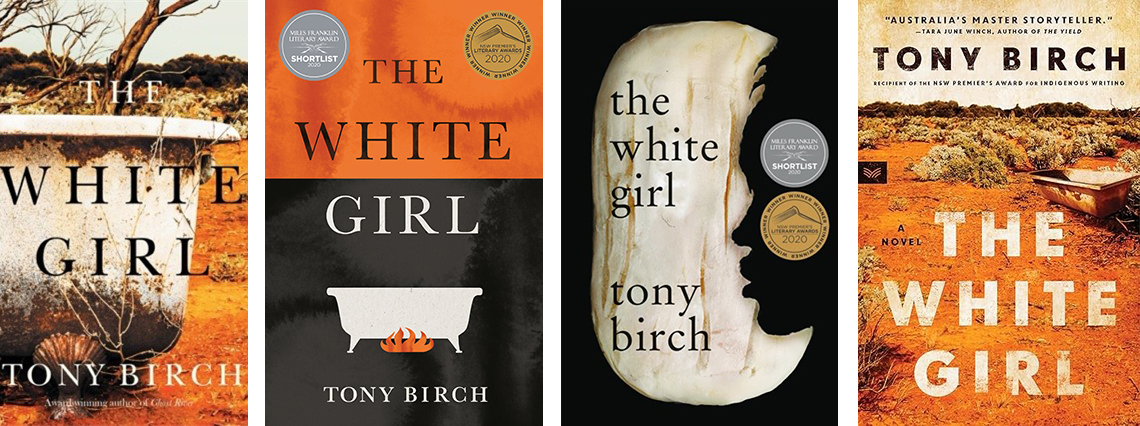
Four distinctive and powerful covers are available for The White Girl. Three of them feature the iron bath, which comes to symbolise the warmth and closeness of relationship between Sissy and her grandmother and which also provides comfort and support to both of them. The black and white cover may be for the publication of the novel in the USA. Ask students to consider what the covers might indicate about the contents of the novel.
Below you will find a table which links some of the text requirements points with quotations from the novel and from the author Tony Birch. In groups ask students to consider the context of the extracts and in what ways the quotations reflect the text requirements for study and what other incidents and quotations could make a connection.
| Text requirements to consider when studying texts authored by Aboriginal and Torres Strait Islanders | Extracts from the text and comments by the author | Explore the connections |
| The artistic and Cultural value of these texts, including ideas, arguments and representations of identity, histories and Cultures | ‘Deane carried the blood of so many Aboriginal people on his hands- it could never be scrubbed away, not from the man himself or the town that carried his name. The Line had been drawn a century earlier to separate the Aboriginal people incarcerated on the nearby mission from the good white settlers of Deane. A government regulation deemed that any Aboriginal person living west of Deane’s Line was a resident on an Aboriginal reserve.’ p7. | |
| how Country/Place, Community and lived experiences shape the perspectives of Aboriginal and/or Torres Strait Islander Storytellers and audiences |
‘Don’t you think I know that, Henry? I know every inch of this town and all the country round it.’ p12 ‘I thought there was none of your lot left around here.’ Many years had gone by since Odette had last seen Joe Kane but the man’s anger, evident in his older son, was unmistakable. ‘Oh, my people are still here, son. A few of us are above the ground, the rest are below it. We’ve always been here and we’re going no place.’ p19 She was unnerved to see a column on the left side of the blackboard documenting the names of each known Aboriginal child of any mixture of blood within the jurisdiction. The second column listed the age and birth date of each child. The third column listed a parent. The final column, beneath the title caste, listed descriptions such as half-caste, quarter-caste and octoroon. Odette ran an eye down the board and counted sixteen names. Towards the bottom of the list was the name of her granddaughter, Cecily Brown. Alongside it were the words, near white–caste unknown. She closed her eyes and willed herself to contain her growing anger. p106 ‘Odette, let me warn you, for your own good as well as your grandchild. You can’t be taking her across the State. Not on a bus, a train, or on foot. That permit will get you some freedom, but not her. You’re living under the Act, and she’s under the Act as well. That girl is not permitted to travel anywhere. It’s as simple as that. You take her out of the district and get caught, you’re likely to lose her for good. You know that better than me.’ p115 |
|
| how Storytelling, Aboriginal Languages and Aboriginal English are expressions of Culture, identity and Customary practices |
‘[In the] Aboriginal community, storytelling is massive — stories told around the kitchen table or at the pub or at the footy ground," …Aboriginal people [have] always told stories of where they came from.’ Tony Birch ABC RN ‘Through the stories,’ Odette said. ‘I’m telling them to you, and it will be your job to remember. It’s just like the story in the book you’re reading. The story of the dog from Africa. You told me about that today, and already I can remember it. Our stories are not written in any books, which means you’ll need to keep telling them to your own family one day.’ p119. |
|
| how the modes of these texts may recognise and contribute to Cultural conventions or practices of oral Storytelling | Please, sit,’ she instructed, ‘on the ground with your people.’ Sissy sat on her great-grandmother’s grave and traced her name and the date of the woman’s death with a fingertip. ‘Why is it,’ Sissy asked, ‘that here, next to the day of her birth the word written down is Unknown? Everyone knows their birthday, don’t they, Nan?’ ‘Not back then, they didn’t. Your great-grandmother, she wasn’t born on the mission. There wasn’t any mission when she was born. She was free. Born on her country. Birthdays didn’t matter so much before the mission days.’ ‘That means nobody knows how old she was?’ ‘Well, maybe not the day or the year, but she was a respected woman. That’s all we need to know.’ p118 | |
| how Cultural symbolism, imagery, allusion and irony are used to shape meaning | ‘Odette was thinking of her own childhood and the rare but valued time she spent in the bush surrounding the mission. She often shared these stories with Sissy, yet she also carried other memories of the mission that she kept to herself. These had etched themselves into the telling wrinkles on her face.’ p41 | |
| how personal values and perspectives are broadened and reconsidered through engagement with these texts |
Born on the mission, Odette had been separated from family and placed in one of the outbuildings, where she’d spent many nights listening to the sobs of younger girls. Whenever she felt a need to cry, Odette had slipped outside and sat on the back step of the laundry rooms, yearning for her father, Ruben. Although the men’s dormitory was no more than fifty yards away Odette was not permitted to speak to her father, except on Sunday mornings after Mass. p21 Although having faith in white people could be a futile exercise, Odette had never quite given up on them, a belief she’d inherited from her father, who liked to express the view that there was some good in all people. If there was good in men such as Lowe and Joe Kane, it was deeply buried, Odette thought. She understood that Lowe would never allow her to travel; he was a man incapable of understanding what was in the heart of an Aboriginal woman. p111 |
|
| texts that originate from a range of diverse Communities | ‘There is the loss of Country in urban settings, (but) ... there were eight Aboriginal households in Fitzroy in two streets where I grew up and direct connections alive to enslaved ancestors’ Tony Birch at Sydney Writers Festival May 2024 |
The White Girl was launched at Readings book shop in Carlton Victoria in 2019. The novel celebrated the courage and heroics of Aboriginal women. Birch’s daughter Siobhan, who officially launched the book, said it is about the fact that at a time in history when people were given legal licence to do awful things to Aboriginal people, not everyone did. The ABC reported that Birch said that he drew his inspiration from the women in his life, and the realisation which struck him one day that these women would unhesitatingly die for their children. “This book is a thank you to the women who would not be moved when it came to the protection and wellbeing of those they love.”
“I would not presume to tell the story of any child left behind to deal with loss and the resultant trauma. What I do hope for this novel, is that the love and bravery conveyed by Odette and Sissy provides some understanding of the tenacity and love within the hearts of those who suffered the theft of their own blood … I knew at the outset that I was going to write a novel that could reach Aboriginal women. Again, for all the family experience and all the material I’d read in the public records office and what I’d heard from other people, I was determined to write a really strong, central female character.’ Tony Birch about his novel The White Girl.
In what ways does Tony Birch represent a really strong, central female character in The White Girl? In your response make detailed references to the text.
The White Girl Meets Stage 6 text requirements for prose fiction, Aboriginal and/or Torres Strait Islander author, Australian author, social, cultural and gender perspectives.


Jane Sherlock and Deb McPherson are experienced and passionate English teachers. They have also been involved in the education sector as authors and presenters at teaching conferences.
$9.95 flat rate shipping or free over $110
Australian family-owned & sourced
Supplier to over 1,000 schools Australia wide