






Flat Rate Shipping
$9.95 flat rate shipping or free over $110

Aussie Owned
Australian family-owned & sourced

School Supplier
Supplier to over 1,000 schools Australia wide

When doing critical thinking questions, it is important to carefully read the information given, look carefully at any visual stimulus and apply rules consistently. Sometimes students can feel a bit overwhelmed, focus on being right rather than the process. If they can remember to be calm and look at all aspects of the question it will be helpful. They can then eliminate what does not fit the information in moving to selecting their response. When they do this they should be able to justify why each of the non-selected options were eliminated.
Try the sample question below.
About the author: Mohan Dhall is an experienced teacher and teacher-educator, author and educational manager. Trained in gifted education, Mohan has developed many critical thinking courses for students and has also trained teachers in critical and creative thinking skills. As Director, he ran one of Australia’s longest running school based centres for gifted children. He has written hundreds of different types of critical thinking questions and had more than 70 books published. His latest books, Critical Thinking Book 3 and Mathematical Reasoning Book 3 have recently been published by Five Senses Education.
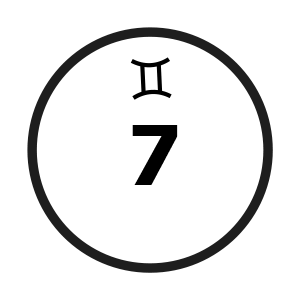
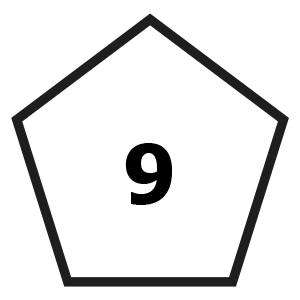
A toy clock uses number tiles to denote the numbers from 1 to 12. The following image shows some of the number tiles from the clock.

Which of the following may be one of the missing number tiles?


The answer is B.
If you look closely, you will see the following patterns:
Each of these numbers: 3, 6, 9 and 12 are on pentagons. Note that the 3 and 9 indicate this. Since 9 is used up in the stimulus it cannot be one of the missing tiles and thus C is eliminated.
Now to the round tiles. These are numbered: 1, 2 and 4, 5 and 7, 8 and 10, 11.
The pattern to these is that the symbol on 4 and 10 match. This indicates that the symbols apply to digits that have a difference of 6.
Hence 1 and 7 will have an identical symbol. 2 and 8 will have the same symbol (but different to any other matching pair). 4 and 10 have an identical symbol – as can be seen. 5 and 11 will have matching symbols.
So, since 1 and 7 have matching symbols, B must be correct and A and D can be eliminated as incorrect.


$9.95 flat rate shipping or free over $110
Australian family-owned & sourced
Supplier to over 1,000 schools Australia wide