



Flat Rate Shipping
$9.95 flat rate shipping or free over $110

Aussie Owned
Australian family-owned & sourced

School Supplier
Supplier to over 1,000 schools Australia wide
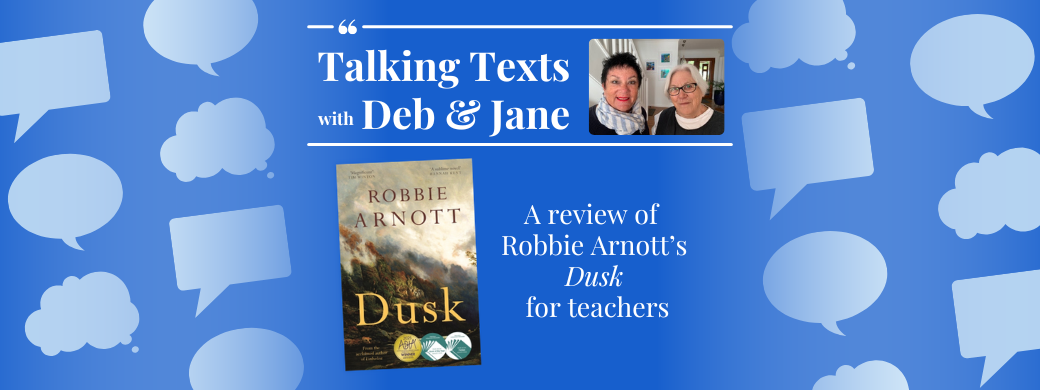
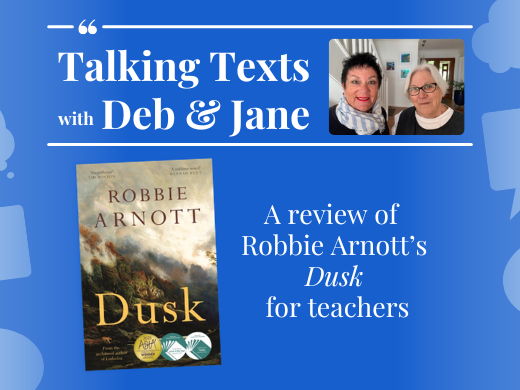
Dusk is the second novel by Robbie Arnott I have reviewed for Five Senses and this marvellous Tasmanian writer does not disappoint. Dusk is many things: an antipodean western, a search, a quest, a hunt for a lethal wild cat, an examination of dispossession and belonging, an exquisite rendering of an Australian landscape. It draws on a powerful myth in Australian life about escaped panthers roaming the land. The novel is emotionally draining and hugely engaging. It is full of beautiful and harsh landscapes and has an electrifying conclusion, easily the best ending I have read in many years. I would be hard put to find another novel that could appeal so strongly to students in Years 10 for a close study or an author study and it could be used in Year 11 at either Standard or Advanced level.
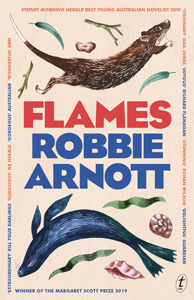
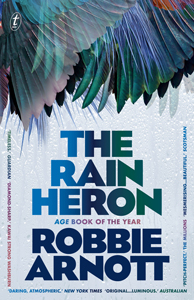
Robbie Arnott is Australian, and he lives in Hobart, Tasmania. His previous books include Flames, The Rain Heron, and Limberlost. Limberlost won the Fiction, Age Book of the Year, 2023 and was also the winner of Adult Fiction Book of the Year and of the Dick and Joan Green Family Award for Tasmanian History in 2024. Limberlost was shortlisted, Miles Franklin Literary Award in 2023 and is on the HSC list for 2027/2028 in Module B Standard.
The novel opens in what appears be to Lutruwita/Tasmania in the 1800s with the following two sentences which propel the reader straight into the narrative:
“Word reached the twins that a puma was taking shepherds up in the highlights. And not just shepherds – the hunters who’d tried to catch the creature were being killed, too, killed and dragged through the snow and devoured.”
The twins are thirty seven year olds Iris and Floyd, forced to live on the edges of society, damned in its eyes by the criminal and violent actions of their escaped convict parents. The twins are closely bonded; they care for each other and depend on each other. They move often, just surviving by seeking labour, hunting and living off the land, often hungry, always trying to prove that they are good, reliable workers. Dusk, the puma, is the last of the wild cats from the Andes that had been introduced into the country to curb the deer population. Instead, the pumas go after the sheep and then the shepherds and then the hunters sent to kill them. Dusk has a price on her head and the bounty offered by the graziers attracts the twins and they begin a journey to the highland frontier town of Rossdale. In flashbacks the reader comes to understand their abusive past and Floyd’s chronic pain, caused by an injury gained when rescuing his sister from drowning. It is Iris who carries an ointment that provides her brother with some relief from the debilitating pain. It is also Iris who spends a day working with Aboriginal peat cutters in the highlands. As they prepare to leave for the puma search Iris finds another bounty hunter, Patrick Lees, attractive, while Floyd is suspicious of his motives. Patrick is a duplicitous and dangerous man with whom they form an edgy partnership to find the puma. As the hunt continues the twins find themselves in a landscape of mist and snow and legend amid huge bones of past prehistoric creatures. The presence of the puma is keenly felt. It comes to light that another man, Jon, a famous Patagonian hunter who had gone missing had hired Lees as a guide and been left for dead by him. After another terrible betrayal by Lees the twins survive and join forces with Jon in capturing and moving Dusk as the novel travels to a remarkable conclusion.
When you read the first sentence in a book many things can happen. You could be drawn into the world of the book immediately, transported to another time or place and left there to emerge hours later, a changed human being. Or you could be puzzled, shocked, bored or hooked by that opening line. The first words in a novel can be powerful predictors of what is to come, or they could frustrate and annoy the reader. Much depends on that opening sentence or statement. Some books open on a single word. Others with a very brief line. A number have a long and involved paragraph that snakes its way into the reader’s heart. If students spend some time on that opening paragraph it can reward them further into the book. One way to linger on that opening is to ask students to make a prediction on what is about to unfurl in the book.
Before the book is issued to students read the opening line aloud to them or use the Audible Preview version of the introduction read by Zoe Carides.
“Word reached the twins that a puma was taking shepherds up in the highlights. And not just shepherds – the hunters who’d tried to catch the creature were being killed, too, killed and dragged through the snow and devoured.”
First prediction: Ask them in groups to discuss what possibilities occur to them about the unfolding story. Each group makes a short prediction about possible characters, plot lines and setting. The group writes it down, shares it with the class.
Second prediction: Then show the class the Picador edition cover perhaps as a slide on a screen and ask each group to reconsider their first prediction and attempt another with any new ideas prompted by the cover
Third prediction: project the blurb on the Picador edition and ask them to predict how this novel might end.
Ask students to put all their predictions in an envelope with their group number and names on the front and seal each envelope. Then issue the books and get them reading. Once students have completed their reading of the novel ask them to open their envelopes and see how different or similar their predictions were in comparison with the reality of the narrative.
“We’ve used the peat forever, but selling it to you lot is a new thing […] Gotta survive somehow” explains Lydia to Iris when Iris seeks work with the peat cutters. Lydia gives her one day’s work and food and a place to sleep but explains it's a family business. Lydia reappears in the story when Iris Floyd and Jon, the Patagonian bring Dusk to her camp.
Group and Individual response
What insights does this novel give the reader into First Nations perspectives and attitudes to their Country and to the invaders who have taken so much away from them? Discuss this question and then compose an individual response that looks at the representation of dispossession and the resilience of First Nation peoples in this novel. Write about 400 words.
Reread pages 90-104, pages 109-111 and pages 232-235.
Robbie Arnott has a way of bringing the reader into the landscapes he describes. The highlands and lowlands of Lutruwita/Tasmania are an integral part of the narrative. The interaction and attitudes of the twins, the First Nations people, the graziers and even the puma to their surroundings varies significantly.
Group and Individual task
In groups discuss which landscape has the most impact on you and take the season and weather into your consideration Reflect on the forests, the lowlands, the towns, the peat fields, the rivers and caves, the flora and fauna. Each group member should select a passage and look closely at Arnott’s word choice and the way he uses the senses to bring landscapes alive. Be prepared to share your analysis with the rest of your group.
Endings are hard work and authors often struggle to close off a narrative in a way that delights, rewards, inspires, challenges or satisfies the reader. Robbie Arnott delivered on every count for me, but every reader’s response is different.
Pair and Individual task
In pairs discuss the ending and the way Arnott sustained suspense until the final moment. After discussing the ending compose you own individual response. What did you think of the ending? Explain why you felt that way. Consider alternative endings/extensions if you feel unsatisfied with Arnott’s conclusion. Share your response with the rest of the class.
Text requirements: Dusk is a novel (extended prose) by an Australia author and it includes a range of cultural, social and gender perspectives.
For more recommended texts suitable for Stage 5, explore our Year 9 texts and study guides and Year 10 texts and study guides.
Concepts could include Context • Representation • Point of View • Characterisation • Style • Connotation, imagery and symbol.
A student uses a range of personal, creative and critical strategies to interpret complex texts EN5-RVL-01
Reading, viewing and listening skills
Reading, viewing and listening for meaning
Reading for challenge, interest and enjoyment
Reflecting
A student analyses how meaning is created through the use and interpretation of increasingly complex language forms, features and structures EN5-URA-01
Representation
Code and convention
Connotation, imagery and symbol
Point of view
Characterisation
Narrative
A student evaluates how texts represent ideas and experiences, and how they can affirm or challenge values and attitudes EN5-URB-01
Perspective and context
Style
(English K-10 Syllabus 2022 © NSW Education Standards Authority for and on behalf of the Crown in right of the State of New South Wales, 2023)
Consider an author study by looking at Dusk and three other Robbie Arnott novels.

Jane Sherlock and Deb McPherson are experienced and passionate English teachers. They have also been involved in the education sector as authors and presenters at teaching conferences.
$9.95 flat rate shipping or free over $110
Australian family-owned & sourced
Supplier to over 1,000 schools Australia wide