




Flat Rate Shipping
$9.95 flat rate shipping or free over $110

Aussie Owned
Australian family-owned & sourced

School Supplier
Supplier to over 1,000 schools Australia wide
For Stage 4
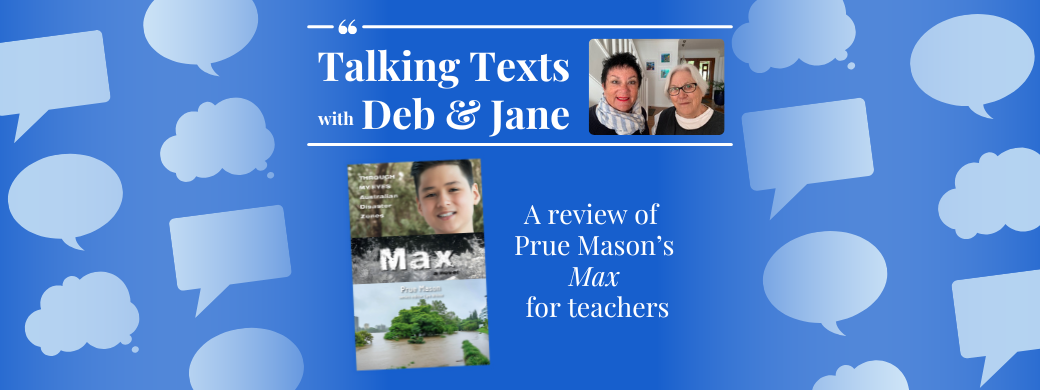
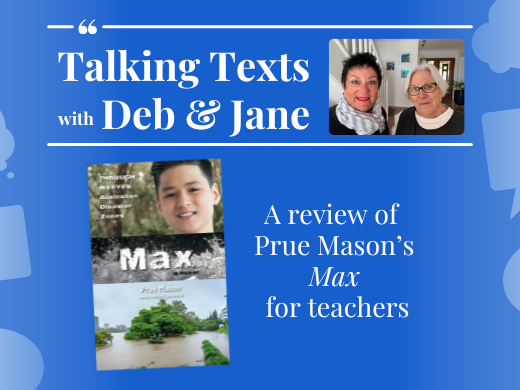
There is something about likeable and engaging adolescent protagonists who confront the challenges of nature which makes for enjoyable and compelling reading. This series - Through My Eyes Australian Disaster Zones - has really made its mark in creating realistic, likeable and effective adolescents against extreme weather events. This is the eighth is this series and unfortunately the final. I have read and enjoyed each one and this is no exception. The main character Max is 12 about to turn 13 so the age appeal of this novel is Stage 4 Year 7.
This book is probably more suited to a concept focus like Representation or Point of View where a series of texts could be explored which represent adolescent agency set against the challenges of climate change. Indeed, Max could be the focus text for the class and choice could be given to read and explore the others in the series.
The original series – Through My Eyes Natural Disaster Zones - explored extreme weather experiences ranging from the 2011 tsunami in Japan, a typhoon in 2013 in the Philippines and the 2011 Christchurch earthquake in New Zealand. More recently the series has focused on Australian Disaster Zones: the 2019 devastating bush fires in Tasmania (Tyenna), the ferocity of Cyclone Veronica in 2019 in the Pilbara (Mia) and Alex, which uses the 2020 severe drought in South Australia’s Flinders range as its setting. Max uses the devastating 2022 Brisbane floods as its climate event and this will resonate with many students and their communities given the overwhelming extreme weather events in Australia in 2024 and 2025.
In the previous 7-10 syllabus I thought the Cross Curriculum Priority of Substantiality had much appeal and potential for our English classrooms and selection of texts. Despite its omission in the current syllabus, there is still an important place for exploring texts which highlight the vulnerability of our planet and focus on the importance of social sustainability where resilience, compassion and community collaboration contributes to a positive well-being. The characters in this novel are affirmed the best of humanity.
Our students are certainly interested in the environment and texts such as Max give them an opportunity to learn about specific challenges facing our planet. It is worth considering that Mission Australia surveyed 19,501 young people aged 15-19 about what they regarded as the most important issues in Australia today. 44% identified the environment as one of the most important issues and many considered climate change and its effects on Australian life as of particular concern.
Max opens with a young boy flying in a Robertson 44 helicopter. This is an aircraft that is used for cattle mustering in the remote areas of the Northern Territory where the stations are huge. The Robertson is known for its manoeuvrability and agility. Max’s mum is the pilot and there are already concerns about the build-up of storms in the oppressive humidity of this February in Queensland. Most of the story is set in 2022 in suburbs of Brisbane which suffered heavily during the massive deluge of February 2022 following a declaration earlier of El Nina followed by the impact of ex-Tropical Cyclone Seth.
The main character is Max who is twelve and looking forward to being thirteen. He is a likeable, positive and thoughtful young man and has an endearing relationship with his immediate and wider family and friends His mother Anh is a pilot of Vietnamese heritage, his father Thom is an environmental scientist and his grandparents emigrated from Vietnam. Max’s uncle Joe is a celebrity weather presenter and Anh often has to fly Joe and news reporters to areas which have been affected by extreme weather events. Max‘s good friend Bianca Anderson is passionate about the environment and is involved in a range of causes: her T-shirt “There is no Planet B” is both resonate and relevant.
The weather features significantly in the story and there are numerous references to previous storms and floods. Brisbane is actually built on a floodplain and the Brisbane River has a long history of inundation.
Max is a keen bike rider and enjoys practicing manoeuvres and he is also likes rugby league and playing the saxophone. Biking and football takes him to the local park where he befriends Trent, a boy who has moved from Newcastle with his family. At first it is not fully clear what Trent’s actual situation is but it gradually emerges that Trent, his mother and young sister are living in their car having lost their home and the mother’s job. This situation forms part of the narrative’s subplot as this mode of living will be even more dangerous once the water rises. The storms builds, the humidity is oppressive and the rain is relentless. The floods occur more quickly than what was expected and thousands of people are caught unprepared. Max’s mum is flying to take reporters to crisis areas and is also involved in rescuing people surrounded by the floods. Max and his family are committed to helping everyone especially those who houses have flooded. Insights to the preparation needed for flood survival add interesting and valuable information. Like the other books in this series, the specific weather event becomes the focus and how to survive the crisis drives the narrative as well as providing valuable provocation for the reader in considering the environmental challenges of global warming, climate change, building on floodplains and increased urbanisation.
Prue Mason started her career as a flight attendant and she has a pilot’s licence. Her husband is a professional pilot. They lived in Canada and the Middle East and here Prue worked for a children’s newspaper writing feature article and short stories. They returned to Australia and since then Prue wrote Max for this series.
Lyn White is the Series creator and editor. Lyn has extensive experience as a teacher librarian and in 2010 completed postgraduate studies in Editing and Communications at the University of Melbourne. Her work with refugee children motivated her to create the acclaimed Through My Eyes series of books set in contemporary war zones Lyn’s passion is engaging adolescents and teachers in quality texts.
As a hook for your students consider a visual presentation of images of extreme weather events in Australia and overseas. YouTube provides many examples. Depending where you live you may have some compelling images of weather events in your local area. Given the number and ferocity of them in recent years your students will have some “weather” stories of their own. Contextualise the discussion in terms of the challenges to our planet as these events grow in frequency and ferocity. For example, the north coast of NSW had barely recovered from one intense storm when they were hit by more flooding and deluges. When the soil is already soaked and insurance becomes prohibitive, the impact can be catastrophic. Consider using some of the recommended resources on p.185-186 as part of orientation to the novel’s focus. For example, this report from ABC News is interesting and accessible.
The State Library of Queensland has an interesting overview of floods in the Brisbane River.
This post was made in 2011 but the information is still accurate and relevant to the context of Max.
Newspaper report
Write a human interest story for an online or printed local or statewide newspaper. The focus should be on Max and his family’s efforts. Use specific detail from the novel and add other details if this suits the purpose and context. Revisit the requirements of a feature article and be sure to include:
Imaginative writing
Use one of these phrases from the novel as a starting point for students’ own imaginative writing which uses an extreme weather event as its focus.
Write about 600-800 words and seek feedback from two other students as to the strengths and weaknesses of the piece. Consider this feedback for the final draft. Include an image to suit the story’s content.
Group task
Form small groups to work on this task.
The topic is:
“There is no Planet B.”
How can literature help us understand the challenges of nature and our world?
Decide what form the response will take e.g. conventional essay, digital essay, Prezi, group oral presentation.
Each group is to explore
Text requirements: Max is a novel (extended prose) by an Australia author. It includes a range of cultural, social and gender perspectives, including from popular and youth cultures.
Looking for more classroom texts for Stage 4 students? Browse our Year 7 texts and study guides and Year 8 texts and study guides at Five Senses Education.
Concepts could include Representation • Point of View • Narrative • Characterisation • Perspective and context.
A student uses a range of personal, creative and critical strategies to read texts that are complex in their ideas and construction EN4-RVL-01
Reading, viewing and listening for meaning
Reading for challenge, interest and enjoyment
Reflecting
A student analyses how meaning is created through the use of and response to language forms, features and structures EN4-URA-01
Point of view
Characterisation
Narrative
A student identifies and explains ways of valuing texts and the connections between them EN4-URC-01
Genre
(English K-10 Syllabus 2022 © NSW Education Standards Authority for and on behalf of the Crown in right of the State of New South Wales, 2023)



Jane Sherlock and Deb McPherson are experienced and passionate English teachers. They have also been involved in the education sector as authors and presenters at teaching conferences.
$9.95 flat rate shipping or free over $110
Australian family-owned & sourced
Supplier to over 1,000 schools Australia wide