




Flat Rate Shipping
$9.95 flat rate shipping or free over $110

Aussie Owned
Australian family-owned & sourced

School Supplier
Supplier to over 1,000 schools Australia wide
For Stages 5 and 6
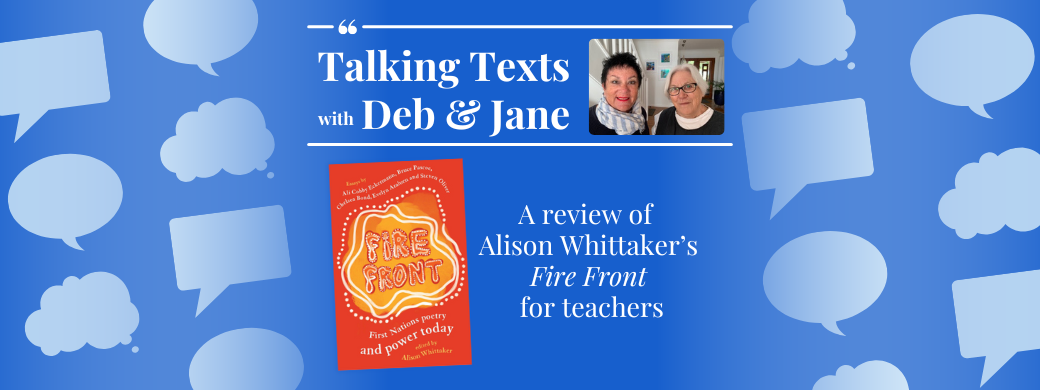
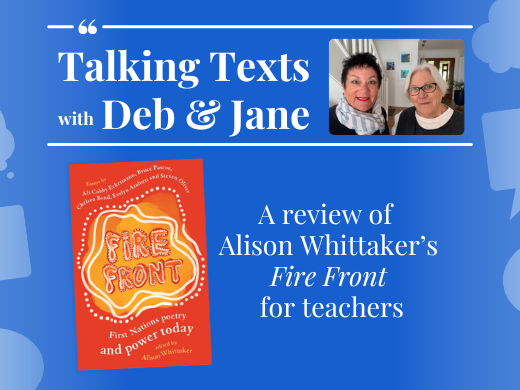
This powerful and compelling anthology of First Nations poetry, and the commentaries that accompany the poems, represents a watershed in Indigenous publications. So aptly named Fire Front, this anthology burns through difficult territory and brings pain, promise and change.
Distinguished academics, poets, authors and public intellectuals Alison Whittaker, Evelyn Araluen, Ali Cobby Ekermann, Steven Oliver, Bruce Pascoe and Chelsea Bond, provide diverse perspectives and commentary using scholarship, courage and generosity to explore the themes of First Nations writing.
Teachers and students in Years 10, 11 and 12 will find much to inspire and to explore in this essential collection of First Nations poetry. The poems reward re-reading and reading aloud. And, as Ali Cobby Eckermann notes, “When you have read these poems, also act”.
Please note the syllabus content references below refer to Stage 5 from the 2022 NSW 7-10 English Syllabus.
Alison Whittaker is a Gomeroi poet, academic and essayist and she has delivered a passionate and vital collection of fifty-three poems that come from the heart of Indigenous Australia.
There are five different bolded sections in this impressive anthology, and the editor has taken their titles from a line in one of the selected poems. Chelsea Bond provides commentary for “Ancestor, you are exploding the wheelie bin” where poets explore their connections to kin, Country and ancestors, often in a context of dispossession and alienation. Alexis Wright’s savage and sharp epic “Hey Ancestor”, starts with Old Whitefella Day, (26th January) and takes the reader through the core of Country, its permanence, roots and responsibilities and its despoilment. In the same section you will find Archie Roach’s “Took the Children Away” and Briggs’ (FT Guurrumul Yunupingu) roll call, “The Children Came Back”. Alice Eather’s “Yúya Karrabúrra” (Fire is Burning) takes the reader into the perils and complexity of walking between her two worlds with an Aboriginal mother, and a father descended from ancestors who arrived on the First Fleet.
“Despite what Dorothea has said about the sun scorched land” is introduced by Evelyn Araluen and chronicles protest and resistance to colonisation and the need for remembrance. Samuel Wagan Watson’s “The Grounding Sentence” begins with an “eternity of dispersal” and charts the grief and despair of living where the “skin of the country is branded deep with crosshairs and warning signs”. Kevin Gilbert’s “The New True Anthem” calls out injustice, hate, tyranny and desecration of the country.
Bruce Pascoe’s essay, “Bleat beneath a blanket”, introduces the next section, “I say rage and dreaming”. These poems are concerned with power and resistance. Pascoe writes of the “pain, the indignity, the sorrow, the humiliation, the frustration that white people were deaf and blind to the beautiful planning of a culture” many thousands of years old.
Declan Furber Gillick calls ‘Nanna Emily’s Poem” (Mount Isa Cemetery 2014), a yarn, a piece of oral history and asks the reader to consider reading it aloud, in a “moment of relative stillness”. This devastating poem, about a member of the stolen generation returning to the grave of his mother, would move a stone to weep.
Pain, loss and renewal are found in full measure in the section introduced by Steven Oliver, “Because we want it back, need it back, because they can”. The line comes from the poem “I am the Road” by Claire G. Coleman. Born off Country, and traveling far from Boodja, the narrator suffers the agony of homelessness, of being pulled away from, and denied, the land of the ancestors. The poem is an individual and collective lament, hoping, dreaming to buy back “some of my/grandfather’s Country …”.
In the last section, “This I would tell you”, the reader is led to a group of new poets, through Oodgeroo Noonuccal’s poem for her son, Denis Walker, “Son of Mine”. Her great granddaughter, Elizabeth Walker, complements that poem with her own, “Grandfather of Mine” for Papa Denis. Dylan Voller, who as a youth, suffered infamous brutality in the Don Dale Juvenile Detention Centre, makes his contribution in “Justice for Youth”. These, and other poems, as Ali Cobby Eckermann says in her remarkable essay, form part of the cycle of storytelling, of reiteration, of weaving in and out of the First Nations stories as well as writing to, and for their future. She calls these young poets the “beautiful warriors of resistance and truth.”
Read Cara Shipp’s Listening from the Heart: Rewriting the Teaching of English with First Nations Voices 2023 AATE 150pp to explore better ways to engage with First Nations People and their stories, their history and culture and to understand the protocols and appropriate terminology to use when reading and studying texts by First Nation authors. This warm, wise and generous book will be a huge help in the classroom.
Aboriginal and Torres Strait Islander readers and viewers are warned that the videos mentioned in this section contain images and voices of people who have died.
Yúya Karrabúrra (Fire is Burning)
Alice Eather was a young First Nations poet, environmental activist and teacher. She died in 2017. Her heartbreakingly beautiful poem captures the weight and complexity of walking in both the Indigenous and non-Indigenous worlds.
Hear and see ‘Yúya Karrabúrra’ performed by the poet at: https://www.youtube.com/watch?v=5yla0FMEAmg
Nanna Emily’s Poem
Declan Furber Gillick is an Arrernte playwright, artist, educator, performer and musician with Aboriginal and Irish-Anglo ancestry. He calls his poem ‘Nanna Emily’s Poem (Mount Isa Cemetery 2014)’, a yarn. In his Author’s Note on page 95 he explains that “the words were chosen, structured and sequenced to be spoken by me.” His words are “for telling”, they are “a piece of oral history” and he asks readers to consider reading his “text aloud, in a moment of relative stillness.”
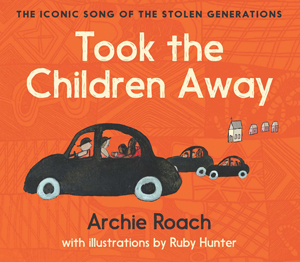
Took the Children Away
Archie Roach was an Australian singer-songwriter and a Gunditjmara and Bundjalung Elder who campaigned for the rights of Aboriginal and Torres Strait Islander people. He released his song ‘Took the Children Away’ in 1990. In 1960 he was two, when he and his siblings, were forcibly taken away from his mother and father by government agencies. His song represents all the people who were forced away from their families. Archie Roach died in 2022.
Watch Archie Roach perform his song: https://www.youtube.com/watch?v=IL_DBNkkcSE
Or see him read his story from the picture book he wrote: https://www.abc.net.au/news/2020-11-08/archie-roach-explains-took-the-children-away/12851328
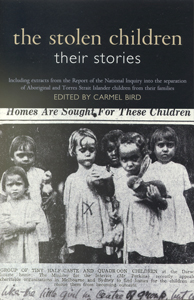
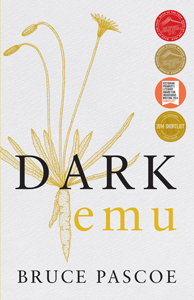
Read more about the Stolen Generation by accessing these texts:
Groups choose one poem from each section in the anthology. They read the poems aloud or listen to a recording of the poems. In groups they discuss the poems that most affected them and the ways in which the poets were able to represent their lives and experiences.
Students then select ONE poem and write an individual response to the following question:
In what ways does the poem you selected explore and represent the diverse and complex perspectives and experiences of Aboriginal and Torres Strait Islander Peoples? Make detailed reference to the poem in your response. Write about 600 words.
Text requirements: Fire Front is a poetry anthology by Aboriginal and /or Torres Strait islander authors and a quality text. It includes a range of cultural, social and gender perspectives.
Pair this text with resources from our Year 11 texts and study guides and Year 9 texts and study guides for a deeper study program.
Concepts could include Representation • Perspective • Connotation, symbol and imagery.
A student uses a range of personal, creative and critical strategies to interpret complex texts EN5-RVL-01
Reading for challenge, interest and enjoyment
A student analyses how meaning is created through the use and interpretation of increasingly complex language forms, features and structures EN5-URA-01
Connotation, imagery and symbol
Narrative
A student evaluates how texts represent ideas and experiences, and how they can affirm or challenge values and attitudes EN5-URB-01
Perspective and context
(English K-10 Syllabus 2022 © NSW Education Standards Authority for and on behalf of the Crown in right of the State of New South Wales, 2023)


Jane Sherlock and Deb McPherson are experienced and passionate English teachers. They have also been involved in the education sector as authors and presenters at teaching conferences.
$9.95 flat rate shipping or free over $110
Australian family-owned & sourced
Supplier to over 1,000 schools Australia wide