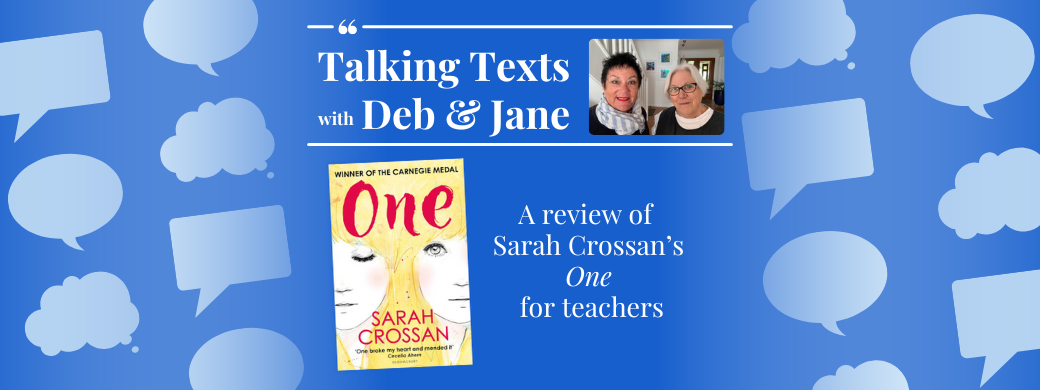
Sarah Crossan's "One" teachers' review - Talking Texts with Deb & Jane #61Sarah Crossan's "One" teachers' review - Talking Texts with Deb & Jane #61

Brief description and distinctive features

For Stage 5

The latest research from the UK Literacy Trust regarding a decline in reading for pleasure is a concern. I think we can agree that such a decline in adolescents reading for pleasure is certainly occurring in Australia. 

These insights from the UK Literacy Trust will resonate with your own classroom experiences:

When children and young people enjoy reading, they read more often, helping to build vital reading skills and bringing wider benefits for wellbeing, confidence and learning. Our research demonstrates the urgency for reading for pleasure to become a national priority. Failure to tackle the reading for pleasure crisis now will put children’s futures at risk. (newsletter@literacytrust.org.uk)

We can add to those comments the challenges in persuading our students to read books- especially HSC students to read a prescribed text with more than 100 pages. There is also the huge impact that no-reading has on students accessing the all-important Reading task in the HSC. The 2024 HSC Paper 1 for all English courses was demanding in the amount and type of reading to be done in 10 minutes. 

Our role as English teachers is now even more significant. We cannot expect parents, peers and streaming to inspire and interest adolescents in reading. We need to provide engaging, accessible and relevant books which are above all, great reads.

Verse novels are one way to go. Sarah Crossan is a master of this form and I highly recommend her Carnegie medal winner – One. 

This novel is pacey, clever, funny, powerful and both a heartbreaking and a heartwarming read from the YA shelves. The distinguishing feature of Young Adult fiction is that the protagonists are often adolescents, either confronting the issues that matter to them or dealing with the world that adults have left them. Increasingly, YA authors show a willingness to experiment with form and verse novels have gained in popularity and appeal.

The NSW 7-10 English Syllabus states that across each stage, the selection of texts must give students experiences of a range of cultural, social and gender perspectives, including from popular and youth cultures. We know that student interest and engagement will be heightened if the texts engage our students in areas of their own interest and Sarah Crossan’s verse novels cover a range of student interests.

Brief description of One

One is written in free verse which propels the reader through its 430 pages in a surprisingly short time. It is the story of conjoined twins – Grace and Tippi. They are named by their parents after two of Alfred Hitchcock’s movie stars: Tippi Hendren and Grace Kelly. Tippi and Grace are sixteen and they each have her own head, heart, and two arms, but at the stomach, they join. They have not wanted to risk the dangerous separation surgery but when the story opens, their bodies are beginning to fight against them. 

While conjoinment may not be familiar to your students, Grace and Tippi’s story is compelling. Sarah Crossan was attracted to this specific topic when she researched the wider topic of twins.  

Grace tells their story, and she shows us their different personalities and the difficulties of living life reliant on another person for even the simplest of actions, such as walking and eating. Their love for each other, their adolescent feistiness and the challenges they face are powerful in their interest and engagement.

The story covers family life, school challenges, the importance of friends, some devastating bullying and the extraordinary delights of sibling love. 

About the author

Sarah Crossan grew up in Dublin, Ireland and emigrated to the UK where she graduated with a degree in philosophy and literature at the University of Warwick before training as an English and drama teacher at Cambridge University. Sarah is passionate about the need for creative writing in schools and was involved in promoting this before leaving teaching to write full time. She has a Masters in creative writing and in 2010 received an Edward Albee Fellowship for writing. 


Distinctive features of One

  • One is categorised as a verse novel or verse fiction 
  • One is 429 pages long but the white space and pared-back text allows the novel to be read in about 2 hours
  • The story is written in free verse with some splendid images
  • The story is set in New York and New Jersey, USA.
  • Crossan’s research enables seamless embedding of historical and medical information about conjoined twins and medical procedures
  • Grace tells the story; this first-person narrative increases the immediacy, intimacy and poignancy.
  • "Grace's elegant and intimate first-person narration combines with her wry sense of humour to create a likeable character in a believable situation. This is honest, unapologetic realism from a diverse perspective not often seen in young-adult fiction. Not to be overlooked." - Kirkus Review
  • Other perspectives are also incorporated into Grace’s narrative to give a wider view of the girls’ challenges for example, their sister Dragon, parents, grandmother, friends Jasmine and Jon
  • Deals with range of YA subject matter: adolescents’ need to fit in, love and romance and forging an identity
  • The narrative is divided into 11 parts aligned with the months from August to the following March and every chapter has a title.    

Ways to use One in the classroom

The front and back cover:

Discuss with the class what features of a book cover most attracts you?

  • Images?
  • Colour?
  • Awards?
  • Author’s name?
  • Recommendations?

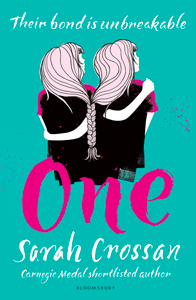
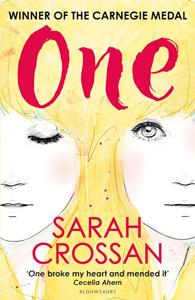
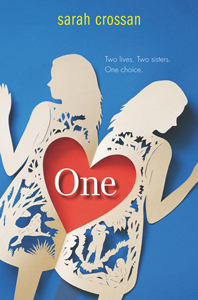
Sometimes publishers change a book’s cover with different editions. There are three covers for One. 

Full class discussion or small groups: which cover most successfully draws you into the world of Tippi and Grace? How is this achieved? This could be a short writing task.
One is a marvellous read and needs to be given classroom time to hook students into this engaging and wonderful book.

It is available on audio (3hrs 42 minutes) if you have students who prefer to listen and read.

You could access a free trial and play the first 5 minutes which covers the opening four chapters.

Share this interview with Sarah Crossan who provides a brief summary of the story.

This review from The Guardian may also be valuable to hook your class into reading One: https://www.theguardian.com/childrens-books-site/2015/nov/10/one-sarah-crosson-review


Check-in with students as they read the book through class discussion: 

  1. Are you enjoying it?
  2. Do you find the verse format propels you through the narrative?
  3. What strikes you most about the way Tippi and Grace deal with their world?
  4. Why do you think Sarah Crossan chose to tell the story from the point of view of one of the sisters? What effect does Grace’s first- person, present tense narrative have? 
  5. What other family members are the most engaging for you: mum, dad, Grammie, Dragon?
  6. Why do you think Tippi and Grace are paired with Jon and Yasmeen at their new school?
  7. Who engages you most - Jon or Yasmeen?
  8. How effective is the humour? Did anything in the novel make you laugh? 


Exploring form: the verse novel

Watch the interview with Sarah Crossan on the appeal of verse novels (2 minutes 8 seconds) 

Re-watch the interview and in small groups:

  • List two insights Sarah Crossan gave you about verse novels?
  • How did the free verse format affect your reading experience?
  • Share your insights with the class and create a classroom poster for future use.

Choose four chapters and identify examples of the features of verse novels discussed in Sarah’s interview. 


Collaborative task:

Find 3 significant chapters and discuss what makes them significant

  • Choose one of those chapters and make copies for your group
  • In groups annotate the language choices made by Sarah Crossan to explore this significant event/situation
  • Share the group’s finding and build a class summary which will be valuable notes for your own writing of an additional chapter
  • Responding: Reflect on in what ways this close reading promotes a broad and balanced understanding of the world and enables you to explore wider universal issues


Students as writers

In pairs imitate the style of Crossan and write an additional chapter to the novel set one year later. 

Consider these ideas:

  • How is Grace adjusting to life without Tippi? 
  • How are the other members of the family coping? 
  • Are Grace, Jon and Yasmeen still friends? 
  • Are Grace and Jon a couple? 
  • Is Grace still on the transplant waiting list? 

Share the chapters and compare your chapter with one other and discuss how each chapter is similar and different in the exploration of Grace


Choose a section from your novel and deliver to the class as Readers’ Theatre: discuss which section, rehearse with attention to pause, pace, pitch. Consider some sound effects and musical instruments to use.


Critical essay: 

Teacher to workshop and scaffold one question to provide guidance in the conventions of the essay. 

Suggested question: How does Sarah Crossan’s One portray interesting ideas about difference? 


Collaborative writing:

Divide the class into small groups and either give them a choice of the questions below or use a random method for selecting a question. Note that the questions are modelled on past HSC-style questions.  Students can select a question or choose from a hat for group collaboration.

As a group:

Unpack what the question requires

  • Collaborate on an introduction
  • Decide which 5-7 chapters would provide the best textual evidence to explore the question
  • Decide on 5 quotations which could be integrated into your response
  • Collaboratively write the response
  • Highlight in one colour where you have answered the question
  • Highlight in another colour to demonstrate incorporation of textual detail 

Share copies of each response with the rest of the class

Offer construction feedback on two strengths and two weaknesses of one more essay.

Incorporate feedback.

Print a class set of each essay.

Possible essay questions:

  1. In what ways does the text’s form shape the way we respond to the ideas and content of this novel?
  2. It is not only the subject matter but also the narrative point of view that makes Crossan’s novel compelling. Discuss this statement making detailed reference to your prescribed text. 
  3. The complexity of human relationships is central to the novel, One. To what extent do you agree with this statement? In your response, make detailed reference to the extract from One and the novel as a whole.  
  4. Explain how One invites us into a different world and broadens our understanding of human experience. In your response, make detailed reference to your prescribed text.
  5. Discuss how Crossan’s perspective on personal challenges is conveyed in One. 

After the collaborative essay writing:

  • In 200- 250 words discuss the pleasures and difficulties, successes and challenges experienced in collaborating on the critical response.


Wide Reading exploring diversity of perspectives. 

  • Engage in sustained and varied reading that presents increasingly diverse and complex perspectives and experiences, including those of Aboriginal and Torres Strait Islander Peoples, and respond in a range of ways, including through extended written responses.
  • Offer a wide selection of texts which explore diverse perspectives and experiences.

Suggested texts could include Indigenous perspectives:

  • Borderland Graham Akhurst
  • I Didn’t Think it Through Gary Lonesborough
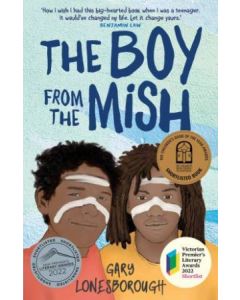
  • Boy from the Mish Gary Lonesborough
  • My Spare Heart Jared Thomas
  • The White Girl Tony Birch
  • Catching Teller Crow Ambelin Kwaymullina
  • Brontide Sue McPherson

Relevant details in relation to the new NSW English 7-10 syllabus

Text requirements: One is extended prose, a verse novel. It has cultural, social and gender perspectives, including from popular and youth cultures.
For more recommended texts suitable for Stage 5, explore our Year 9 texts and study guides and Year 10 texts and study guides.

Concepts could include Representation • Point of View • Characterisation • Narrative.


Relevant NSW English 7-10 Syllabus content

Reading, viewing and listening to texts 

A student uses a range of personal, creative and critical strategies to interpret complex texts EN5-RVL-01

Reading, viewing and listening skills

  • Develop a deeper understanding of themes, ideas or attitudes by revisiting and reinterpreting texts to find new meaning
  • Reading, viewing and listening for meaning
  • Analyse the main ideas and thematic concerns represented in texts
  • Clarify and justify personal responses to texts, explaining how aspects of the text, such as character, genre, tone, salience or voice, position a reader and influence these personal responses 

Reading for challenge, interest and enjoyment

  • Read increasingly complex texts that challenge thinking, pique interest, enhance enjoyment and provoke a personal response
  • Engage in sustained and varied reading that presents increasingly diverse and complex perspectives and experiences, including those of Aboriginal and Torres Strait Islander Peoples, and respond in a range of ways, including through extended written responses
  • Consider how the social, cultural and ethical positions represented in texts represent, affirm or challenge views of the world
  • Evaluate experiences of reading by sharing responses to texts
  • Evaluate the ways reading texts help us understand ourselves and make connections to others and the world

Reflecting

  • Reflect on how an appreciation of texts can be enhanced through re-reading, and close or critical study
  • Understand and reflect on the value of reading for personal growth and cultural richness
  • Reflect on how reading promotes a broad and balanced understanding of the world and enables students to explore wider universal issues

Understanding and responding to texts A

A student analyses how meaning is created through the use and interpretation of increasingly complex language forms, features and structures EN5-URA-01

Representation

  • Analyse how contextual, creative and unconscious influences shape the composition, understanding and interpretation of all representations

Point of view

  • Examine elements of focalisation, such as omniscience, limitations, indirect speech, tone, reliability and multiple narrators, and how these interact to shape perceptions of meaning in texts, and apply this in own texts

Characterisation

  • Analyse how engaging, dynamic and complex characters are constructed in texts using language features and structures, and use these features and structures in own texts

Narrative

  • Analyse how narrative conventions vary across genres, modes, media and contexts and how they can be used to represent ideas and values and shape responses, and apply this understanding in own texts
  • Explore how narratives can represent and shape personal and shared identities, values and experiences

Understanding and responding to texts B

A student evaluates how texts represent ideas and experiences, and how they can affirm or challenge values and attitudes EN5-URB-01

Perspective and context

  • Evaluate how texts can position audiences to accept, challenge or reject particular perspectives of the world, and reflect on this in own texts

Style

  • Analyse how the distinctive aesthetic qualities and stylistic features of a text can shape and be shaped by its purpose, and experiment with this in own texts
  • Examine the way an author’s distinct personal style shapes meaning in their work

Expressing ideas and composing texts A

A student crafts personal, creative and critical texts for a range of audiences by experimenting with and controlling language forms and features to shape meaning EN5-ECA-01

Text features

  • Introduce and define complex key ideas, academic concepts and positions for arguments in sustained analytical and persuasive texts
  • Use the structural conventions of analytical writing purposefully, including a well-articulated and considered thesis, a sustained and cohesive progression of supporting points, and a rhetorically effective conclusion

Expressing ideas and composing texts B

A student uses processes of planning, monitoring, revising and reflecting to purposefully develop and refine composition of texts EN5-ECB-01

Planning, monitoring and revising

  • Engage with model texts to develop and refine features, structures and stylistic approaches in own work
  • Produce co-constructed complex texts to represent a diversity of ideas and values
  • Select from a range of collaborative drafting strategies and feedback processes to improve clarity, meaning and effect in texts

Reflecting

  • Reflect on own texts, using technical vocabulary to explain and evaluate authorial decisions appropriate to the target audience and specific purpose
  • Discuss the pleasures, challenges and successes experienced in the processes of understanding and composing
  • Evaluate the effectiveness of compositional choices in writing that have been influenced by elements of other texts, using specific examples
  • Evaluate own ability to plan, monitor and revise during the composition process, and how this can improve clarity, cohesion and effect


(English K-10 Syllabus 2022 © NSW Education Standards Authority for and on behalf of the Crown in right of the State of New South Wales, 2023)

Connecting texts

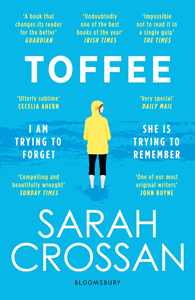
Toffee by Sarah Crossan