



Flat Rate Shipping
$9.95 flat rate shipping or free over $110

Aussie Owned
Australian family-owned & sourced

School Supplier
Supplier to over 1,000 schools Australia wide

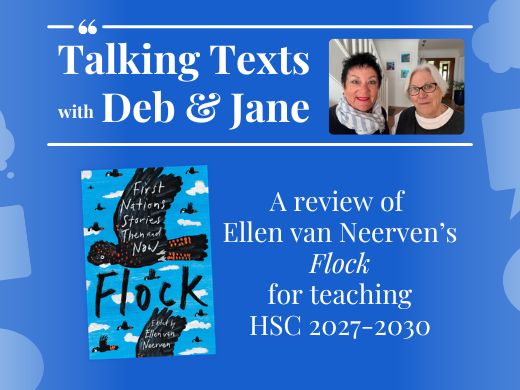
Flock: First Nations Stories Then and Now is set for study in 2027-2030 in Year 12 for English Studies in Narrative and human experiences and EAL/D in Texts and human experiences.
Note: Two stories which differ from Studies for EAL/D do not feature in this blog: Each City by Ellen van Neerven and River Story by Mykaela Saunders.
What it means to be human is at the core of these short stories. Told by First Nations writers there is the added rich layer of First Nations identities, cultures, connection to Country and lived experiences.
On the back cover Associate Professor Sandra Phillips makes this powerful endorsement for the stories in Flock: “Flock will draw you in and make you part of this astounding collective of love and life”.
Such an endorsement strongly resonates with key phrases in both the Studies and EAL/D Syllabus especially ‘the role of storytelling throughout time in communicating and reflecting the human experience.’
Ellen van Neerven is the editor of this collection. Ellen van Neerven is of Mununjali Yugambeh and Dutch heritage. Ellen’s first book, Heat and Light, was the recipient of the David Unaipon Award, the Dobbie Literary Award and the NSW Premier’s Literary Awards Indigenous Writers’ Prize. Van Neerven is also the author of two poetry collections: Comfort Food, which was shortlisted for the NSW Premier’s Literary Awards Kenneth Slessor Prize; and Throat, which won the Kenneth Slessor Prize, the Multicultural NSW Award and Book of the Year in the NSW Premier’s Literary Awards. Van Neerven’s memoir, Personal Score: Sport, Culture, Identity, won the Victorian Premier’s Literary Award for Non-fiction in 2024.
Flock will enable authentic and meaningful connections to the Stage 6 Syllabus’s specific considerations for studying texts authored by Aboriginal and/or Torres Strait Islander Peoples:
From the Stage 6 English Syllabus (2024)
Flock: First Nations Stories Then and Now contains twenty stories and apart from the six prescribed by NESA, students may have encountered other writers including Jane Harrison, Gale Kennedy, Jared Thomas, Samuel Wagan Watson and Tony Birch. All stories in the collection have been previously published over a timeframe from 1996 until 2021. The collection’s title, Flock, and the engaging cover reference the idea of individual voices becoming one in a flock.
In her introduction van Neerven says:
We all have our own pair of beautiful wings, but we fly together in formation. Together we are stronger. We flock together.
The cover features the work of artist Kukula McDonald who is part of the prolific and prestigious Papunya Artists. The sulphur-crested cockatoos are significant to First Nations identities and connection to Country. Access this site which provides some useful information on the significance of the sulphur-crested cockatoo and some of Kukula’s engaging artwork: https://www.aboriginalartuk.com/post/kukula-mcdonald-and-the-spirit-of-the-black-cockatoo
Group task: Divide the class into six small groups and allocate one writer to each group.
Each group is to research their writer and create a 300-500 word document in dot points of interesting information other than what is provided below. For example, Jeanine Leanne was a high school teacher before moving to academia. Each group is to find an image which they think best captures the writer.
Each group is to share their insights before exploring each story.

Tara June Winch ‘Cloud Busting’
Tara June Winch is a Wiradjuri woman now based in France. Her book The Yield won the Miles Franklin award in 2020. Her 2006 novel, Swallow the Air has been a previous HSC text and for the 2027-2030 HSC it is prescribed for - Standard Language, identity and culture. Cloud Busting is chapter 3 in Swallow the Air but in this collection it is a stand-alone story.
Archie Weller ‘Shadows on the Wall’
Archie Weller is from Western Australia whose first novel Day of the Dog was shortlisted for a range of literary awards. He is well known for his writings Land of the Golden Clouds, Going Home, The Window Seat and The Unknown Soldier and Other Poems.
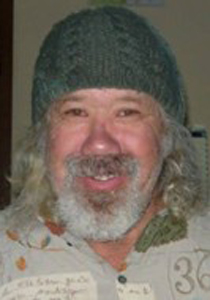
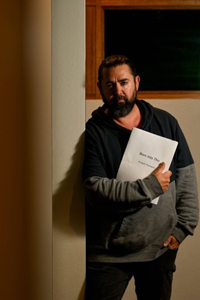
Adam Thompson ‘Honey’
Adam Thompson is a Pakana man from Tasmania, who writes contemporary short fiction. His debut collection Born Into This was shortlisted for the USQ Steele Rudd Award for a Short Story Collection and the 2021 Age Book of the Year Award. In 2022, Born Into This won the international Story Prize: Spotlight Award.
Melanie Saward ‘Galah’
Melanie Saward is a proud descendent of the Bigambul and Wakka Wakka peoples. She is a Tulmur (Ipswich) based writer, an associate lecturer in creative writing at QUT, and a PhD student. Melanie’s writing has been widely published and has received commendations.
Access this interview for more details on Melanie Saward:
https://www.anikopress.com/emerging-writers/emerging-writers-series-melanie-saward

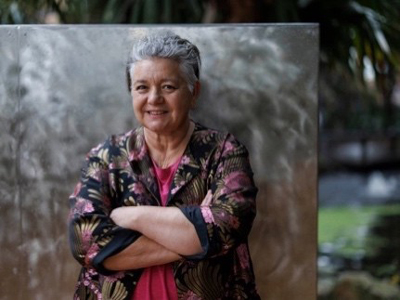
Melissa Lucashenko ‘The Dreamers’
Melissa Lucashenko is an acclaimed First Nations writer of Goorie and European heritage. Since 1997 Melissa has been widely published as an award-winning novelist, essayist and short story writer. Too Much Lip won the Miles Franklin award in 2019 and her novel Edenglassie received considerable acclaim. Her short story ‘Dreamers‘ which appears in in Flock, was a prescribed text for Standard Module C for the 2026 HSC.
Jeanine Leane ‘Forbidden Fruit’
Jeanine Leane (born 1961) is a Wiradjuri poet and activist from southwest New South Wales. She is an associate professor in creative writing at the University of Melbourne. She has published three volumes of poetry and fiction, and numerous other publications including poetry, book reviews, and interviews.
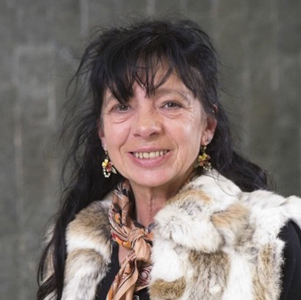
The English Studies Focus area, Narrative and human experiences privileges the concept of ‘narrative.’
The ETA concepts include these points in understanding and teaching narrative:
Understand narrative conventions, such as setting, plot and sub-plot, and how they are used to represent events and personally engage the reader, viewer or listener with ideas and values in texts, and apply this understanding in own texts.
What is narrative, how it is constructed, how it is represented and how it is part of our world?
The word ‘narrative’ has been part of our language for millennia having originated in the Latin ‘narrare’ meaning to ‘tell’ or ‘relate’. But humanity has been telling stories or constructing narratives well before spoken and written language was invented. Indeed, it is part of humanity to tell stories to describe and make sense of the world around us. The earliest way this had been achieved is cave and wall paintings by First Nations peoples around the world. As time evolved, wandering minstrels and poets would share stories to avid listeners in towns and villages. Then stories became part of the printed world. Printed copies of poems, short stories, novels and plays are a relatively new phenomena aided by the growth of the industrial revolution and inventions like the printing press. With more people being educated and learning to read saw a purpose and audience for printed stories. The growth of railways in Britain saw the first book shops and today airports are one of the most popular sources of people buying books for a long flight.
Storytelling is an important element of First Nations histories and cultures, so this collection is an authentic text to be exploring this focus area.
The short story is a genre within the storytelling oeuvre and is a popular form found in magazines, online sites, printed collections.
The short story is an excellent vehicle for story-telling and engaging adolescents. It differs as a form from extended prose and has distinctive features:
The six stories set for English Studies below give students a range of human experiences to explore and the range of narrative voices enable different perspectives on these experiences and a way to see the world differently. The stories also explore experiences which create tension and a range of consequences created by different behaviours of the characters within the stories. EAL/D students also study ‘Honey,’ ‘Galah’, ‘Dreamers’, ‘Forbidden Fruit’ as well as ‘Each City’ by Ellen van Neerven and ‘River Story’ by Mykaela Saunders.
| Brief overview of the stories: this could provide the basis for a deeper exploration of each story either as a class, small groups or individually. | |||
| Page reference | Story |
Human experiences ‘Students develop their knowledge and understanding of human experiences through encounters with narratives’ |
Language features |
| 1-8 |
‘Cloud Busting’ Tara June Winch |
|
|
| 19-35 |
‘Shadows on the Wall’ Archie Weller |
|
|
| 75-85 |
‘Honey’ Adam Thompson |
|
|
| 107-114 |
‘Galah’ Melanie Saward |
|
|
| 181-192 |
‘Dreamers’ Melissa Lucashenko |
|
|
| 193-97 |
‘Forbidden Fruit’ Jeanine Leane |
|
|
For each story answer these questions:
The more opportunities students are given to write about the set stories in Flock, the more confident they will be for the challenges of their Trial and HSC. Consider workshopping some of these questions, writing introductions, essay plans and choosing quotes to best suit the question.
There is a sample English Studies examination on the HSC site:
There is a sample English EAL/D examination on the HSC site:
Sample NESA EAL/D question:
Please note the changes which have occurred for the 2027-2030 English Studies examination compared to the 2026 examination:
The examination will consist of one written paper worth 60 marks.
Section I: Narrative and human experiences (15 marks)
Section II: Narrative and human experiences (15 marks)
Section III: Writing for purpose (30 marks)
Paper 1: Texts and human experiences
Section I (20 marks)
Section II (20 marks)
Outcomes from English Studies syllabus which can be explored in this focus area with Flock:
ESD-12-01
ESD-12-02
ESD-12-04
ESD-12-05
Outcomes from English EAL/D syllabus which can be explored in this focus area with Flock:
EEA-12-01
EEA-12-02
EEA-12-04
EEA-12-05

Jane Sherlock and Deb McPherson are experienced and passionate English teachers. They have also been involved in the education sector as authors and presenters at teaching conferences.
$9.95 flat rate shipping or free over $110
Australian family-owned & sourced
Supplier to over 1,000 schools Australia wide