



Flat Rate Shipping
$9.95 flat rate shipping or free over $110

Aussie Owned
Australian family-owned & sourced

School Supplier
Supplier to over 1,000 schools Australia wide

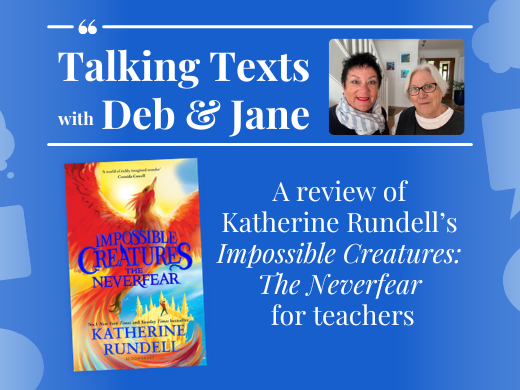
For Stages 3 and 4
The two children’s authors I most admire are Patrick Ness and Katherine Rundell. They both take children’s agency seriously and seem to communicate effortlessly the feelings and experiences of young people. They are authentic and realistic (a difficult feat when writing fantasy) in their descriptions and their characterisations. Their singular and contrasting styles both offer their readers escape, understanding and resilience as well as wonderful and terrifying adventures.
Katherine Rundell is an academic as well as an author and a strong advocate for reading for pleasure. In a recent article in The Guardian (August 6 2026) ‘I hate what AI is doing to the minds and happiness of the young’ she reiterated her view of the pleasure and importance of reading.
I talk a great deal about reading for pleasure; I’ve written elsewhere about the necessity of pleasure in the classroom, and why it is not an optional extra but the hallmark of true education. We must find ways to show children that reading gives you access to an inexhaustible source of delight. But I worry, too, that we are limiting the meaning of the word pleasure. Learning is a strange and discomfiting experience; it’s a struggle and a frustration, and epiphanies are rare. It is not always pleasure in its easiest sense.
So I think we also need to talk to young people about reading to outrun and outfight injustice. Reading to get faster, swifter and tougher; to develop powers of scrutiny and criticism and huge creative imagination. Reading human work to insist that we are human. Reading for liberation and emancipation; reading for intellectual freedom, and to have the strength to fight in the arenas of the mind, because when we let a computer think for us, we put a gun to the head of civilisation.
Her own books are a wonderful example of the power that reading about joy, and the toughness of struggle, can give to our students. This Impossible Creatures series now stands at book three in a projected five book cycle and has all the hallmarks of a classic, and is now firmly established in the tradition of Tolkien’s The Hobbit and The Lord of the Rings and Phillip Pullman’s His Dark Materials.
Katherine Rundell’s third book in the Impossible Creatures series opens with the birth of a unicorn and a revelation that Christopher’s empathic and powerful connection with animals is now intensifying. This will have extraordinary implications for the climactic final encounter of the novel. Readers are returned to the Archipelago for the Midsummer celebrations on the islet of Glimt with many of the characters from previous books playing a leading role in this new and perilous quest. Fidens Nighthand, Berserker (and Protector of Teren, the child Immortal whose whereabouts at the start of the book are still secret) inherited the palace of Glimt. With the help and support of the scholar, Irian, he has transformed the Palace and its inlets and islands into a haven of safety and learning. Christopher and Anya are soon caught up in an attempt to rescue Irian from the terrifying bandits, with the ouroboros brand on their wrists, who capture her and leave death and destruction behind them. The children have the help and support of Radwin, the ratatoska, and Jacques, the tiny dragon as they sail on Nighthand’s boat, The Neverfear, to complete the three impossible tasks the villain Morax demands to release Irian. Morax is the malevolent controller of the Tiger and the Snake and behind all the devastation created by the bandits. His right-hand lieutenant is Carla Venasque, (a former colleague who knows and hates Nighthand) and his aim is to gain control of the child Immortal. The growth of both Christopher, as a strategist and powerful communicator with diverse creatures, and of Anya, as a warrior, have powerful implications as the final climatic confrontations with Morax and his minions plays out.
Note: Book Four in the Impossible Creatures series will be published in September next year and Disney films are bringing the series to the cinema.
Previous reviews of Impossible Creatures Book One (posted February 23, 2024) and Impossible Creatures: The Poisoned King Book Two (posted October 19, 2025) on Five Senses website will assist any readers who want to know what happened in those books or who want to refresh their memories of the books. Both reviews contain a range of ideas and activities that could be modified to suit Book Three.
Asking a Year 6 or 7 class to create units of work for another class based on specific texts can give them a unique opportunity to produce quality work which can be shared, published and displayed and used by other students and teachers in a school. As a motivational tool it can work wonders.
Many years ago, a group of students at Lisarow High on the Central Coast produced some wonderful units of work on a novel they read in class. The variety of tasks and examples included
Students can be very enthusiastic when given such agency in the classroom and know they have an audience other than their teacher and my experience was that they were motivated to get reading and adopt the stature of an expert and design their own units of work.
A good time for such a unit of work to be created is towards the end of the year when the pattern and purpose of English units of work are clear to students and they are ready for a challenge. Such a unit can use any texts as the focus. For the students it can really produce quality work which can be the basis for visiting another classroom, either another Year 7 class or for a Primary feeder school as an introduction to their high school. Rundell’s fantasy saga is a perfect place to start with wide reading availble in the three novels produced so far and the tanterlising prospect of students creating short sequels to the novels they will enjoy so much.
Before students began, discuss the guidelines below and the outcomes. i.e. what they want the other student to be able to do or to demonstrate by the end of the unit.
Dear Year 6/7 students
You are asked to consider the following steps to help you design your unit of work.
Step 1
Read the novel and reach some conclusions about what the author intended.
Step 2
Form groups of four to six.
Step 3
Consider what you want the students who will be reading the book to
learn and experience. What outcomes do you want? You might want them to read more widely, to have improved comprehension skills, to demonstrate a good knowledge of the text through imaginative recreation, to write more creatively, to use metaphor effectively in their writing: the activities you design should reflect the outcomes you want.
Step 4
Consider the range of activities you could cover. The range is limited only by your imagination, but the unit must have:
Suggestions
As a group decide what activities and tasks you think would be useful and important for other students to consider. Once the discussions are made, allocate individual and pair activities and set about designing activities and providing examples. Whatever activities you decide on, you must provide some examples for the other class to give them some idea of what is expected. Paper, cardboard, scissors, felt tipped pens will be available for use.
Of course, time could be set aside to just read through the three books and then groups could select the one that they will concentrate on when designing a unit of work. After the admittedly involved initial organisation, the role of the teacher is to guide and consult with groups and help collect resources, organise an opportunity for students to present their unit to other classes and consider ways to publish the students work in the school and beyond. Finally, the teacher can appreciate the results of student designed units of work and all the skills learnt and employed to develop them.
Rundell is a master of character and creatures. The two main characters, Christopher and Anya are worthy of an extensive examination as students chart their qualities and attributes, acknowledge (as they so often do) their shortcomings, fears and difficulties as human beings and the growth they make as human beings in the book.
Expand and enlarge the Bestiary
The beautifully illustrated Guardian’s Bestiary from Impossible Creatures, which appears in all three books, could be expanded by students, as they extend the description and illustration of the new creatures and revisit the familiar ones, based on their knowledge of the books. The collection of animals now includes a bonnacon, a leshoki and a behemoth, as well as the many of the other creatures readers would know from previous books, such as the gagana, the sphinxes and unicorn and the nereids. The leshoki, which plays a pivotal part in Book Three is especially interesting, as nobody really knows what they look like in their native state! Students could publish their descriptions and illustrations and email Bloomsbury publishers at AU@bloomsbury.com to share their interpretations and seek a response from Katherine Rundell.
Text requirements: novel, literature from other countries
Concepts could include Narrative • Characterisation • Genre.
A student analyses representations of ideas in literature through narrative, character, imagery, symbol and connotation, and adapts these representations when creating texts EN3-UARL-01
A student analyses representations of ideas in literature through genre and theme that reflect perspective and context, argument and authority, and adapts these representations when creating texts EN3-UARL-02
Narrative
Characterisation
Genre
Theme
Perspective and context
A student fluently reads and comprehends texts for wide purposes, analysing text structures and language, and by monitoring comprehension EN3-RECOM-01
Reading for interest and wide purposes
Text requirements: Impossible creatures: The Neverfear is an illustrated novel (extended prose) text from a British author. It includes a range of cultural, social and gender perspectives.
Concepts could include Genre • Intertextuality • Theme • Characterisation.
A student uses a range of personal, creative and critical strategies to read texts that are complex in their ideas and construction EN4-RVL-01
Reading, viewing and listening for meaning
A student examines and explains how texts represent ideas, experiences and values EN4-URB-01
Theme
A student identifies and explains ways of valuing texts and the connections between them EN4-URC-01
Genre
Intertextuality
(English K-10 Syllabus 2022 © NSW Education Standards Authority for and on behalf of the Crown in right of the State of New South Wales, 2023)
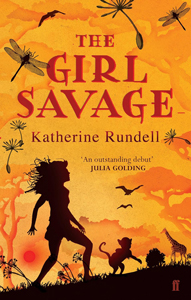
You could broaden the scope of the wide reading beyond the Impossible Creatures trio and include other Rundell books such as books as The Girl Savage, Rooftoppers, The Wolf Wilder, The Good Thieves and The Explorer. These books are realistic adventure stories and do not belong in the fantasy genre but are equally powerful tales of resilience and action as kids learn to gain some control and agency in challenging situations.



Jane Sherlock and Deb McPherson are experienced and passionate English teachers. They have also been involved in the education sector as authors and presenters at teaching conferences.
$9.95 flat rate shipping or free over $110
Australian family-owned & sourced
Supplier to over 1,000 schools Australia wide