




Flat Rate Shipping
$9.95 flat rate shipping or free over $110

Aussie Owned
Australian family-owned & sourced

School Supplier
Supplier to over 1,000 schools Australia wide

For Stage 5
“I wanted to write something that all the kids back home, especially my nieces and nephews, could relate to and feel pride in. I hope I’ve done them all proud.” Lisa Fuller
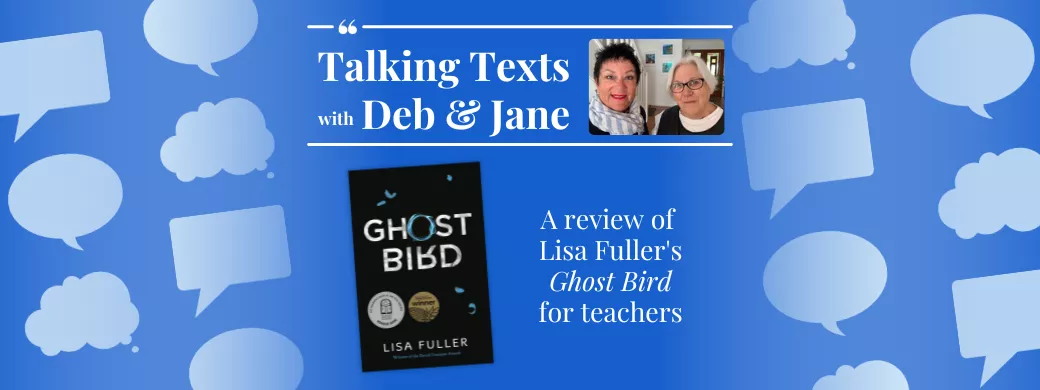
This compelling thriller is best studied in Stage 5 or 6. Laney and Stacey are twins, mirror images of each other but very different in personality and attitude. Stacey is studious, careful and wants to do well and get out of their small town while Laney is more outgoing, sporty and rebellious; she skips school to meet her boyfriend. One night she doesn't return. Stacey starts dreaming of her twin but the dreams are dark and terrifying nightmares. Stacey and her mother are frantic to find Laney and when the police fail to take the disappearance seriously the Aboriginal community needs to forget old feuds and come together to find the missing girl. Stacey is pivotal in the race to find her sister and rescue her from unnamed terrors before it is too late. The novel, which started with a cautionary warning tale from the twins’ grandmother, comes full circle with the gripping conclusion.
Lisa Fuller is a Wuilli Wuilli woman from Eidsvold, Queensland, and is also descended from Gooreng Gooreng and Wakka Wakka peoples. She won the 2017 David Unaipon Award, the 2020 ACT Book of the Year Award and was an Honour Book, 2020 CBCA Book of the Year Awards – Book of the Year: Older Readers.
Read Cara Shipp’s Listening from the Heart: Rewriting the Teaching of English with First Nations Voices (2023 AATE 150pp) to explore better ways to engage with First Nations People and their stories, their history and culture and to understand the protocols and appropriate terminology to use when reading and studying texts by First Nation authors. This warm, wise and generous book will be a huge help in the classroom.
Watch Lisa Fuller on West Words to introduce the narrative and to see and enjoy the warmth of the author. Lisa reads the opening of the novel which she says is her favourite section. Discuss what is established in this opening section. Foreshadow to students that later in this unit they will be asked to share their favourite part of the novel and why it is their favourite.
Ask students in groups to find examples of First Nations’ language, culture and practice in the novel. Look for the use of language, references to dreaming stories, attitudes to Elders like Nan and Pop, and ‘mob’ relationships. Lisa Fuller also makes considerable use of figurative language to represent Aboriginal and Torres Strait Islander culture, identity and experience in Ghost Bird. Metaphors (including personification) and similes jump off the page. You will find many described in Teaching notes on Ghost Bird from the University of Queensland Press (pages 3-4) and they would make a good start for classroom discussion.
The main characters are interconnected in this novel. In pairs ask students to develop a graphic organiser that shows the relationships in the First Nations mobs and the wider community and share with the class. From the graphic ask the class to select 6 characters to Hot Seat e.g. Stacey, Sam, Rhi, Nan, Laney, Pop and May. Divide the class into 6 groups with each group to have a student to represent one character while the rest of groups prepare questions. They need to use the information they have gathered from the novel on ONE of the six characters. Then place a chair in front of the class. Each character takes a turn on the hot seat. In turn each class group asks questions of the person on the hot seat and the person on the hot seat answers as the selected character.
Create a trailer that would encourage students to read Ghost Bird. Use an appropriate sound track, images and text. Look at the book trailer on YouTube and see how you could improve it with a stronger voice over script, more engaging graphics and your own sound track.
“In what ways does Lisa Fuller represent Aboriginal and Torres Strait Islander identity and experience in her novel Ghost Bird?” In your response make detailed reference to the text.
Text requirements: Ghost Bird is a novel by Australian author, Lisa Fuller who is an Aboriginal and Torres Strait Islander, a Wuilli Wuilli woman from Eidsvold, Queensland. Ghost Bird contains intercultural and diverse experiences and cultural, social and gender perspectives, including from popular and youth cultures.
Concepts could include Representation • Perspective • Narrative • Genre.
(English K-10 Syllabus 2022 © NSW Education Standards Authority for and on behalf of the Crown in right of the State of New South Wales, 2023)



Jane Sherlock and Deb McPherson are experienced and passionate English teachers. They have also been involved in the education sector as authors and presenters at teaching conferences.
$9.95 flat rate shipping or free over $110
Australian family-owned & sourced
Supplier to over 1,000 schools Australia wide