



Flat Rate Shipping
$9.95 flat rate shipping or free over $110

Aussie Owned
Australian family-owned & sourced

School Supplier
Supplier to over 1,000 schools Australia wide

Past the Shallows is set for study in 2027-2030 in Year 12 for English Studies in Narratives and human experiences and EAL/D in Texts and human experiences.
This is a beautifully told narration of intense human experiences as families deal with tragedy, loss, cruelty and fractured lives. The novel has a genuine and welcome place in Narrative and human experiences. Set in the wilds of Bruny Island in Tasmania the narrative speaks authentically to Year 12 students. Parrett has told a story involving real human despair in a challenging and at times, unforgiving landscape.
Favel Parrett is an Australian writer and Past the Shallows was her first novel. It was shortlisted for the Miles Franklin award and won the 2012 Dobbie Literacy Award and the 2012 ABIA Newcomer of the Year Award.
30 of the 60 marks in the HSC Studies Paper are related to the focus area.
There are several articles below which will not only provide extra and interesting insights to the author and the novel but could be the basis of a series of Section I style questions.
The word ‘narrative’ has been part of our language for millennia having originated in the Latin ‘narrare’ meaning to ‘tell’ or ‘relate’. But humanity has been telling stories or constructing narratives well before spoken and written language was invented. Indeed, it is part of humanity to tell stories to describe and make sense of the world around them. The earliest way this had been achieved is cave and wall paintings by First Nations peoples around the world. As time evolved, wandering minstrels and poets would share stories to avid listeners in towns and villages. Then stories became part of the printed world. Printed copies of poems, novels and plays are a relatively new phenomena aided by the growth of the industrial revolution and inventions like the printing press. With more people being educated and learning to read saw a purpose and audience for printed stories. The growth of railways in Britain saw the first book shops and today airports are one of the most popular sources of people buying books for a long flight.
Past the Shallows has many features of a successful narrative in the stories that Parrett tells. The novel affirms the importance of storytelling especially how authentic and gripping stories engage us to consider what life is like for others. The narrative provides the reader with a way to see the world differently through a family under pressure and the resilience of the sons Miles, Joe and Harry.
The human experiences are engaging, compelling and at times, tragic as Parrett explores such important elements of the Curren family’s own story including the powerful experiences of loss, secrets, a bitter and difficult father, friendship, tragedy, lack of communication, small towns.
The novel also explores experiences which create tension and a range of consequences created by different behaviors including the relationship of the father, Steve Curren and his sons, Aunt Jean and the boys, family tension, resentment, bitterness, pain, fear and love.
The emotions of the characters are diverse and the narrative style evokes for the reader a range of such emotions which help the reader to be part of Harry’s world and his tragedy. The emotions are real and include helplessness, despair, fear, loss, sadness, loneliness, depression, anger, anxiety, uncertainty, mistrust, pain, vindictiveness, joy, freedom and hope which are common human experiences enabling the reader to understand Harry and his family.
There are other experiences explored in Past the Shallows:
It is not just the content and ideas that Parrett explores which makes this such an effective narrative but also the way she constructs the narrative and the impact of perspective to explore and represent individual and collective human experiences.
Parrett’s prose is often sparse, understated, deceptively simple but it contains such power and although it is sometimes violent there are examples which are life affirming.
How do the features of Past the Shallows contribute to the way the narrative and ideas are shaped?
In the interview at the back of the book there are some interesting comments about the title:
What was the inspiration for Past the Shallows?
The south coast of Tasmania had a huge influence on me when I was young. It is isolated and wild – a place I will never forget. The story grew out of my memories and feeling for that place. It is a sad and beautiful place. An ancient place.How did you come up with the title?
The title came from the first line of the book: ‘Out past the shallows, past the sandy-bottomed bays, comes the dark water – black and cold and roaring.’ It was actually my publishers’ brilliant idea. For a long time, I knew the book as Crack Wattle. I knew this title wasn’t quite right, but it did mean something to me. There is still a section in the book about crack wattle. Then, when they suggested changing it to Past the Shallows I knew it was perfect straight away. I think it is a great title.
The title suggests the deep part of the ocean which could represent the cold, dark, challenging, uncertain and overwhelming features of the ocean so the title is suggesting that sometimes we all go past the shallows and safety of what we know. For the Curren family their deep water is their past and its secrets and how the family copes or does not cope. But ironically, they must venture into the deep water of the ocean to find abalone which is their livelihood.
The subtitle Everyone loves Harry. Except his father represents one of the key tensions of the novel: instead of being a supportive, loving, caring, nurturing father Steve Curren is cruel, vindictive and revengeful and hates Harry.
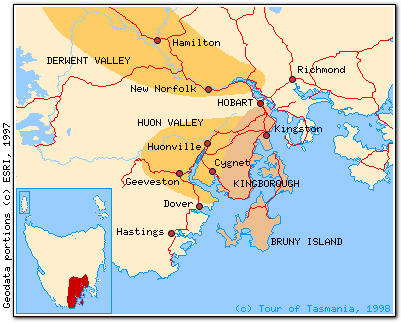
The setting is also an important part of the author’s deliberate choice and is part of the novel’s representation. Geographically, Bruny Island is removed from mainland Tasmania. Bruny Island is a wild and untamed area which attracts tourists for these features. Its pristine waters are well known for growing mussels, scallops and abalone.
The narrative opens at Cloudy Bay - Australia’s most southern surfing beach. We are told that the Currens live on the ‘scrubby fringes of civilisation.’
The role of water – both the ocean and the rivers – is a compelling element of the setting and engenders much of the text’s dark power.
Bruny Island’s weather is often changeable, unrelenting in its cold and bleakness and is home to small towns and settlements where the people depend on the fishing industry for their livelihood. Swimming and surfing are challenging because of the weather and the temperature of the water.
The epigraph at the beginning of the story comes from the explorer Admiral D'Entrecasteaux whose name has been given to the channel of water between the south-east of the Tasmania mainland and Bruny Island. D’Entrecasteaux’s description is effective: ‘twas nature and nature in her wildest mood.’
To build student understanding about the challenges of abalone fishing access this Youtube: https://www.youtube.com/watch?v=fywX066OXJY
The setting is important as a narrative feature especially as it rarely changes place; the unity of setting focuses the action and intensity on the small community of Bruny Island and the tension of the Curren family and household. There are rarely any light moments or different locations for relief. This closed environment reinforces the family’s difficulties. The Curren family is the focus of the narrative and its tragedies. Each member of the family is suffering from the loss of the mother and the secrets involving her death. There is little escape, relief or respite for the family and the reader. The early chapters at the Hobart Show are the rare escape from Bruny and reinforce the lack of joy and recreation for the family especially Harry.
Parrett’s structure or construction of the novel is a key element of its effectiveness and representation. It is non-linear and the flashbacks are important in providing background to the mystery and secrets of what impacts on the family: something sinister and tragic has happened to result in the death of their mother. So, the reader learns about the past at the same time as the past comes into focus.
This narrative framework introduces some of the key ideas including secrets and the power of secrets to damage the family as they do not deal with them. There are two main secrets: Uncle Nick and their mother and her death. Both experiences have affected the family.
As the story progresses there are hints and suggestions about how Nick and the mother died and why. As early as Chapter 2 this secrecy and dark mystery is represented in the references to not only Uncle Nick’s demise but that seems to be linked to the Curren family’s economic situation: “the bank owned the boat now. Because the bank owned everything.” Here Parrett’s use of short sentences and repetition represents family tension e.g. the secrets surrounding the death of Uncle Nick:
Not one bit. Not his beanie. Not his boots.
Student task: Plot the key points in the novel’s action: where are the high points of intensity and emotion? Consider the role of memory and the gradual piecing together of Miles’s memories about this mother and the night of the accident.
The opening of any narrative should engage the reader and excite and encourage them to continue reading to see what will happen and how the narrative threads will be resolved.
What is established in the opening paragraph of Past the Shallows?
Out past the shallows, past the sandy-bottomed bays, comes the dark water – black and cold and roaring. Rolling out the invisible paths. The ancient paths to Bruny, or down south along the silent cliffs, the paths out deep to the bird islands that stand tall between nothing but water and sky. Wherever rock comes out of deep water, wherever reef rises up, there is abalone. Black-lipped soft bodies protected by shell. Treasure.
Interestingly, the novel ends with the same evocative description but with a change:
Out past the shallows, past the sandy-bottomed bays, comes the dark water – black and cold and roaring. Rolling out the invisible paths.
To somewhere warm.
To somewhere new.
This is a deliberate choice by Parrett in the construction of her narrative.
Also, consider the role of the ocean as if it is not only the setting for the family’s tragedies but is like another character. Incidents involving the ocean are often violent, challenging and dangerous which becomes a strong metaphor for the family’s relationships and existence.
The sea/ocean becomes a character and challenges different family members to behave in certain ways. Paradoxically the ocean both provides the family’s living and destroys them.
The ocean serves several important functions in the representation of the human experiences and emotions and also in its role in the novel’s storytelling:
So, the ocean reflects the family’s experiences of:
Student task
Find three passages in the novel which demonstrate the fierce contrasts within the ocean e.g. p. 45 when the ocean is almost friendly:
The cold water bit at his hands and feet as he began the paddle. Winter brought massive swells, awesome to watch and not much fun to be in, but today the bluff was still like liquid mercury. Near perfect three-foot lines. The paddle was easy. The waves were easy. The ocean was at peace.
Is the ocean a metaphor for Steve Curren?
What role does the ocean have in the novel’s representation of human experiences including tensions.
The people in a narrative are part of the narrative’s appeal and success. Writers choose what to tell us about their characters very carefully and they make language choices to position us to view them in particular ways. Parrett creates credible, engaging, compelling and complex characters who seem like real people. They are valuable vehicles for Parrett’s perspectives on the human experience. The adolescent voices are authentic, and the adult voices reveal flawed and complex humans.
Group student task
Each group selects a character - Harry, Joe, Miles, Dad, Aunty Jean, George, Jeff
Groups to share their insights and notes so everyone has a set of notes on all characters
Individual task: using your shared class notes choose two characters and explore the way they interact and what that reveals about their experiences with each other and the landscape around them.
Task:
Consider how Parrett shapes our perspective on the character of Jeff as represented on p.55-56. Look at the verbs and detailed description.
The shark hadn’t hurt him - not even a scratch.
She lay on her side, her blue skin already turning grey, and Miles felt sick as he watched Jeff slice through her white underbelly with ease. Her stomach and insides slid through blood onto the deck.
She was pregnant.
Jeff hacked into the full womb and three pups spilled out; two dead and half eaten, the other trying to swim in its mother's blood against the hard surface of the deck, tiny gills stretched open, black eyes searching. Jeff bent over and stabbed it through the head, grinning as its body came up on the long knife, still fighting. He chucked it at Miles and laughed as he wiped blood off his face.
Miles caught the baby in his arms. It was dead now, black eyes fixed. It was fully formed, more than half a metre long, maybe only days away from being born. It would have survived if Jeff had just let it go, let it slide off the back of the boat. It had made it this far, battling its siblings, killing and feeding off them. Waiting. It would have been born strong, ready to hunt, ready to fight.
Please note the changes which have occurred for the 2027-2030 English Studies examination compared to the 2026 examination:
Stage 6 - Year 12
Section I: Narrative and human experiences (15 marks)
Section II: Narrative and human experiences (15 marks)
Section III: Writing for purpose (30 marks)
The more opportunities students are given to write about Past the Shallows, the more confident they will be for the challenges of their Trial and HSC. Consider workshopping some of these questions, writing introductions, essay plans and choosing quotes to best suit the question.
There is a sample English studies examination on the HSC site:
https://curriculum.nsw.edu.au/learning-areas/english/english-studies-11-12-2024/assessment/hsc-examinations
Other HSC style questions for Studies
How does Parrett represent the human experiences through the construction of her novel, Past the Shallows?
In your response, make reference to the prescribed text.
Outcomes from English Studies syllabus which can be explored in this focus area with Past the Shallows
ESD-12-01
ESD-12-02
ESD-12-04
ESD-12-05

Jane Sherlock and Deb McPherson are experienced and passionate English teachers. They have also been involved in the education sector as authors and presenters at teaching conferences.
$9.95 flat rate shipping or free over $110
Australian family-owned & sourced
Supplier to over 1,000 schools Australia wide