




Flat Rate Shipping
$9.95 flat rate shipping or free over $110

Aussie Owned
Australian family-owned & sourced

School Supplier
Supplier to over 1,000 schools Australia wide
For Stage 5
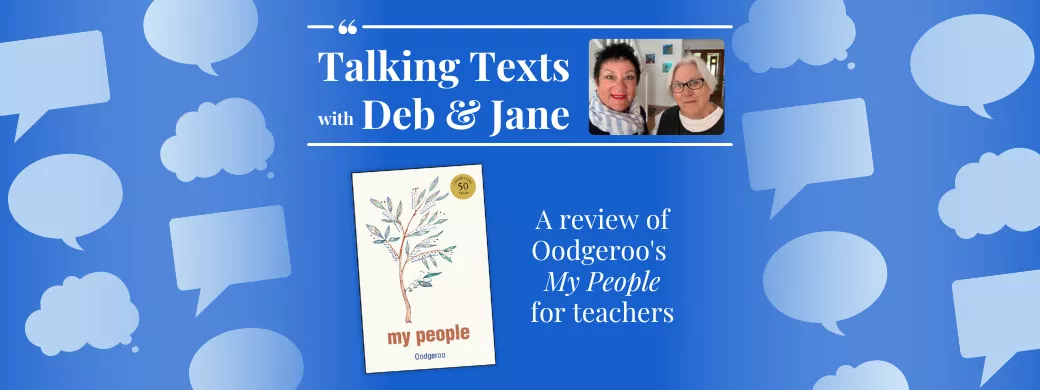
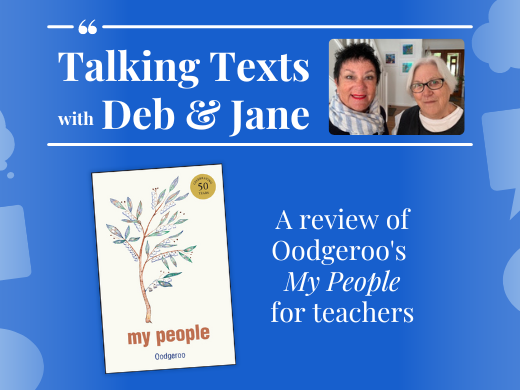
Oodgeroo’s poetry is full of passion, power and provocation.
This is the fifth edition of this marvellous collection which was updated in 2020. The collection contains 77 poems which cover the length and breadth of Oodgeroo’s experiences and significant contribution to Australian literature. This collection of poetry is a treasure house of beauty, clarity, authenticity and the power of words to capture First Nations experiences.
In order to fully explore and appreciate these poems, I recommend that you include in your faculty resources Cara Shipp’s exemplary text, Listening from the Heart. This extract, from my colleague, Deb McPherson’s review of Listening from the Heart, attests to that:
“Listening from the Heart is an outstanding resource for English teachers and faculties across Australia as we seek to be a better job of enjoying, understanding, learning about, and from, First Nations people… Listening from the Heart will help teachers seek better ways to engage with First Nations People and their stories, history and culture. Every teacher will benefit from this kind, thoughtful text and faculties will have much to explore and discuss. This is the book of the year in terms of supporting teachers in the classroom and can be very highly recommended.
Cara Shipp is a Wiradjuri/Welsh woman and teacher who regularly presents at local and National conferences on incorporating First Nations perspectives into the English curriculum. Go to her blog for past presentations and teachers notes at https://missshipp.wordpress.com”
Oodgeroo of the Noonuccal peoples, Custodian of the land Minjerribah. 3 November 1920 – 16 September 1993
Oodgeroo of the Noonuccal peoples was one of Australia’s first Aboriginal and Torres Strait islander poets. She was also a civil rights activist and a powerful and passionate advocate for First Nations peoples. She was a political activist within the Communist party and received many awards including MBE which she later returned. She visited China in 1984 with her friend and compatriot, Professor Manning Clarke, as part of a cultural delegation. A more detailed biography can be found at AustLit.
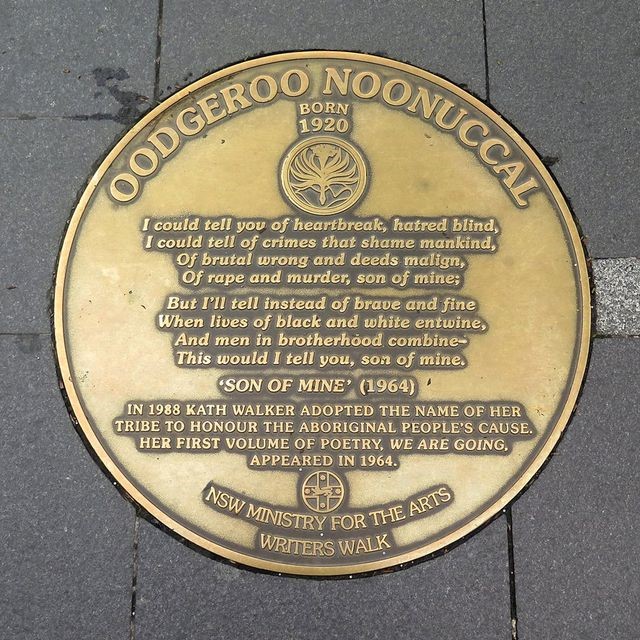
My People will enable students to enjoy these poems and the stories they tell at the same time as exploring significant themes and ideas about First Nations experiences.
Please allow your students the opportunity to enjoy the sounds of the words and the emotional connection of this old, and revered form, of human expression.
The collection includes the transcript of Oodgeroo’s speech in 1989 when she received an honorary doctorate at Griffith university and is a powerful commentary of its day. This transcript includes a moving and compelling poem written by Oodgeroo’s close friend and fellow poet, Judith Wright - Two Dreamtimes which provides important insights.
To help you decide what poems you might like to explore with your students or what you might encourage your students to explore themselves I have created four headings that I think provide some loose categorising of the poems’ key ideas and experiences. Please note that this is my framework and not that of the publisher or the poet.
You might consider a class task where the students debate the value of these categories and instead, they could create their own lists. Also consider how the titles capture the category/perspective. Some poems will be suited to more than one category.
My categories:
If you are looking for poems which are a powerful plea for understanding First Nations experiences:
| Page | Poem |
| 2 | Let Us Not Be Bitter |
| 3 | An Appeal |
| 14 | The Young Girl Wanda |
| 27 | White Man, Dark Man |
| 39 | Aboriginal Charter of Rights |
| 42 | Spinners |
| 43 | A Song of Hope |
| 47 | The Dawn Is at Hand |
| 50 | My Love |
| 55 | Son of Mine |
| 56 | Dead Life |
| 76 | We Are Going |
| 79 | United We Win |
| 84 | Civilisation |
| 87 | Freedom |
| 89 | Hope |
| 91 | I Am Proud |
| 93 | Daisy Bindi |
If you are looking for poems which give insights to and celebrate First Nations lore, spirituality and continuity:
| Page | Poem |
| 5 | The Curlew Cried |
| 6 | Sounds Assail Me |
| 7 | Tree Grave |
| 8 | Dawn Wail for the Dead |
| 20 | Corroborree |
| 21 | Stone Age |
| 25 | Ballad of Totems |
| 35 | Bora |
| 37 | Nona |
| 38 | The Food Gatherers |
| 41 | Gifts |
| 45 | The Woor Woman |
| 52 | Tribal Justice |
| 58 | Jarri's Love Song |
| 71 | The Bunyip |
| 72 | Understand, Old One |
| 86 | Biami |
| 95 | The Past (NSW HSC Standard Module B) |
| 97 | Balance |
If you are looking for poems which give insights to First Nations experiences of dispossession and injustice:
| Page | Poem |
| 9 | Dark Unmarried Mothers |
| 13 | The Child Wife |
| 16 | Whynot Street |
| 17 | White Australia |
| 18 | Acacia Ridge |
| 19 | The Unhappy Race |
| 28 | The Protectors |
| 29 | Intolerance |
| 22 | Assimilation – No! |
| 23 | Integration – Yes! |
| 24 | The Teachers |
| 30 | Bwalla the Hunter |
| 32 | No More Boomerang |
| 51 | Colour Bar |
| 66 | Namatjira |
| 67 | The Dispossessed |
| 68 | Interlude |
| 77 | Cookalingee |
| 80 | Song |
| 81 | God's One Mistake |
| 82 | Verses |
| 90 | Racism |
| 92 | Then and Now |
| 101 | Oh Trugganner! |
| 104 | Kiltara-Biljara* (Eagle Hawk) |
If you are looking for poems which give insights to First Nations experiences of Connection to Country and the celebration of nature:
| Page | Poem |
| 49 | Municipal Gum |
| 57 | ? |
| 60 | Community Rain Song |
| 88 | Return to Nature |
| 96 | Time Is Running Out |
| 98 | China … Woman (NSW HSC Standard Module B) |
| 99 | Reed Flute Cave (NSW HSC Standard Module B) |
| 106 | Mongarlowe |
| 107 | Leave Straddie Unabridged |
Revisit the purpose of poetry and what distinguishes it from other forms.
Build a classroom culture of reading the whole poem several times and exploring it before the deep dive into specific techniques. Encourage students to seek what speaks to them and that a long list of literary techniques including Greek terminology does not engender love and engagement. It should be less about the literary technique and more about how the poet, in this case Oodgeroo, purposefully uses language to express her ideas, emotions, perspectives and experiences of First Nations peoples.
Reading a poem out aloud can be one of the most effective strategies for engagement and interpretation.
by Associate Professor Jackie Manuel (2019)
Your school might have copies of Poets and Poetry (1992 Sadler, Hayllar and Powell). There is a chapter devoted to Oodgeroo which showcases 10 of the poems from this collection and includes some valuable questions on some of the poems which you could choose to explore with your class.
An additional task could be to invite First Nations representatives to your school and ask about First Nations peoples who may have lived in your area and use this information to write your own poem.
Use traditional style essay questions to build response skills. Unpack the structural conventions of analytical writing with emphasis on the need to understand and interpret the question, to open paragraphs with strong topic sentences and include specific and detailed evidence from the poem to substantiate student response.
In small groups students are to explore this idea:
“It isn’t what you did in the past that will affect the present. It’s what you do in the present that will redeem the past and thereby change the future.”
Paulo Coelho from The Secret River program Sydney Theatre Company
How have the texts you have explored helped you understand the past to help build capacity for the future?
Any references must be acknowledged through footnotes and include a bibliography.
Text requirements: My People is a collection of poetry by Australian author Oodgeroo, who is an Aboriginal and Torres Strait Islander. My People contains intercultural and diverse experiences and cultural, social and gender perspectives.
For more recommended texts suitable for Stage 5, explore our Year 9 texts and study guides and Year 10 texts and study guides.
Concepts could include Representation • Perspective • Connotation, imagery and symbol
Specific syllabus content points which would be addressed through exploration of this text:
A student: uses a range of personal, creative and critical strategies to interpret complex texts
A student: analyses how meaning is created through the use and interpretation of increasingly complex language forms, features and structures
Representation
Code and convention
Connotation, imagery and symbol
Point of view
Narrative
A student: evaluates how texts represent ideas and experiences, and how they can affirm or challenge values and attitudes
Perspective and context
Argument and authority
Style
A student: investigates and explains ways of valuing texts and the relationships between them EN5-URC-01
A student crafts personal, creative and critical texts for a range of audiences by experimenting with and controlling language forms and features to shape meaning EN5-ECA-0
A student uses processes of planning, monitoring, revising and reflecting to purposefully develop and refine composition of texts EN5-ECB-01
(English K-10 Syllabus 2022 © NSW Education Standards Authority for and on behalf of the Crown in right of the State of New South Wales, 2023)



Jane Sherlock and Deb McPherson are experienced and passionate English teachers. They have also been involved in the education sector as authors and presenters at teaching conferences.
$9.95 flat rate shipping or free over $110
Australian family-owned & sourced
Supplier to over 1,000 schools Australia wide