




Flat Rate Shipping
$9.95 flat rate shipping or free over $110

Aussie Owned
Australian family-owned & sourced

School Supplier
Supplier to over 1,000 schools Australia wide
For Stage 4
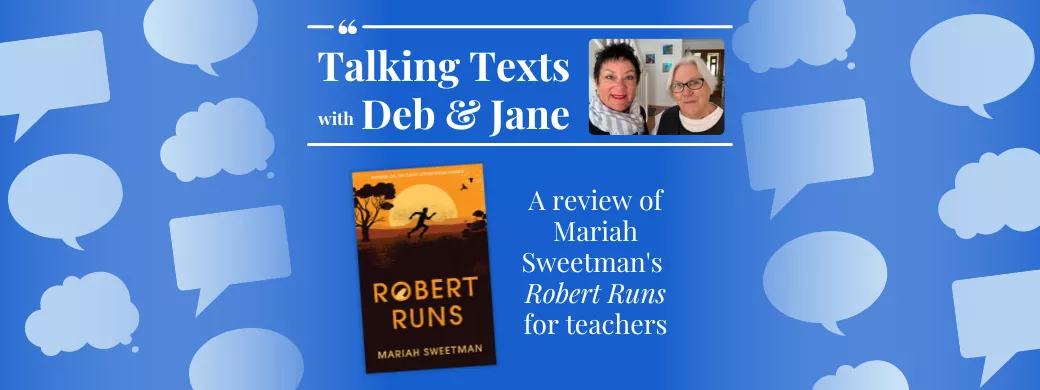
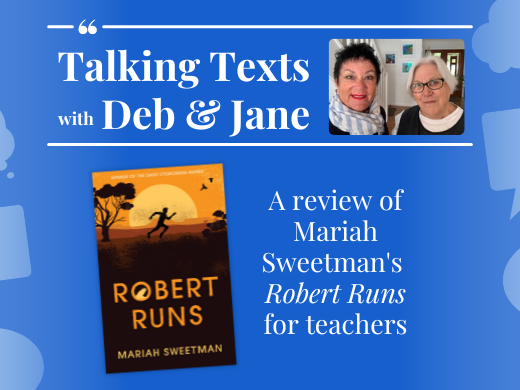
The “appeal of the real” is a great way to engage our students. When the real story also involves sport and at the same time can give important and compelling insights to First Nations Peoples’ lived experiences, then a text grows in its appeal. Robert Runs is a powerful text for Year 8 classrooms.
In Robert Runs the author, Mariah Sweetman, draws on the true story of her great-great grandfather, Robert Goupong Anderson, who at one time was the fastest runner in Australia and who beat the world record holder, Arthur Postle of Pittsworth, in 1904.
Robert and his little sister Dot are growing up on a Mission in Queensland in the 1900s. Life on the mission is hard and often cruel. First Nations children are forbidden to use their own language, and there is a constant threat to their culture and identity as well as physical abuse. The children still find strength, humour and friendship among themselves. Through this imaginative retelling the author examines the impacts of invasion and dispossession, and in particular, the massacres, tragedy and injustices that created the Stolen Generations.
The thrill of a famous foot race begins and ends the story.
Mariah Sweetman is a proud descendent of Ugarapul (Green Tree Frog) people and the winner of the 2022 Daisy Utemorrah award, which is presented annually for an outstanding unpublished manuscript of junior or YA faction by an Aboriginal or Torres Strait islander author.
For information about teaching First Nations content see Cara Shipp’s book Listening from the Heart: Rewriting the Teaching of English with First Nations Voices (AATE 2023). You will also find information at the Magabala website for information on teaching Indigenous Content and at the SBS Learn website where an Aboriginal and Torres Strait Islander Protocols guide for teachers is available.
Show students the historical monument below that celebrates the achievement of Robert Goupong Anderson who was raised on Deebing Creek Mission. In 1904 he defeated Arthur Postle, the world record holder in a sprint at Charters Towers. In his later life he worked on many properties across Queensland. You can find more information at the Monument Australia website.
Some background details on the Stolen Generation may be needed for some groups to establish the historical and social context of this novel. The AIATSIS website has resources on the Stolen Generation.
What was a day in the life of a First Nations’ child at Deebing Creek Mission like? How different was their life from your own experiences? In groups collect details from the novel and prepare a report for the class about the conditions for children there and contrast it with your own experiences. Use the following list to help you.
Compose a text of your own which reflects a day in your life at high school.
As a class create a list of the main characters in the novel e.g. Robert and Jonathon, the Elder the teacher Miss Adams, the Boss Man, Mr McRae etc. and place the names in a box. Divide the class into groups of 4-5 and each group draws a character name from the box and has the responsibility of researching their character in the novel and becoming the group expert on that one character. All groups create a series of questions to ask about other characters and each group responds about the character they have become expert in.
Mariah Sweetman uses figurative language to represent the strong connections between First Nations People and their Country. When the Elder (p20-21) talks with his totem, the green tree frog, he looks at his sleeping fellow travellers “spread out like scattered tree branches” and laments their displacement from their sacred lands. When Goupong tries to escape after the Mission Games he touches the bark of the trees as he passes and “silently thanked them for their covering and protection.” (p146). The author also uses a simile for biting impact when Goupong compares the violent Boss Man’s smell to that of a “rotting sheep carcass” (p25)! When, as writers we compare one thing with another, we help the reader to see and feel what we saw and felt.
Task: In small groups seek out other vivid descriptions in the novel and discuss how those descriptions impacted on you. Then, as an individual, recall a natural scene that means something to you; a beach, a park, a mountain, sand dunes, gardens or bush, a creek or lake and see if you can evoke the sight, sound, touch and smell of the place by comparing it to some other object, animal or experience. Weave your comparisons into a short description of your favourite place.
Text requirements: Robert Runs is a novel by an Aboriginal and Torres Strait Islander author with social and gender perspectives.
Looking for more classroom texts for Stage 4 students? Browse our Year 7 texts and study guides and Year 8 texts and study guides at Five Senses Education.
Concepts could include Context • Point of view • Characterisation
Uses a range of personal, creative and critical strategies to read texts that are complex in their ideas and construction EN4-RVL-01
Analyses how meaning is created through the use of and response to language forms, features and structures EN4-URA-01
Examines and explains how texts represent ideas, experiences and values EN4-URB-01
(English K-10 Syllabus 2022 © NSW Education Standards Authority for and on behalf of the Crown in right of the State of New South Wales, 2023)


Jane Sherlock and Deb McPherson are experienced and passionate English teachers. They have also been involved in the education sector as authors and presenters at teaching conferences.
$9.95 flat rate shipping or free over $110
Australian family-owned & sourced
Supplier to over 1,000 schools Australia wide