




Flat Rate Shipping
$9.95 flat rate shipping or free over $110

Aussie Owned
Australian family-owned & sourced

School Supplier
Supplier to over 1,000 schools Australia wide

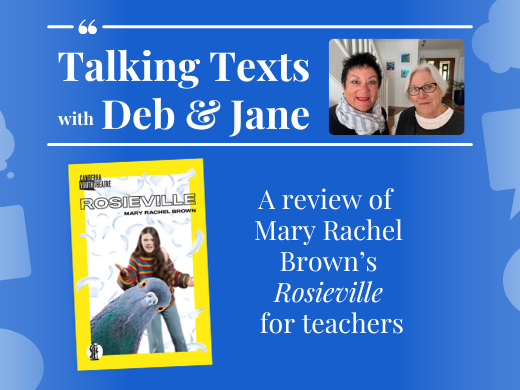
Plays are hard to find for Stage 4. Sunshine Super Girl has been a standout for Year 8 and A Ghost in My Suitcase works well in Year 7 but it’s wonderful when you find a new play that will engage students with humour and heartache and Rosieville really fits the bill.
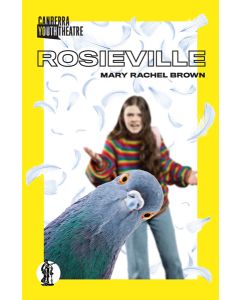
Eleven-year-old Rose lives at number 1 Button Place and her heart is breaking as her dad has gone away and her mum Liz can’t say when (or if) he is coming back. She also has a pigeon talking to her that claims to be her subconscious. “Every night, same time, same pigeon crash lands in my room. At first, I think it’s dead, But then it starts talking”. The bird’s intentions are good. It is there to help Rose to prepare for her Dad not coming home. Her brother, 14-year-old Xavier, used to spend a lot of time in the shed building a flying machine with his dad, but he tells his old and ill neighbour, Alan Sayed, that he is not doing it anymore. Alan is concerned about Xavier and encourages him to keep building the machine to enter the Birdman Rally. Alan’s 18-year-old daughter and carer Anika, joins them and she, and her boyfriend Ben, and Rose also spend time with Alan’s homing pigeons. There are family discussions, mass pigeon watching, and Xavier’s triumphant Birdman Rally. The play culminates with the pigeon leaving because his work is done and Rose telling the audience the news of Alan’s death.
The playwright uses the loyalty, stamina and fortitude of homing pigeons (who always manage to find their way home) to help Rosie come to terms with the leaving of her dad and Anika to prepare for her father’s death. The play promotes the help of family, friends, neighbours and community when life seems a bit much to handle alone.
Roseville was a Canberra youth theatre commission and Runner Up in the Shane & Cathryn Brennan Prize for Playwriting Theatre for Young Audiences category.
Every March from 1985 to 1992 thousands flocked to the shores of Lake Burley Griffin to witness one of the more spectacular events on the Canberra Festival program, the Capital 7 Birdman Rally.
Explain that the play contains references a real event and show the class the footage of the 1987 rally which is available at the National Film and Sound Archive of Australia (NFSA).
Ask them to remember this footage as you act out the play.
In groups ask students to list the pigeon facts that you learnt by reading/acting out the play. Then compile another list of false pigeon facts. Then test the knowledge of the other groups by asking them to indicate true or false as you read out some true and some false items. Use your knowledge of the play and the internet to help you compile your lists. A useful resource can be found at PETA.org.
Follow your Pigeon Trivia with a group discussion about the character of the pigeon and how the playwright represents this character in the play and what they symbolise.
Canberra Youth Theatre interviewed Mary Rachel Brown about her play Rosieville in 2023. You can find the full interview at https://canberrayouththeatre.com.au/mary-interview/
Mary explained in the interview that she likes having surprises in her work. “I like it when the pigeon interrupts a serious conversation by flying into a door. I love a surprise interruption. I always try and write a few into my work.’
In groups discuss the surprises in this play and what effect they had on you as an audience.
The playwright was also asked if she had the chance to be a character in the story which one would she choose and why? She replied:
“The pigeon of course, it can fly and it helps people, those are two very attractive qualities. Close second would be Anika, because she’s cool and unpredictable”
In pairs, pick the characters you would like to be and explain why you liked them and how the playwright made them so likable. Consider the use of dialogue, humour, metaphor and pathos.
Rosieville is about heartbreak and resilience and how humour can help. Mary Rachel Brown describes it this way:
“Rosieville examines the nature of waiting and how we hold ourselves together while looking down the barrel of uncertainty. I hope to capture some of the human anxieties, habits, and distractions we create to compensate for things not being how we want them to be. This is a play about how to walk alongside unexpected loss, and how help often comes from where you least expect it,” Mary Rachel Brown in Rosieville a show perfect for school holiday outings
In groups explore the play’s key ideas and messages. Then choose two ideas and craft an individual response of about 300 words on how these ideas are developed in the play.
Text requirements: Rosieville is a drama text written by an Australian playwright. It contains intercultural experiences and cultural, social and gender perspectives.
Looking for more classroom texts for Stage 4 students? Browse our Year 7 texts and study guides and Year 8 texts and study guides at Five Senses Education.
Concepts could include Context and perspective • Connotation, imagery and symbol • Representation.
A student uses a range of personal, creative and critical strategies to read texts that are complex in their ideas and construction EN4-RVL-01
Reading, viewing and listening skills
Reading, viewing and listening for meaning
Reading for challenge, interest and enjoyment
Reflecting
A student analyses how meaning is created through the use of and response to language forms, features and structures EN4-URA-01
Representation
Connotation, imagery and symbol
Point of view
Characterisation
A student examines and explains how texts represent ideas, experiences and values EN4-URB-01
Perspective and context
A student creates personal, creative and critical texts for a range of audiences by using linguistic and stylistic conventions of language to express ideas EN4-ECA-01
Representing
Speaking
(English K-10 Syllabus 2022 © NSW Education Standards Authority for and on behalf of the Crown in right of the State of New South Wales, 2023)

Jane Sherlock and Deb McPherson are experienced and passionate English teachers. They have also been involved in the education sector as authors and presenters at teaching conferences.
$9.95 flat rate shipping or free over $110
Australian family-owned & sourced
Supplier to over 1,000 schools Australia wide