




Flat Rate Shipping
$9.95 flat rate shipping or free over $110

Aussie Owned
Australian family-owned & sourced

School Supplier
Supplier to over 1,000 schools Australia wide
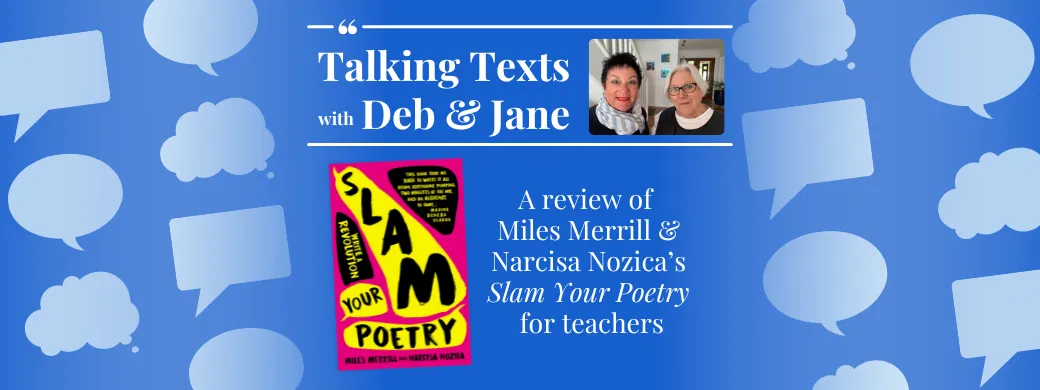
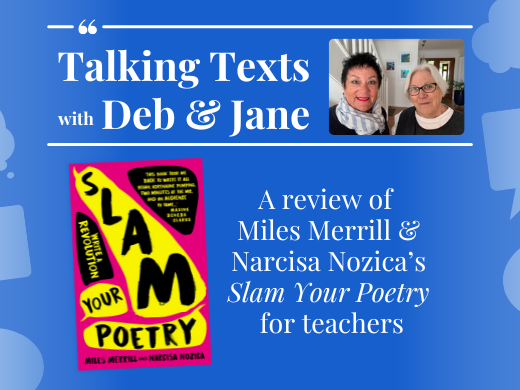
After writing the blogs on Homeland Calling and Maxine Beneba Clarke’s gorgeous The Sound of the Thing, I recalled Slam Your Poetry which I first read about three years ago.
While Slam Your Poetry is an excellent guide on setting up your own Slam poetry event, it is even more valuable as a resource for the English classroom. It is a wonderful and authentic examination and exploration of the power of poetry and will help your students to be better, more engaging and powerful writers in the imaginative mode. I would recommend that every faculty have a few copies of this book as it merits dipping in and out of: each time you do, there will be another gem to discover.
Imagine a unit of work entitled Slam your Poetry where you highlight the verb “slam”: traditionally as a verb this is to move against a hard surface and create a loud noise or impact. This is exactly what we want our young writers to achieve: to cause an impact, make a noise!
The unit could incorporate a range of poems where poetry is being used to expose and raise awareness about significant human experiences as well as poems where voice will enhance the message and its power.
Consider adding images to your unit as a wider focus on the importance of poets and painters to “slam” society. Exploring existing poems can inspire the thrill and joy of students writing their own and this is where Slam Your Poetry will be invaluable.
Originally from Chicago (birthplace of slams), Miles Merrill is a writer, performer and event coordinator who combines poetry with theatre, experimental audio, hip-hop beats, stand-up and, occasionally, political confrontation. Miles introduced poetry slam to Australia, co-wrote and co-directed 'Slamming for the Sydney Festival' and performed with UK DJ Billy Bizniz at the Sydney Opera House. Internationally, Merrill has performed in Krakow's Audio Art Festival, and writers' festivals in Bali, Beijing, Vancouver and Calgary. Miles is the ideas and meetings person at Word Travels and can be booked for school tours and workshops.
Narcisa Nozica is an NSW English teacher. She graduated from the University of Sydney with bachelor's degrees in arts and education. In 2016 Narcisa won a NSW Premier's English Teachers Association Scholarship to study how spoken word poetry can be used in schools. Since then, she has written several articles in the English Teachers Association professional journal mETAphor, presented at an ETA conference on the subject of spoken word, and worked with teachers and students to help young people find their poetic voice.
Slam Your Poetry is full of accessible, relevant, engaging and very useful hints, inspiration and ideas for teaching poetry and setting up your own Slam poetry experience.
It opens with an overview of the book’s contents and the subheading, This ain’t Poetry Classics 101, is a valuable starting point. We need to engage adolescents in poetry they can relate to before immersing them in classical poetry and intense critical analysis. The introduction also includes an interesting summary of the “Stories Before Writing” which reminds us of the rich tradition of oral storytelling throughout time.
Part 1 Write to Speak contains some wonderful hints and tips for writing.
Part 2 Set up a Slam is very useful if you want to establish a slam event at your school or in your community.
Part 3 Teach and Revolution contains a series of very practical chapters on writing, speaking, drafting, crafting and other relevant tools. It also includes some excellent resources including reference books, video collections, interviews which will enrich your students’ understanding of the power of spoken word.
Consider a specific unit of work which concentrates on the spoken word. This could include poems which have a strong sense of voice and students could listen to recordings or spoken versions. Speeches could also be included in the unit as they have authentic audience and purpose. Be sure to choose speeches which will resonate with your students as well as others which will enrich their broader world view.
To hook students in the concept of the power of the spoken word show a YouTube clip of one or more of these performers:
Below is a list of poems some of which I referenced in the blog on Homeland Calling. These could be powerful examples of poems to explore as the spoken word or for inspiration for students own writing:
Incorporate a writing session in each lesson so that writing becomes normalised. Over time students will develop skills and competence the more they write. It is important to develop this in “low-risk, no-risk” situations where students are not being assessed or judged. Chapter 2 is full of excellent ideas to get students writing. I am sure you will have encountered some of these ideas and perhaps even discarded them. For example, there is the “stream of consciousness” or “lightening” or “free” writing (or as Miles calls it “Vomit onto your Page.”) He suggests playing an instrumental track so the lyrics do not distract; students are required to keep writing words until words appear. At first students might need to write “I cannot think of anything” but eventually other words will start to occur. Miles describes this as “mining my surface, finding words hidden just under my awareness … We need a raw explosion”. P.25-26
As you and your students become more familiar with these writing sessions try to incorporate more ideas from this chapter: Write It:
Consider sharing Luka Lesson’s powerful and engaging performance poem: May Your Pen Grace the Page.
This poem is currently prescribed for Standard Module C but that does not stop you from exploring it in Stage 5. I love Luka’s use of the verb ‘grace” – have a class discussion as to the popular understanding of the word and where we see grace in our world. David Malouf refers to “grace” in his poem Ladybird (Advanced Module B).
Form groups and ask student to list the three best pieces of advice from Luka Lesson. Create a wall chart for your classroom and add advice as you read more poetry. This will provide excellent foundations for Stage 6 Module C.
Invite a poet or performance poet to your school. Remember that this is part of the way they make a living so we need to be respectful and pay them. If it is too challenging to collect money from your students consider allocating from your faculty budget to pay visiting performance poets. Or seek a grant from your P&C or if you are in an economically-challenged area seek a grant from your local State or Federal member or service club as a sure way to enrich your students’ lives and experiences.
Luka Lesson has forwarded these details to me re his 2025 schedule:
Please note that bookings can be made at lukalesson.as.me.
If you have any questions about Luka’s offerings or the booking process, please feel free to get in touch at education@lukalesson.com. For more details, you can download the Education Brochure from his site.
Miles Merrill: contact Miles at miles@wordtravels.org.au
Other performance poets to watch/view are Omar Musa, Kae Tempest, Troy Wong.
Consider this article on performance poets from The Guardian. Share with your class and use as a reading/comprehension task and students could then write a response to the article.
If you haven’t read my blog on Homeland Calling (September 30 2024) please see the links to the writers’ performances and this concept of power and poetry will resonate even further. Desert Pea media have produced 48 videos of the songs featured in the collection.
We want our young adults to be bold, strong, have an opinion, advocate for themselves and the future: the spoken word is the ideal vehicle for this.
Text requirements: Slam Your Poetry is
Concepts could include ? • ? • ?.
A student [focus area description] SYLLABUS-CODE
Focus Area topic
(English K-10 Syllabus 2022 © NSW Education Standards Authority for and on behalf of the Crown in right of the State of New South Wales, 2023)

Jane Sherlock and Deb McPherson are experienced and passionate English teachers. They have also been involved in the education sector as authors and presenters at teaching conferences.
$9.95 flat rate shipping or free over $110
Australian family-owned & sourced
Supplier to over 1,000 schools Australia wide