



Flat Rate Shipping
$9.95 flat rate shipping or free over $110

Aussie Owned
Australian family-owned & sourced

School Supplier
Supplier to over 1,000 schools Australia wide
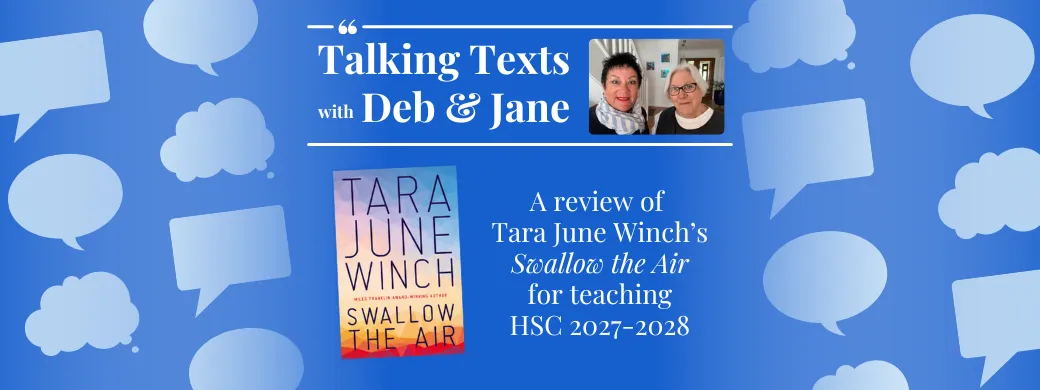
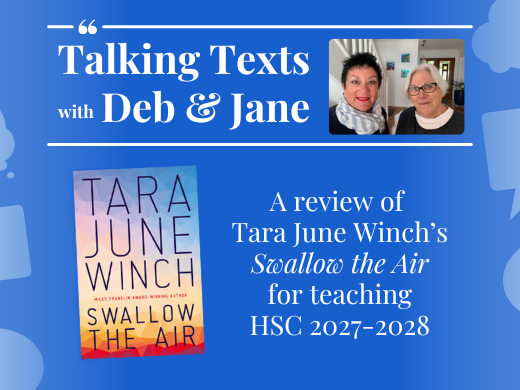
Swallow the Air is set for study in English Standard: Language, identity and culture for the new Stage 6 English syllabus for 2027 and 2028.
It is currently on the HSC 2019-2026 list for EAL/D Module B: Language, Identity and Culture and and this blog was written to match the new HSC syllabus for English Standard.
Complement your study of this text with our Year 12 texts and study guides, Year 11 texts and study guides, and English Years 11–12 Study Guides at Five Senses Education.
I first read Swallow the Air when considering texts for the 2009 HSC. The novel had won a raft of awards and would certainly have been a relevant choice for Discovery and Belonging. But we did not choose it. Our school had started to explore First Nations texts and voices but I had reservations about Swallow the Air for our students. Fast forward to 2025 and I now have more confidence in the text working as we have all had much more exposure to the power of First Nations voices. Now after my third reading Swallow the Air is an excellent choice for this Focus Area: Language, identity and culture. Indeed, the novel is absolutely about this focus area. Swallow the Air affirms the connection of identity and culture to our sense of well-being, agency and fulfilment. We all want to know who we are and that we can feel safe and accepted in the place we call our own. We can all lose our way. We long for stability and certainty. We want and need to be confident in who we are. Swallow the Air affirms these individual needs.
Awards for Swallow the Air
The story opens with a poignant single sentence: “I remember the day I found out my mother was head sick.” What a confronting and tragic realisation for a child to have to make and May Gibson is only nine. May’s mother is Wiradjuri, her father English. At the novel’s opening, May is living in coastal Wollongong, which is not her mother’s country, in a single-parent household with her mother and her brother, Billy, who has a different and Indigenous father. Following the suicide of her mother May moves around friends and family firstly to survive and then in a desperate search for both her own sense of identity and her cultural connection. Her encounters see the brutal realities of individuals and communities living with alcoholism, gambling, poverty, squats, eviction, deaths of friends and family. May is determined to find answers to her questions but most of her journeys do not provide the answers or satisfaction she needs and wants especially the long drive to Darwin to find her father. May eventually returns to Country and makes important discoveries to enrich her own search and survival. May and the reader have gained important and compelling insights to First Nations culture and identity. Swallow the Air reminds us that it is easy to lose one’s way: the challenge is finding a reason to keep going and choose a path to better options. Some reviews refer to the novel as semi-autobiographical as the author took her own journey of cultural discovery at age 16 but NESA have clearly designated it as Prose Fiction.
Swallow the Air has been previously prescribed for Area of Study; Discovery (2015-2020) and Belonging (2009-2014) so resources are available which is always very helpful.
Distinctive features
Swallow the Air will enable authentic and meaningful connections to the Stage 6 syllabus’s specific considerations for studying texts authored by Aboriginal and/or Torres Strait Islander Peoples:
From the Stage 6 English Syllabus (2024)
Although the new syllabus states that students study ONE prescribed text in detail it is easy to sometimes overlook the rest of that sentence which states, and a range of textual material to explore, analyse and assess the ways in which meaning about individual and community identity and cultural perspectives is shaped in and through texts.
The range of textual material is very valuable to establishing meaningful connections to the concepts of language, culture and identity. Also, if your students are limited in their understanding and knowledge of First Nations cultures and experiences, this additional textual material could be very valuable.
A range of textual material is also a valuable opportunity to authentically consider the key verbs in this Focus Area: affirm, ignore, challenge and disrupt prevailing assumptions and beliefs about themselves, individuals and culturally connected groups.
Depending on your students’ exposure and understanding of First Nations content it will be necessary to revisit content about:
Many of these lived experiences are referenced in Swallow the Air and can be seen as the result of losing one’s identity and culture.
Read Cara Shipp’s Listening from the Heart: Rewriting the Teaching of English with First Nations Voices (2023 AATE 150pp) to explore better ways to engage with First Nations People and their stories, their history and culture and to understand the protocols and appropriate terminology to use when reading and studying texts by First Nation authors. This warm, wise and generous book will be a huge help in the classroom.
On p.6 Cara Shipp points out that “Knowing where you are is a simple step toward understanding more about First Nations people, their histories and cultures.” Cara suggests to find out the local names for the land on which you live, work and travel. Cara recommends this site: https://aiatsis.gov.au/explore/map-indigenous-australia
Provide a map for students to add key places from the narrative e.g.Bellambi, Gundagai, The Block in Redfern, Darwin, Lake Cowlong, Euablong.
This map could also be a wallchart for your classroom: alongside the place add who May encounters in this place and in what ways May’s experiences contribute to affirming her identity/and or cultural connection?
When considering language and how it both shapes and reflects identity and culture, it is important for students to see language as a frame for the novel as well as specific examples of language techniques.
The syllabus dot point is a valuable lens: The language features, text structures and stylistic choices that influence narratives p.15 NESA English Standard 11-12.
Winch’s language choices include:
The first half of the novel explores the impacts and effects of loss on one’s identity, self and survival. In the second half May’s physical journey of self-discovery is not always positive or what she had hoped but there is purpose and meaning to her journey. This journey takes on a broader meaning by the final page and Winch’s words resonate in this more contemporary world of truth-telling and First Nations Connections to Country:
“An excavator starts its smothering engine over the torrent of each barrel. Over the sun. Over the blue. And I wonder if we stand here, if we stay, if they stop digging up Aunty’s backyard, stop digging up a mother’s memory, stop digging up our people, maybe then, we’ll all stop crying.”
In reading this I was reminded about Midnight Oil’s Beds are Burning which is such a vibrant and relevant song and video to share and students would find it powerful and compelling.
Below you will find several extracts. In what ways do these examples from the first half of the novel explore the key ideas of language and identity? Allocate 1-2 per group for close analysis of the language features used by Winch.
I have provided a model for one of the extracts
Poignancy of the opening through the word choices and imagery:
Connections to Country: poignant and powerful imagery
Forcible removal of children and Missions
Dislocation and dispossession:
Searching and finding
Who am I? Identity and culture.
In the second half of the novel, May finds more hope and certainty in her search for family and culture.
This section comprises eleven chapters: allocate 1-2 chapter per group to locate significant extracts which affirm May’s growing sense of identity and connection to country and culture.
In small groups or individually, choose 2-3 extracts from each half of the novel to demonstrate how May Gibson searches and finds not only her identity but an affirmation of her Country and Culture.
There are requirements for particular types of texts to be selected from the prescribed texts list for different courses. Great care must be taken in selecting a pathway of texts that meets all the requirements.
In the Standard English course students are required to closely study 3 prescribed texts, with ONE drawn from each of the following categories:
Pathway 1 for HSC Standard English with Swallow the Air as first choice
Poetry
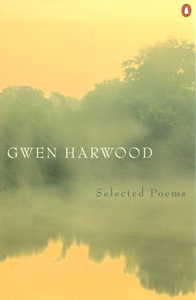
Texts and human experiences:
Selected Poems by Gwen Harwood
Prose Fiction
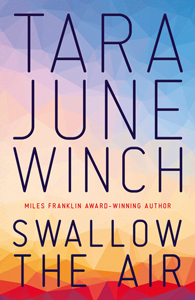
Language, identity and culture:
Swallow the Air by Tara June Winch
Film

Close study of literature:
Arrival directed by Denis Villeneuve
Pathway 2 for HSC Standard English with Swallow the Air as first choice
Film

Texts and human experiences:
One Night the Moon directed by Rachel Perkins
Prose Fiction
Language, identity and culture:
Swallow the Air by Tara June Winch
Poetry

Close study of literature:
Collected Poems by Carol Ann Duffy

Jane Sherlock and Deb McPherson are experienced and passionate English teachers. They have also been involved in the education sector as authors and presenters at teaching conferences.
$9.95 flat rate shipping or free over $110
Australian family-owned & sourced
Supplier to over 1,000 schools Australia wide