




Flat Rate Shipping
$9.95 flat rate shipping or free over $110

Aussie Owned
Australian family-owned & sourced

School Supplier
Supplier to over 1,000 schools Australia wide

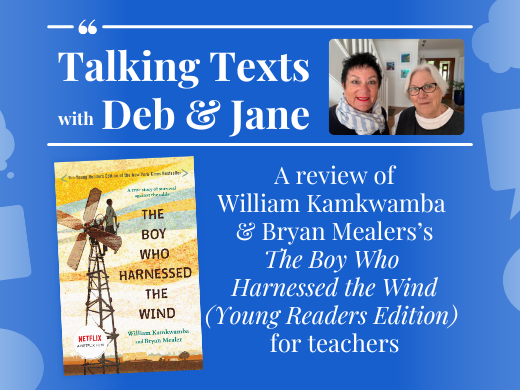
For Stage 3. Note: This is the Young Readers edition.
It’s rare to find a work of non-fiction as inspiring as this remarkable book by a young man who really made a difference in the life of those around him. William Kamkwamba grew up in Malawi in Africa and his determination and curiosity led to a remarkable quest to find out how to build a windmill. Students in Year 5, 6 (and 7) will relish ‘the appeal of the real’ when reading this book as William Kamkwamban, a young Malawian boy takes them with him on his journey of discovery.
William Kamkwamba’s story The Boy Who Harnessed the Wind was a New York Times best seller and was produced in many different mediums. Kamkwamba currently works between the USA and Malawi as he supports ongoing community initiatives including the Moving Windmills project, Clean water and energy initiatives, the Light Library Program, the SPARK program to supply STEM curriculum to schools and book clubs across the world and the Agri Tech innovation program in which William mentors young people in Malawi to create efficient tools for rural areas.
Bryan Mealer is an American journalist born in 1975 who covered the war in the Congo and is the author of several books. He co-authored the book The Boy who Harnessed the Wind with William Kamkwamba whose TED talk in 2007 inspired him Mealer to contact the young Malawian.
The Boy Who Harnessed the Wind is William Kamkwamba’s story. When we first meet him in the book he is a 13 year old boy living in his village called Masitala, with his family, on the outskirts of the town of Wimbe, in Malawi. There is no electricity in his house (and of course no internet either) and his father is a farmer who grows maize or corn, and all the children help in the fields. Malawi is a small land-locked country in southeastern Africa and there is a useful map at the start of the book to help students orientate themselves on the world stage. Malawi is bordered by Tanzania, Mozambique and Zambia and is largely an agricultural society. William goes to school and enjoys being with his friend Gilbert and his cousin Geoffrey. William is very curious about how things work and loves taking things apart and putting them back together as he fixes radios and wonders about how electricity works. When a devastating drought strikes Malawi, the family can no longer afford to pay for his schooling and the whole family are soon reduced to one meal a day. Many people die from starvation. As the crops fail, William dreams of helping his family through this disaster by building a windmill to generate power and provide water from the well for the crops. He had discovered some books in a local library and with an English-Chichewa dictionary he learns more about science. One book in particular, Using Energy, by Dr Mary Atwater inspires him. Using old tractor and bicycle parts as well as scrap metal, plastic and wood, he and his mates construct a windmill and on a glorious day he demonstrates how it can create power to light up a light bulb. Once William has proved he can create electricity for light he realises he could use a windmill to pump water. As the drought finally recedes William’s windmill to pump water is up and running and his fame spreads on the radio and in the print media. He does a TED talk and travels to Tanzania by plane and he also goes back to school after missing it for five years. At the TED talk William sees the internet in action for the first time and in 2007 William goes to the United States to see the windmills of California and the epilogue lets readers know what else happened in his life. He and his family have survived and he intends to improve life for many other Malawians.
The Boy Who Harnessed the Wind is available in many different formats which really confirms its appeal for a range of readers and viewers.
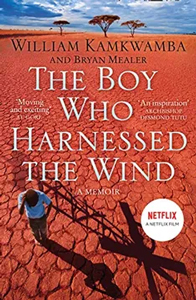
The original autobiography The Boy Who Harnessed the Wind: Creating Currents of Electricity and Hope was for adults and was published in 2009.
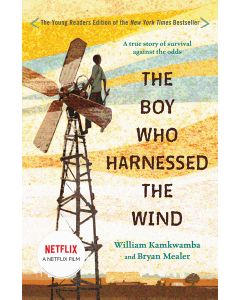
The version of the book which is the subject of this review is the Young Reader’s edition of that original memoir and was published in 2015. It contains a powerful series of photographs and an epilogue which lets readers know what William is doing now.
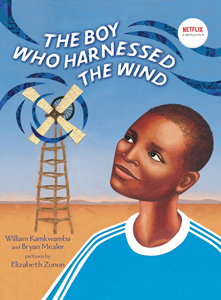
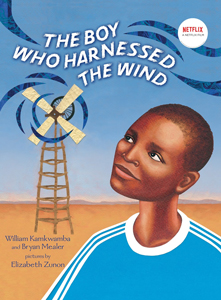
A picture book version, illustrated by Elizaeth Zunon, was published in 2019 and is also available in print and on Kindle. The oil and cut-paper collages are visually stunning and the beautiful and simple text deftly conveys the story for younger readers.
In addition, William’s story was also the subject of a TED talk, and a documentary and film (Netflix’s 2019 adaptation, staring Chiwetel Ejiofor was a strong commercial success).
The musical, The Boy who Harnessed the Wind, is currently being performed during April and May 2026 at the Royal Shakespearean Company in London.
Task: Below are various covers of different adaptations and students could consider which one they like best and why.
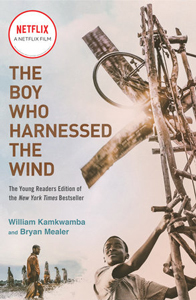
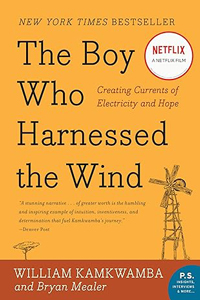
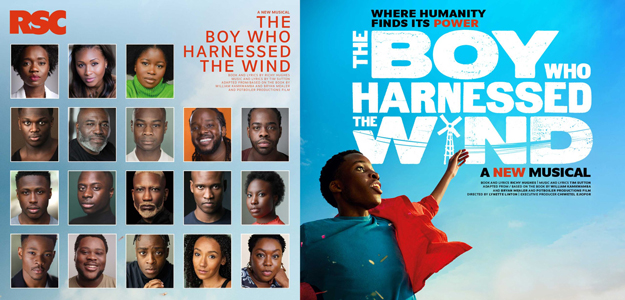
Ask students to consider the idea of writing a book together and to try and anticipate the positives and negatives of such a collaboration. William Kamkwamba and Bryan Mealer were both responsible for the book The Boy Who Harnessed the Wind despite the fact that their contributions were very different. In an interview on Writing Routines Mealer described the process he went through to record William’s story. https://www.writingroutines.com/bryan-mealer/
You also co-authored The Boy Who Harnessed the Wind with William Kamkwamba. How did that routine work between the two of you? Any surprises co-authoring a book?
I tried something I’d never done before. At the time, William didn’t speak fluent English and I worried that I wouldn’t be able to capture his true character – his quips, silly jokes, and cadence. So I hired an interpreter [Blessings] and conducted all interviews with William through him. I’d ask William a question and he’d answer in Chichewa, his mother tongue, and the interpreter would tell me in English. It worked wonderfully. I was then able to write an entire book in the voice of a 14-year old kid. Every few months we’d get back together in Malawi and I’d read aloud chapters. William would tell me if I got it right or not. The only surprise was how much fun I had. William and I made a great team and we’re still very close friends. But I don’t think I’d like to co-author another book.
Read this extract below from The Boy Who Harnessed the Wind to the class and get them to construct a table in which they compare the lives of the boys with the lives they lead in their own place, town and country.
Although Geoffrey, Gilbert and I grew up in this small place in Africa, we did many of the same things children do all over the world, only with slightly different materials. And talking with friends I've met from America and Europe, I now know this is true. Children everywhere have similar ways of entertaining themselves. If you look at it this way, the world isn't so big.
| The things children do | William, Geoffrey and Gilbert in Malawi | Where you live |
| Playing | ||
| To entertain themselves | ||
| Jobs at home | ||
| Sport | ||
| School | ||
| Add some other categories | ||
William Kamkwamba was a curious boy and his curiosity and access to books were powerful in helping him to devise and create the tools and materials he needed to make his devices. Here is one example from the book of what he did.
I didn't have a drill, so I had to make my own. First I heated a long nail in the fire, then drove it through a half a maize cob, creating a handle. I placed the nail back on the coals until it became red hot, then used it to bore holes into both sets of plastic blades.
Group Task: Ask students to find and identify from the book some of the other tools and items William and his mates used and manipulated to achieve his successes. Create a group list which can be displayed in the classroom.
William Kamkwamba was also a very positive person who overcame many obstacles to achieve his dreams. The local library played an important part in his success. There are three quotations from his book below. Use them as stimulus for writing about your own dreams and aspirations.
I went to sleep dreaming of Malawi, and all the things made possible when your dreams are powered by your heart.
If you want to make it, all you have to do is try.
‘Cool! Where did you get such an idea?’ ‘The library.’
Wide reading is vital in schools today as research shows how the reading habit can slip away from students as they turn to social media for their stories. The new social media ban provides a great opportunity to increase book reading.
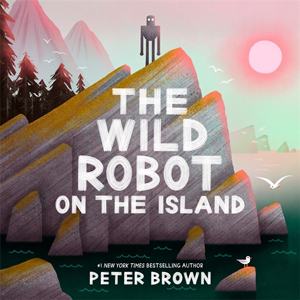
Students could enjoy seeing, hearing and reading different versions of books they are reading in class. For example consider the picture book of The Boy Who Harnessed the Wind alongside the copy of the Young Readers edition of The Boy Who Harnessed the Wind. Or look at The Wild Robot on the Island which is the picture book version of The Wild Robot by Peter Brown.
Gary Paulsen’s Gone to the Woods is a memoir as well but has a very different focus while describing his life as a young boy in America and overseas in plain and powerful language. It could be read alongside his stories of adventure such as Hatchet and Northwind.
The Growing up in Australia series has some excellent accounts of childhood that would make for interesting reading alongside The Boy who Harnessed the Wind. So would Mirror, the picture book by Jeannie Baker which compares life in two different places: one in an North African village and one in a western city.
Text requirements: May include literature by authors with diverse backgrounds and experiences, literature from other countries
A student analyses representations of ideas in literature through narrative, character, imagery, symbol and connotation, and adapts these representations when creating texts EN3-UARL-01
A student analyses representations of ideas in literature through genre and theme that reflect perspective and context, argument and authority, and adapts these representations when creating texts EN3-UARL-02
Narrative
Characterisation
Genre
Theme
A student fluently reads and comprehends texts for wide purposes, analysing text structures and language, and by monitoring comprehension EN3-RECOM-01
Reading for interest and wide purposes
(English K-10 Syllabus 2022 © NSW Education Standards Authority for and on behalf of the Crown in right of the State of New South Wales, 2023)



Jane Sherlock and Deb McPherson are experienced and passionate English teachers. They have also been involved in the education sector as authors and presenters at teaching conferences.
$9.95 flat rate shipping or free over $110
Australian family-owned & sourced
Supplier to over 1,000 schools Australia wide