





Flat Rate Shipping
$9.95 flat rate shipping or free over $110

Aussie Owned
Australian family-owned & sourced

School Supplier
Supplier to over 1,000 schools Australia wide

For Stage 5 and Stage 6 Year 11
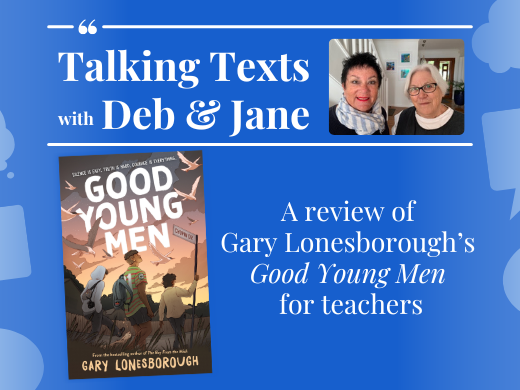
If I was still in the classroom with the challenging and endearing rogues of 10E8, this would be an absolute must. Indeed, anything written by Gary Lonesborough is perfect for our adolescents.
So much happens around us where we see young men disenfranchised, angry, disillusioned and looking for direction. At the same time as parents, teachers and community members we see so many young men who are full of decency, honesty and integrity and who make good choices.
Good Young Men contains many likeable and decent young men but there are also those who are not. The challenges of living in a small town, peer pressure, alcohol, drugs, racism, aggression, toxic masculinity and violence are also in this book. Some of the characters are Aboriginal and some are gay and some are both. The racism and homophobia from those around them tears at your heart.
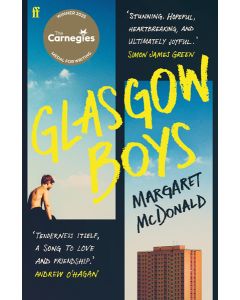
Good Young Men is well suited to a close study in Year 9, 10 and 11. Alternatively, it would be a wonderful text to include in a wider unit of work which concentrates on Representation of Adolescence or a unit called Adolescence under Pressure. If you teach at a boys-only school it would be a fabulous novel to include in a focus on Males, masculinity and identity. To broaden the text context, consider also using Glasgow Boys which is another excellent text about young men. (see my Five Senses blog 30th March 2026)
The NSW 7-10 English Syllabus states that across each stage, the selection of texts must give students experiences of a range of cultural, social and gender perspectives, including from popular and youth cultures. We know that student interest and engagement will be heightened if the texts mean something to our students’ lives. Texts which explore youth cultures will be effective choices, especially for disengaged or reluctant readers. In the case of Good Young Men you are not only providing a genuine voice exploring youth culture, but it is also authored by a First Nations writer.
Kallum is the first main narrator of Good Young Men and he is returning to his home town of Carraway’s Point having been expelled from an elite school in Sydney where he had gained a football scholarship with the hope of playing Rugby League for Souths. The reason behind Kallum’s expulsion is not fully revealed until much later and this certainly provides tension and suspense. The narrative focuses mainly on Kallum, Jordy and Dylan, who were close friends in primary school and all lived on Chopin Drive. They have drifted apart in high school and now reconnect after the death of the fourth member of their childhood group, Brandon. Brandon is murdered by a policeman at a house party when being apprehended for stealing. He is shot and dies in a pool of blood in front of Dylan.
Each boy of the old friendship group is trying to deal with his own challenges. Kallum has the backstory to the loss of his sport scholarship to explain and deal with in his return to Carraway’s Point. Jordy contends with family responsibilities and a closeted boyfriend. Dylan was the only witness to Brandon's death, and he must testify in court. Struggling to contain their emotions and process the murder of their friend, Kallum, Jordy and Dylan must navigate explosive events in a way that opens up a future they cannot yet see.
The Aboriginal community, of which the four boys are part, are reeling from this latest Aboriginal death at the hands of the justice system and see it as racially motivated. The town is divided and racial tensions erupt. A group of young white men who continually express homophobic and racist views, and have always taunted the Chopin Drive friendship group, actively stir up trouble and violently threaten Dylan against testifying in court in the trial of the police officer. Some of these incidents are confronting and chilling for the reader. Against this background, the boys of Chopin Drive take on caring roles within their families, explore career options, gain their driver’s licences, graduate Year 12 and win scholarships and entry into Sydney tertiary institutions. Dylan, the most seriously impacted friend, processes his grief by creating a film to tell the truth and expose the injustice in the situation. Jordy and Kallum grow into themselves as gay men, and Kallum is honest with himself and his family about not wanting to pursue a professional football career.
Gary Lonesborough is a Yuin writer, who grew up on the Far South Coast of NSW as part of a large and proud Aboriginal family. Gary was always writing as a child, and continued his creative journey when he moved to Sydney to study at film school. Gary has experience in youth work, Aboriginal health, child protection, the disability sector (including experience working in the youth justice system) and the film industry.
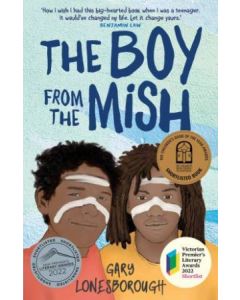
His young adult novels, The Boy from the Mish and We Didn't Think It Through, have won and been shortlisted for numerous awards, and his third novel, I’m Not Really Here, won the CBCA Book of the Year award for Older Readers. His fourth novel, Good Young Men, was released in March 2026. His acknowledgements are a delight to read. He thanks his Year 6 teacher at St Patrick’s Primary School in Bega, who asked 'twelve-year-old me to send her a copy of my first book', and his Year 12 English teacher at Bega High for 'always cheering on my writing'.
Share with your students Lonesborough’s website for a detailed explanation of how he came to write Three Good Men as it includes some interesting insights to the writing process: https://garylonesborough.com/
The explanation opens:
This book means so much to me. It began as an idea in 2021 – a scene of a boy leaving his secret boyfriend’s room after a meet up. I then worked on this idea while on an alumni residency at Varuna Writer’s House in Katoomba in late 2022. That story blossomed into Jordy’s first few chapters. After about twenty-thousand words, I shelved the idea. I had gotten to the point where Jordy’s story starts in Good Young Men, and didn’t know where else to go.
Sometime in 2022, after finishing the edits of my second novel, I started another story about a boy who’d just been expelled from a fancy private school. I was inspired by The Catcher in the Rye, which I loved, and wanted to explore a similar story from the perspective of an Aboriginal boy from a small country town, who came from near poverty and this scholarship he’d received to attend the school was not just a big opportunity for him, but a big opportunity for his family as well. I’d gotten to about the third chapter of Kallum’s story before I decided to shelve the idea. Again, I didn’t know where to go after he’d returned to his hometown and reunited with his old friends …
Read Cara Shipp’s Listening from the Heart: Rewriting the Teaching of English with First Nations Voices 2023 AATE 150pp to explore better ways to engage with First Nations People and their stories, their histories and cultures and to understand the protocols and appropriate terminology to use when reading and studying texts by First Nation authors. This warm, wise and generous book will be a huge help in the classroom.
The first chapter is only one page: it is Dylan’s chapter who will later return as the third voice. On this opening page the reader is invited into a world that resonates with parts of Australia at the moment though this compelling paragraph:
As we step into the shopping centre car park, white spray-paint on the orange brick wall catches my eye. Two council workers in high-vis shirts are on ladders, scrubbing away the faded words: WHITE POWER.
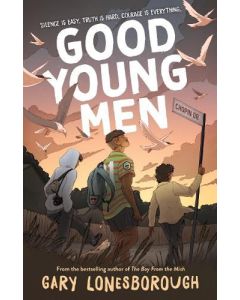
Significance of the title: consider the use of the word ‘good’. In our society this word is often associated with decency, honesty, integrity. Describing ‘men’ it immediately positions the reader to consider that there will be ‘good’ men in this narrative and there could also be those who are the opposite.
Unpack the cover as a visual text and a way of inviting the prospective reader into the narrative. How effective are the illustrations: what do we learn from them?
The comments above the title are powerful:
SILENCE IS EASY. TRUTH IS HARD. COURAGE IS EVERYTHING.
Discuss with students the purpose of such subheadings and if the three short sentences influence student response and if so, how?
There are thirty-three chapters divided almost equally between the three narrators: Kallum, Jordy and Dylan. Each narrator tells his story in the first person.
After reading, allocate a character to a separate group:
Share the group findings and build a class resource to use in specific tasks on this novel, and on the other Lonesborough novels if the class reads and explores them.
Cara Shipp’s work on characters is excellent; you might like to share her extracts from p. 7-12 of the Allen and Unwin teachers’ resource.
There are many powerful ideas in this novel:
Share these with your students and ask them to contribute any other ideas that Good Young Men engendered in them.
Sustained response on Good Young Men:
‘Books are not only portals to what happens in our world but they can provoke, challenge and consolidate key ideas about our world.’
In what ways is this comment relevant to Gary Lonesborough’s Good Young Men?
In your response make close reference to the novel and write about 700-800 words.
Workshop the structure of an extended response including the introduction, use of topic sentences and incorporation of sell-selected, relevant textual detail.
Consider a post for the school’s Facebook page or school newsletter: Our class have been reading and exploring all of Gary Lonesborough’s books and this is what we think …
Include this comment: ‘You can’t be what you can’t see.’
This article in The Guardian is very accessible and a valuable starting-point: ‘I stopped reading because I couldn't see myself in books. So I wrote one instead’
Ideally invite Lonesborough to visit your school and ask groups to compile a set of questions on their book to ask Gary.
In groups or individually, compose a feature article or digital essay which explores two of Lonesborough’s novels and 2-3 other texts:
Below is a brief coverage of the other three books; two have more resources in previous Five Senses blogs.
The Boy from the Mish Gary Lonesborough (2021) 271pp.
Benjamin Law wishes this book had been written when he was a teenager as it would have changed his life. Jackson is seventeen, a young Yuin man living in rural NSW and confused about his own sexuality. When Tomas, another First Nations teenager, fresh out of detention, comes to stay at Jackson’s home in the Mish, Jackson starts to fall in love with him. All the awkwardness of love and the misunderstandings are captured so authentically, with much humour among the angst. The importance of family and friendship is affirmed and there will be much to discuss in the classroom.
We Didn’t Think It Through Gary Lonesborough. Allen & Unwin (2023) 288pp.
2024 CBCA Book of the Year, Older Readers
Selected as one of the Best Young Adult Books for 2023
This novel is a tough read and will need guidance and discussion with your students about some of the content, but it will certainly engage your young people especially your young adolescent males. YA writer Will Kostakis praises Lonesborough as a ‘bold, necessary new talent.’ Lonesborough’s debut novel The Boy From the Mish tackled confronting topics like male sexuality and acceptance. We Didn’t Think It Through extends this bold foray into adolescence with more darkness, grit but ultimately, hope.
Jamie Langton is sixteen and lives in a small community called Dalton’s Bay. He is confused and angry about his parents’ rejection and lives with his aunt and uncle who are understanding and supportive. But they cannot save him when Jamie and his mates encounter more racism and bullying from the local white gang. Jamie and his mates retaliate by vandalising and stealing Mark Cassidy’s car. Neither Jamie nor his mates Dally and Lenny thought this through and the consequences are disastrous with Jamie now detained in the youth justice system. Jaimie knows he must find a way forward and Aunty Dawn’s words cannot console him: ‘Don’t let that place break you. You’re stronger than the system. Stay out of trouble. Do your time.’ p.73. But detention is not a place for redemption and healing.
See my blog on Five Senses May 10 2024 for specific teaching ideas
Detailed and valuable teachers notes written by First Nations writer and teacher Cara Shipp and available on Allen and Unwin website: https://www.allenandunwin.com/browse/book/Gary-Lonesborough-We-Didn't-Think-It-Through-9781760526931
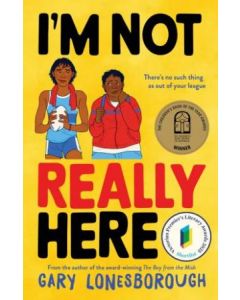
I’m Not Really Here Gary Lonesborough. Allen & Unwin (2024) 375pp.
Jonah King is part of a small, close-knot family comprising his dad Fred and his twin younger brothers- Zeke and Luke. Their mother has died and not only are the family still grieving but her contribution to the family finances was significant. The family are struggling with not meeting rental payments and have had to move around. They now return to Patience, a small town where Fred grew up. Jonah is sensible, cares for his younger brothers, is reliable and is often given the family’s domestic tasks and duties. Jonah has had challenges fitting in at his old school and dreads a recurrence of this at the new school. But he does find friends and he also finds love. For Jonah through this path to romance is difficult: Jonah is Aboriginal, he is self-conscious of his weight and he is gay. Jonah has a crush on Harley but a relationship with Harley seems impossible. Harley is also Aboriginal and as a star footballer, is very popular, good-looking with a well-toned body.
Jonah is accepted into a friendship group which includes Tegan who is alternate in her behaviour and views, is feisty and very definite about the rules of friendship which she believes Jonah has broken. This provides more navigation for Jonah of the tricky world of adolescence. The revelations of Jonah’s feelings for Harley are told with a tenderness and sweetness indicative of Lonesborough’s style. This feature endears the story to boys and girls as the challenges of teenage romance coupled with unrequited love will appeal to a wide range of readers. The scenes set in the high school are very authentic and will resonate with adolescent readers.
(See my blog on Five Senses: 23 December, 2023.)
Text requirements: Good Young Men is extended prose, a novel by an Aboriginal and/or Torres Strait author. It has cultural, social and gender perspectives, including from popular and youth cultures.
Concepts could include Context • Representation • Point of view • Characterisation • Connotation, imagery and symbol
A student uses a range of personal, creative and critical strategies to interpret complex texts EN5-RVL-01
Reading, viewing and listening skills
Reading, viewing and listening for meaning
Reading for challenge, interest and enjoyment
Reflecting
A student analyses how meaning is created through the use and interpretation of increasingly complex language forms, features and structures EN5-URA-01
Representation
Code and convention
Connotation, imagery and symbol
Point of view
Characterisation
Narrative
A student evaluates how texts represent ideas and experiences, and how they can affirm or challenge values and attitudes EN5-URB-01
Perspective and context
Style
(English K-10 Syllabus 2022 © NSW Education Standards Authority for and on behalf of the Crown in right of the State of New South Wales, 2023)


Jane Sherlock and Deb McPherson are experienced and passionate English teachers. They have also been involved in the education sector as authors and presenters at teaching conferences.
$9.95 flat rate shipping or free over $110
Australian family-owned & sourced
Supplier to over 1,000 schools Australia wide