




Flat Rate Shipping
$9.95 flat rate shipping or free over $110

Aussie Owned
Australian family-owned & sourced

School Supplier
Supplier to over 1,000 schools Australia wide
For Stage 5
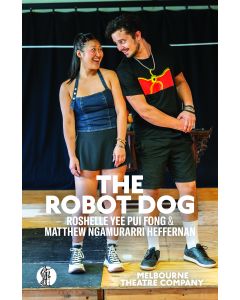
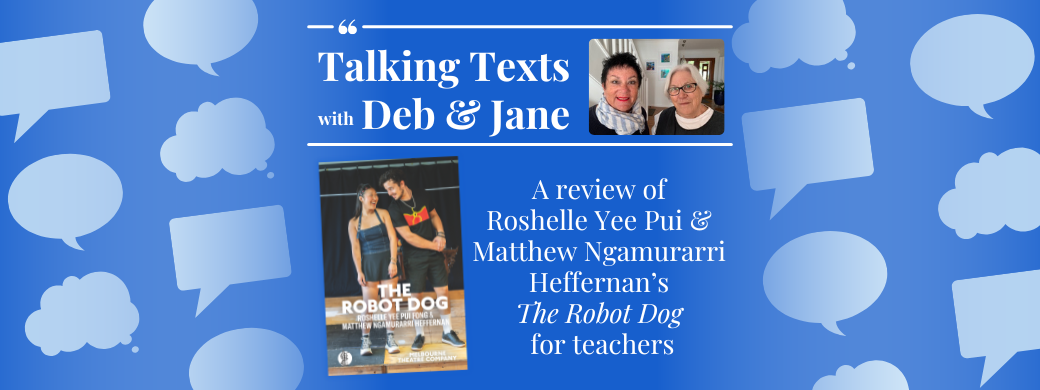
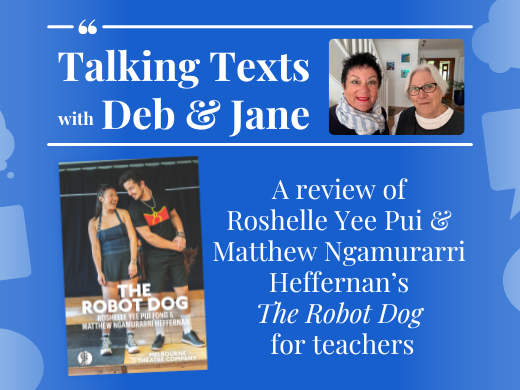
Plays are essentially storytelling and those stories are most effective when they are about us. The Robot Dog is a play for its time. All around us we are confronted with the thrill and indeed, the challenges of Artificial Intelligence (AI). There is something exciting about the concept of computer technology, robotics and cybernetics. There are also complications, reservations and dissents. These include how to keep our humanity, preserve our relationships and our sense of purpose in life.
The Robot Dog incorporates two AI features: a Smart-house interface (Hus) and a robotic therapy dog while exploring the impact of loss and grief for Asian and First Nations heritage and culture. At times the robotic dog and the Hus system are additional ‘characters’ and the play which is set in 2042 asks us to question where we are at in this growing and problematic brave new world.
These comments by co-writers Roshelle Yee Pui Fong and Matthew Ngamurarri Heffernan are insightful:
A lot of times when we see the future represented in media, it’s focused on how it might look, all the ways in which life might be different, and rarely do we get to see the granularity of life in the future for Aboriginal and Cantonese people, how we might practice our cultures and how technology might change these ancient ceremonies.
When The Robot Dog played at the prestigious Melbourne Theatre Company in 2025, the online news outlet, The Conversation commented that the play “reminds us there are some knowledges we hold that AI will never have.” This is comforting but challenges us to value those knowledges. A Chinese proverb recurs in the play and this is a poignant reminder of valuing our identity and culture: “When we forget our ancestors we will become a brook without a source, a tree without a root…”
We are always looking for plays for our students and The Robot Dog is certainly relevant, timely and fascinating. It would work well as a close study for year 9, 10 or 11 or part of a Representation unit which explores a range of texts that explore the future and our place in it. It would also work in Stage 6 for a Year 11 Reading to Write unit which could include a range of short texts that explore and investigate the future and the impact and use of AI. Students could then move on to read a range of fiction and nonfiction. The play provides an interesting foundation for Standard students exploring Language, culture and identity in the HSC. The Robot Dog would suit the discursive and persuasive styles of responding and students could find it engaging writing about AI in contemporary Australian life.
It is 2042. Janelle and Harry are the two main characters and a couple: Janelle has Cantonese heritage while Harry is a First Nations Man. Janelle’s mother has passed away and Harry and Janelle move into Janelle’s family home where there are many memories and artefacts which compound Janelle’s loss and grief. Both characters are trying to work out how to express their respective cultural identities as well as deal with the demands of life in a futuristic technologically-augmented society. As Janelle and Harry attempt to navigate their work, relationship and job-seeking requirements they find almost every aspect of their life is ‘assisted’ by an AI system (Hus) which monitors their everyday functions, controls the home and provides them with prompts which are at times annoying, paternalistic and jargonistic but often are very funny. This system also provides the house with a very cute robotic therapy dog called Dog. The situations these circumstances generate are both humorous and poignant in raising our awareness and provoking our thinking.
The Robot Dog is a collaboration between Hong Kong-born multidisciplinary artist Roshelle Yee Pui Fong and Luritja writer and technologist Matthew Ngamurarri Heffernan.
Fong developed the play during the Melbourne Theatre Company’s our Writer’s program in 2021, before the chance discovery of Heffernan building a robot dog as part of his Master’s degree sealed their collaboration. It was further developed during Cybec Scenes in 2022, before being commissioned as part of MTC’s NEXT STAGE Writers’ Program.
There is an interesting insight to the co-writing process on the MTC site.
Roshelle Yee Pui Fong’s writing credits include a range of plays adapted into different countries. In 2022, she was an artist in Creative Australia’s Digital Fellowship program, Assistant Director on Melbourne Theatre Company’s Laurinda and a writer for Cybec Scenes, while completing her Masters of Theatre (Writing) at Victorian College of the Arts, and on Melbourne Theatre Company’s Artistic Associate panel (2022-24). Roshelle has also been developing new work in Australian Plays Transform’s Mid-Career Playwrights’ group and is an advisor for Contemporary Asian Australian Performance’s (CAAP) Artist Reference Group.
Matthew Ngamurarri Heffernan is a Pintupi-Luritja creative-technologist, ANU PhD student at the school of Cybernetics, and a writer from central Australia. He is a champion of sharing Indigenous voices through technology and has worked extensively to share and conserve the knowledge of Indigenous peoples. Through his previous role as lead developer at Indigital, Australia’s first Indigenous tech education company, Matthew helped to make the digital landscape more accessible to and inclusive of Indigenous young people. Matthew also worked on the development of Indigemoji and Kaytetemoji, Australia’s first brand of Indigenous emojis designed by young Indigenous children and guided by Elders on Country. Matthew has written for Indigenous X, The Guardian and Red Room Poetry. He says “Cybernetics definitely helped me think about how I wanted to frame some of the story,”
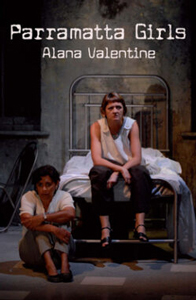
Going to the theatre is not necessarily the experience of your students so the concept of the purpose of drama and the physicality of a play may not be familiar to them. Like film and fiction, plays are often a vehicle for social commentary and Australia has a rich tradition of playwrights who explore contemporary social issues on stage. Alana Valentine is one of the most prolific contemporary playwrights alongside Andrew Bovell, Suzie Miller, Jane Harrison, Leah Purcell and Kate Mulvaney. Playwrights like Ray Lawler, Michael Gow, David Williamson, Alex Buzo and Dorothy Hewett were trailblazers in exploring Australian stories.
Like any text in the classroom, it is important to establish confidence with your students. A point of concrete relevance is the play’s title: who has had any exposure to a robotic dog? Maybe share some images. Why do dogs often feature in our stories? What can a robotic dog not do as well as a real dog (or perhaps it can!) Share the different examples of AI in students’ everyday life to establish how prevalent it is e.g. robotic surgeries, Alexa, Siri, Google, self-driving trains and cars, chatbots. This quote from Albert Einstein is fascinating in the context of The Robot Dog.
‘The mere formulation of a problem is often far more essential than its solution, which may be merely a matter of mathematical or experimental skill. To raise new questions, new possibilities, to regard old problems from a new angle requires creative imagination and marks real advances in science.’ Albert Einstein
To build confidence and orient students to the play share the above synopsis of the play, its distinctive features and this introduction from Matthew Ngamurarri Heffernan from the Currency edition which captures the play’s purpose:
Through The Robot Dog, I wanted to explore some questions. People throughout history have responded to changes in their environment by adapting or adopting new technologies/modalities. With this comes the stories, the mythologies that interrogate and establish our relationship with the technology. We’re at a time now where ‘unprecedented’ is the precedent. What does it mean for humanity to have technologies that resemble us? What are the mythologies that we can construct to understand ourselves in relation to this new technology and world? How do our unique and ancient cultures maintain authenticity while adapting/adopting? Can a robot have a skin name?
Consider also sharing this interview with the Melbourne production’s actors with your students to make it all real: https://www.mtc.com.au/discover-more/backstage/the-robot-dog
This short video was posted as a pre-show resource by the Melbourne Theatre Company: https://www.mtc.com.au/education/education-hub/the-robot-dog-pre-show-resource. Included on this site are five questions for students to consider after watching the video.
Below the video are some excellent explanations of AI including its benefits, its evolution and its risks to our future. These would be valuable notes for students to read and perhaps use in a feature article or persuasive speech.
The Robot Dog is a script for performance, so students need to use the metalanguage of drama and be aware of such features as the stage directions, set details and how the characters interact in the small space of each scene.
Susan Hoddinott, a friend and colleague, has written extensively on the importance of treating drama texts differently from prose:
Teaching Drama can be one of the most daunting, yet one of the most rewarding experiences, for an English teacher. Drama is one of the oldest literary forms. It has a discreet body of knowledge that spans 2,500 years. It has its own terminology. It is closely linked to poetry as, like poetry, it springs from the very origins of story-telling and the oral tradition. The understanding of the form and features strengthen a student’s understanding of how theatre is a distinctively visual, and auditory world.
Setting refers to where and when the action takes place. The playscript tells us it is 2042 (Year of the Water Dog), the oldest house on 3 Creswick Avenue, Bulleke-bek (formerly known as Brunswick)
The Stage directions become instructions for the director to shape decisions for the actors, set designers, costume creators and lighting engineers including significant opening details which quickly establish key elements of mood and characterisation.
In a play dialogue is the driver: it is critical to the play’s meaning and power. What the characters say and how they say it will propel the action, create the mood, and contribute to the characterisation so the specific word choices are significant.
The dialogue in this play is characterised by:
Structure of the action: the play comprises a Prologue and a single Act over eight days. Each day captures a different part of the story like a series of eight snapshots each representing Janelle and Harry’s relationship, their progress re their job situation, their changing perspectives about grief, loss and culture and their evolving relationships with Dog and Hus.
The exposition of any text is important but in a play the audience needs to be quickly oriented to the main characters, the narrative arc and the play’s style. In The Robot Dog this partly occurs in the Prologue and the action and dialogue of Day 1.
The Prologue establishes some key narrative elements of the story as well as some features of the setting which will recur:
Day 1 occurs ‘Two months later’.
List the key narrative features of this ‘scene’ and how the playwrights have positioned the audience to experience this important section of the exposition.
What important detail are we given about DOG and Hus?
In what ways does the dialogue of Janelle, Harry, Dog and Hus differ?
How do the characters of Dog and Hus differ?
After exploring the play divide the class into small groups and according to the size of your class, each to take 1-2 periods of time/days: with close analysis of this ‘day’ what are the key ideas explores and how is this achieved?
Sustained response:
A cheeky comedy set in an all-too-believable future, The Robot Dog sinks its teeth into some of the most provocative and challenging questions of our time.
In what ways does The Robot Dog explore “some of the most provocative and challenging questions of our time.” In your response make close reference to 3-4 ‘days’ from different parts of the play.
The Melbourne production director Amy Sole commented that “the best theatre doesn’t just tell a story -it wrestles with something real.” Write a feature article in the discursive style that expands the ideas in Amy Sole’s comments. Use The Robot Dog as your main text to discuss and include other plays, films, novels, podcasts that “wrestles with something real.”
The discursive style gives you the freedom to be witty, clever and have some fun. Consider some interesting and quirky subheadings and be sure to incorporate images and captions.
Divide the class into two groups: the affirmative and the negative to prepare a debate on this topic: AI is our best friend. Each group should work collaboratively on the speeches for their first, second and third speakers. Encourage the students to use an AI platform to research their topic. Choose your best three speakers to present your case as a formal debate. Use the evidence from the six speakers to construct a persuasive or discursive piece of writing to explore the benefits and challenges of AI.
Text requirements: The Robot Dog is a drama text written by an Australian playwright. It contains cultural, social and gender perspectives.
Concepts: context • perspective• representation
A student uses a range of personal, creative and critical strategies to interpret complex texts EN5-RVL-01
Reading, viewing and listening skills
Reading, viewing and listening for meaning
Reading for challenge, interest and enjoyment
Reflecting
A student analyses how meaning is created through the use and interpretation of increasingly complex language forms, features and structures EN5-URA-01
Code and convention
Connotation, imagery and symbol
Point of view
Characterisation
Narrative
A student evaluates how texts represent ideas and experiences, and how they can affirm or challenge values and attitudes EN5-URB-01
Theme
Perspective and context
Style
A student crafts personal, creative and critical texts for a range of audiences by experimenting with and controlling language forms and features to shape meaning EN5-ECA-01
Writing
Speaking
A student uses processes of planning, monitoring, revising and reflecting to purposefully develop and refine composition of texts EN5-ECB-01
Planning, monitoring and revising
Reflecting
(English K-10 Syllabus 2022 © NSW Education Standards Authority for and on behalf of the Crown in right of the State of New South Wales, 2023)
There are a few options in exploring texts which connect to The Robot Dog:
1. As a play which explores contemporary social issues and then move to other plays which also fulfill this role to consider the wider theatre landscape as a vehicle for social commentary.


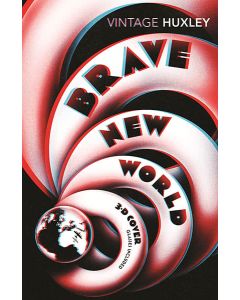
2. Explore the play as a Science Fiction text and move to other Science Fiction texts which have explored the possibilities of the future. Consider a feature article or essay which explores The Robot Dog and at least 2 other texts.


Jane Sherlock and Deb McPherson are experienced and passionate English teachers. They have also been involved in the education sector as authors and presenters at teaching conferences.
$9.95 flat rate shipping or free over $110
Australian family-owned & sourced
Supplier to over 1,000 schools Australia wide