





Flat Rate Shipping
$9.95 flat rate shipping or free over $110

Aussie Owned
Australian family-owned & sourced

School Supplier
Supplier to over 1,000 schools Australia wide
For Stage 6 Year 11 or Stage 5 Year 10
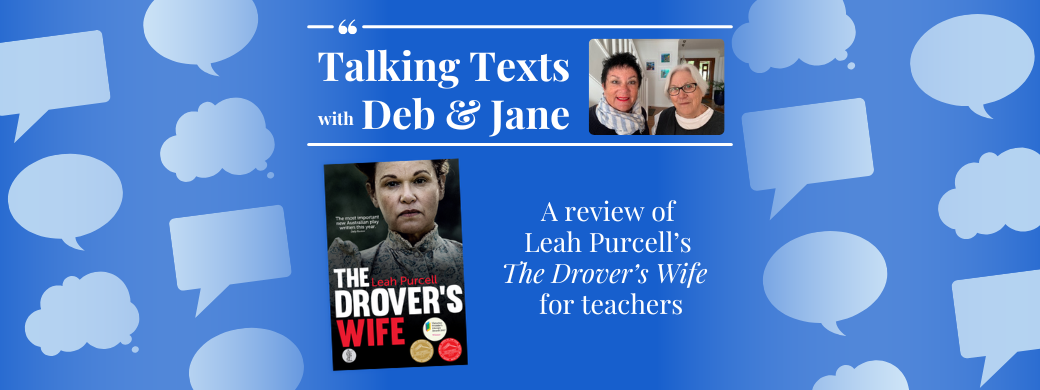
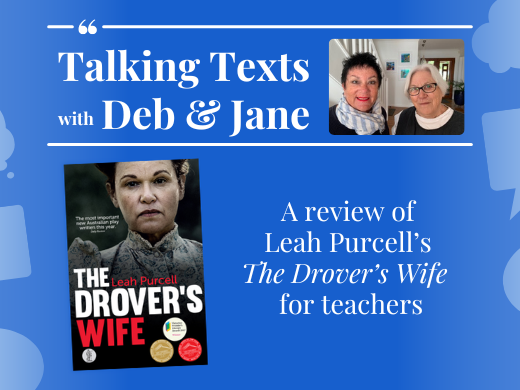
Two Australian icons combine in this compelling, confronting and powerful play: Henry Lawson’s short story and the talents of proud First Nations actor, playwright, novelist and director, Leah Purcell.
The Drover’s Wife was first performed in September 2016 at the Belvoir theatre; it sold out in four days and played to standing ovations every night.
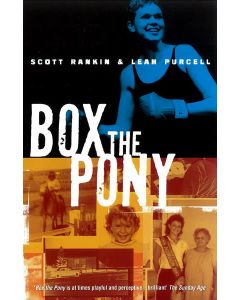
I first discovered Leah Purcell in 2000 when our faculty bought class sets of her semi-autobiographical play, Box the Pony. It was a huge success with Year 11 in a unit we created, called ‘Representation of Black Voices’.
We are always looking for plays for our students and while this one has been around for almost 10 years I think it deserves closer attention as it is a perfect fit for the syllabus requirements of texts authored by First Nation writers. I know some schools tried the play in Year 9 and found some of the content confronting, but I do think it is well suited to Year 11 and depending on your context, Year 10.
If you choose to teach this play to Year 11, NESA instructs that we do not explore the Lawson short story as it is prescribed by the 2027 HSC in ‘Texts and human experiences’. If you program it in Stage 5 there are no restrictions.
The play could be explored as ‘Close Study’ or as a wider unit in ‘Reading to Write’ which focuses on a range of texts to explore how different Australian Voices are represented in different forms and modes or a ‘Reading to Write’ exploring a range of texts authored by First Nations writers.
This play would also suit Year 10 where students could have the opportunity to read some of the excellent and engaging First Nations Young Adult fiction from writers like Gary Lonesborough, Jared Thomas, Lisa Fuller, Sue McPherson, Amberlin Kwaymullina. Deb and I have written blogs for Five Senses on most of these. The pantheon of First Nations voices has grown enormously and texts such as these are rich, varied and highly engaging.
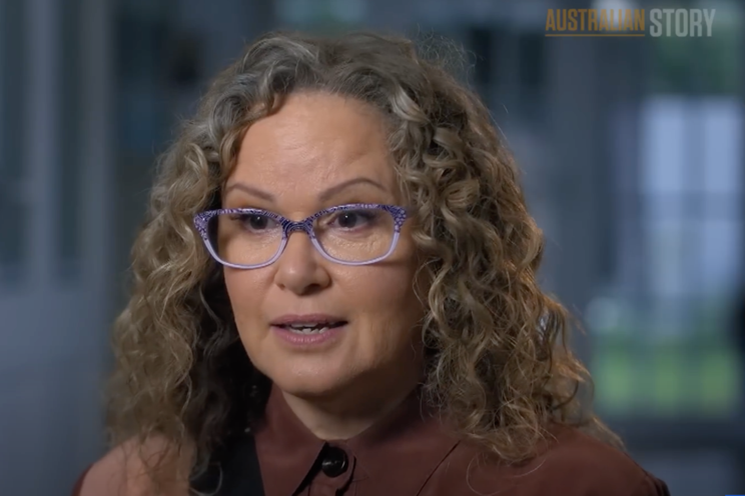
In the ABC Australian Story June 2022 episode Leah Purcell commented:
“When I was about five years old, my mother would read to me the Henry Lawson book of short stories, and ‘The Drover's Wife’ was one of them, and it was our favourite. It's about a drover's wife, sitting with her children in her shack waiting for a snake to leave the hut. And what she has to deal with while her husband is away. I saw my mother as that drover's wife. There was no father figure in our family and it was just me and my mum and I was that little boy in Henry Lawson's story, I was the protector of my mother.”
Leah Purcell Transcript from Australian Story June 2022
The play follows the core narrative of Lawson’s short story ‘The Drover’s Wife’ which highlights the isolation, challenges and the extraordinary resilience of rural women in the barren aridity of Australia’s outback especially those whose husbands and fathers were often absent. The drover’s wife lives in a two-room hut with her children and her husband is away droving.
Like the short story, the main character is the drover’s wife and in the play she has a name, Molly, and she is given powerful, blunt and unambivalent dialogue. Her son, Danny plays a significant role as do other characters who are additional to Lawson’s story: Yadaka the Indigenous character and the swagman Thomas McNealy. Four other characters also appear: a peddler, a trooper, and two stockmen. There is more violence than in the short story and the dialogue is much more direct and aggressive which provide confronting insights to the challenges and brutality of survival for women and First Nations peoples in colonial times.
Purcell calls the play a “reimagining” of the Lawson story- told from the point of view of a woman who is first Nations so the lens is significantly different and indeed, the play can stand alone from the short story and has its own value and integrity.
The Drover’s Wife is a script for performance, so students need to use the metalanguage of drama and be aware of such features as the stage directions, set details and how the characters interact in the small space of each scene.
Susan Hoddinott, a friend and colleague, has written extensively on the importance of treating drama texts differently from prose:
“Teaching Drama can be one of the most daunting, yet one of the most rewarding experiences, for an English teacher. Drama is one of the oldest literary forms. It has a discreet body of knowledge that spans 2,500 years. It has its own terminology. It is closely linked to poetry as, like poetry, it springs from the very origins of story-telling and the oral tradition.
The understanding of the form and features strengthen a student’s understanding of how theatre is a distinctively visual, and auditory world.”
Setting refers to where and when the action takes place. The playscript tells us it is “1893” which immediately establishes a specific time in Australia’s colonial history: it is pre-Federation: colonial rule is often harsh and Australia is not inclusive or welcoming. It will be a further 74 years before Indigenous peoples would be counted as Australian citizens.
We are told the play is set in “Alpine country, southern New South Wales”. Like Lawson’s story it is set in a “two-room shanty” but in the play it is specifically set in the “dense, scrubland of the Alpine country of the Snowy Mountains” which immediately evokes the fringes of society. This geographical setting will amplify and highlight the harsh, inhospitable and challenging landscape.
The Stage directions become instructions for the director to shape decisions for the actors, set designers, costume creators and lighting engineers including significant opening details which quickly establish key elements of mood and characterisation:
DROVER’S WIFE, heavily pregnant, aims her Martini Henry, single-shot rifle at a badly injured Aboriginal man, Yadaka, lying on the ground. There is an iron collar around his neck.
On p. 5, still in scene i there is almost a page of stage directions with minimal dialogue and these directions are critical to student understanding of the intensity of the physical actions and what is happening to the three characters on stage. These directions reveal the terror of Molly as she fears the two men, Yadaka and McNealy, at the same time as her labour contractions grow in intensity.
In a play dialogue is the driver: it is critical to the play’s meaning and power: what the characters say and how they say it will propel the action, create the mood, and contribute to the characterisation so the specific word choices are significant.
The dialogue in this play is characterised by:
Structure of the action: the play comprises a single Act of 9 scenes. Each scene captures a different part of the story like a series of nine snapshots each representing different aspects of the narrative and Molly’s characterisation. The short scenes propel the action.
There are other features for students to consider such as the Scottish lament after the stillborn death of Molly’s baby girl which adds to the poignancy of the play’s mood.
The exposition of any text is important but in a play the audience needs to be quickly oriented to the main characters, the narrative arc and the play’s style.
The opening minutes of a play or a film should establish the setting, some key characters and their characterisation and features of the play’s style. This play has sometimes been referred to as an “Australian western” amplified by it being set in the Alpine country of NSW: stark, bleak, cold, challenging and arid. American westerns are usually set on a ranch and a homestead and this happens here as well. They also often involve a threat from the outside which the family or owner must deal with and in this play an outside threat is quickly established. The main character is a female and indeed, the drover’s wife is heavily pregnant which will influence the course of the next three scenes where she is fiercely protective of herself and her unborn baby. Her pain and discomfort will be a dramatic feature and this will be exacerbated by the threat she feels from Yadaka and McNealy.
The opening characterises the woman as aggressive as demonstrated by her action of holding a single shot rifle and her first dialogue: “Don’t you move, ya black bastard.” and “You’re not dyin’ here! Get up and get going.” And later to McNealy “I wouldn’t trust you as far as I could spit.” This high modality word choice and strong tone establishes her strength, capacity and stoic resilience and we will quickly learn she is protective of her children and a strong woman who has endured many challenges. She also is fearful because she is in a highly vulnerable situation not only with the pain and impending birth but that she is alone with her young children while her husband is droving. While she repeats that Joe is not far away, neither Yadaka nor the swagman believe her as they would know he could be hundreds of kilometres away. The structure of the opening scene moves quickly from one threat to another and both threats are visiting males. But it is the Aboriginal Yadaka who is more genuine, kind and will help her without exploiting her.
In a short space of time some of the play’s key ideas are introduced which will be expanded and developed as the play progresses. These include the brutal realities of colonial Australia specifically female resilience in an inhospitable environment where women were often not given choice, freedom, authority and agency. Also, racial injustice was a feature of nineteenth century Australia and Aboriginal people were often victims of white oppression, dispossession and cruelty.
Ask students to consider where play’s exposition concludes and in what ways do scenes 3, 4, 5 and 6 consolidate the ideas of the play?
Part of the original story by Henry Lawson was to celebrate the contribution made by women such as the drover’s wife who were invariably forgotten in the colonial stories of early Australia. Purcell wants to further this awareness by dramatising the isolation of this colonial woman and Purcell adds extra layers to the story of adversity including an array of violent experiences which highlight the calamities that some humans face.
Focusing on specific extracts from the play is a valuable experience for students to demonstrate their understanding of key scenes in the play and to develop their close focus on language.
In scene 6 (page 28) Molly reveals some of the challenges of her life. Her dialogue here is longer than elsewhere in the play as if she is now more comfortable with explaining her situation to Yadaka who has become less threatening. The facts are powerful as Molly relates that aged sixteen and three months pregnant her husband was away droving for eighteen months. Her language is very matter of fact and laconic in its style as if these adversities were common including “My da dyin’.” Her repetition through the short one-word sentence: “Died” reinforces this tragic experience exacerbated by her isolation and physical and emotional vulnerability. Molly evokes the spiritual comfort given by the local Indigenous woman who gives such “beauty and comfort to the sound.” So, in this experience of total isolation and grief at her father’s loss, the “gin” gives her comfort.
The wife then laconically continues the summary of her challenging life: “my precious firstborn, Jack, died” and her choice of the word “precious” is one of the few times she is sentimental and emotional. She then describes how she “rode for nineteen miles …with my dead son in my arms” which reinforces her isolation and her stoic, brave resilience. Part of her continuing adversity is the death of her two cows and this is significant as the cows give food and milk. Her comment is poignant and compelling: “I truly was alone then.” She completes this story by stating that “finally, Joe came home” but not soon enough for her to have coped and survived all this adversity created by her isolation which increases her vulnerability.
When Yadaka picks up the dialogue he reveals details about the poisoning of traditional waterholes which is one of the numerous stories of colonial impact on the lived experiences of first Nations peoples.
Ask students in groups to consider these questions:
“Purcell is getting ready to perform in her radical rewrite of the Henry Lawson short story ‘The Drover’s Wife’ retooled with strong Indigenous emphasis and autobiography, while retaining a few Lawson plot points: bullock shooting and rogue swaggies paying a sunset visit to the titular wife, played by Purcell.”
“The importance of theatre is to provoke us to challenge our own assumptions.”
To what extent is this true of Leah Purcell’s The Drover’s Wife?
View ABC Australian Story June 13th 2022: Leah Purcell. The Storyteller. (29 minutes)
This focuses on the film version she created on ‘The Drover’s Wife’ and it includes some interesting details about the play.
Introduce students to the format of this ABC series. Create a viewing scaffold where students make notes on both the content and ideas explored and the features of this documentary form including archival photographs, commentary by a range of people in the Arts industry, interviews with Leah Purcell and film clips of the film and play.
It is introduced by Deborah Mailman- another very successful First Nations Arts creative.
Consider sharing the transcript: https://www.abc.net.au/news/2022-06-09/the-songlines-of-leah-purcell/13922656
Task
Write a feature article suitable to a weekend newspaper or online publication on the importance of contemporary Australians watching and reading about First Nations peoples’ lived experiences.
Refer to the play, The Drover’s Wife as the main textual detail and include 2-3 comments from Leah Purcell from the Australian Story transcript below. Also refer to 2-3 other texts authored by First Nations peoples; these could include television series, features films, fiction, poetry, speeches and song. Include 3-5 images with captions.
Australian Story extracts:
“It's been a lot of non-Indigenous writers writing our scripts for a long time (but now) the catchphrase is nothing about us without us.
There's a maturity now in this Australian storytelling about the Indigenous experience, a large reason for that is it's blackfellas telling blackfella stories and there's blackfellas in front of the camera and behind…”
“Slowly we're giving the power of the voice back to the individual, back to mob, back to our people so that we can be the truth tellers…”
“Because I believe that if you call Australia home, this ancient culture is yours as well. To be proud of and to participate in. It's nothing to be ashamed of or say that it doesn't exist. This is who we are and it's mighty…”
“In cultural ways, you have that thread of a songline which connects you to country, connects you to family, connects you to culture. 'The Drover's Wife', Henry Lawson's version is part of my songlines. My DNA is within it. And I've sung up business on it. I sung up the play, I sung up the novel. I sung up the movie…”
“Aboriginal people have survived since time began. You know, we were here, we lived through two ice ages. And we're going to survive again. But we just got to empower ourselves, empower each other. Grasp the opportunity of education. And back ourselves in that. And then become the best at that.”
Other texts to consider
1. Box the Pony. Leah Purcell’s The Drover’s Wife references the tragedy known as the Stolen Generation. In another play written by Leah Purcell, Box the Pony, Leah performed the song ‘Run Daisy Run.’
This song paid homage to Purcell’s late maternal grandmother Daisy Walker, who was stolen from an Aboriginal camp by authorities at age five, along with her sister and younger brother. They were transferred to a train and taken away to a mission.
Growing up the in the country town of Murgon near the Cherbourg Aboriginal mission in Queensland, Purcell’s music is strongly influenced by country and western singing, and “Run Daisy Run” is no exception. Purcell frequently performs this song acoustically with solo voice and guitar, or in a capella style.
In the song, an Aboriginal mother tells her 4-year-old daughter:
Run Daisy run, run Daisy run
They were the last words her mama had said
“Run to the highlands, run through the scrub,
Just run, run Daisy run, just run, just run
Because the whiteman he’s ridin’ high.
Purcell focuses on the perspective of her great-grandmother who tried to hide her child from the authorities and resist the government’s strategy of forcibly removing Aboriginal children from their families and communities.
Later, Leah Purcell commented:
“I literally wrote the song in five to ten minutes. No sort of, even, drafts. At that stage, my grandmother had died. She died when I was ten. And this song came out of me and I believe that she wrote that song through me, because I don’t remember writing it. I just remember finishing it and going, “Wow. That’s pretty cool.” Literally. That’s no joke. I just went, “Wow. That’s awesome.”
Access this song in the Box the Pony playscript on p29-30.
2. Also access Archie Roach's powerful song on the same subject ‘They Took the Children Away.’
In what ways does song help us enter a different world and understand our past?
3. A different text is this wonderful collection of 99 reinterpretations of Lawson’s short story, The Drover’s Wives. There is a unit on this book in Reading Australia: https://readingaustralia.com.au/lesson/the-drovers-wives/
Some of the reinterpretations are:
This book allows some fun as well as highlighting the ongoing relevance and resonance of the original story.
Text requirements: The Drover’s Wife meets Stage 6 text requirements for drama, Australian author, a range of texts authored by Aboriginal and/or Torres Strait Islander Peoples.
Find supporting resources in our Year 11 texts and study guides at Five Senses Education.
Across Stage 6, the study of a range of texts authored by Aboriginal and/or Torres Strait Islander Peoples should consider:
(English Standard 11-12 Syllabus 2024, English Advanced 11-12 Syllabus 2024 © NSW Education Standards Authority for and on behalf of the Crown in right of the State of New South Wales, 2023)




Jane Sherlock and Deb McPherson are experienced and passionate English teachers. They have also been involved in the education sector as authors and presenters at teaching conferences.
$9.95 flat rate shipping or free over $110
Australian family-owned & sourced
Supplier to over 1,000 schools Australia wide