




Flat Rate Shipping
$9.95 flat rate shipping or free over $110

Aussie Owned
Australian family-owned & sourced

School Supplier
Supplier to over 1,000 schools Australia wide
For Stage 6 Year 11 or Stage 5 Year 10
‘A collection of stories with shards of light peering through the darkness.’ Maks Sipowicz ArtsHub
We often hear sad stories but sad stories can be uplifting and affirming as they reinforce how we deal with difficulties in life and what we reveal about ourselves and our own resilience, hope, strength, kindness and love.
In this collection Tony Birch has written 16 short stories which explore everyday experiences in such a way that being human is about finding the extraordinary in the ordinary, the heroism in the marginalised and the power of the human spirit.
I have many fond memories of working with my faculty in programming for 7-11. We would always include a unit on short stories in every year and had class sets available for each year and different levels within the year. Short stories are do-able. They are accessible through their length and can offer rich experiences to explore character, structure, setting and ideas. They can also provide excellent models for students’ own writing.
Dark as Last Night is written by the esteemed and engaging First Nations writer, Tony Birch who has a wonderful capacity to explore the everyday, the ordinary and those little moments in life which define our humanity. These stories use ordinary people, some are certainly marginalised and many have not had positive experiences in their lives but always there is some connection with the people and those around them. Some stories are dark and difficult but always there is a sense of hope. There is a compelling realism in Birch’s writing and this collection will not only make for engaging reading for your students but will give them some ideas to craft their own short stories.
This collection would be well suited to Advanced and Standard Reading to write and Standard Close study of literature. In Reading to write the focus is not just on ‘intensive and close reading of quality texts’ but on how such texts can help our students compose their own texts. Dark as Last Night offers many examples of ideas, conventions and stylistic features which could be an inspiration for students writing their own short narratives. The stories could also provide insight to a different world than their own which could then be explored through the discursive style.
A possible focus could be Australian Voices: Now and Then and Dark as Last Night could be the core text and other short fiction, poetry and film could be considered including The Taste of River Water (poetry) by Cate Kennedy, The Boy Behind the Curtain (nonfiction essays) by Tim Winton, stories by Nam Le and a selection of poetry which is not on the HSC by Bruce Dawe, Robert Gray, Judith Wright. The ‘Growing Up’ series could be excellent here especially Growing up in Australia and Growing up in Rural Australia. Films could include The Sapphires, Top End Wedding, Bran Nue Dae, The Castle, Red Dog, Priscilla and Queen of the Desert. Other short stories from different countries and times could also be considered including stories by Roald Dahl, Edgar Allan Poe, Ray Bradbury and Jack London.
‘Close Study’ for Standard could also be explored through Dark as Last Night where the conventions of short fiction could be closely analysed through a range of stories from the collection.
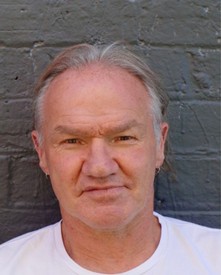
Professor Tony Birch is the Boisbouvier Chair in Australian Literature in the School of Culture and Communication at the University of Melbourne. This position is aimed at promoting the teaching and appreciation of Australian literature. Tony Birch is a First Nations writer, academic and activist and received his doctorate from Melbourne university.
He is the author of four novels: Women and Children, which won the 2024 The Age Fiction Book of the Year; The White Girl, winner of the 2020 NSW Premier's Award for Indigenous Writing, and shortlisted for the 2020 Miles Franklin Literary Award; Ghost River, winner of the 2016 Victorian Premier's Literary Award and Blood, which was shortlisted for the Miles Franklin Literary Award in 2012. He has also published two poetry books and four short story collections; the most recent of which, Pictures of You which is a collection of Birch’s short fiction over the last twenty years and includes five stories from Dark as Last Night. Dark as Last Night, won both the 2022 NSW Premier’s Literary Award and the Queensland Literary Award for Fiction.
Dark as Last Night has a verisimilitude which is possibly shaped by Birch’s own childhood experiences growing up in inner-city Fitzroy, Melbourne in the 1960s. His parents worked hard but the family lived in impoverished conditions and recollections of the men in his life are not positive. The working-class suburb was a melting pot of different cultures, which gave the young Birch a ‘natural appreciation for people from different backgrounds.’
He also saw the grim elements of local life: poverty, poor access to education, racism and meeting challenges with violence. Some of his stories have a specific focus on Aboriginal ‘lived experiences’ but not all so there is a universality about his insights about those who live on the margins of society and at times, struggle to fit in.
Tony Birch is often interviewed on ABC radio and an ABC article ‘Award-winning author Tony Birch reveals what ignited his passion for stories about human connection’ provides some fascinating insight to Tony growing up as a ‘Fitzroy Blak’ in the 1960s.
In October the Sydney Morning Herald included a Q&A on Tony Birch where Benjamin Law asks public figures to discuss a range of topics.
Another longer article can be found in the Sydney Morning Herald ‘Good Weekend’ (July 22 2023) which provides more detail on Tony’s unhappy school days. In this article he discusses how two interests saved him: reading and long-distance running:
Any opportunity to return to education would not have been possible without the aid of two regulated habits of mine: reading and long-distance running. Whatever else I failed at during my school years, I was a voracious reader, obtaining my first public library card at the age of five. I read storybooks, followed by novels, and was never without a book beside my bed, in my schoolbag, or in my hands when riding the train to and from school. After leaving school, my reading habit widened to works of non-fiction, mostly political titles, and quality daily newspapers.
There are 16 stories in the collection and I would recommend these for Stage 6:
‘Dark as Last Night,’ ‘Bobby Moses,’ ‘Bicycle Thieves,’ ‘Starman,’ ‘The Librarian,’ ‘Animal Welfare,’ ‘Flight,’ ‘Lemonade’ and ‘Riding Trains with Thelma Plum.’
‘Dark as Last Night’ is the titular story and the longest in the collection. It is told from a child's perspective as she tries to protect her mother from an abusive father. ‘Bobby Moses’ is a touching and sensitive story where we witness an Aboriginal man returning to his people’s Country, and the suspicion with which he and the colonial residents of the land regard each other. ‘Bicycle Thieves’ appears to be a moving story about brothers and bikes but reveals a darker undercurrent. In ‘Afterlife’ we join a brother and a sister in clearing out their deceased older brother’s flat, while learning of his importance to his community. In ‘Starman’ we follow two teenagers and their clumsy first attempts at romance and see how it doesn’t take much more than a shared interest in music to establish a strong connection. The musical references are fun. ‘The Librarian’ is an endearing tribute to teachers, reading and libraries and resonates with Tony Birch’s own childhood of libraries being a haven for him. ‘Animal Welfare’ is quirky and reminiscent of Roald Dahl as it explores some strange characters. ‘Flight’ is a beautifully-crafted story about the challenges of so many families and how sometimes humans can be desperately cruel. ‘Lemonade’ is a moving story about love, loss, devotion, families and confronting truths. ‘Riding Trains with Thelma Plum’ is a story set during the pandemic, which deals with themes of race, music, joy, and fear and offers an excellent model for student writing using a journey.
I recommend starting with ‘Riding Trains with Thelma Plum’ or ‘Flight’ or ‘Lemonade’ as they are shorter than the opening story and their brevity builds confidence and competence.
Reacquaint students with the short story as a specific literary form which share features of its more sustained cousin, the novel, but has features to suit the brevity and compression which characterises a short story.
The short story is a popular form and often preferred by many readers.
The distinctive features of a short story are:
This accessible and popular literary form has several key features:
In responding to a short story from Dark as last Night there are some options for you to give students:
1. Some story-specific questions to build student understanding of key features of the narrative and the style
OR
2. A set of general questions like these:
OR
3. A table format where students complete details from their stories:
| Title of story | Purpose and effect | Textual evidence |
| Setting | ||
| Characters | ||
| Structure | ||
| Narrative voice | ||
| Ending | ||
| Specific languages choices | ||
| Ideas and themes | ||
As well as the generic questions for each story consider these which are specific to some stories.
‘Flight.’
‘Lemonade’
This is a very moving and beautiful story about love, loss, siblings, family, self and the kindness of strangers.
‘Riding Trains with Thelma Plum’
‘The Librarian’
This story is both moving and engaging. The opening sentence immediately sets the scene: ‘The New School Year.’ The first two pages establish the era when Get Smart and Bandstand was on the television and Don McLean’s American Pie was a popular song. Spider Miller is a character many of us may have encountered as students or teachers.
‘Dark as Last Night’
Final task: Following close reading and analysis of at least six stories, students are to respond to this task
Birch succeeds in making the unremarkable remarkable, in showing that all lives have their victories, no matter how small. The Australian
The endorsement above appears on the back cover of the UQP edition of Dark as Last Night. With close reference to three stories from the collection discuss to what extent this applies to the stories you have chosen.
Academics, writers and journalists will often write reviews of newly-published books. The purpose of a book review is to make some judgments about the book, provide a concise summary of its content alongside a personal evaluation to help potential readers decide whether to read it.
Student task: Search online for two reviews which most resonate with your own reading of Dark as Last Night. Give reasons for your choice. Add another comment from the reviews which captures the power of these stories.
Use the list below as a starting point for your search.
Access this review on the Australia Book Review site and read what it says about the influences on Birch’s writing:
As part of a wide reading quest, students could choose a book from the list below to further their interest and understanding of the power of texts authored by Aboriginal and/or Torres Strait Islander Peoples.
Text requirements: Dark as Last Night meets Stage 6 text requirements for prose fiction, Australian author, a range of texts authored by Aboriginal and/or Torres Strait Islander Peoples.
Find supporting resources in our Year 11 texts and study guides at Five Senses Education.
Across Stage 6, the study of a range of texts authored by Aboriginal and/or Torres Strait Islander Peoples should consider:
(English Standard 11-12 Syllabus 2024, English Advanced 11-12 Syllabus 2024 © NSW Education Standards Authority for and on behalf of the Crown in right of the State of New South Wales, 2023)


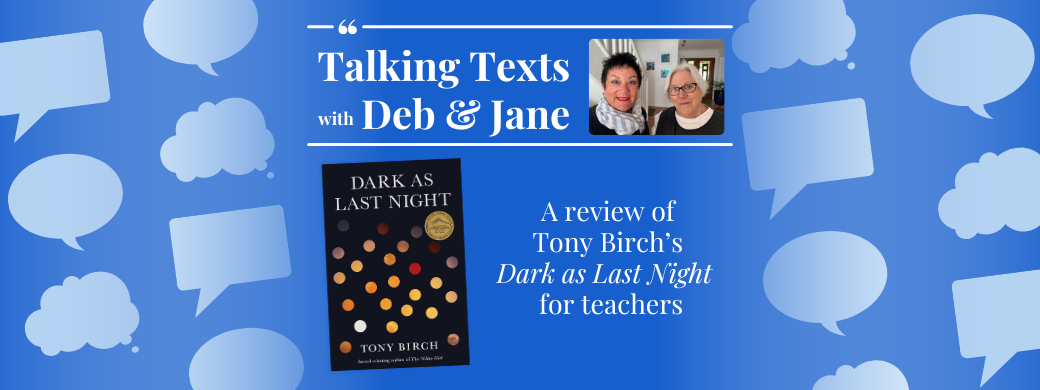
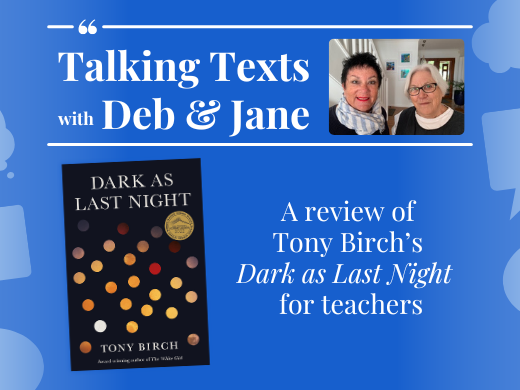
Jane Sherlock and Deb McPherson are experienced and passionate English teachers. They have also been involved in the education sector as authors and presenters at teaching conferences.
$9.95 flat rate shipping or free over $110
Australian family-owned & sourced
Supplier to over 1,000 schools Australia wide