



Flat Rate Shipping
$9.95 flat rate shipping or free over $110

Aussie Owned
Australian family-owned & sourced

School Supplier
Supplier to over 1,000 schools Australia wide
For Stages 4, 5 and 6
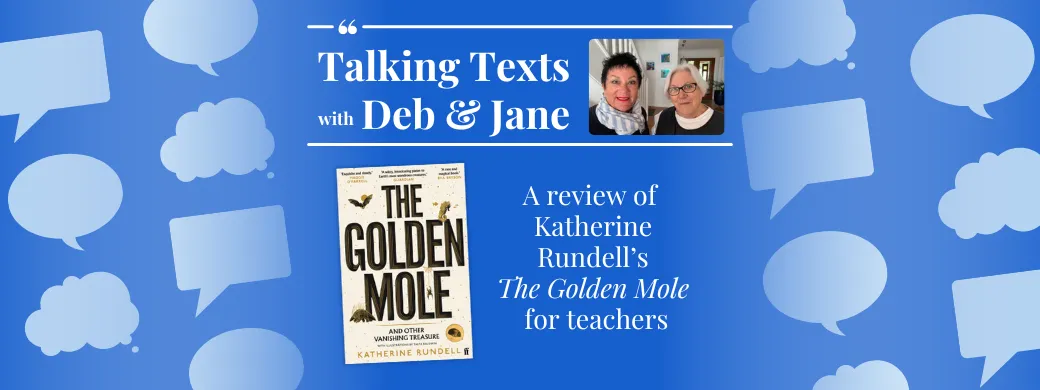
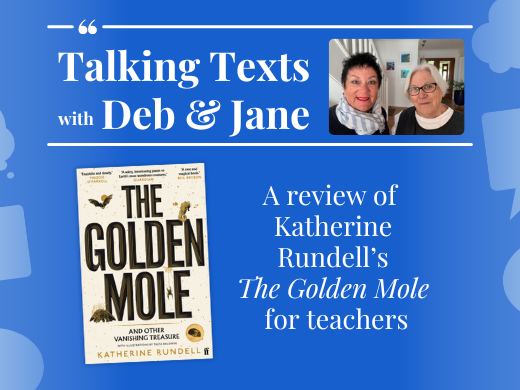
In The Golden Mole Katherine Rundell takes readers on an extraordinary and magical journey around the world. Her spellbinding introduction about endangered species, from swifts who fly two million kilometres in their lifetime, wood frogs who freeze solid to get through winter and dolphins who whistle to their young in the womb is one of the best “hook the reader” passages I have ever read - who could not read on!
The Golden Mole is a passionate call to treasure the creatures of the natural world and act on climate change and its resultant species extinctions, delivered to a generation very concerned about their current and future environment. We know that students are concerned about their environment and climate change because the Mission Australia Youth survey in 2023 tells us so. Over 19,000 respondents aged 15-19 years selected the four top issues of importance to them, and the environment led the way, followed by equity and discrimination, the economy and financial matters and mental health. Of course many older people are equally concerned about the climate and species crisis but they hit younger people harder as they have no power to change policies through the ballot box. The Golden Mole will speak compellingly to them. In sparkling and brilliant prose Rundell records moments when we as humans “have collided with living things, in both joy and destruction, delight and grandeur and folly.” There is plenty of folly to see. One example is humans’ voracious and ridiculous search for aphrodisiacs across the ages. Rundell has an academic background and uses many sources from myths and historical anecdotes to literature and newspapers. Rundell wants to wake us up to the perilous state for many species and she wants us to take action to preserve the wonders she describes. Sharing this book in the classroom will help to power that preservation. While this review places The Golden Mole in Stage 5 classrooms it could also be studied in Stage 4 or Stage 6.
The pangolin was the animal that captured my heart with its antiquity, timidity and vulnerability. Teachers could read the introduction aloud and then declare their favourites and explain their choices as a model for the class. Then get the students flipping through the book and making decisions on which chapter they will read first. Allow several in-class reading periods. Then, place students in groups to discuss the different species that had the most appeal for them and get them to articulate the reasons why they choose that species. Each group reports back to the class on their discussions.
A blurb is a short description of a book or film written usually by the people who have produced it for promotional purposes such as making people want to buy it or see it. It is usually between 100-200 words.
Read the blurb for The Golden Mole below and rate it out of 10. Then write your own.
The world is more astonishing, more miraculous and more wonderful than our wildest imaginings. In this passionately persuasive and sharply funny book, Katherine Rundell tells us how and why.
A lavishly illustrated collection of the lives of some of the Earth’s most astounding animals, The Golden Mole is a chance to be awestruck and lovestruck – to reckon with the beauty of the world, its fragility, and its strangeness.
A swift flies two million kilometres in its lifetime. That’s far enough to get to the moon and back twice over – and then once more to the moon. A pangolin keeps its tongue furled in a pouch by its hip, a Greenland shark can live five hundred years, a wombat once inspired a love poem.
Form pairs based on the species you would like to be the subject of a persuasive letter to your local community or city paper or a speech to the class. You are advocating for action to preserve and protect an endangered species. Consider Katherine Rundell’s prose as a model for your own writing. When researching your species look for powerful images and evidence to support your case. If you select a speech, support it with a PowerPoint presentation with suitable images and evidence to back up your argument. In writing your letter or your speech use language which captures your passion and concern for the species or animal just as Katherine Rundell does. Tim Winton does this too in his powerful plea to protect Ningaloo. The power of the language can then become a critical element in the persuasion.
Text requirements: The Golden Mole is an illustrated work of non-fiction (extended prose) and a quality multimodal text from around the world.
Explore our Year 9 texts and study guides and Year 7 texts and study guides for more Stage 4 and 5 reading material.
Concepts could include Argument and authority • Style
Stage 5 content listed below; please note the text could be studied in Stages 4 and 6 as well.
Argument and authority
Style
Writing
Speaking
For students who are d/Deaf or hard of hearing, this will be through signing and/or speaking. For students who use other forms of communication to supplement speech, content should be taught through speaking (and listening) experiences, where appropriate, in combination with the student's preferred communication form.
(English K-10 Syllabus 2022 © NSW Education Standards Authority for and on behalf of the Crown in right of the State of New South Wales, 2023)


Jane Sherlock and Deb McPherson are experienced and passionate English teachers. They have also been involved in the education sector as authors and presenters at teaching conferences.
$9.95 flat rate shipping or free over $110
Australian family-owned & sourced
Supplier to over 1,000 schools Australia wide