



Flat Rate Shipping
$9.95 flat rate shipping or free over $110

Aussie Owned
Australian family-owned & sourced

School Supplier
Supplier to over 1,000 schools Australia wide

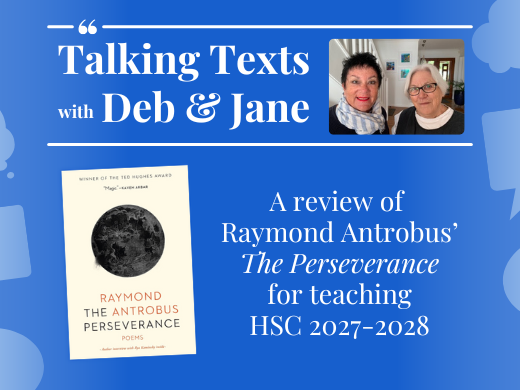
The Perseverance is an enlightening and compelling collection of poems by a Deaf poet, full of insight and rage, laughter and reflection, with a great range of poems. The poems’ ability to consider multiple identities through powerful and liberating language is highly recommended and it is a wonderful text for this focus
Seven poems from The Perseverance are set for study in both English Standard: Language, identity and culture and EAL/D: Language, identity and culture for the HSC in the new Stage 6 English syllabus for 2027 and 2028.
Complement your study of this text with our Year 12 texts and study guides, Year 11 texts and study guides, and English Years 11–12 Study Guides at Five Senses Education.
The poems are ‘Echo’, ‘Jamaican British’, ‘Ode to My Hair’, ‘Dear Hearing World’, ‘The Ghost of Laura Bridgman Warns Helen Keller About Fame’, ‘Dr Marigold Reevaluated’, ‘To Sweeten Bitter.’
Raymond Antrobus, born in 1986, is a British poet, writer and educator. His father was Jamaican and his mother was British. Born deaf, it wasn't until Antrobus was six that his deafness was diagnosed. His mother had noticed that he had no response to the shrill ringing of the phone in the kitchen and after investigations his educational assessment changed from ‘slowness’ to’ deafness’.
In a guest contribution to The Poetry Foundation (March 10 2017) Antrobus wrote of his struggle in both d/Deaf and hearing spaces, as hearing students teased him about using British Sign Language and some d/Deaf students mocked his lack of BSL skills. He kept a journal where he “subconsciously preserved and built my love of and confidence in language”. He reflected, that what he really needed was:
“the nurturing of a Deaf identity, one that wasn’t medical, but philosophical, one that embraced my natural love of language and valued Deafness as a way of being.”
In an interview with Anita Sethi he said “in a way poetry is my first language and it is the language I lean on and always have done.”
In May 2019, Antrobus became the first poet to win the Rathbones Folio Prize for his collection, The Perseverance. He also won the Ted Hughes Prize for Poetry. His picture book, called Can Bears Ski? illustrated by Polly Dunbar, allows readers and viewers to share a discovery of deafness through a child’s perspective.

The Perseverance was praised by chair of the judges of the Rathbones Folio Prize as:
"an immensely moving book of poetry which uses his deaf experience, bereavement and Jamaican-British heritage to consider the ways we all communicate with each other."
The set poems are about lived experiences or experiences shared with the poet, and about how language is used in time and place. In his Notes at the end of his collection Antrobus explains the inspiration for many of his poems. ‘Echo’ is a form of introduction to the collection as it reveals his diagnosis and his family. ‘Jamaican British’ was inspired by Aaron Samuel’s poem ‘Broken Ghazal’. The collection also looks at Deaf people in history as Laura Bridgman, the person central to the poem in ‘The Ghost of Laura Bridgman Warns Helen Keller About Fame’, was a Deaf-Blind student at the Blind Asylum in Boston who became famous when Charles Dickens took an interest in her. Bridgeman is quoted in the poem. ‘Dr Marigold Reevaluated’, also has a Dickens connection as it is based on a short story written by the British author. ‘Dear Hearing World’, modelled on Danez Smith’s poem, ‘Dear White America’, was originally written as a rant for performance about the poet’s experiences as a deaf child.
Note: Raymond Antrobus has notes about the spelling of d/Deaf at the end of his book. The poems use variations of big D and little d/Deaf. Capitalisation can be used in reference to the individual born Deaf or the Deaf community to show respect and deference. It also indicates a cultural identity, rather than a disability. The lower case deaf refers to the physical condition of having hearing loss and can also refer to people who become deaf in later life after they have acquired a spoken language and whose relationship with deafness is more medical than cultural.
On first looking at a poem…
Re-visit strategies for reading and accessing a poem to build student competence and above all, confidence. They don’t need to be trying to fathom a convoluted puzzle or apply unfamiliar terminology but to admire and enjoy the way Antrobus has shaped meaning.
Hints for reading a poem
In this Focus Area Language, identity and culture, students study ONE prescribed text in detail and a range of textual material to explore, analyse and assess the ways in which meaning about individual and community identity and cultural perspectives is shaped in and through texts.
Starting with the poet
Listen to what the poet has to say about why he is a poet:
‘So why have I turned to poetry to publicly explore this [deaf identity]? Because poems are careful things—if done well, every sound and word has something to carry. My poems are Deaf poems because they are defiant in how they take up space on the page, not searching for loss, but for something gained ... I think that what my parents respected about poetry was its ability to communicate the otherwise unsayable; becoming a poet is my attempt to achieve a power equal to digital hearing aids.’
From The Poetry Foundation
Also consider the impact and importance of the epigraph at the beginning of the collection.
‘There is no telling what language is inside the body.’ American poet Robin Coste Lewis
For each poem stand back and ask how the language of that poem explores individual identity and what does it say about culturally connected groups?
In what ways does each poem
Also consider the impact texts have in shaping individuals’ and communities’ sense of identity. How do the poems shape a sense of identity for individuals and communities?
Connecting texts
The blurb for Antrobus’ children’s picture book Can Bears Ski? is a powerful introduction to deafness. Have a few copies in the classroom for students to read.
Boy Bear cannot hear Dad Bear coming to wake him up in the morning but he can feel the floor vibrate with his heavy footsteps. He can only grasp little bits of what his teacher says to him at school. He cannot catch what his friends are laughing at. And, all the time, keeps hearing the question, “Can bears ski?” What does it mean? With the support of Dad Bear, Boy Bear visits an audiologist and, eventually, he gets hearing aids. Suddenly, he understands the question everyone has been asking him: "CAN YOU HEAR ME?
Also have a few copies of Future Girl, by Deaf Australian author and activist Asphyxia, as students might also be interested to read the graphic novel, and it is an accessible and inspiring text.


Looking at ‘Echo’
Listen to Raymond Antrobus read ‘Echo’ recorded on Sept 13 2024
‘Echo’ is a five poem sequence which explore the poet’s diagnosis of deafness and the very nature of language.
Students could:
Now listen to, and explore, the other poems in the suite: ‘Jamaican British’, ‘Ode to My Hair’, ‘Dear Hearing World’, ‘The Ghost of Laura Bridgman Warns Helen Keller About Fame’, ‘Dr Marigold Reevaluated’, ‘To Sweeten Bitter’. Consider what they share with ‘Echo’ and how they are different.
Essay Task: How does Raymond Antrobus use language and image to explore diverse cultures and identities in his poem ‘Echo’?
There are requirements for particular types of texts to be selected from the prescribed texts list for different courses. Great care must be taken in selecting a pathway of texts that meets all the requirements.
In the Standard English course students are required to closely study 3 prescribed texts, with ONE drawn from each of the following categories:
The suite of poems from The Perseverance by Raymond Antrobus includes a range of cultural, social and gender perspectives.
Pathway 1 for HSC Standard English with The Perseverance as first choice
Film

Texts and human experiences:
One Night the Moon directed by Rachel Perkins
Poetry

Language, identity and culture:
The Perseverance by Raymond Antrobus
Prose Fiction
Close study of literature:
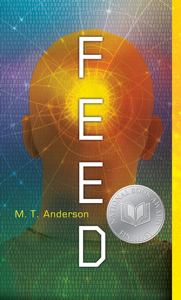
Feed by MT Anderson
Pathway 2 for HSC Standard English with The Perseverance as first choice
Drama

Texts and human experiences:
Away by Michael Gow
Poetry
Language, identity and culture:
The Perseverance by Raymond Antrobus
Prose Fiction
Close study of literature:
Feed by MT Anderson

Jane Sherlock and Deb McPherson are experienced and passionate English teachers. They have also been involved in the education sector as authors and presenters at teaching conferences.
$9.95 flat rate shipping or free over $110
Australian family-owned & sourced
Supplier to over 1,000 schools Australia wide