


Flat Rate Shipping
$9.95 flat rate shipping or free over $110

Aussie Owned
Australian family-owned & sourced

School Supplier
Supplier to over 1,000 schools Australia wide
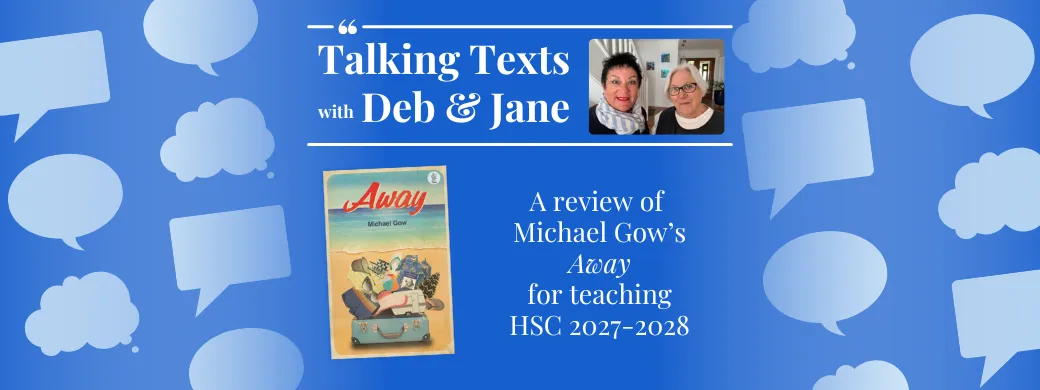
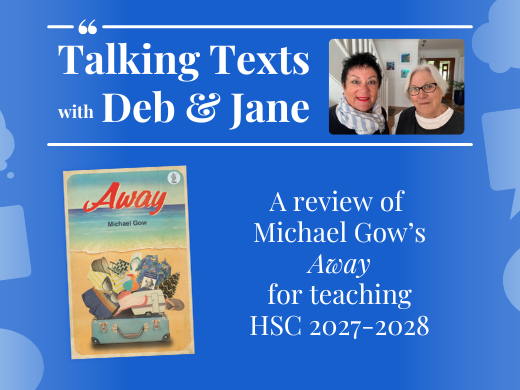
Away is set for study in 2027-2028 in Year 12 for Advanced and Standard in Texts and Human Experiences

Sitting on a south coast beach in January I re-read Away and was delighted by its freshness, richness and suitability for Texts and human experiences. It is such a joy.
In 2027—the first HSC year of this new Prescriptions list—it will be 60 years since the setting of Away in 1967.
How have we changed?
How have we not?
If plays and theatre are intended to, hold a mirror up to nature or be a chronicler of our times, what do we come to understand about ourselves, our world and indeed, the broader human experience though this “deeply touching” Australian play? Similarly, we can consider the ways that this play encourages us to reflect personally and challenge our assumptions about the nature of human experience.
It is a text that suits both Advanced and Standard and I believe is a positive and affirming introduction to students’ exploration of the HSC. Additionally, Away’s rich contextual features will enable sophisticated and insightful responses.
It is the summer of 1967, and three families re-enact their Christmas holiday rituals. Each family have their own conflicts, challenges and tensions, which Christmas and holiday preparation, seem to exacerbate.
The families are all connected to the same school and each family has their own deep challenges. The principal Roy and his wife Coral are trying to come to terms with the loss of their son in the Vietnam war. Two students, Tom and Meg have performed in the school play. Tom and his parents, Vic and Harry, are trying to cope with Tom’s serious illness, determined to make the most their time together. Meg and her family are fortunate in comparison as they are free of this kind of tragedy. But her mother Gwen is obsessed with achievement, financial security and status, so she constantly undermines the happiness of all of them. Thus, the conflict is set up early in the play and the dramatic interest comes from the way each family works through their problems and the comparison of their respective situations.
Each family goes on holiday and a Shakespearean-style storm brings them together. In these experiences the separate families are drawn together to confront their fears and tragic realities. Only then can they begin to heal. Through this confrontation they come to powerful realisations, before their important experiences of reconciliation, healing and renewal.
The cyclical structure of the play begins and ends with extracts from Shakespeare. It opens with the end of A Midsummer Night’s Dream and closes with the beginning of King Lear so that the play moves from comedy to tragedy while paradoxically offering a sense of renewal.
Away has been previously set in 1989-1994, 1999, in Changing Self: 2001-2003, in Journeys: 2004-2008 and in EAL/D 2019-2026. This ensures many valuable resources for content, teaching and learning, including various HSC Texts guides.
Note: For students to succeed in Texts and Human Experiences it is important to highlight the significance of the concept of representation. The word “representation” occurs four times in the content description. It is important that students understand that representation aligns to the deliberate choices made by the composers, in this case the playwright Michael Gow to explore the ideas of the human experience. Students need to explore the text as a play or drama script and to use the conventions and terminology of drama in their discussion and responses.
Research the social, historical and political context of Away which is significant to the text’s representation of human experiences. Away was written in 1986 but Michael Gow deliberately chose to set the play 20 years earlier in the period of his own growing up – the 1960s. At this time, Australian society was changing dramatically. There had been a huge immigration program from Europe after the second world war, bringing refugees and others who had different languages and customs that some Australians found confronting. The generation who lived through the depression and the war were desperate for a peaceful and secure life; their children, brought up in peace and freedom wanted excitement and change. Their minds were open to new things, new ideas and this generation gap was striking.
A visual representation of the time for example, a PowerPoint would be an engaging way to share the context with your students.
Consider:
The Shakespearean framework is part of Gow’s deliberate and purposeful representation. Away is framed by two Shakespearean plays: Midsummer Night’s Dream and King Lear. It starts with the epilogue from the comedy Midsummer Night’s Dream. The fact that the quoted section is from the end of that Shakespearean play foreshadows the end that is to come. A fantasy setting of fairies is included. This self-conscious metatheatrical referencing to the act of creating a play becomes an effective way of establishing for a modern audience that Gow’s play will not be naturalistic – in some parts it becomes surreal and over-dependent on coincidences. For example, a storm magically appears, driving all the characters to the same place where they discover reconciliation and acceptance. Apart from providing an excuse for later fantastical elements, the opening speech also begins one of the themes of the play: ‘restore amends’. Restoration is the desired outcome and for all the characters it is an acceptance of their trials but true restoration – that is of Tom’s life and Coral’s son’s life – cannot happen in the real world.
King Lear is declared by the teacher to be a greater tragedy than Hamlet, which is only one man’s struggle. It is in King Lear that ‘the struggle between man and nature as well as man and man, and between man and himself’ takes place and it is all three types of such challenges that are evident in Away. In this ending we have a clear statement that the play is a tragedy about struggle not about death. If we follow this hint and go back through the play, we start to see that each family is struggling to cast off their burdens. Tom ends as he begins, reading Shakespeare, but the opening delight of the fairies is replaced by a sombre darkness- ‘Meantime shall we express our darker purpose.’ Lear is handing over his kingdom and is preparing to enter old age, approaching death, without the worries of ruling a kingdom. He wants to crawl to death ‘unburden’d.’ This invites us to see the play as being a space where characters can unburden themselves. For Tom, this leads to death but for others there is reconciliation and acceptance of their condition.
Task: In what ways does the final scene of Away draw together the central concerns of the play? How does this scene represent growth and agency? In your response make detailed reference to your prescribed text.
This table explicitly uses features from the syllabus description of Texts and human experiences and completing the table could be an individual task or a collaborative exploration.
| Character | Module feature: how do these specific elements align with each character? Include examples. • Individual human experiences and the emotions and qualities related to these experiences • Collective human experiences and the emotions and qualities related to these experiences • Insight into their emotional, intellectual, physical, cultural and lived experiences • The characters as representations of identity, culture, acceptance and growth |
Textual detail: in what ways does the play represent these elements? |
| Tom | ||
| Roy | ||
| Meg | ||
| Gwen | ||
| Jim | ||
| Coral | ||
| Harry | ||
| Vic |
Consider these elements from the Stage 6 syllabus
Provide opportunities for students to use their own experiences as the basis for their imaginative responses. The more this style of writing can be normalised students will grow their skills and capacity for writing under pressure.
Give students these sentences to choose one which most resonates with them and use as the opening of a short piece of writing about their own Christmas or other holiday experiences:
This time in our family is when we realise that …
When I go away with my family I …
When our family and friends go to my uncle’s farm… (substitute any location including for example, a shack on the Hawkesbury, caravan at Bendalong, beside the Murrumbidgee …)
Sometimes it would be easier to stay at home…
Christmas holidays are not the same anymore since…
Write about 500-700 words and try to capture specific details of your experiences including concrete detail of your surrounds, the weather, your activities. Limit the characters to three and incorporate some growth and understanding through the experiences.
Alert students to revisiting their story later in the term to share in terms of editing and refinement.
Share some of the Summer stories in the SMH in January 2025. In this Herald series, prominent artists, comedians, authors and journalists were invited to write about their “summer that changed everything”.
Stories that would be most engaging as models:
Use these as a model for students own writing about a summer that changes them.
In 2027 it is 60 years since Away was first performed. Write a 1000-word feature article in a discursive style which explores Australia then and now. Try to incorporate these features:
In 2017 the Sydney Theatre Company staged a wonderful production of Away at the Sydney Opera House. Read the review in the SMH here.
There are requirements for particular types of texts to be selected from the prescribed texts list for different courses. Great care must be taken in selecting a pathway of texts that meets all the requirements.
Away is an Australian drama text.
Four prescribed texts to be studied with at least ONE from each of the following categories (prose fiction, poetry, and drama OR nonfiction OR film OR media) and ONE authored by Shakespeare.
Students are required to closely study three prescribed texts with ONE drawn from each of the following categories: prose fiction, poetry, drama OR film OR media OR nonfiction.
Pathway 1 for HSC Advanced English with Away as drama first choice
Drama

Texts and human experiences:
Away by Michael Gow
Drama (Shakespeare) | Poetry
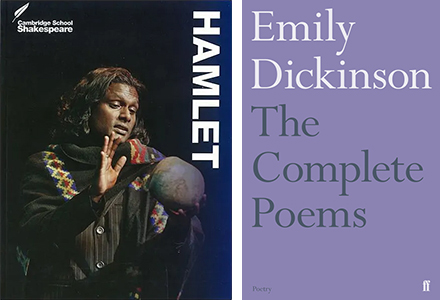
Textual conversations:
Hamlet directed by William Shakespeare | Selected poems by Emily Dickinson
Prose Fiction

Critical study of literature:
Warlight by Michael Ondaatje
Pathway 2 for HSC Advanced English with Away as drama first choice
Drama
Texts and human experiences:
Away by Michael Gow
Poetry | Prose Fiction

Textual conversations:
Selected poems by William Blake | Drive Your Plow Over the Bones of the Dead by Olga Tokarczuk
Drama (Shakespeare)
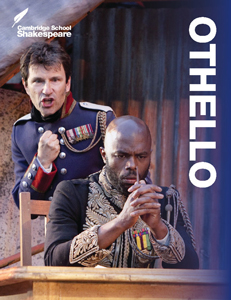
Critical study of literature:
Othello by William Shakespeare
Pathway 1 for HSC Standard English with Away as first choice
Drama
Texts and human experiences:
Away by Michael Gow
Poetry
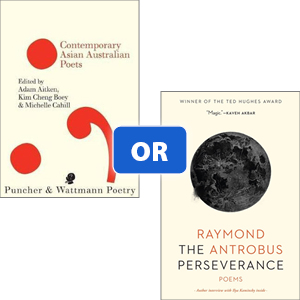
Language, identity and culture:
Contemporary Asian Australian Poets edited by Aitken, Boey & Cahill
OR
The Perserverance by Raymond Antrobus
Prose Fiction

Close study of literature:
Feed by MT Anderson
OR
Limberlost by Robbie Arnott
Pathway 2 for HSC Standard English with Away as first choice
Drama
Texts and human experiences:
Away by Michael Gow
Prose Fiction

Language, identity and culture:
The Namesake by Jhumpa Lahiri
OR
Swallow the Air by Tara June Winch
Poetry
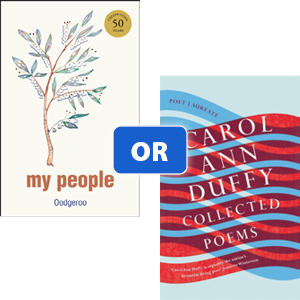
Close study of literature:
My People by Oodgeroo Noonuccal
OR
Selected poems by Carol Ann Duffy

Jane Sherlock and Deb McPherson are experienced and passionate English teachers. They have also been involved in the education sector as authors and presenters at teaching conferences.
$9.95 flat rate shipping or free over $110
Australian family-owned & sourced
Supplier to over 1,000 schools Australia wide