




Flat Rate Shipping
$9.95 flat rate shipping or free over $110

Aussie Owned
Australian family-owned & sourced

School Supplier
Supplier to over 1,000 schools Australia wide
For Stage 4
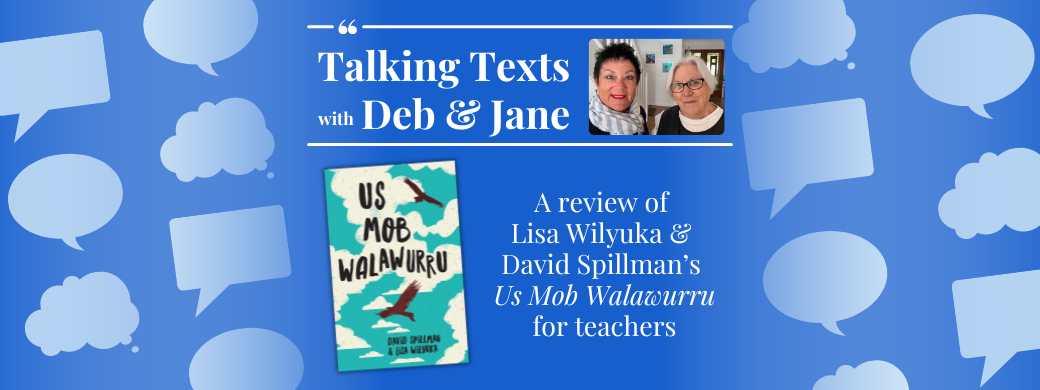
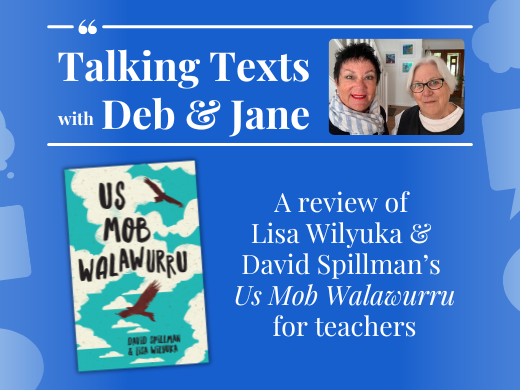
Us Mob Walawuru is an engaging and valuable introduction to the perspectives of First Nation peoples for students in Stage 4. David Spillman is a facilitator and writer who has spent many years working on Aboriginal communities in the Northern Territory. Lisa Wilyuka is a Luritja woman from Titjikala, a small community 120 km south of Alice Springs. She is an artist who works closely with youth in her community. An excellent teaching resource can be found at Copyright Agency Reading Australia here.
Us Mob Walawurru is a work of historical fiction and intercultural exploration. It is set in Central Australia among the Luritja people and gives the reader a fascinating insight to life on a cattle station through a First Nations perspective during the 1960s to the 1980s. The novel is roughly divided into two parts by setting the story at two different pastoral stations, Dry River and Big Sky. The narrator is Ruby, a young Luritja girl growing up with her Uncle Archie and Aunty Alice at Dry River Station run by whitefella Joe Morgren, who grew up with Archie. We see the work and people on the stations through her eyes. When the students are to go on a school trip to Tulu for a sporting carnival the rest of the community want to come as well to see family, and confusing cultural differences between Aboriginal people and whitefellas are revealed. After the family are forced to move to Big Sky Station, following a conflict with Joe, the reader sees Ruby enhance her awareness and understanding of Country and connection to Country. Two stories from Neena and Ruby’s past reveal traumatic and devastating actions against their kin. In the 1970s the reader sees the beginning of the returning of leases to traditional owners, such as Ruby’s Uncle Archie. A reunion between Uncle Archie and his old friend and Joe Morgren is foreshadowed in the final page.
Read Cara Shipp’s Listening from the Heart: Rewriting the Teaching of English with First Nations Voices (2023 AATE 150pp) to explore better ways to engage with First Nations People and their stories, their histories and cultures and to understand the protocols and appropriate terminology to use when reading and studying texts by First Nation authors. This warm, wise and generous book will be a huge help in the classroom.
Perplexing and confusing cultural and environmental differences between First Nations Peoples and the settlers are examined and explained in Us Mob Walawurru. The school bus trip allows readers to clearly see the ways First Nations people experience their country and the different knowledge, understanding and expectations they bring to the journey (see pages 28-61). Look through this section and other parts of the novel and in small groups work out the different ways First Nations People and settlers look at their world by using the headings below to help you prepare a report to the class:
Research at The Australian Institute of Aboriginal and Torres Strait Islander Studies (AIATSIS) website: https://aiatsis.gov.au
The returning of pastoral leases to Traditional Owners was an important moment in recognition of First Nations 60,000 years of prior occupation and custodianship of Australia. See pages 148-162 in the novel. You can find more information about this at The Australian Institute of Aboriginal and Torres Strait Islander Studies website and particularly at this page on land rights.
When Ruby moves to Big Sky Station mornings find her sitting under an old desert oak or kurrkara pulka. Nena says she is re-making her spiritual connection to her Country every day. Ambelin Kwaymullina (who is a First Nations writer and illustrator who comes from the Palyku people of the Pilbara region of Western Australia) captures a similar feeling in her poems in Living on Stolen Land (a collection of poetry)
“There is no part of this place
that was not
is not
cared for
loved
by an Aboriginal or Torres Strait Islander nation
There are no trees
rivers
hills
stars
that were not
are not
someone’s kin”
Individual creative response
The strong connection between First Nations People’s culture and country is a key part of their identity. Ruby, sitting under the kurrkara pulka, is one example. What places are important to you as part of your life? It could be your home, a special holiday place, a space you retreat to for thought and wonder, or perhaps a fantasy land. Write a description of about 400 words which captures the senses of touch, taste, sight and sound at this special place.
Analytical response
When Neena speaks to Ruby later in the novel she says:
Ruby, there are going to be big changes for our mobs in the next twenty years, some good, some not so good. But we’re gunna have more say about these changes. The rules will still be made by whitefella governments but they are starting to listen to what we have to say. People from our mob who can walk in both worlds, talk and write in both languages, are going to be very important, Ruby. And they will need to be strong and wise. It will be a hard journey." p129
In what ways does Ruby walk in both worlds? Why will she need to be strong and wise? How does the reader see this more clearly through the authors’ deliberate choice of character, plot and figurative language? In your response make close reference to the novel.
Text requirements: Us Mob Walawurru is a novel (extended prose) by an Aboriginal and/or Torres Strait Islander author and a Non-indigenous author with social and gender perspectives.
Looking for more classroom texts for Stage 4 students? Browse our Year 7 texts and study guides and Year 8 texts and study guides at Five Senses Education.
Concepts could include Perspective and Context, and Characterisation.
Uses a range of personal, creative and critical strategies to read texts that are complex in their ideas and construction EN4-RVL-01
Analyses how meaning is created through the use of and response to language forms, features and structures EN4-URA-01
Examines and explains how texts represent ideas, experiences and values EN4-URB-01
Characterisation
Perspective and context
(English K-10 Syllabus 2022 © NSW Education Standards Authority for and on behalf of the Crown in right of the State of New South Wales, 2023)


Jane Sherlock and Deb McPherson are experienced and passionate English teachers. They have also been involved in the education sector as authors and presenters at teaching conferences.
$9.95 flat rate shipping or free over $110
Australian family-owned & sourced
Supplier to over 1,000 schools Australia wide