




Flat Rate Shipping
$9.95 flat rate shipping or free over $110

Aussie Owned
Australian family-owned & sourced

School Supplier
Supplier to over 1,000 schools Australia wide

For Stage 3
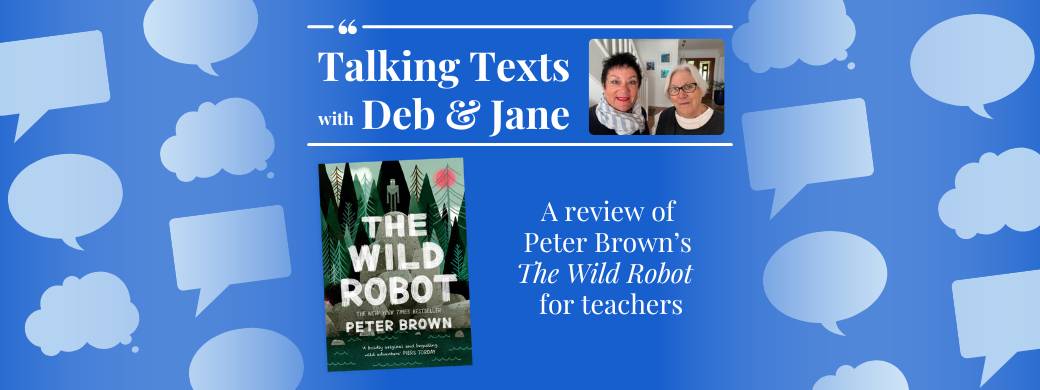
Humans go missing in this fable-like story of a robot and an island’s animal inhabitants. This beguiling and graceful story with its focus on friendship and family as a robot learns to survive in the wilderness is an apt book to consider for the classroom. The 2024 DreamWorks animated film version of The Wild Robot, and the recent rise of AI in so many aspects of life and the alarming state of the world just now make it especially noteworthy. Students from age 7-12 will delight in this novel, as can readers of all ages and stages.
Peter Brown is an American author and illustrator. The inspiration for The Wild Robot story came from Brown’s drawing of a robot in a tree. The Wild Robot was an ALA Notable Book for Children, and was one of Kirkus Best Children’s books of the year and a New York Public Library Best Book for Kids.
Six ROZZUM robots are washed up on the rocks of an uninhabited island. Five are broken apart on impact but the sixth, unit 7134, remains intact and is accidently activated by an inquisitive otter. Roz has no human to give her commands so her primary function is to survive. The animals on the island (the otters, beavers, foxes, deer, geese and other birds) see Roz as a monster and avoid her. She observes them closely and she understands she has to adapt to their ways and learn their language (there only seems to be one language). Roz accidently destroys a goose family, but one egg remained intact and when it hatches Roz adopts it with the advice of another goose called Loudwing, and names it Brightbill. The animals gradually warm to Roz and with the help of Mr Beaver creates a nest as a shelter and plants a garden with advice from Tawny the deer. Mother bear becomes a friend after Roz saves one of her cubs. Roz offers advice to the other animals on using fire and building shelters during winter and proposes a truce at dawn when little hunting happens. As Brightbill grows up, Roz’s place in the island community is strengthened. The beavers help her with a wooden foot replacement when one of her feet is damaged. When Brightbill goes on migration with other geese Roz continues to help the other animals and welcomes his return in spring.When an airship arrives on the island the animals are alarmed that the three combat robots( RECOS) are going to take Roz away. The animals defend her with clever tricks and traps and finally use one of the RECOS’ rifles to destroy the last remaining RECO. But Roz is damaged and knows she needs to return to her Maker to be repaired and that more airships will come. She leaves on another airship but plans to return to the island and her friends.
After watching the National Book Festival interview on YouTube between Kit Ballenger and Peter Brown the teacher could select some sections to show to the class. The questions at the end by some young readers are very good.
At https://www.youtube.com/watch?v=RCLAg92vQ_c&t=1572s
Peter Brown’s blog contains a wonderful account of his craft of writing and how he came to write and illustrate the novel. https://www.peterbrownstudio.com/the-wild-robot/
He says he wanted to tell a story about a robot who finds harmony in nature which ran against the more usual Science fiction trope of the robots rising up and destroying humanity. There are screen shots of his initial drawings, he references other stories that have influenced him, he shows his story-mapping and the whole blog provides a fascinating insight into the creative process. He even shares his procrastinations and the rules he wrote for himself to get the writing started:
He concludes with:
It took eight years, but I finally found an answer to the question that led me down this path. What would an intelligent robot do in the wilderness? She’d make the wilderness her home.
An exploration of this site would give students real insight into the process of creating, writing and illustrating a story.
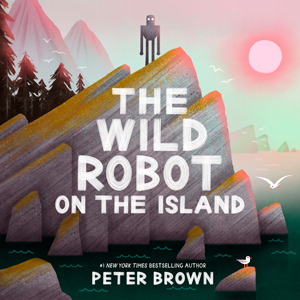
Brown starts with pencil and paper, then moves to paint and paper and finally utilizes the computer. In his novel The Wild Robot the illustrations are in black and white. In 2025 Brown created The Wild Robot on the Island to retell the story in full colour picture book form. The story has been simplified with a gentler tone for younger readers. It would be useful for students to also have access to copies of the picture book to widen their understanding of the environment and landscape of the island and to appreciate the impact of colour on the illustrations and the way that the images carry more of the story in the picture book.
Task: Ask students to compare and contrast the illustrations in the novel and in the picture book. They could also consider the differences in tone and theme.
Books with chapter headings are a key gift to readers. Readers can use the headings to predict what might happen. Some chapters are very short, for example Chapter 10 is just a paragraph while Chapter 63 is the longest chapter in the book with nine pages and four illustrations. Before starting to read the book in class give students a quick look at the chapter headings and ask them in groups to predict what sort of events might happen in this book. Some headings may be a bit cryptic while others are straightforward. Then read pages 1-7 to the class to get them started.
Chapter headings
1. The ocean
2. The otters
3. The robot
4. The robot hatches
5. The robot gravesite
6. The climb
7. The wilderness
8. The pinecones
9. The mountain
10. The reminder
11. The robot sleeps
12. The storm
13. The aftermath
14. The bears
15. The escape
16. The pine tree
17. The camouflaged insect
18. The camouflaged robot
19. The observations
20. The language of the animals
21. The introduction
22. The new word
23. The wounded fox
24. The accident
25. The egg
26. The performer
27. The gosling
28. The old goose
29. The beavers
30. The nest
31. The first night
32. The deer
33. The garden
34. The mother
35. The first swim
36. The gosling grows
37. The squirrel
38. The new friendship
39. The first flight
40. The ship
41. The summer
42. The strange family
43. The gosling takes off
44. The runaway
45. The dead robots
46. The fight
47. The parade
48. The new foot
49. The flier
50. The button
51. The autumn
52. The flock
53. The migration
54. The winter
55. The lodgers
56. The new lodgers
57. The fire
58. The conversations
59. The spring
60. The fish
61. The robot stories
62. The return
63. The journey (longest chapter in the book)
64. The special robot
65. The invitation
66. The celebration
67. The sunrise
68. The RECOS
69. The defective robot
70. The hunt begins
71. The forest assault
72. The mountain rumble
73. The chase
74. The click
75. The last rifle
76. The broken robot
77. The meeting
78. The farewell
79. The departure
80. The sky
Task: The open ending allows students to imagine what might happen next to Roz. Will she be mended and then be able to return to the island community or will her repairers seek to keep her for other purposes? Before showing students the sequels, ask them to create the first few chapters in a possible sequel to the story. Ask them to model their chapters on the format of The Wild Robot chapters and to give each chapter a heading and an illustration. Once their chapters are written they can be alerted to the opportunity to read what the author wrote about in the other two books in the trilogy.
Read the last paragraphs in the novel to the class and then ask them to start their new story.
Brightbill had been Roz’s son from the moment she picked up his egg. She had saved him from certain death, and then he had saved her. He was the reason Roz had lived so well for so long. And if she wanted to continue living, if she wanted to be wild again, she needed to be with her family and her friends on her island. So, as Roz raced through the sky, she began computing a plan.
She would get the repairs she needed.
She would escape from her new life.
She would find her way back home. p269
The main character, Roz, remains calm and friendly in the face of threats and disaster. While Roz is a robot and doesn’t have feelings, the reader does come to trust her, just like the animals do, and be concerned for her safety and that of the island environment. Roz is part of the island community over the course of the story. She is a peaceful robot. She has to find solutions that don't involve violence. Roz learns how to communicate with wild animals. She doesn't fit completely into either the human world or the world of wild animals, but she tries to be a good steward of the island. When she has animals in her shelter, the nest, everyone is welcome but in there Roz has a rule that we have to get along so none of the normal hunting can occur in her nest.
Task: Character profile: be a detective as you read
Ask students in groups to gather information on Roz to help them determine what sort of robot she is and what are her characteristic behaviours and actions so they can make a character profile Each group could be responsible for a different selection of chapters. Once each group has gathered information about Roz they could have a class discussion about collaboratively creating a character profile based on the material they have found. Use and modify the template below depending on the information students have discovered.
ROZZUM unit 7134
| Name: | |
| Gender/Pronouns: | |
| Species: | |
| What the character looks like: | |
| Typical Outfit: | |
| Personality: | |
| Biggest Fear: | |
| Greatest Strength: | |
| Habits/Quirks: |
STORY DEVELOPMENT
| What pulls the character into the story? | |
| Why is the character doing what s/he is doing? | |
| What are the key conflicts in the story? | |
| How does the character change by the ending? |
The American author, Isaac Isimov, famously developed three laws of Robotics when he was writing his Science Fiction collection of short stories called I Robot in 1950.
A possible fourth law about protecting the earth has been suggested recently in the light of advancing climate change. With the rapid advances in AI, a concern today is the problem of human orders and programming that are unethical or harmful. There is a focus on AI with principles like human oversight, safety, transparency, fairness, and accountability, which move beyond Asimov's simple rules.
Task: Design your robot and present to the class with a report. In groups decide what features of a robot would you consider important, fair, ethical and useful in your world. Draw and annotate your robot and present your design to the class either as a drawing or as a digital image on a power point. Each member of the group should speak to a particular aspect of the design and explain why that was included.
The Wild Robot appears to be set in the northern hemisphere based on the animals living on the island. Imagine what animals could be on the island if it was off the coast of Australia.
Task: In a class discussion ask students to consider what sorts of Australian animals could populate the island and how would the characteristics of those animals change or enhance the story. Ask each student to choose an Australian animal and write a short chapter about that animal’s interaction with the wild robot. They could consider koalas, kangaroos, Tasmanian devils, emus, whale sharks, wombats, echidnas, platypus, redback spiders etc.
Wide reading is vital in schools today as research shows how the reading habit can slip away from students as they turned to social media for their stories. The new social media ban provides a great opportunity to increase book reading. Students could consider reading the two sequels The Wild Robot Escapes and The Wild Robot Protects if they have not already done so. The Wild Robot Escapes allows students to see Roz in a new environment when she is set to work on a farm and how she keeps her independence and makes her way back to the island with the help of both children and animals and surprisingly her original creator. The Wild Robert Protects involves Roz in combating a toxic poison tide that is spreading in the ocean and badly affecting life on the island and in the sea. Alternatively students could decide on a theme to guide their reading choices. One is suggested below.
How animals and humans interact in their environment
A wide reading challenge to read TWO books that feature interactions between animals or humans and the environment (or both) can bring back the joy of selecting their own texts when presented with a range of books to choose from. It is easy to set up once the librarian finds all the animal books available.
Text requirements: novel, literature from other countries
Concepts: narrative • characterisation • genre
A student analyses representations of ideas in literature through narrative, character, imagery, symbol and connotation, and adapts these representations when creating texts EN3-UARL-01
A student analyses representations of ideas in literature through genre and theme that reflect perspective and context, argument and authority, and adapts these representations when creating texts EN3-UARL-02
Narrative
Characterisation
Genre
Theme
Perspective and context
A student fluently reads and comprehends texts for wide purposes, analysing text structures and language, and by monitoring comprehension EN3-RECOM-01
Reading for interest and wide purposes
(English K-10 Syllabus 2022 © NSW Education Standards Authority for and on behalf of the Crown in right of the State of New South Wales, 2023)



Jane Sherlock and Deb McPherson are experienced and passionate English teachers. They have also been involved in the education sector as authors and presenters at teaching conferences.
$9.95 flat rate shipping or free over $110
Australian family-owned & sourced
Supplier to over 1,000 schools Australia wide