




Flat Rate Shipping
$9.95 flat rate shipping or free over $110

Aussie Owned
Australian family-owned & sourced

School Supplier
Supplier to over 1,000 schools Australia wide
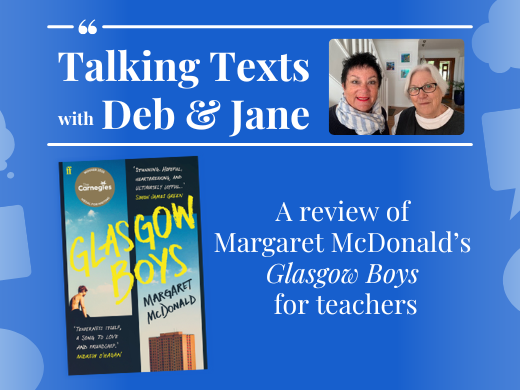
For Stages 5 and Stage 6
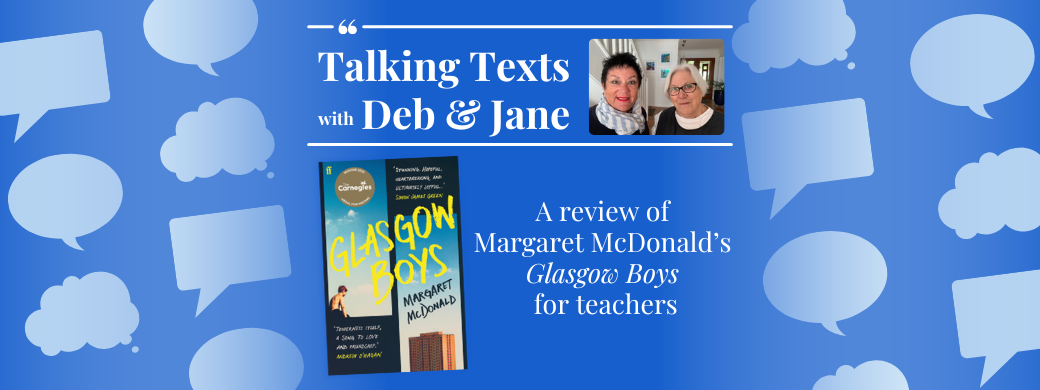
Thank you Carolyn Walsh, from Allen & Unwin, for sending me this book to read. It has been patiently sitting on my desk while I have been focused on reading HSC texts for 2027 and I decided it was time to re-enter the world of Young Adult fiction (YA), which is what I love to read and write about.
In 1978 the Central Tablelands branch meetings of the English Teachers Association attracted lecturers and academics from Mitchell CAE (now CSU). Regulars were Jack Thompson, Warwick Franks and Judy Parker. As a second year out teacher, I had no idea of their role and importance in the English landscape, but we became friends, then I taught their children and soon I was their student in their new post-graduate course. And… so began my journey into the world of YA literature.
In high school my English diet was The Loved One, The Scarlet Letter, Emma and Shakespeare: all of which I enjoyed. UNSW undergraduate and DipEd courses did not include anything remotely associated with YA. The undergraduate course started with Chaucer and finished three years later with Look Back in Anger and we covered almost every Shakespeare. It was simply gorgeous but not necessarily what my Year 9 in 1977 would want. My first assignment from Jack was a booklist of YA. Those books now seem very tame and even dated, but they set me off on a career-long journey into the world of adolescence including my first discovery of Judy Blume which was so provocative (and exciting!) Other books included Lee Harding’s Displaced Person and The October Child by Eleanor Spence.
Since then, I have been inspired by those wonderful folk from ETA conferences like Helen Sykes, Ernie Tucker and Deb McPherson whose enthusiasm and suggestions added so many titles to the book room, firstly at Bathurst High then Kiama High. Now almost 50 years later I am still loving the world of YA and this latest discovery not only confirms this love but affirms the power of fiction to grow our understanding, empathy and love of young people and their challenges.
Glasgow Boys reminds me of the tone and content of other YA novels: Deadly Unna which was a big hit with my boys-only Year 10 class and do you remember the appeal of Kes and Slake’s Limbo. Remember when we first discovered Susie Hinton’s The Outsiders? It was revolutionary. Lord of the Flies still had a place but kids devoured Pony Boy and Sodapop. Fast forward to now and the engaging series by Scot Gardner plus books by Gary Lonesborough, Sue McPherson and Graham Ackhurst have captured my heart and interest. I love the entire series by Anthony McGowan and this Glasgow Boys has some of that endearing working-class realism and kids surviving despite the adults in their world.
We are so fortunate to have so much quality YA to engage our adolescent students and I sincerely hope you will read Glasgow Boys and consider a class set for your year 9, 10 or 11 students. Youth Culture is an important element of the English syllabus. Student interest and engagement will be heightened if the texts mean something to their lives. The ideas of identity, acceptance, friendship, sexuality, part time work, school and relationships are explored with empathy, authenticity and realism in Glasgow Boys.
Glasgow Boys is the story of two young men who have both been in care most of their lives following different situations re their parents. The boys are Finlay who is now 18 and Banjo is 17. Finlay has just started university to train as a nurse and the challenges are difficult: juggling shared housing, his daily cleaning job, writing academic essays and at times the overwhelming nature of his first clinical placement in a nursing home. Finlay has limited support and is reluctant to provide his back story to those around him. His resilience is inspiring and makes you realise how difficult it is for so many students who just want to succeed. He encounters an old friend, Akash and their relationship grows despite complexities. Finlay’s university friends help him to feel some sense of belonging and the elderly patients of the nursing home come close to providing the nurturing elements of a family. But it is Finlay’s relationship with Banjo which provides the narrative’s tension and impetus. Finlay and Banjo were friends and roommates in care and something happened. It takes most of the book to discover the actual event that changed their relationship and the gradual revelation is heart-rendering and heart-breaking.
Banjo is much tougher - at least on the exterior. His only way to cope with loss, dislocation, rejection, loneliness is to fight and tragically he acknowledges that in pain he can at least feel “something”. Banjo is now in a new care family who try hard to understand and accept his aggressive behaviour as does the school principal and the athletics coach but Banjo knows only one way to seek acceptance and identity, and that is with his fists. Banjo joins the athletics team and is clearly a superior runner to the team’s ‘star’ Ryan but the athletics team quickly becomes an outlet for Banjo’s anger and need to understand why his mother abandoned him. He can only assume that he was not worthy of her wanting to stay. Banjo, like Finlay, has to find part time work and he does so in a local café washing dishes. The café team are welcoming and warm to Banjo especially Elena who will become Banjo’s true friend as she struggles with her challenging health issues. Elena’s family are so different to what Banjo has experienced and this is endearing and joyous for Banjo. Gradually the reader is given more details about Banjo and Finlay’s back story and what happened three years ago.
This is Margaret McDonald’s debut novel. Margaret is a Scottish author from Glasgow who has been published in the disability-focused magazine Breath and Shadow as well as the prose and poetry magazines Bandit Fiction, Bubble Lit, In Parentheses, and The Manifest Station. McDonald started writing the novel at 19 while she took time out from her creative writing studies at Strathclyde University to recover from a bowel operation related to her Crohn's disease. She was forced to shield during the pandemic due to being immunosuppressed and high risk, and the novel began to take shape during that time. Margaret worked for the UK National Health System (NHS) after COVID, during which time she finished her Masters in English literature, from Glasgow University, with Distinction. She also has a First Class BA (Hons) from Strathclyde University, where she studied writing.
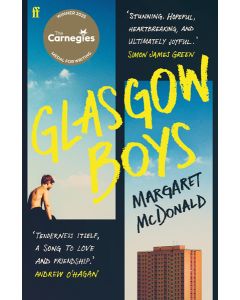
Glasgow Boys has already attracted a range of awards including winning the prestigious CARNEGIE MEDAL 2025. At 27 Margaret McDonald was the youngest ever winner of the Carnegie Medal for Writing in its almost 90-year history.
Other awards for Glasgow Boys include Winner Ukla Award 2025, Winner Ukla Shadower's Choice Award 2025, Winner Branford Boase Award 2025, Shortlisted YA Book Prize 2025, Shortlisted Waterstones Children's Book Prize 2025, A 2025 Read For Empathy Book.
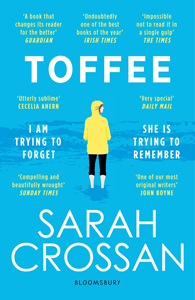
The narrative style of alternating chapters from different characters’ perspective is a feature of other Young Adults books and students may be familiar with the novels of Sarah Crossan who uses the alternating perspectives with her very engaging verse novel style.
A key appeal is the authenticity of the characters: and students could explore what it is that makes Finlay and Banjo so engaging as well as other characters like Elena, Banjo’s new foster family, and the elderly folk at the nursing home.
In what ways does Chapter 1 establish key features of the author’s stylistic choices?
Consider:
Banjo’s characterisation is established from the opening lines:
Banjo kicks the wall and spins to fall against it. Fifteen minutes. Basically on time. And why send him to the hall? What’s the punishment- missing class? Some genius.
The final pages of this opening chapter are poignant and moving:
His knuckles are still throbbing … Banjo focuses on the pain to try and distract him from the supermassive black hole in his chest, But it doesn’t work. The hole sucks him in as it always does. p.8
The chapter concludes with heartbreaking insights to Banjo:
Thing is, Banjo’s been wrung through the care system since he was ten. He used to know how to shove things down and lock them away. But now he carries it everywhere: this rancid regret that bloats inside his gut and swells it raw … he lets all the crying happen inside his mouth and realises it in slow, even breaths, the way he’s used to.
Then the narrator reveals the first clue to the backstory of Banjo and Finlay:
Sometimes he thinks he’s finally getting over all the mess that happened three years ago, and then it slams into him as if it’s been no time at all.
Chapter 2 is called Finlay.
Finlay has been in care until recently and now at university is overwhelmed that “he’s got his own room…It has a sink, a toilet, a shower. It’s his.”
This chapter highlights the importance of what shapes our identity which is often a combination of our culture or background and our family. Finlay has neither.
Using the above dot points on Banjo as a scaffold establish what is revealed about Finlay in his first chapter.
As students read the novel ask them to make notes on these points:
A blurb, often found on the back cover, is intended to give some insight to the key ideas and characters of a text. The publisher also hopes it will encourage sales. A blurb often includes personal insights to what the reader enjoyed (or not) about the book.
Read this extract from the blurb on the novel from Allen & Unwin site:
A striking debut exploring the power of identity, community and the Scottish working class. This coming-of-age story is an incisive look at young masculinity and the way even the most fraught childhood is not without hope.
Neither Finlay or Banjo can remember the last time they had a hug. Against all odds, 18-year-old Finlay has begun his nursing degree at Glasgow University. But coming straight from the care system means he has no support network. How can he write essays, focus on his nursing placement and stop himself from falling in love when he's struggling to even feed himself? Meanwhile, 17-year-old Banjo is trying to settle into his new foster family and finish high school, desperate to hold down his job and the people it contains. But his anger and fear keep boiling over, threatening his already uncertain future.
Underpinning everything is what happened three years ago in their group care home, when Finlay and Banjo were as close as brothers until they stopped speaking. If these boys want to keep hold of the people they love, they have to be able to forgive one another. More than this, they must find a way to forgive themselves.
Task: continue the blurb above and add another 250-300 words of your own responses, insights, preferences, dislikes of the novel. In your additions include some background on Margaret McDonald. You can access this newspaper article titled 'My award-winning book was ignored by 60 agents'.
Question: To what extent do you agree with this review of Glasgow Boys? In your response make close reference to specific examples from the novel which supports your perspective.
Two broken boys, with lots of baggage. Two boys who can´t connect, who can´t bear to be touched, literally or metaphorically. One resorts to anger, the other withdraws within himself. Broken families, loss and pain. A budding friendship, broken during a terrible night. And yet, this is a beautiful book. Gorgeous prose, pitch perfect characterisation, characters you love and want them to win. A story, ultimately, of the power of redemption through love, both given and received (if you let it). Visceral, heartbreaking, and unflinching – but balanced by levity, heart, and hope
Write an additional chapter which focuses on another boy from the care home: how will you make him different to Banjo and Finlay? What could happen to him? Try to emulate the style of Margaret McDonald.
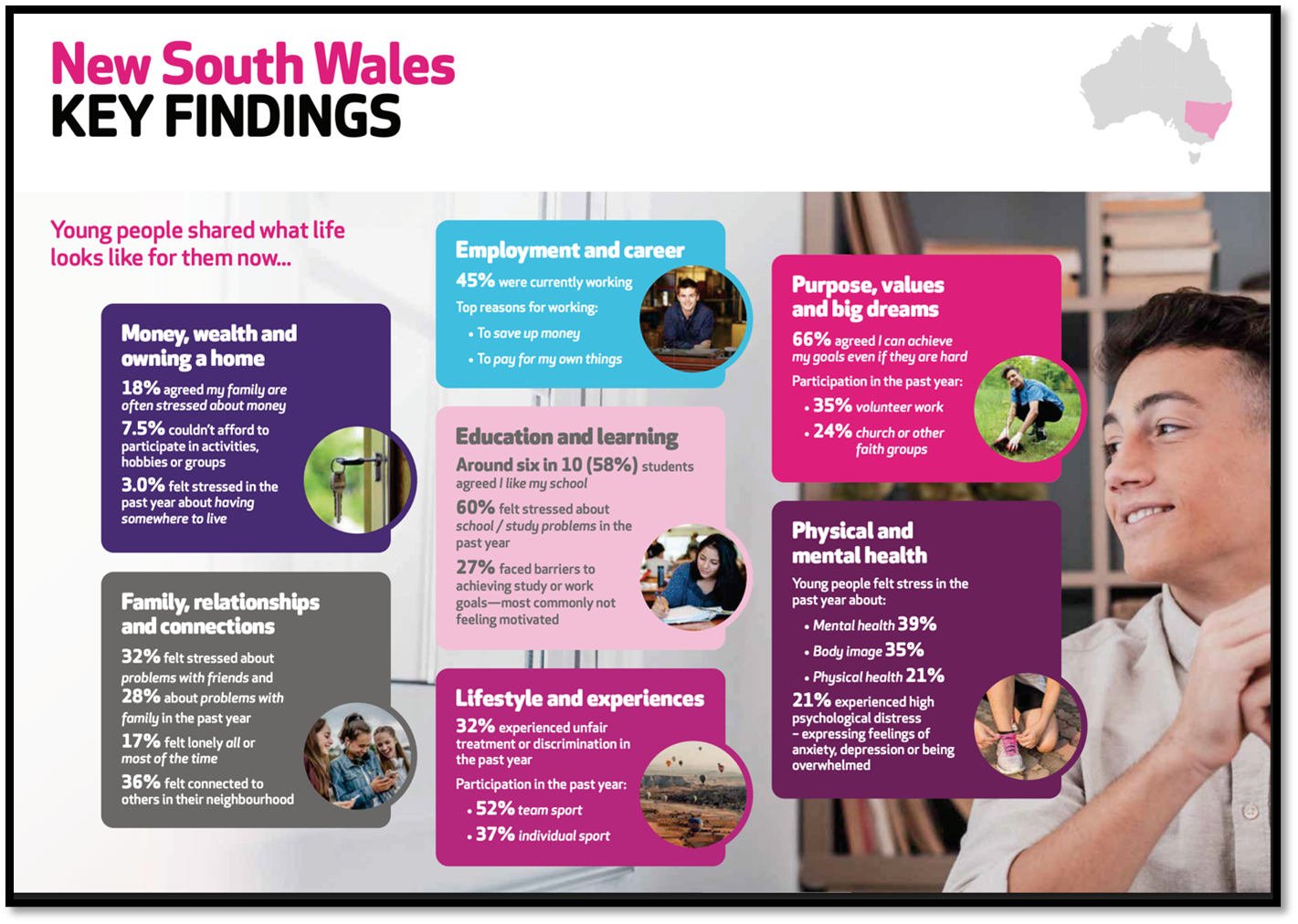
Read this infographic from the Mission Australian survey.
Text requirements: Glasgow Boys is a novel (extended prose) from a Scottish author. It includes a range of cultural, social and gender perspectives including from popular and youth cultures.
Concepts: context • representation • point of view • characterisation • connotation, imagery and symbol
A student uses a range of personal, creative and critical strategies to interpret complex texts EN5-RVL-01
Reading, viewing and listening skills
Reading, viewing and listening for meaning
Reading for challenge, interest and enjoyment
Reflecting
A student analyses how meaning is created through the use and interpretation of increasingly complex language forms, features and structures EN5-URA-01
Representation
Code and convention
Connotation, imagery and symbol
Point of view
Characterisation
Narrative
A student evaluates how texts represent ideas and experiences, and how they can affirm or challenge values and attitudes EN5-URB-01
Perspective and context
Style
(English K-10 Syllabus 2022 © NSW Education Standards Authority for and on behalf of the Crown in right of the State of New South Wales, 2023)
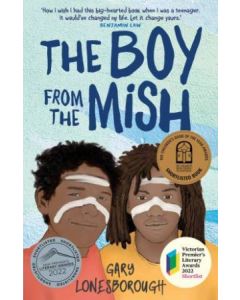
Human need to belong, be cared for, and be valued. Consider the range of texts below where these human experiences are explored:





Jane Sherlock and Deb McPherson are experienced and passionate English teachers. They have also been involved in the education sector as authors and presenters at teaching conferences.
$9.95 flat rate shipping or free over $110
Australian family-owned & sourced
Supplier to over 1,000 schools Australia wide