




Flat Rate Shipping
$9.95 flat rate shipping or free over $110

Aussie Owned
Australian family-owned & sourced

School Supplier
Supplier to over 1,000 schools Australia wide
For Stage 3
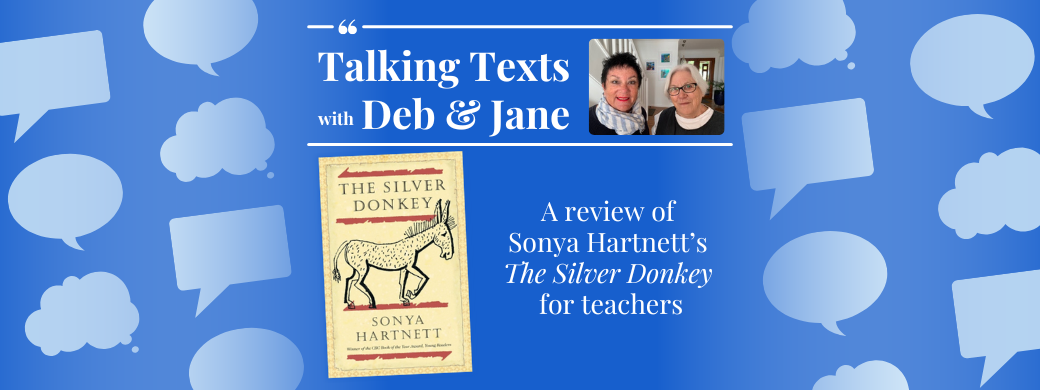
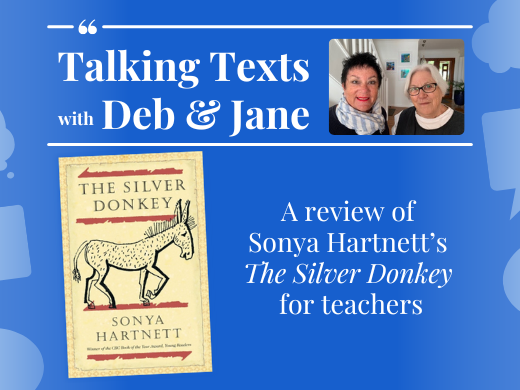
This beautifully written novel has much to offer students in Stages 3-4. Set in France during the First World War it features young and engaging protagonists who assist a blind soldier. It explores some serious issues such as the impact of war on human beings, the power of friendship and the agency of children and their compassion and ability to help others. It also provides a wonderful set of stories within the narrative as the blind soldier, acting as a storyteller, shares four tales of humans and donkeys across the centuries.
About the author
Sonya Hartnett is an Australian author of children and young adult (YA) books who had her first book called Trouble All the Way published when she was just fifteen years old. She has won many Australian and International literary awards. Among the awards she has won for The Silver Donkey are Winner 2005 CBCA Book of the Year for Young Readers. Shortlisted 2005 NSW Premier’s Awards for the Patricia Wrightson Award. Winner 2005 Courier Mail Book of the Year Prize for Writing for Young Adults. Winner 2007 COOL Award for Fiction for Years 7–9. Shortlisted 2007 Kids Own Australian Literature Award (KOALA) for Fiction for Years 7–9. Her YA books are often realistic and can be confronting.
As two young sisters, ten year old Marcelle and eight year old Coco walk through the woods one spring morning in France they find what appears to be a dead man lying on the ground. Initially they run away but then return to make sure he is really dead. They find him alive but blinded by the war. His name is Lieutenant Shepard and he is English and has left the war behind him. The girls are concerned for him as he explains he is trying to get across the English Channel to get home to see his younger brother John who is very sick. The soldier tells the sisters stories featuring donkeys while they help him with food and clothing. He has a little silver donkey that is his good luck charm which Coco loves. The girls’ brother, Pascal, gets involved and together with Fabrice, a village Frenchman disfigured by polio from the village and who couldn't go to war, they plan an escape in a boat across the Channel for Shepard. Marcelle and Coco are so sad to see their soldier go but know it is what he needs to do and they watch as Fabrice and the lieutenant set off in the night across the English Channel. Coco thought that she might be given the silver donkey but believes it left with the lieutenant. When she returns to his place in the woods she finds his old clothes neatly folded and then she thinks perhaps he did leave the donkey for her as he said it was for the trustworthy and the brave and she was both of those things. Coco finds a patch of freshly-turned earth under some leaves and digs down to find the silver donkey. The novel concludes with footprints on a beach far away.
The Silver Donkey is set in France and England during the First World War which lasted from 1914 -1918. The blind lieutenant is British and he enlisted to fight in the Great War like so many of his contemporaries, but found life in the trenches in France to be a devastating experience. Australia was part of the British Empire and automatically entered the war on the 4th August 1914 when Britain declared war on Germany. Australia sent troops to help fight against the Germans and the Turks. One of the stories in the novel references the ANZAC story of John Simpson and his donkey during the Gallipoli campaign in Turkey (Türkiye today and pronounced Tur-key-YAY) during the First World War in 1915. John was an English born Australian stretcher bearer and he and his donkey rescued many injured men in Monash Valley and Anzac Cove before he was killed on May 19 aged 22 years old.
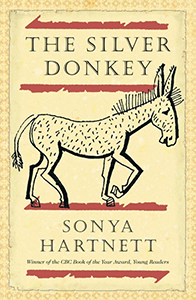
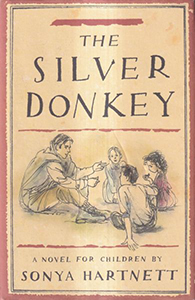
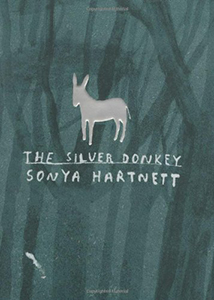
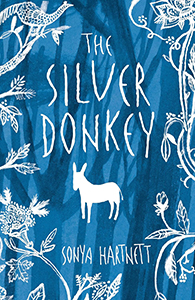
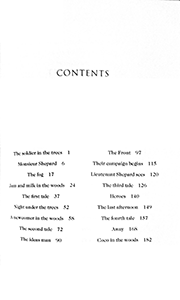
Pre-reading group task: Distribute copies or show on a screen the different covers that have been used for The Silver Donkey. Ask students to use the covers to gather information about what might happen in the story. Ask them to identify the edition they are using.
Then display the Contents page from the book and ask students to consider if the headings give them any more information and to make a second prediction based on the headings in the book. Then place each groups’ predictions in a separate envelope to be opened when the book has been read so groups can check their predictions against what actually happened in the novel.
War and attitudes to warfare are carefully explored by Hartnett in The Silver Donkey.
When Shepard leaves England for the frontline in France at the start of the First World War he believes he is setting off for a big adventure:
When war was declared he’d been quick to enlist, as had all his friends. When he was sent across the channel to the muddy countries where war raged, he’d gone expecting to be amazed and excited, War, however, was nothing like he’d imagined. Instead of amazed, he’d been horrified. Instead of excited, he’d become homesick and forlorn. p23
Lieutenant Shepard is a deserter in that he has left his position at the front and walked away. As such he could be tried and shot by the British military authorities, as happened to many men in this brutal war. He undoubtedly suffered from traumatic stress disorder following his harrowing war experiences, his own injuries and the death of so many of the men he was responsible for as commander and grew to know and support. He also has a vital reason to seek his home - his younger brother is dying, as we discover in his fourth and final tale. His memories of the war are vivid and shocking and his third tale of Simpson and his donkey at Gallipoli reinforces the destructive nature of war, its unpredictability and dreadful consequences for the people caught up in its terror.
Task: In a class discussion ask students what aspects of war are revealed in the novel and how the major characters (Lieutenant Shepard, Marcelle, Coco, Pascal and Fabrice) respond to the war and whether that changes over the time of the novel.
The two sisters at the centre of the story are brave and inquisitive children. Marcelle wants to be a nurse when she grows up and Coco wants to be an explorer. When they first find what they think is a dead body in the forest they ran away shrieking but then courageously return to make sure the man is really dead. They find a shattered man who needs their help and after a dialogue between them they do help him and agree to keep his secret.
Task: In groups ask students to find instances of the sisters’ bravery and trustfulness as well as their compassion. Also look for examples of their agency (their development of an identity and sense of belonging and the power they have to fulfil their potential) and their sense of frustration about not having agency in the area of the rescue plan.
The Silver Donkey contains several stories within the narrative told by Lieutenant Shepard to the children as he waits in the forest. Storytelling is such an important part of this novel and each tale brings new light on what it is to be kind and help others. All the stories have a donkey at their centre
Group Task: Make a table in which you compare the four stories and discuss the theme of each story and the connections between the stories.
| The stories | Main characters | Setting | Theme | Connections |
| The Bethlehem tale | ||||
| The Drought fable | ||||
| The story of Jack and his donkey | ||||
| John's story |
The silver donkey is a powerful symbol of kindness, humility, bravery and John Simson and his donkey are an iconic symbol of courage and mateship. A symbol is using objects like the silver donkey or characters of figures like John Simpson to represent abstract ideas and concepts. The children understand this idea as they reflect on the tale they have heard.
“They thought back on the tales that the soldier had told. They remembered Hazel, the gentle Bethlehem donkey, who used the last of her strength helping those who needed her. They remembered the donkey who stood on the mountain and accepted suffering so that others would not know pain. They remembered the donkey with a hundred names, the sturdy friend of Jack who proved that the most humble being can have the most courageous heart. They gazed at the soldier, who said, 'I fear that John will be sorry he gave the silver donkey to me. The silver donkey belongs to the trustworthy and the brave.”
Group Task: research the story of Simpson and his donkey by visiting the Australian War Memorial https://www.awm.gov.au/collection/P11013269
Also find out the story behind this inscription at Anzac Cove and what it means to the friendship between Australia and Türkiye who were enemies during the First World War:
Those heroes that shed their blood and lost their lives ... You are now lying in the soil of a friendly country. Therefore rest in peace. There is no difference between the Johnnies and the Mehmets to us where they lie side by side here in this country of ours ... You, the mothers who sent their sons from faraway countries, wipe away your tears; your sons are now lying in our bosom and are in peace. After having lost their lives on this land they have become our sons as well.
Mustafa Kemal Atatürk the leader of Turkey
Text requirements: novel, Australian author
Concepts: narrative • characterisation • understanding and responding to literature
A student analyses representations of ideas in literature through narrative, character, imagery, symbol and connotation, and adapts these representations when creating texts EN3-UARL-01
A student analyses representations of ideas in literature through genre and theme that reflect perspective and context, argument and authority, and adapts these representations when creating texts EN3-UARL-02
Narrative
Characterisation
Theme
Perspective and context
A student fluently reads and comprehends texts for wide purposes, analysing text structures and language, and by monitoring comprehension EN3-RECOM-01
Reading for interest and wide purposes
(English K-10 Syllabus 2022 © NSW Education Standards Authority for and on behalf of the Crown in right of the State of New South Wales, 2023)
There are many other stories that connect to The Silver Donkey. Another novel that uses stories within a narrative is The Monster Calls by Patrick Ness and illustrated by Jim Kay. When students have finished being read to or reading The Silver Donkey they might like to explore this award-winning story about a young boy and his mother and the monster who helps him face the truth.
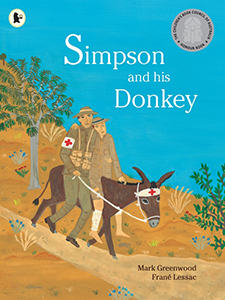
The picture book Simpson and his Donkey by Mark Greenwood and illustrated by Frané Lessac is a poignant retelling of the Anzac legend. The text explores his early life in in England where he walked donkeys for a ride for a penny with his friend Billy Lowes. It follows Simpson to Gallipoli where he and his donkey rescued nearly 300 injured soldiers. It contains a map and a brief biography of Simpson. You can find a video about the picture book at https://markgreenwood.com.au/book/simpson-and-his-donkey/

Jane Sherlock and Deb McPherson are experienced and passionate English teachers. They have also been involved in the education sector as authors and presenters at teaching conferences.
$9.95 flat rate shipping or free over $110
Australian family-owned & sourced
Supplier to over 1,000 schools Australia wide