




Flat Rate Shipping
$9.95 flat rate shipping or free over $110

Aussie Owned
Australian family-owned & sourced

School Supplier
Supplier to over 1,000 schools Australia wide

For Stages 5 and 6
The Mission Australia Youth survey is the largest annual survey of young people in Australia. In 2023 19,501 respondents aged 15-19 years selected the four top issues of importance to them: the environment, equity and discrimination, the economy and financial matters and mental health. Find out more and download the report here: https://www.missionaustralia.com.au/publications/youth-survey
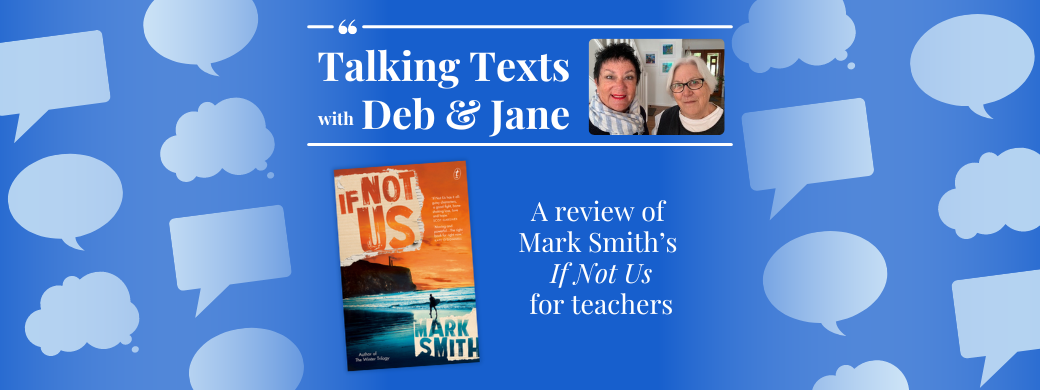
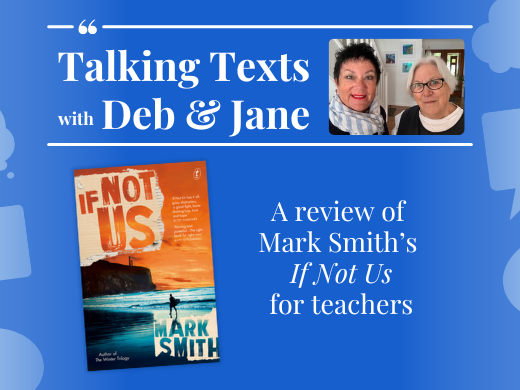
When selecting texts for the classroom its useful to know what matters to the youth of Australia. The environment and responding to climate change continues to hold great importance for young people today and Mark Smith has written several texts with strong appeal for students in Years 9, 10 and 11. The Winter trilogy (The Road to Winter, Wilder Country and Land of Fences) is an exciting and powerful Australian YA about a dystopian future. His latest novel, If Not Us, examines the consequences of taking a stand about climate change in a small town and will have strong appeal for students in Years 9, 10 and 11 as it considers so many of the issues young people are concerned about.
Hesse is the protagonist of If Not Us and is a keen surfer. This is despite losing his dad seven years ago, when his dad paddled out to a dangerous surfing spot and never came back. Hesse’s town, Shellbourne, has a coalmine and a power station as well as a beach, and while Hesse’s mum is a member of the local environmental group Hesse himself is more interested in Fenna, the exchange student from the Netherlands. But when asked to represent youth at a forum the group runs, a nervous Hesse fronts up and his call for action makes the news and a video of him taken by Fenna goes viral. Hesse gains support but faces backlash from friends and foe alike. People are worried about their jobs at the mine as dangerously high emissions are revealed. Smith does not minimise the conflicting viewpoints. He plots the growing attraction between the two teenagers with Hesse’s ache at the loss of his dad and the importance of his new commitment to action on climate change. Fenna’s anxiety attacks, a deadly car crash and the opportunity for a big surf with an older mate, at the place where his dad died, are all part of a compelling and beautifully described conclusion.
“‘My name’s Hesse, and I’m part of the generation that’s going to have to’—he stopped to clear his throat and swallow hard—to live with the effects of climate change.’” From If Not Us p153 when a nervous Hesse gets up to address the town meeting.
Stage the next local environmental forum meeting after the revelations about the high sulphur dioxide emissions from the power plant. Selected students can take on the roles of Hesse, Fenna, Imogen, Bear, Jago and Jake while the rest of the class plays the audience.
The topic for debate is:
“That we can stop climate change and live a sustainable life.”
Several characters in If Not Us experience mental health challenges and it is the support of family and friends that often makes a difference in their lives.
“Fenna squatted down. ‘Are you okay?’ she asked, reaching out to put her hand on Felicity’s knee.” p108
“This was his happy place. Out here in the middle of the bay no-one could hassle him argue with him.” p115
“’He was a good bloke, your dad,’ Skegs said, staring out into the gathering dark”. p119
In groups find these three references in the novel and re-reread them and then compare these offers of support to those suggested on p8 of the Mission Australia Youth Survey 2023 (see below). Prepare a short summary for the class on what support is available in your local area.
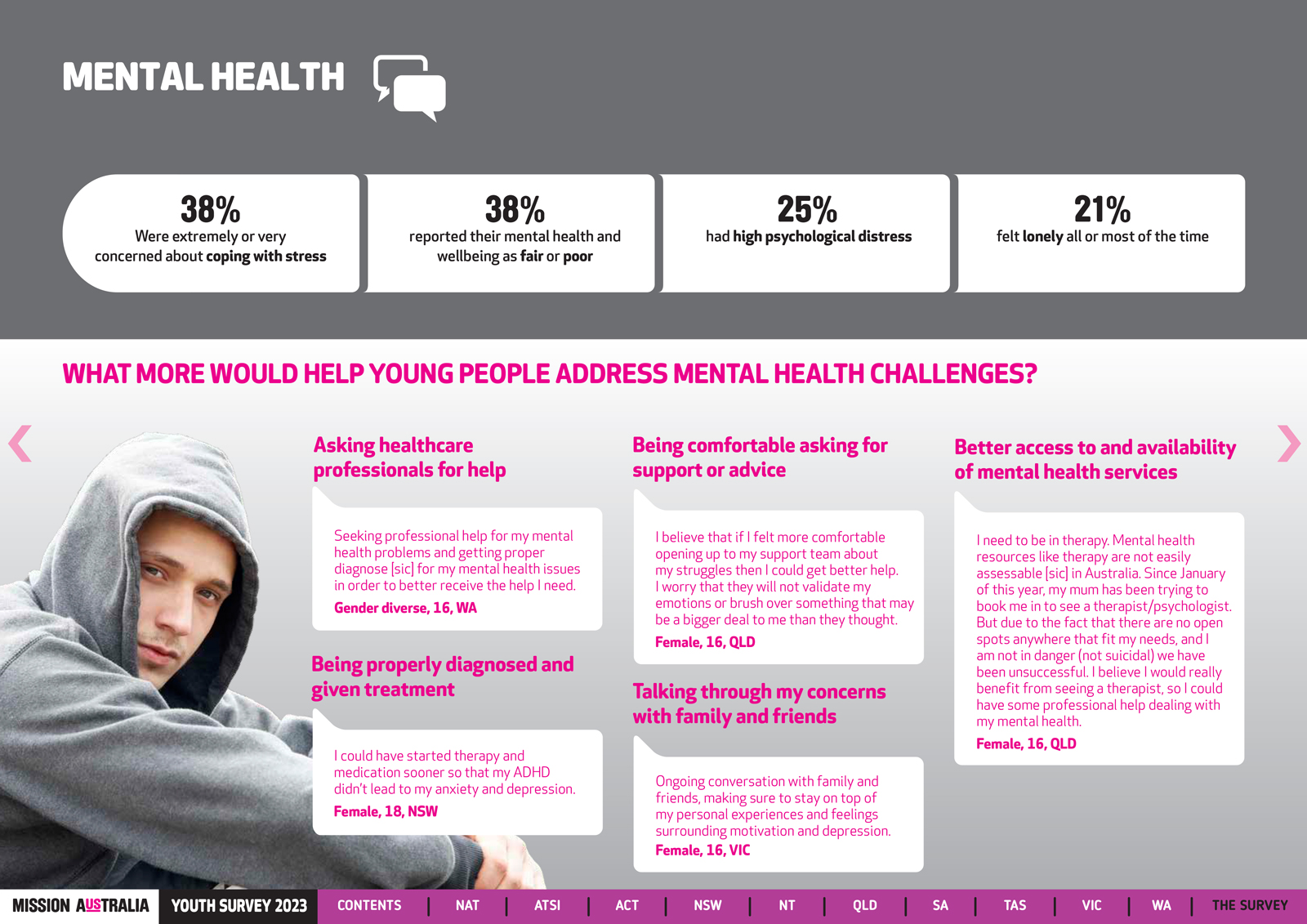
Source: Mission Australia 2023 Youth Survey, p8. https://www.missionaustralia.com.au/publications/youth-survey/3019-youth-survey-report-2023/file
“‘My name’s Hesse, and I’m part of the generation that’s going to have to’—he stopped to clear his throat and swallow hard—to live with the effects of climate change.’” From If Not Us p153 when a nervous Hesse gets up to address the town meeting.
Stage the next local environmental forum meeting after the revelations about the high sulphur dioxide emissions from the power plant. Selected students can take on the roles of Hesse, Fenna, Imogen, Bear, Jago and Jake while the rest of the class plays the audience.
The topic for debate is:
“That we can stop climate change and live a sustainable life.”
Several characters in If Not Us experience mental health challenges and it is the support of family and friends that often makes a difference in their lives.
“Fenna squatted down. ‘Are you okay?’ she asked, reaching out to put her hand on Felicity’s knee.” p108
“This was his happy place. Out here in the middle of the bay no-one could hassle him argue with him.” p115
“’He was a good bloke, your dad,’ Skegs said, staring out into the gathering dark”. p119
In groups find these three references in the novel and re-reread them and then compare these offers of support to those suggested on p8 of the Mission Australia Youth Survey 2023 (see below). Prepare a short summary for the class on what support is available in your local area.
Many contemporary texts show you the effects of unchecked environmental exploitation. Post-apocalyptic novels like John Lanchester’s The Wall, Cormac McCarthy’s The Road, and M T Anderson’s Feed portray societies that no longer care or act responsibly to sustain their environments. The film Blade Runner, directed by Ridley Scott, is a film noir set in a bleak future where power is held by a few wealthy companies, the environment is barren and ‘replicant’ humans are exploited. Lilli Wilkinson’s After the Lights Go Out and Smith’s own The Winter trilogy, explore the effects of climate change and an epidemic on a future Australia.
In groups select 3-4 texts of these texts or texts you have encountered that are concerned about climate change and a future that has not dealt with this global problem and analyse the effectiveness of different representations of the challenges living in harmony with the environment.
List your choice of texts and your choice of medium for presentation.
e.g. digital essay, podcast, Prezi, iMovie, PowerPoint.
Smith writes well about the coastal life, the relationships in the town, surfing and the ocean. Effective writers draw on their own experiences to give veracity to their stories. To practice drawing on your own experiences in your writing, keep a journal. Write down amusing, embarrassing, serious or perplexing incidents. Record the conversations of people at home, work and school. Keep an eye on the natural world, as Smith does, and write your responses to it at different times of the day, in different weather and in different seasons.
You will probably write best about what you know well, so write about your life experiences. If you can, add some humour into your writing.
Working in groups, do some research (using the Internet and printed resources) to investigate a current environmental issue that interests you. Present arguments from both sides of the debate for a class discussion. Issues that you could investigate include climate change, extreme weather, transition to a renewable future, the Murray–Darling Basin, species extinction, recycling of plastics and other waste.
Text requirements: If Not Us is a novel (extended prose) by an Australian author. It includes a range of cultural, social and gender perspectives.
Pair this text with resources from our Year 11 texts and study guides and Year 9 texts and study guides for a deeper study program.
Concepts could include Characterisation, Theme and Perspective and Context.
Characterisation
Perspective and Context
Theme
(English K-10 Syllabus 2022 © NSW Education Standards Authority for and on behalf of the Crown in right of the State of New South Wales, 2023)


Jane Sherlock and Deb McPherson are experienced and passionate English teachers. They have also been involved in the education sector as authors and presenters at teaching conferences.
$9.95 flat rate shipping or free over $110
Australian family-owned & sourced
Supplier to over 1,000 schools Australia wide