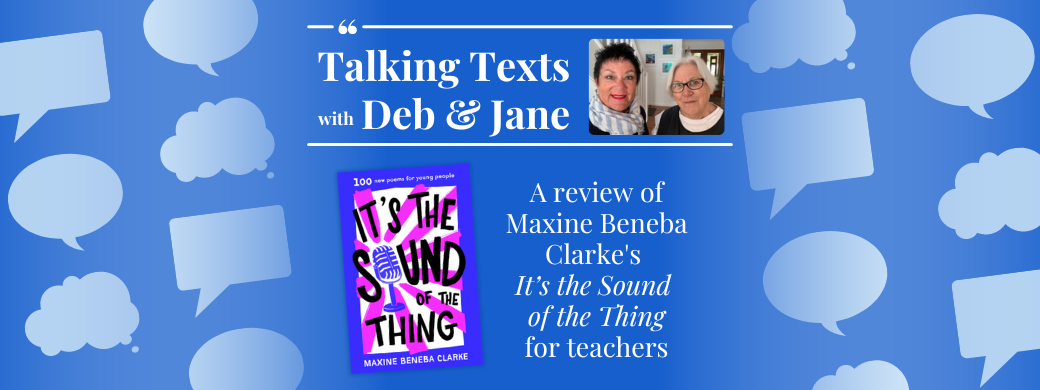
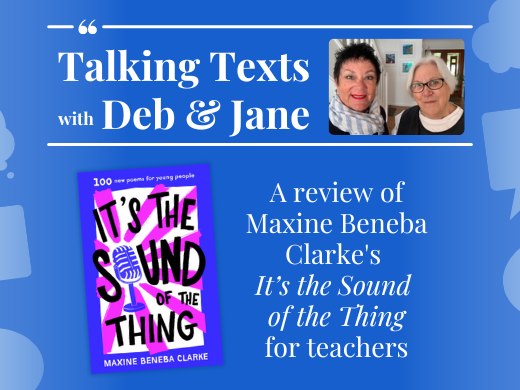
Looking for a collection of poems to bring joy to the exploration of poetry? Here it is!
Subtitled, 100 new poems for young people, this collection is a definite for your Year 7 or 8 classroom. Poetry is so often maligned and unfortunately is not always our students’ favourite memory of high school, but this collection could change that.
“It’s also a brilliant resource in showing that not only can poetry be easier to understand than we might first believe, but it’s also an excellent way to express complex or private feelings, making poetry a more accessible form of writing or journaling for kids.”
Brief description of It's the Sound of the Thing:
The new English 7-10 Syllabus recommends collections of poetry for Stage 4 and this is a perfect example of a collection by a single poet.
“It’s the sound of the thing” is the second line of Maxine Beneba Clarke’s seventh poem in the collection – Onomatopoeia – which is a wonderful example of this engaging poetic technique which is probably the most fundamental element of what first attracts us to words.
This collection of 100 poems covers a wide range of everyday experiences which reinforces the power of poetry to explore our own humanity and indeed, the extraordinary behind the ordinary. There are poems about the fun of food, the poignancy of a grandfather’s fading memory, the sounds of a suburban street and “my annoying little sister.” This collection is well-suited to Stage 4.
Maxine Beneba Clarke is an Australian award-winning writer of Afro-Caribbean heritage. She is the writer of 14 books including fiction, non-fiction and poetry and this is her first book of poetry for young people. Maxine Beneba Clarke is the author of the short fiction collection Foreign Soil, the memoir The Hate Race and the poetry collections Carrying the World and How Decent Folk Behave. Her children's picture books include the CBCA Honour book The Patchwork Bike and the illustrated poem When We Say Black Lives Matter, which was longlisted for the Kate Greenaway Medal. She is currently Poet in Residence at The University of Melbourne.
Distinctive features of It's the Sound of the Thing:
The introduction, A Note from Maxine, opens the collection and establishes the mood of joy and delight for the spoken word and especially, of poetry. The poet celebrates the fun and the power of poetry “to bring to life the mundane and boring or to raise our spirit. Poetry can capture in a few words the essence of a life, a happening, a thing or a feeling.” This down-to-earth assessment is refreshing and empowering.
The poems range from 3 lines to 4 pages.
The first poem, The Poet in You, celebrates the capacity of everyone to be a poet and gives students permission to play with words and that, indeed, “Wrangling with words is a glorious thing.”
A few favourites to emphasise the collection’s variety:
Detention which explores some of the students who are given detention
Screentime which gives an interesting insight to parents and children
Red which is a fun and clever mash-up of different fairy tales
Remembering which is a poignant and heartfelt tribute to age and dementia
An Index By Poetic Form at the back provides an excellent reference for poems in different forms including Acrostic, Free Verse, Haiku and Sonnets. This would be a wonderful way to make some of these forms much more accessible to students.
Ways to use It's the Sound of the Thing in the classroom
Make sure the students hear the poems read aloud. There is an audio version by Bolinda where Maxine Beneba Clarke brings her poems to life through her warm and rich voice.
Poems which have distinctive sounds e.g. limericks, onomatopoeia and alliteration will appeal to younger students while older students could be drawn to some of the poems that evoke more poignant portraits like the examples of haiku or specific topics as in Remembering or Wanna Be.
Access The Red Room poetry site to see Maxine reading her poem Tik Tok Dance. Students could read the poem where each small group takes a different stanza. Using the poem as a model, groups could write another stanza that takes the TikTok dance to another place or situation. For fun, students could create a dance to suit the poem and record it on their phones as if a TikTok video.
Use poems as models for student writing, especially in encouraging the delight of everyday objects and experiences as the basis for student writing e.g. acrostic poems.
Encourage students to be guided by personal preference and engagement as to which poems most appeal to them and ask them to justify their choices.
Climate March Chant is a fabulous poem for class involvement. Consider either dividing the class into small groups and allocating 1-2 stanzas for them to prepare and present or perform as a full class and allocate specific lines to specific students. Consider using simple instruments to add a soundscape e.g. drums, castanets, clapping sticks. Encourage students to write an additional stanza for the poem which maintains the same structure and rhyme scheme.
For students towards the end of Year 8 explore Amanda Gorman’s The Hill We Climb and discuss the power of poetry to raise awareness and provoke thought about significant human experiences. This poem was presented by 22 year old Amanda Gorman at the inauguration of President Joe Biden on January 20 2021.
This collection could become a stepping off point for exploring other poems where “it’s the sound of the thing” that engages us as well as the subject matter. Consider such poems as these below and try to find audio versions by engaging speakers e.g. Jack Thompson
‘The Man From Snowy River’
‘The Charge of the Light Brigade’
‘The Rime of the Ancient Mariner’
‘La Belle Dame San Merci’
‘The Raven’
‘Jabberwocky’
Relevant details in relation to the new English 7-10 syllabus
Text requirements: It’s the Sound of the Thing is a poetry collection by an Australian author and poet and it has cultural, social, gender perspectives and youth culture references. Using such an anthology can encourage student choice for personal interest and enjoyment.
Relevant NSW English 7-10 Syllabus content
A student: uses a range of personal, creative and critical strategies to read texts that are complex in their ideas and construction EN4-RVL-01
Apply a range of strategies to develop fluency in reading aloud, including an understanding of pace, tone and voice
Explore the main ideas and thematic concerns posed by a text for meaning
Explain personal responses to characters, situations and issues in texts, recognising the role of written, oral or visual language in influencing these personal responses Reflect on how reading promotes a broad and balanced understanding of the world and enables students to explore universal issues
Read texts selected to challenge thinking, develop interest and promote enjoyment, to prompt a personal response
Understand the ways reading helps us understand ourselves and make connections to others and to the world
A student analyses how meaning is created through the use of and response to language forms, features and structures EN4-URA-01
Analyse how figurative language and devices can represent ideas, thoughts and feelings to communicate meaning
A student examines and explains how texts represent ideas, experiences and values EN4-URB-01
Understand how repetition, patterning and language features used within a text communicate ideas about social, personal, ethical and philosophical issues and experiences, and demonstrate this understanding through written, spoken, visual and multimodal responses
Understand how perspectives are shaped by language and text
Explore how the perspectives of audiences shape engagement with, and response to, texts
Examine how elements of personal and social contexts can inform the perspective and purpose of texts and influence creative decisions
Consider the influence of cultural context on language
Analyse how engaging personal voice is constructed in texts through linguistic and stylistic choices, and experiment with these choices in own texts
Describe the distinctive rhetorical and aesthetic qualities of a text that contribute to its textual style, and reflect on these qualities in own texts
Identify elements of an author’s work that represent their distinct style
A student creates personal, creative and critical texts for a range of audiences by using linguistic and stylistic conventions of language to express ideas EN4-ECA-01
Apply understanding of the structural and grammatical codes and conventions of writing to shape meaning when composing imaginative, informative and analytical, and persuasive written texts
Compose visual and multimodal texts to represent ideas, experiences and values
Select modal elements to work together to support meaning or shape reader response
Deliver spoken, signed or communicated texts with effective control of intonation, emphasis, volume, pace and timing
Create imaginative texts for creative effect and that reflect a broadening world and relationships within it
Intentionally select and use poetic forms and features to imaginatively express ideas and personal perspectives
Jane Sherlock and Deb McPherson are experienced and passionate English teachers. They have also been involved in the education sector as authors and presenters at teaching conferences.