




Flat Rate Shipping
$9.95 flat rate shipping or free over $110

Aussie Owned
Australian family-owned & sourced

School Supplier
Supplier to over 1,000 schools Australia wide

For Stage 4
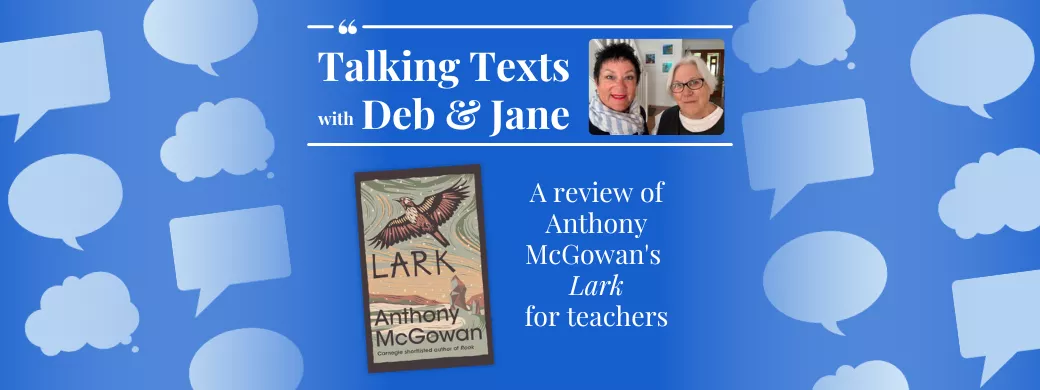
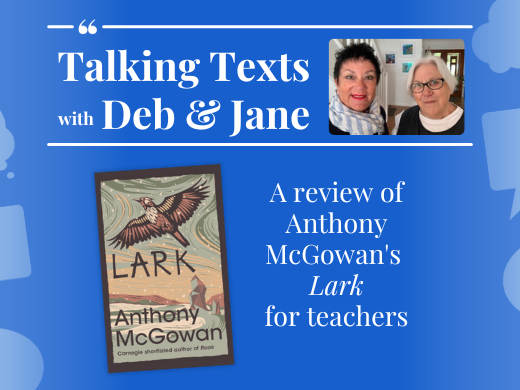
British publication The Sunday Times describes this novel as “funny, scatological, terrifying, heart-warming and heartbreaking. “I don’t bloody like it” is the opening line. It involves two brothers and a Jack Russell terrier called Tina.
Thinking about your Year 7 class? This is the book for them!
This award-winning book is a true gem and one of my favourites of the past five years and there have been many contenders. It is pacy, real, authentic, a great read and speaks to us all. McGowan passionately believes that “books are for and about everyone.” He also affirms and celebrates the importance of children and adolescents in seeing themselves in books:
“’It’s us …. Miss, it’s us! It’s us!’, his voice full of wonder and joy at the fact that kids like him were allowed to be in books.” (From his speech on winning the 2020 CILIP Carnegie medal).
McGowan is a very engaging speaker. You could consider taking students into his writing world through his interviews and the transcript of his speech at https://vimeo.com/428435659
This is the fourth in a series featuring two brothers Nicky and Kenny but you do not need to know the other books – this is a “standalone masterpiece.” It is an adventure story but so much more.
Nicky is the storyteller and the older brother who is fiercely protective of his brother Kenny who has some learning challenges. The boys are keen to escape tension at home and decide to have an adventure in the North Yorkshire moors, taking their old and grumpy Jack Russell, Tina with them. But this “lark” turns into a nightmare when the unpredictable moors weather becomes a blizzard and the story is then about survival. The moors are described with stark realism and the challenges facing the boys and Tina are evocative and engrossing. It is also a story about telling stories and the power of storytelling to makes sense of who we are and the world around us.
Anthony McGowan has written over 40 books and is one of the most widely acclaimed young-adult authors in the UK. His books have won several major awards and been shortlisted for many more. He has also written highly regarded adult fiction, as well as books for younger readers. He has a PhD on the history of beauty and has taught philosophy and creative writing. He lives in London with his wife and two children.
Source: https://www.barringtonstoke.co.uk/dyslexic-reluctant-readers/
McGowan chooses to represent Nicky’s experiences and emotions through the first person:
McGowan makes deliberate choices to set his story in a wild, inhospitable, challenging landscape. This is a common convention in literature and indeed, the landscape takes on deeper significance as a layer of commentary on human qualities like resilience, courage, bravery, fear and survival.
It would be valuable for students to view some images of the North Yorkshire moors. There is some useful information about these moors in the Teacher Resources at https://www.lovereading4kids.co.uk/kids-zone/content/uploads/1669213706-ckg-2020-reading-resources_lark.pdf
The story of Lark incorporates many well-known literary tropes of adventure, lost in the wilderness, escaping conflict, confronting nature.
On a closer reading Lark is also about the human condition and challenging human experiences which is one of the joys of reading and exploring texts. By reading texts like Lark we come to understand our own frailties and strengths as well as gain insights as to what makes us human. Books like Lark are indeed, life-affirming.
Below are nine suggestions for what Lark is about.
Lark is about …
| perils of nature | poverty, hope and sadness | survival against the odds |
| power of stories and how stories help us | love | power of relationships |
| different kinds of bravery | forgiveness | awe and joy of the natural world |
What other ideas could be included? Working in a pair, or small group, rearrange the ideas into a ‘Diamond 9’ formation, as shown below. Compare your ideas with other readers and discuss why some ideas were chosen as the most and least important.

To celebrate the fifth year of Lark’s publication, the publishers are designing a new cover and promotion campaign. You have been asked to write the promotional blub to appear on booksellers’ websites and bookshop posters.
Write the promotional blurb of 150-180 words which includes a brief summary of the story and also provides insights to the richness of the novel’s themes and ideas.
“Kenny’s eyes were closed now, but he nodded.
And then his last words, so faint I could hardly hear them. Yet in another way so loud that they rang out like the ecstatic song of the lark in endless blue sky.
‘Tell me a story.’”
Form small groups and discuss the 4-page epilogue:
McGowan talks about his own experiences growing up in Yorkshire, hiking with friends and the ordinary adventures of his boyhood. Lark is not only an excellent model for student writing but its premise of the “ordinary” is an important way to encourage student agency in their own storytelling. Watch: Do you have any advice for young people who want to write themselves? (7.06) https://vimeo.com/399732058
In this interview, Anthony McGowan comments:
“Ordinary life contains massive scope for adventure, excitement and intensity … what you need to do is gaze with an objective eye on your own real existence, on the world around you, on your relationship with your friends in school and home… you will find some many potential stories there… look around you and you will find stories.”
Think about your own adventures. Choose one of these lines from Lark to start your own 500-word short story which you base on something that has happened to you. Think about how McGowan captures and sustains out interest and how you can emulate some of his style.
Story starters:
Text requirements: Lark is a work of extended prose (novel) by a British author with cultural, social and gender perspectives, popular and youth cultures.
Looking for more classroom texts for Stage 4 students? Browse our Year 7 texts and study guides and Year 8 texts and study guides at Five Senses Education.
Below you can find some content that could be covered in a close study of the text.
Concepts could include Representation • Perspective • Characterisation • Theme.
Specific syllabus content points which would be addressed through exploration of this text:
A student uses a range of personal, creative and critical strategies to read texts that are complex in their ideas and construction EN4-RVL-01
A student analyses how meaning is created through the use of and response to language forms, features and structures EN4-URA-01
A student: examines and explains how texts represent ideas, experiences and values EN4-URB-01
A student creates personal, creative and critical texts for a range of audiences by using linguistic and stylistic conventions of language to express ideas EN4-ECA-01
(English K-10 Syllabus 2022 © NSW Education Standards Authority for and on behalf of the Crown in right of the State of New South Wales, 2023)
Students could consider a reading challenge where they choose 2-3 other books to read:
1. Follow Nicky and Kenny’s stories in the other three of this collection: Brock, Pike and Rook
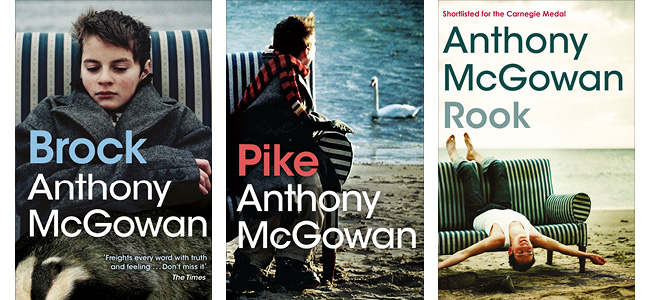
2. Students could choose another YA author whose narratives focus on adolescents and adventure e.g. Katherine Rendell, Gary Paulsen, Andy Mulligan and Katrina Nannested


3. Students could explore Through My Eyes Australian Disaster Zones: series on natural disasters and adolescents as well as the series set in Asia.


4. Students could consider Non-fiction books about survival and adventure.

Jane Sherlock and Deb McPherson are experienced and passionate English teachers. They have also been involved in the education sector as authors and presenters at teaching conferences.
$9.95 flat rate shipping or free over $110
Australian family-owned & sourced
Supplier to over 1,000 schools Australia wide