





Flat Rate Shipping
$9.95 flat rate shipping or free over $110

Aussie Owned
Australian family-owned & sourced

School Supplier
Supplier to over 1,000 schools Australia wide
Please note page numbers are sadly not included.
For Stage 5
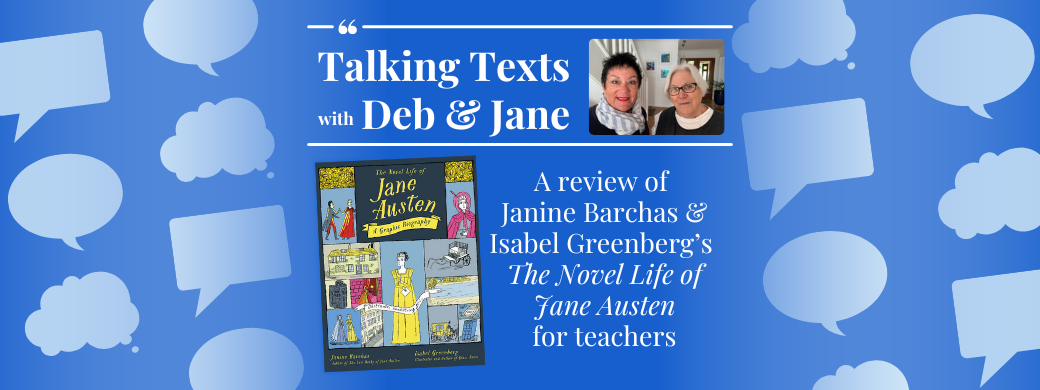
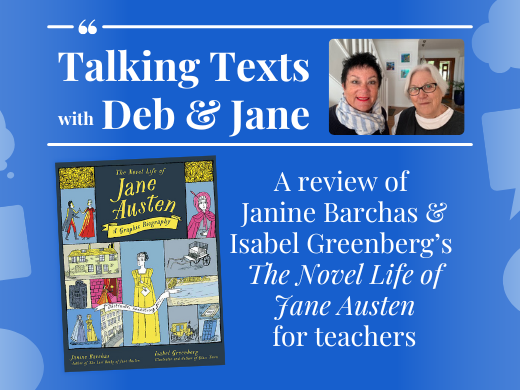
2025 is the 250th anniversary of Jane Austen’s birth and The Novel Life of Jane Austen: A Graphic Biography celebrates Austen’s life in a brilliant collaboration between scholarship and the graphic form. Professor Janine Barchas and illustrator Isabel Greenberg lead the reader through the domestic life of sisters Jane and Cassandra Austen as they make their way through a variety of homes and experiences from 1796 until Jane’s death in 1817. Barchas and Greenberg tell the tale in three distinct parts Budding Writer from 1796-1797, then Struggling Artist from 1801-1809 and finally Published Author from 1809-1817.
Professor Barchas teaches at the University of Texas in Austin and has written several books about Jane Austen including Matters of Fact Jane Austen and The Lost Books of Jane Austen which investigates the spread of Jane’s popularity across economic, cultural and geographic barriers through the medium of less expensive editions of her work published in the 19th and 20th centuries. Barchas has curated several exhibitions about Jane Austen including WhatJaneSaw.org. and her latest book, a collaboration with Isabel Greenberg, The Novel Life of Jane Austen: A Graphic Biography, is being translated into several languages.
Isabel Greenberg is a UK graphic novelist and illustrator. She has created three graphic novels, The Encyclopedia of Early Earth (2013) The One Hundred Nights of Hero (2016) and Glass Town (2020) which looks at the four Bronte children and the detailed imaginary world they created. She has also illustrated several children’s books. Her latest work with Professor Barchas is The Novel Life of Jane Austen: A Graphic Biography.
Brief description of The Novel Life of Jane Austen: A Graphic Biography
We first meet Jane as a teenager in this graphic biography in London as she and her brother Frank attend an exhibition of illustrations of the works of Shakespeare. In Chapter 2 we find Jane walking around the muddy family farm attached to the parsonage in Steventon and musing on landscape architect Capability Brown. We see her father Reverend Austen tutoring students and share the heartache of her sister, Cassandra, over the death of her fiancé. Jane is already writing and thinking of characters. Her father invites her to read from her new manuscript First Impressions (the first title for Pride and Prejudice) which he then sends off to a publisher. But sadly, Jane’s first work is rejected. Chapters 3 to 5 take Mrs Austen and her two daughters to Bath for a visit with her brother, James and his wife. Jane and Cassandra haunt the bookshops, visit a folly and ruins and an ancient chapel, which prove fertile places for ideas for Jane’s writing. Their uncle and aunt kindly hold a party for them. In Chapter 6 the Reverend Austen announces his retirement and decision to move to Bath to the consternation of the sisters. Bath does not prove a happy place for them as not long after their arrival their father dies, leaving his wife and daughters in a struggle to make ends meet without his pension. While the brothers offer to help the three women’s hope of an inheritance from the estate of a wealthy relative is unrealised and they travel to the port city of Southampton where they join brother Frank and his wife in a rented house at Castle Square. Finally in 1809 in Chapter 10 the reader finds Jane and Cassandara and her mother moving into a sizable cottage on brother Edward’s estate at Chawton Hampshire where Jane will have her most productive years as a writer. The relief for all is palpable. In Chapter 13 Jane’s ill health worsens and at age 41 she dies in Winchester and is buried in Winchester Cathedral. The final pages of the graphic biography take the reader to the present and to a celebration of Austen’s works of fiction which are enjoyed and read by millions around the world.
Introduce the class to the author Janine Barchas through a YouTube presentation she gives for the Harry Ransome Center at the University of Austin on The Novel Life of Jane Austen. This presentation provides wonderful insights into the collaboration of the author and the illustrator in the creation of the graphic biography. It's a real delight to see how the two women worked together with screen shots illuminating the genesis and development of the project.
Graphic novels have exploded in sales, genres and sophistication. In an article ‘Graphic novels broaden their Appeal’ (September 9 2024) Brad Rouse wrote that graphic novels have enjoyed a meteoric rise in popularity in the last five years and are now “the third best-selling genre (35 million books sold) in the U.S. and Canada, behind only general fiction (49 million) and romance (36 million)”. So, this new form is popular and “graphic novels’ are not even always novels. The term has gone from referring to a specific format to a wider form that can be graphic memoirs, autobiographies and biographies as well as novels. They are texts that speak directly to readers about the complex visual, auditory and printed world in which they live. They can involve intricate interplay between image, written text and space to form a new type of textual integrity. Students need to understand the changing conventions (just like film) for graphic novels and a good place to start is with Charged with Meaning 2nd edition ed Wayne Sawyer (2019) (Phoenix Education and Stefanie Lia’s Chapter 11 Exploring Graphic Novels in English.
Once students have an idea of the codes and conventions for this form then they can start to appreciate and applaud the interaction between image and word.
Read widely in the graphic form genre
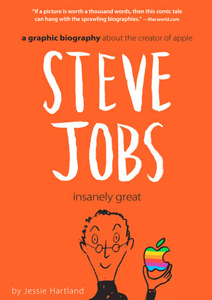
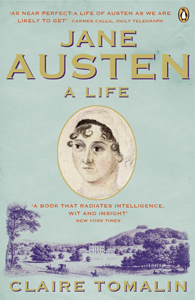
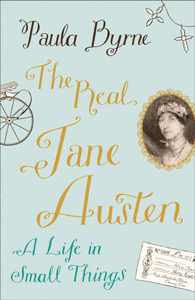
Allow students to read The Novel Life of Jane Austen: A Graphic Biography Janine Barchas, illustrated by Isabel Greenberg and then select a second text from the following list:
Students in groups create a compare and contrast chart on the way the authors and illustrators have used the form and the way style is explored in different ways in different texts.
Alternatively, students might feel inspired to read one of the six Austen novels
And then seek for references to their novel in the graphic biography.
“Every reader brings her own sensibility to Austen’s novels. You can read them for their intricately arranged marriage plots, for their sly humour, for what they say about women and the financial arrangements that underpinned their search for husbands, for their vivid representation of a particular stratum of English life at a particular time. To my mind, there’s no one like her for using comic observation to alleviate the sting or tiresomeness of a vexing situation. It helps to imagine: How would Jane have described this?” (my italics) Sarah Lyall The Essential Jane Austen The New York Times 17 July 2025
Take an incident from your second text and try to imagine how Jane Austen would have described it. Now attempt a re-write in Jane Austen mode.
Richard Glover’s columns in The Sydney Morning Herald are often an opportunity to study the discursive form and see the use of humour artfully presented. After introducing The Novel Life of Jane Austen ask students to read the Glover article ‘It is a truth universally acknowledged that I’m suddenly addicted to period dramas’ and in groups to investigate how he uses humour to explore his addition to period drama and film.
Text requirements: The Novel Life of Jane Austen: A Graphic Biography is a text by a Dutch American author and a British illustrator. It includes a range of cultural, social and gender perspectives.
Pair this text with resources from our Year 11 texts and study guides and Year 9 texts and study guides for a deeper study program.
A student analyses how meaning is created through the use and interpretation of increasingly complex language forms, features and structures EN5-URA-01
Connotation, imagery and symbol
A student evaluates how texts represent ideas and experiences, and how they can affirm or challenge values and attitudes EN5-URB-01
Perspective and context
Style
(English K-10 Syllabus 2022 © NSW Education Standards Authority for and on behalf of the Crown in right of the State of New South Wales, 2023)



Jane Sherlock and Deb McPherson are experienced and passionate English teachers. They have also been involved in the education sector as authors and presenters at teaching conferences.
$9.95 flat rate shipping or free over $110
Australian family-owned & sourced
Supplier to over 1,000 schools Australia wide