



Flat Rate Shipping
$9.95 flat rate shipping or free over $110

Aussie Owned
Australian family-owned & sourced

School Supplier
Supplier to over 1,000 schools Australia wide
For Stage 4
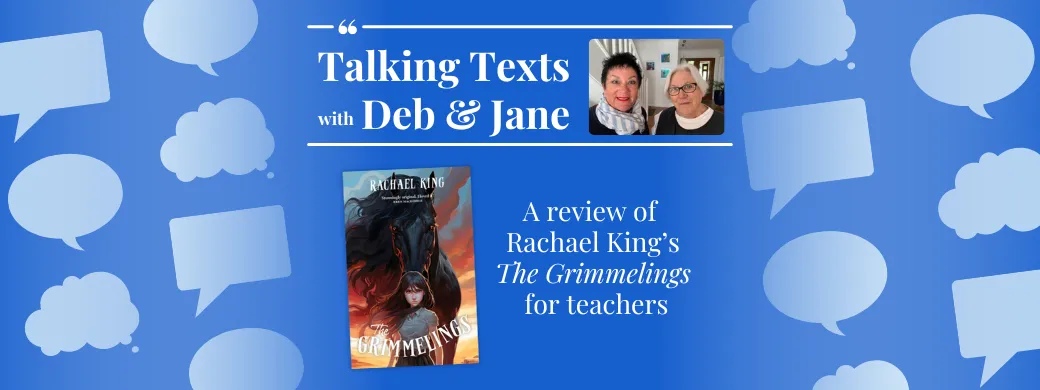
This fantasy story connects with Scottish myths and legends passed down from generation to generation and yet retains a strong realism in both its New Zealand lake setting and the startling events that occur in the story. Thirteen-year-old Ella is a convincing protagonist as she deals with the power of a family curse and the problems of adolescence, a missing father, an overburdened mother, and an ill yet resourceful and somewhat magical grandmother. The family business is horses and Ella and her protective horse, Magpie, are part of the team that offers rides. Ella is angry about some bullying on the bus by classmate Josh Underhill and is intrigued by a new boy called Gus. When Josh goes missing Ella is worried that her wish about Josh has resulted in his disappearance. At the same time a powerful black horse is spotted on a hill above the house and both Gus and the black horse are strangely compelling. The horse and Gus are revealed as a kelpie. Kelpies are dangerous shape-shifting water creatures who can appear on land as humans or horses. In their horse form they entice people to ride on their backs and then take them to a watery grave. Ella, her younger sister Fiona and Grizzly, her grandmother are soon engaged in a lifesaving mission to find those who have been taken and defeat the kelpie.
Rachael King is a writer and reviewer, living in Ōtautahi Christchurch New Zealand. She's the author of two novels for children: Red Rocks, which won the Esther Glen Medal, and The Grimmelings, published in 2024.
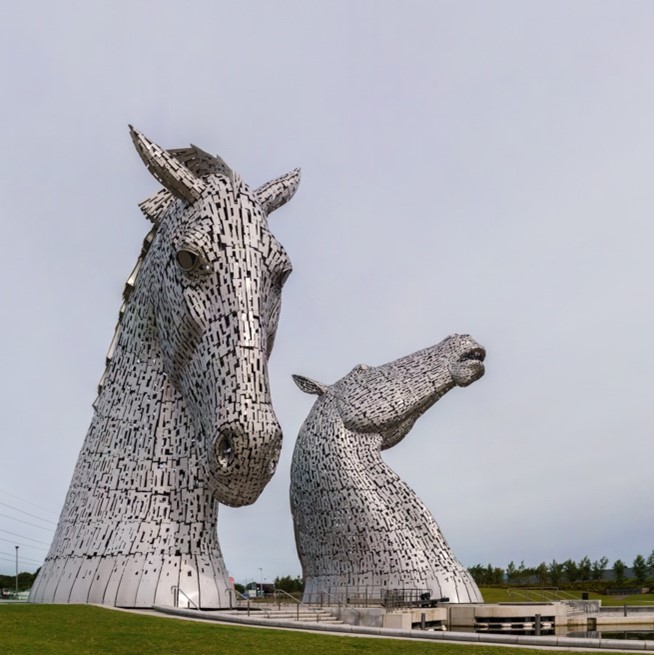
In Scotland a huge metal sculpture called the Kelpies, and designed by Andy Scott, can be found between the Scottish towns of Falkirk and Grangemouth. The horse heads were named after the mythological transforming beast which author Rachel King uses to such impressive impact, in The Grimmelings. Find out what you can about this Scottish water creature and share the information you find with the class.
Investigate the blending of the fantastic and the realistic in this exciting story. Some elements are listed below, suggest other elements and add them to the table below and then in groups consider what techniques the author uses to blend these two very different genres. Report your findings to the class.
| Fantastic elements | Real elements |
| • The Scottish kelpie | • Loneliness of both Ella and Gus |
| • Fiona’s charms and Grizzly’s knowledge | • The horse rides, the behaviour of clients and the resentments of some townspeople |
| • The collective retrospective amnesia of the population at the end of the novel | • Grizzly’s funeral and the appearance of so many of the townsfolk |
| • The black stallion and Magpie | • The regular horses of the trekking business |
Rachael King writes a powerful description of the Kelpie in horse form as it stands in the water of the lake. The author positions Ella as the observer and uses visual and tactile imagery to engage the reader.
A horse stood in the water, drinking. It was as black as night, its sheen reflecting the colours of the streaked sky and the dark, impenetrable water. The Ben had turned grey, its shadowy shape mirrored in the lake, along with fat, lustrous clouds.
There was power in its limbs, in its solid body, in its broad chest - Ella could sense it pulsing. It was massive, a mountain, built for battle. Its long, untamed mane and tail dripped with water, glossy green weeds from the lake caught in its tangles. p139
There are many creatures described in different mythologies from around the world. Some are associated with aquatic and marine mammals, some with arthropods, with bats, birds, bears, lions, reptiles, canines and other species. Many creatures appear in multiple mythologies.
Individual Task: Research another creature in world mythology and write (and illustrate) your own description. Nominate what mythology the creature comes from. Use the descriptions in the novel as models for your own writing and note the powerful use of metaphor. Compose your own description and experiment with metaphor, simile and the use of the senses. Here are some suggestions to start you off: centaurs, sphinxes, griffins, werewolves, chimeras, dragons, selkies, bunyips, and nixies.
In The Grimmelings Rachael King reminds the reader of the power of nature and its vulnerability through her descriptions and the voices and actions of her characters.
Grizzly says, “…Ach, this country. We’ve ruined it in so many ways. Cleared all that forest, destroyed all those native birds and plants just so we can make it look like home. Putting dairy farms where they have no business, destroying the land and the beautiful waterways…” p235
Group Task: Look through the novel and note the descriptions of the natural landscape and the events when that landscape was threatened or threatening. Research why the natural environment and native species are so important for our future life on this planet. What environmental issues can you identify in your own school, local council area and state? Share your research with the class and discuss what you can do to help and preserve the natural landscape, flora and fauna.
Text requirements: The Grimmelings is a novel (extended prose) from around the world. It includes a range of cultural, social and gender perspectives.
Concepts could include Narrative • Characterisation • Intertextuality.
Characterisation
Narrative
Point of view
Narrative
Intertextuality
(English K-10 Syllabus 2022 © NSW Education Standards Authority for and on behalf of the Crown in right of the State of New South Wales, 2023)



Jane Sherlock and Deb McPherson are experienced and passionate English teachers. They have also been involved in the education sector as authors and presenters at teaching conferences.
$9.95 flat rate shipping or free over $110
Australian family-owned & sourced
Supplier to over 1,000 schools Australia wide